A client does not hire your camera. They hire you to make a photograph they need, show up when you said you would and deliver what you agreed to deliver. That is the real starting point for freelance photography. The beautiful portfolio matters, but so does the boring stuff that keeps a job from falling apart.
If you want to know how to become a freelance photographer, start smaller than your ambition. Pick a service you can perform reliably, build honest examples and learn the cost of doing the work. Then take a job whose scope matches your ability. You do not need to pretend to be a large studio. You need a clear offer, a workable process and photographs worth paying for.
Choose one first service you can deliver
Portraits, products, property and events are different businesses in practice. They have different deadlines, locations, lighting problems and consequences when something goes wrong. A controlled portrait session gives you time to adjust. A ceremony does not stop because you are confused about autofocus. Choose the kind of assignment your current skills and backup plan can support.
Write your first service in one sentence. Be specific about the subject and the result: a short portrait session with a defined set of edited files, or photographs of a small product range for a website. Avoid offering every genre just because the camera can point at all of them. A narrow offer is easier to explain and easier to prepare for.
Make practice photographs under conditions similar to the work you want to sell. Test the whole process, including planning, shooting, selecting, editing, exporting and delivery. A strong single frame does not prove that you can deliver a consistent set on a deadline. Find the weak part of the process before a client finds it for you.
If the assignment exceeds your readiness, say so. Assisting an experienced photographer, recommending someone better suited or proposing a smaller job can be the professional decision. Saying yes to everything is not confidence. It is how you create promises that your skills cannot keep.
Build an honest, focused portfolio
Show photographs you made and can explain. Do not use another photographer’s work, imply that a practice shoot was a paid campaign or describe a collaboration as an assignment you directed alone. A portfolio should help a client understand your actual ability, not encourage them to imagine a larger track record.
Choose a small, consistent selection for the service you offer. If you want portrait work, show more than one flattering face in the same easy light. Demonstrate expressions, framing and a finished set. For products, show that color, shape and detail remain consistent across several items. The client should be able to recognize what they are buying.
Get appropriate permission for practice shoots and for public use of the resulting photographs. Permission to photograph someone is not automatically permission to use the image in your advertising. Privacy, releases, copyright and commercial-use requirements depend on the people, purpose and applicable law. Check what applies before publishing a portfolio image.
Keep the presentation simple: a clear service description, a short selection, your service area and a reliable contact method. A visitor should not need to decode your entire creative life to find out whether you do the job they need. Check the page on a phone and make sure the images load and the contact route works.
Learn what the client actually needs
Before discussing a price, ask what the photographs are for. Personal portraits, a company’s website, paid advertising and packaging can require different deliverables and usage terms. Ask who will use the images, where they will appear and whether another business will also receive them. Do not assume that sending a digital file settles every rights question.
Ask about the date, location, number of subjects or products, desired final-image count, deadline and any references that explain the look. References are a way to understand direction, not permission to copy another photographer’s image. Find out who makes decisions and who will be available to approve the plan.
Check practical access: parking, load-in, available space, electricity when needed, venue rules and permission to photograph there. An office that looks spacious in a phone photograph may have no usable working distance. A location may require approval or insurance documentation. Research these details rather than arriving with a hope and a light stand.
When the client changes the request, clarify the change before agreeing. More people, more locations, extra retouching or a faster deadline can change the time and cost. A friendly conversation is still allowed to end with a written summary. It protects the understanding on both sides.
Price the whole job, not only the shutter time
Shooting is one part of an assignment. Count consultation, planning, travel, setup, the session, file management, selection, editing, export, delivery and administration. A short shoot can involve a much longer working day. If you only charge for the time holding the camera, you can miss most of the work.
Also account for real business costs: equipment maintenance, software you use, storage, insurance, professional advice, marketing and taxes appropriate to your situation. Not every cost belongs as a separate line on every invoice, but you need to understand it when deciding whether your price supports the business.
Do not copy a stranger’s rate and assume it makes sense for your market or service. Their deliverables, expenses, rights, experience and client needs may differ. Research the market, but calculate your own costs and explain your offer. There is no universal beginner rate and no guaranteed income hidden in a pricing formula.
Make the quote easy to read. State the assignment, included deliverables, usage terms, production expenses, payment schedule and what would count as extra work. Clarify whether any taxes or third-party costs apply. A client should understand the total and the boundaries before the job begins.
After each completed job, compare your estimate with the actual time and expenses. If editing repeatedly takes twice as long as planned, change the workflow, scope or price. A spreadsheet of real jobs teaches you more than a motivational claim about what photographers should earn.
Put the agreement in writing
Use a written agreement appropriate to your location and assignment. Cover the date and location, scope, deliverables, usage, payment terms, delivery timing, cancellation or postponement, and how changes will be handled. If the assignment involves assistants, rentals or venue costs, clarify who arranges and pays for them.
Be precise about finished files. Explain the expected image count or selection process, what editing is included, how revisions work and whether source or RAW files are included. Do not let a client discover after the shoot that their idea of delivery is different from yours. Promise a timeline you can meet with your current workload.
Keep image usage distinct from the physical or digital files. Ownership, licenses, releases and exclusivity can have legal and commercial consequences. Do not paste an online contract into your business without understanding it. A sample from a professional organization can show the issues, but it is not legal advice or a ready-made answer for every country and client.
Get local professional advice where needed and keep a copy of the agreed version. If the client asks for something unclear, discuss it before signing. You do not need to drown every simple portrait job in jargon, but you do need a shared understanding that survives a busy day and imperfect memories.
Set up the business for where you work
Check local registration, licensing, tax and permit requirements before taking work. In the United States, the Small Business Administration explains that licenses and permits depend on business activities and location. That is a starting point for research, not proof that your particular photography business needs no permit.
Ask an appropriate adviser about business structure, bookkeeping, tax obligations and insurance. Requirements can differ between working from home, renting a studio and photographing on someone else’s property. A venue or client may have requirements beyond those of a government agency. Confirm them for the actual assignment.
Keep business records organized from the start. Save estimates, agreements, invoices, receipts and relevant correspondence in a system you can find later. Track income and expenses rather than hoping to reconstruct them at tax time. Separate the recordkeeping process from the photo-editing process so neither gets lost in the other.
If your offer includes drones or other regulated work, research those rules separately. Owning equipment does not establish that you can legally use it on a paid job or at a particular location. Stay inside the work you are qualified, equipped and permitted to deliver.
Prepare the assignment before arriving
Confirm the plan shortly before the session: time, meeting point, contact person, subjects, access and deliverables. Give the client a short preparation note when it helps, such as arranging products, confirming participants or keeping the working area clear. Do not send a huge checklist that creates more confusion than it prevents.
Test the equipment you will use. Charge batteries, check suitable storage, clean lenses and make sure the camera, lighting and trigger combination works. Check rentals before relying on them. Have a realistic backup plan for the part of the setup whose failure would stop the job. That plan can include replacement equipment, a simpler setup or help arranged in advance.
Prepare a short coverage list tied to the agreed outcome. It is a reminder of what must be delivered, not a reason to stop looking. Leave space for good moments that appear during the session. At the same time, do not let experimentation consume the time needed for the client’s essential photographs.
Run a calm, reliable session
Arrive with enough time for the setup you agreed to, introduce yourself and confirm the priorities with the right contact. Explain what will happen in simple terms. People relax more easily when they understand the process than when you hide behind the camera and issue unexplained commands.
Make a test image and inspect exposure, focus, background and important details. A tiny preview can hide a problem. In a portrait session, check clothing distractions and whether the pose is comfortable. For a product, check placement and unwanted reflections. Ask before changing someone’s appearance, belongings or working space.
Monitor progress against the scope and time. If a problem threatens delivery, communicate early and offer a realistic solution. Do not silently replace the agreed work with something easier and hope the client does not notice. Keep people safe around cables, stands, traffic and unfamiliar locations.
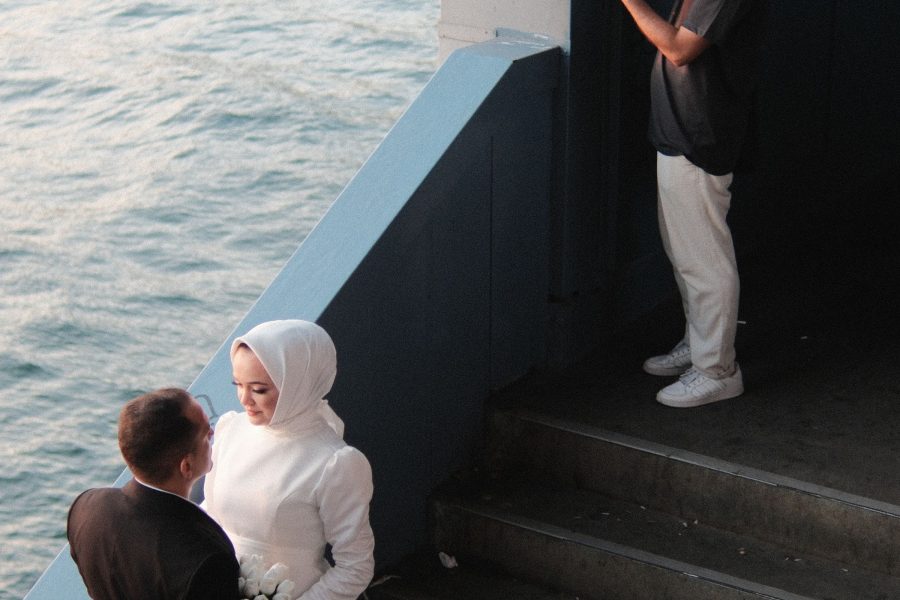
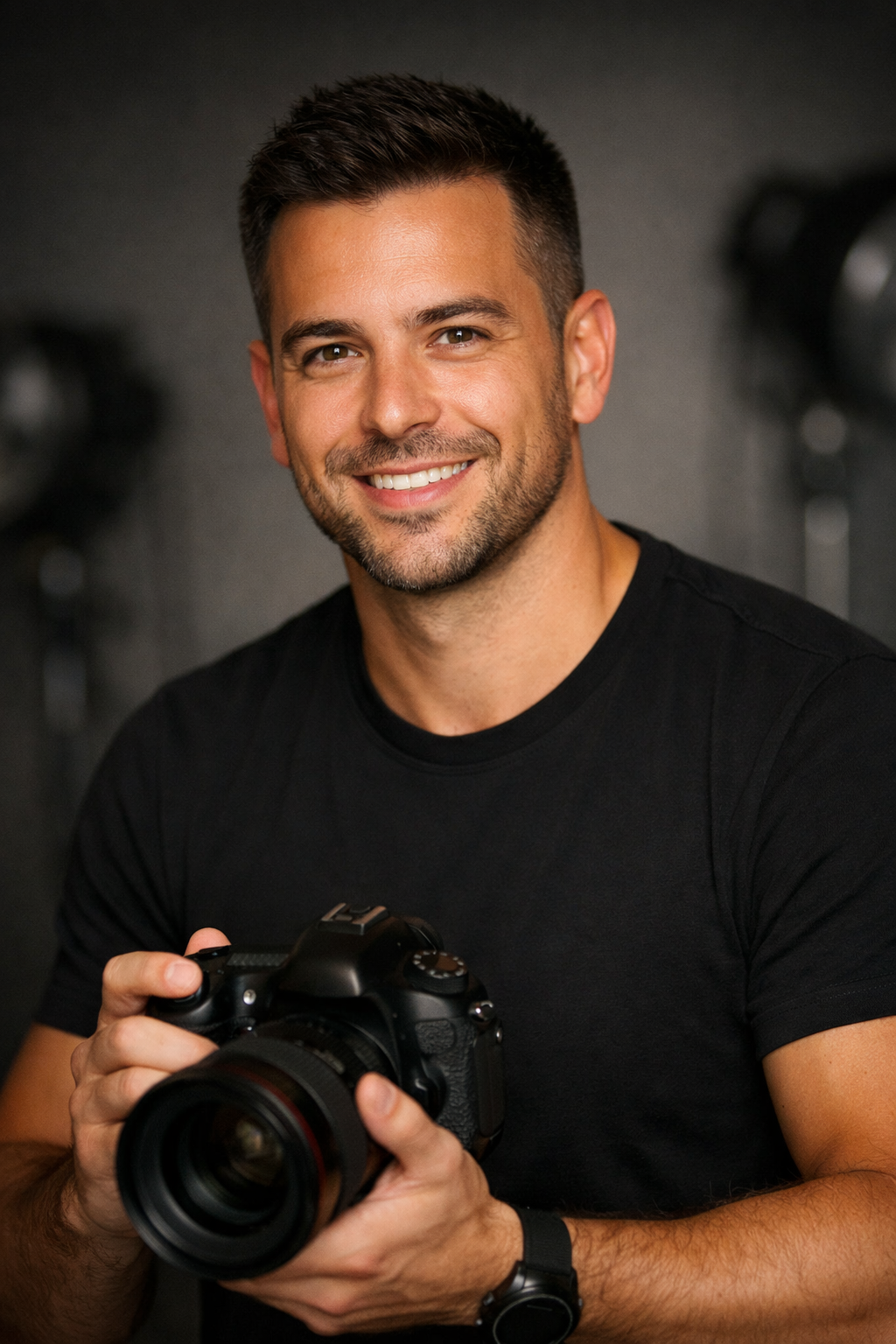
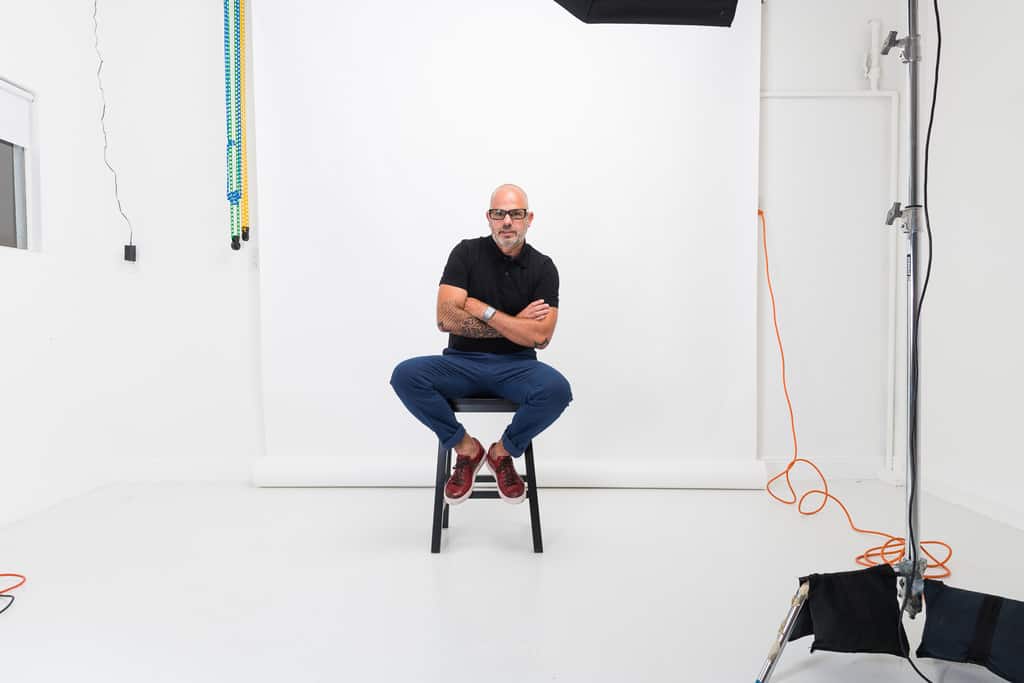
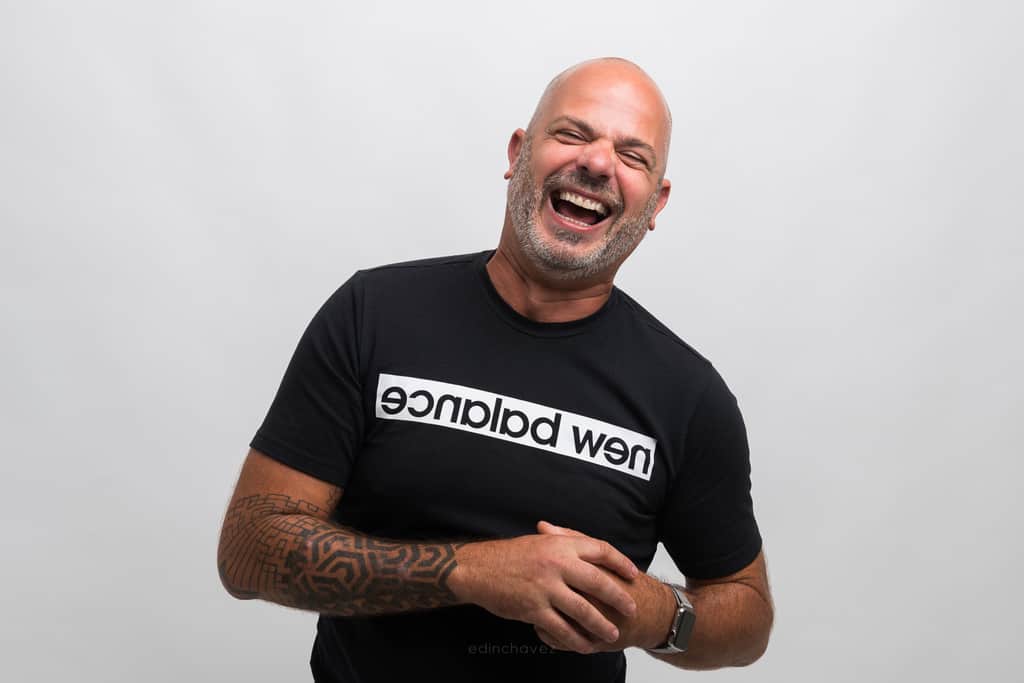
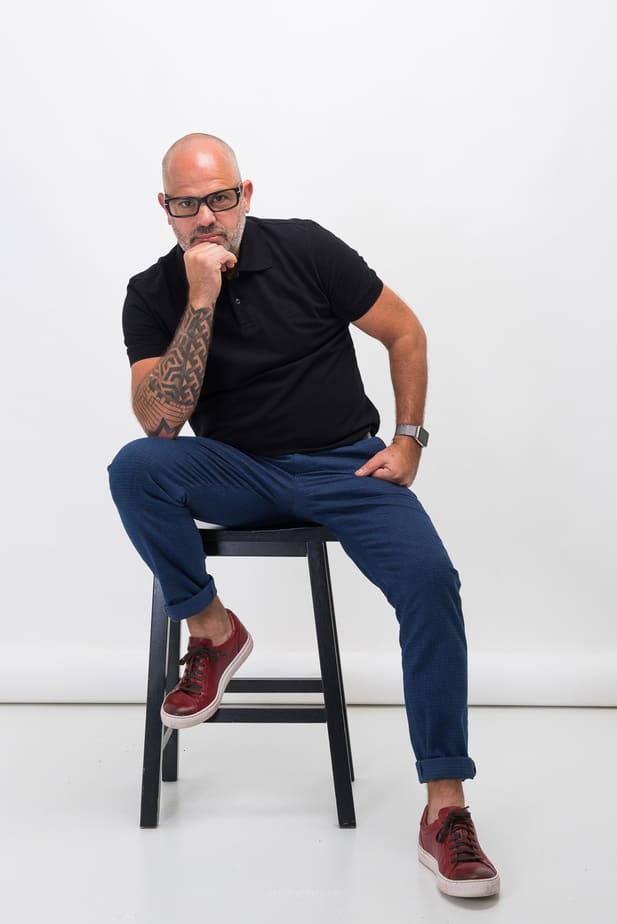
The portrait photographs in this article are from a verified Edin Chavez series. They illustrate a portrait service and working environment, not a claim about fees, client status, lighting settings or commercial results. Your own portfolio should carry that same honesty about what the photographs show.
Protect files, edit consistently and deliver clearly
After the shoot, copy files through a repeatable process and verify the copies before clearing cards. Open files from the backup location, confirm the expected set is present and keep more than one copy of work that matters. A single drive can fail. A progress bar saying finished is not the whole backup plan.
Select and edit to the promised standard. Check consistency across the set, including color, brightness, crops and retouching. Keep originals separate from delivered versions. Our Lightroom guide explains one editing route, but a software brand is not a requirement for being professional.
Export for the agreed use and inspect the exported files. Confirm naming, dimensions and the delivery method. Send a clear note explaining what is included, how to access it and any agreed limits. Do not use a public link when private delivery is expected. Keep the client’s privacy and the agreement in view all the way through delivery.
Handle revisions within the agreed process and discuss new requests before doing extra work. Keep records of delivery and payment. If you promise an archive period, make it one you can support; do not imply you store everything forever when you do not have a durable system.
Find clients without making promises you cannot keep
Make your service easy to find, then approach relevant opportunities thoughtfully. A local business that needs consistent product photographs is more useful than a huge audience that does not buy your service. Explain the kind of work you do and show a short, relevant portfolio rather than sending everyone the same long pitch.
Build relationships through good work and respectful follow-through. Ask satisfied clients whether they are comfortable referring you or giving feedback. Obtain permission before publishing their photographs or testimonial. Do not invent reviews, client logos or results to make the business look established.
Social media can support the portfolio, but follower counts are not a booking guarantee. Keep contact details current, respond clearly and track how real inquiries reach you. Improve the route that brings suitable work. Repeat clients often want consistency and a straightforward experience more than a constant performance online.
Freelance photography FAQ
Do I need an expensive camera to freelance?
You need equipment that can reliably deliver the agreed work and a backup plan for essential failures. Cost alone does not prove readiness. Choose the service first, then identify the tools it requires.
How should I price my first photography job?
Count preparation, shooting, editing, delivery, expenses and business costs. Define the deliverables and usage before quoting. There is no universal beginner rate or guaranteed earnings formula.
Do freelance photographers need a contract?
A written agreement helps establish scope, payment, delivery and usage. The right terms depend on the assignment and applicable law, so use local professional advice instead of blindly copying a template.
Can I put every client’s photographs in my portfolio?
No. Check the agreement, permissions, privacy and any release requirements before using photographs publicly or in advertising. Permission to shoot does not automatically authorize every later use.
Should I offer every kind of photography?
Start with work you can show and reproduce reliably. Expand when your skills, workflow, equipment and backup plan support the new service rather than promising everything at once.
What should I do after delivering a job?
Confirm delivery, handle agreed revisions, keep records and review actual time and costs. Ask for feedback or a referral respectfully, and obtain permission before sharing images or testimonials.
Gear for a reliable freelance workflow
Build around your service. Compare compatible spare batteries, suitable memory cards, reliable backup storage and lighting support when the assignment requires it. Test the complete setup before taking a paid job. A new purchase does not replace a backup plan or clear client agreement.
Compare on Amazon | Compare on B&H
These are comparison searches, not tested product reviews or promises of compatibility, price or availability. Strengthen your light and composition skills with the Shut Your Aperture Academy.
Affiliate disclosure: As an Amazon Associate I earn from qualifying purchases. Purchases through Amazon and B&H links may earn a commission at no extra cost to you.