
I love patterns. The beach keeps changing, but a few shapes can make a photograph feel organized: a row of chairs, a circle of umbrellas, a hard shadow, or the line where water meets sand. Look carefully and an ordinary arrangement becomes the subject. You do not need a dramatic landmark when the relationships inside the frame are strong.
This is a beach-pattern photo series originally published in August 2017. At the time, I wrote that I had been photographing this kind of scene for a while, starting with a kite, then helicopters, and later drones. I used the DJI Mavic Pro for most of this series and edited the photographs with my DJI Lightroom presets. That is the original context, not a recommendation to buy an old aircraft or repeat a flight over a busy beach.
Updated October 2026. The original photographs are preserved below. The added notes explain what is visible in the compositions and how to practice seeing patterns. They do not invent flight heights, camera settings, permits, or conditions that were not recorded with this article.
What makes a pattern photograph work?
A pattern begins when something repeats: a shape, a color, a spacing, a direction, or a change in light. The repetition gives the eye something to follow. It can be strict, like evenly spaced chairs, or loose, like umbrellas scattered across sand. The important question is whether the relationship is clear enough to hold the picture together.
Look for the unit that repeats. In these photographs it is often an umbrella, a chair, or a shadow. Then look at the space between the units. The gaps can be as important as the objects. A tightly packed arrangement feels different from a few isolated shapes surrounded by sand. Neither is automatically better; each gives you a different composition to explore.
Adorama’s guide to pattern photography describes geometric, organic, repeating, and color patterns, including the value of changes in viewpoint and breaks in repetition. Those are useful starting points. The photograph still needs an intentional frame, not simply a large number of similar objects.
Begin with the boundary between water and sand
The opening photograph places the shoreline beside rows of beach furniture. Water, foam, and sand provide larger bands around the smaller repeated chairs and shelters. That gives the eye two scales to read: the broad shape of the coast and the details along it. You can study that structure without knowing the height or exact direction of the camera.
When a pattern sits beside a strong boundary, decide how much of each area belongs in the frame. Too much unrelated background can weaken the repetition. Too little context can remove the relationship that makes the arrangement interesting. Try a wider composition and a tighter one from a safe, permitted viewpoint, then compare what each version says.
A shoreline does not have to be straight to organize a picture. A diagonal edge can divide areas of color and texture, while a curve can carry attention through the frame. Follow the line with your eye. If it leads out through a corner, ask whether the remaining shapes bring the viewer back into the picture.
Color can organize a busy arrangement
Colorful umbrellas create small anchors across pale sand. In the green, yellow, blue, and red arrangements, some colors repeat while others interrupt the sequence. Notice which colors you see first. A strong color can connect several distant objects, so the photograph may feel more ordered than the actual spacing suggests.
Do not assume more saturation makes a better pattern photograph. Color also needs room and separation. If every shade becomes equally intense, the useful relationships can disappear. Start by assessing the existing colors and their distribution. In editing, make small changes and keep checking the whole image rather than polishing one umbrella in isolation.
For practice at ground level, look for repeated painted doors, market crates, tiles, or empty chairs. You can learn the same lesson without an aerial platform. Ask which color repeats, which color breaks the repetition, and whether the background helps those relationships remain clear. A manageable scene makes the exercise easier to repeat.
The space between shapes is part of the subject
A single umbrella beside a large area of sand creates a different photograph from a dense field of umbrellas. The empty area becomes a shape of its own. It can make the object feel small, emphasize its color, or establish distance from the water. Check the balance between the occupied and unoccupied parts of the frame.
In the photograph with a green-and-blue umbrella near the water, the open beach carries much of the composition. The subject does not need to fill the frame to be clear. Its separation from other objects is part of why it is easy to locate. That is a useful reminder when a scene tempts you to crop every quiet area away.
Negative space should still have a purpose. Scan it for small bright distractions or accidental fragments at the edges. A tiny object can pull attention away from the larger arrangement if it has enough contrast. Moving the frame slightly may be more effective than trying to remove the distraction later.
Regular patterns and broken patterns
The yellow-and-white umbrella arrangement shows a repeating set of circular shapes. The blue-and-red arrangements offer another kind of rhythm. You can look at each as a field of related objects, then search for the exception: a missing unit, a different color, an unusual gap, or a chair pointing another way.
A break can become the subject, but it needs to be visible enough to matter. If it is too small, the viewer may never notice it. If it dominates everything, the photograph may no longer read as a pattern at all. Compare the balance between the repeating structure and the interruption. Choose which one should carry the picture.
You can practice with objects you control: arrange a row of cups, then change one position. Photograph the regular version and the interrupted version from the same safe setup. Keep the lighting simple so the spacing is easy to read. This is an exercise you can create, not a claim that any photographs in this series were made as matched tests.
Shadows add a second arrangement
The umbrella and chair photographs contain more than the objects themselves. Their shadows create another set of shapes on the sand. In the dense red-and-white arrangement, the dark forms are a large part of the visual rhythm. Look at the direction, length, and separation of those shadows before deciding where to place the frame.
Light changes the pattern. A shadow can connect two objects, separate them, or make the spacing harder to read. When you can safely return to a scene, compare it under different light rather than assuming one time of day always wins. The goal is to see how the arrangement changes, not to force a preferred look onto every subject.
Keep bright areas under control without flattening the scene. Review the file and check whether the light and dark shapes remain readable. A pattern photograph often depends on small transitions and texture, so aggressive contrast or sharpening can make it feel brittle. Use editing to clarify the relationships already present.
Choose a viewpoint that explains the geometry
A top-down viewpoint can make repeated objects read as shapes rather than as a scene at eye level. Chairs become rectangles, umbrellas become circles, and the sand becomes a background plane. An angled viewpoint can show more depth and context. Neither is the universal choice; the subject determines which relationship you want to show.
Do not confuse viewpoint with equipment. A safe balcony, an authorized overlook, or a table-top arrangement can offer a different perspective without a drone. At ground level, you can photograph a row from the side or along its length. Change height and position, then inspect how overlap affects the pattern.
If you use an aerial camera, the ability to frame a composition does not establish permission to fly. Check current rules for the exact place and operation, required authorization, airspace, people, and site restrictions before launching. A photograph from 2017 is not evidence of what is permitted today. Do not copy an apparent flight path from an image.
Keep people and privacy out of the experiment
Beach arrangements often include people. They are not props you can move or ignore. This gallery is about shapes and spacing; it is not an invitation to hover near beachgoers, follow someone, or photograph a private moment. Choose a different scene when you cannot make the photograph safely and respectfully.
Be particularly careful around crowds, children, and places where people expect privacy. Do not treat a distant viewpoint as a way around consent or publication restrictions. If an image includes an identifiable person, consider the intended use and the permission needed for that use. When in doubt, use an empty arrangement or another subject.
Keep your attention on the operation as well as the picture. Wind, obstacles, other people, and a changing environment matter more than a perfect grid. If conditions do not support a safe plan, leave the photograph for another day. A pattern can be found in many ordinary places; it does not justify taking a risk.
Frame orientation and edge control
Patterns can suggest either a horizontal or vertical frame. A line of objects may fit one direction better, while a boundary between water and sand may work as a diagonal. Rotate or reframe only when doing so improves the relationship. There is no requirement to keep a repeated row parallel with the edge.
Check every corner. Part of an umbrella or chair can imply that the arrangement continues outside the frame, but a very thin fragment may feel accidental. Include enough of the edge object to make it useful or leave it out. The viewer should sense a chosen boundary rather than a collection of leftovers.
Make one wider frame before committing to a tight crop. The wider version may show how a repeating group sits beside open sand or water. Keep both and compare them later. If the tighter version loses the strongest relationship, return to the wider frame rather than forcing the pattern to fill every inch.
Edit for the arrangement, not an exaggerated effect
The original article noted RAW capture and my DJI Lightroom presets. That describes this historical series, not a promise that one preset will improve every pattern photograph. Begin with a sound exposure and white balance, then adjust color and contrast to keep the visible relationships coherent. Preserve the original files.
Use a small thumbnail view to judge the whole frame. Then enlarge it to check detail, edges, and any distracting editing artifacts. A crop that looks strong at first may cut an important shape awkwardly. Return to the whole image often. Local changes should support the composition instead of creating competing patches.
Select a small group of photographs that differ in useful ways: dense repetition, a sparse arrangement, strong shadows, and a shoreline boundary. A series becomes more interesting when each frame adds something. Fifteen nearly identical images would teach less than a set that lets you compare spacing, color, and viewpoint.
Original beach-pattern gallery
The original sequence is kept here so you can compare the arrangements yourself. My 2017 note named number eight as my favorite. That is an original preference from the article, not a new ranking or a claim about which frame is technically best.
 Save
Save Save
Save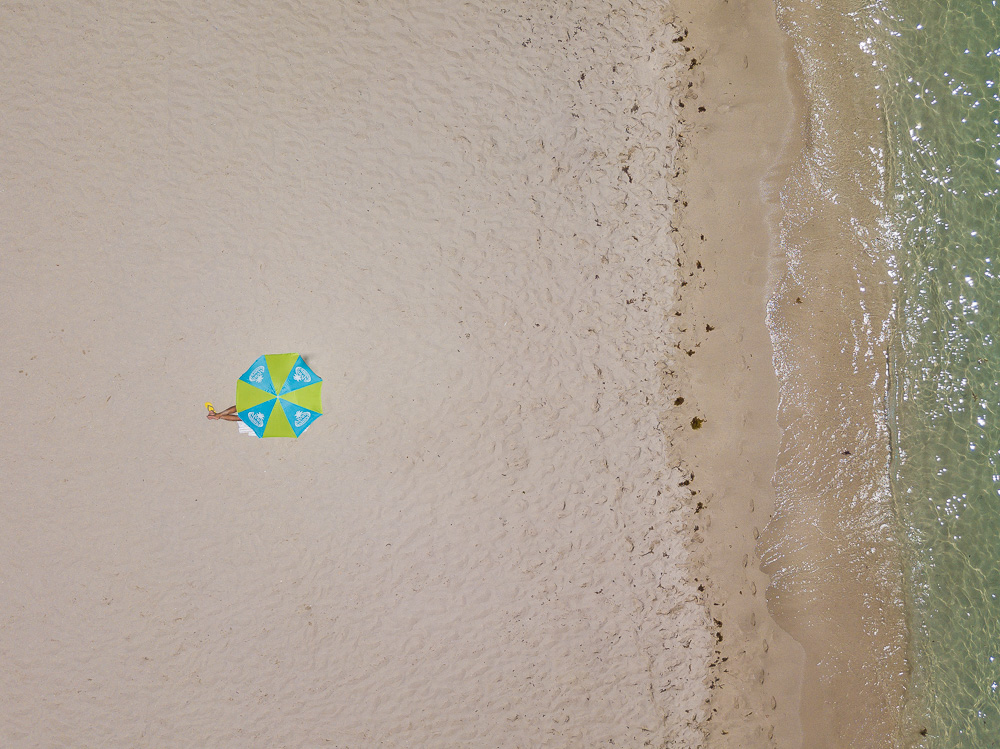 Save
Save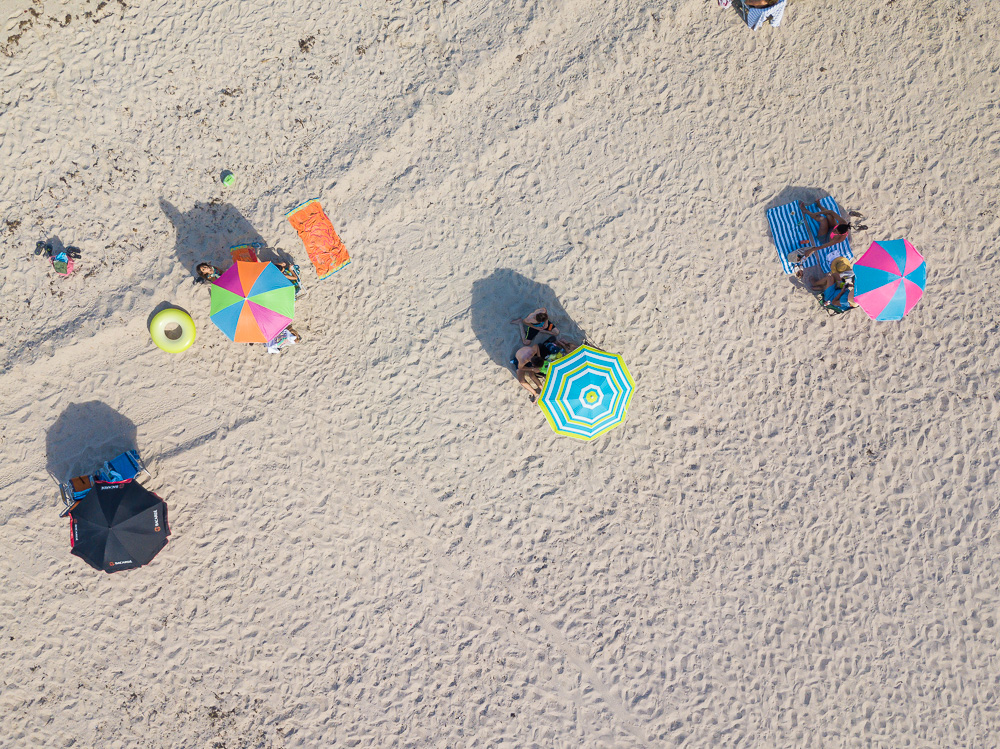 Save
Save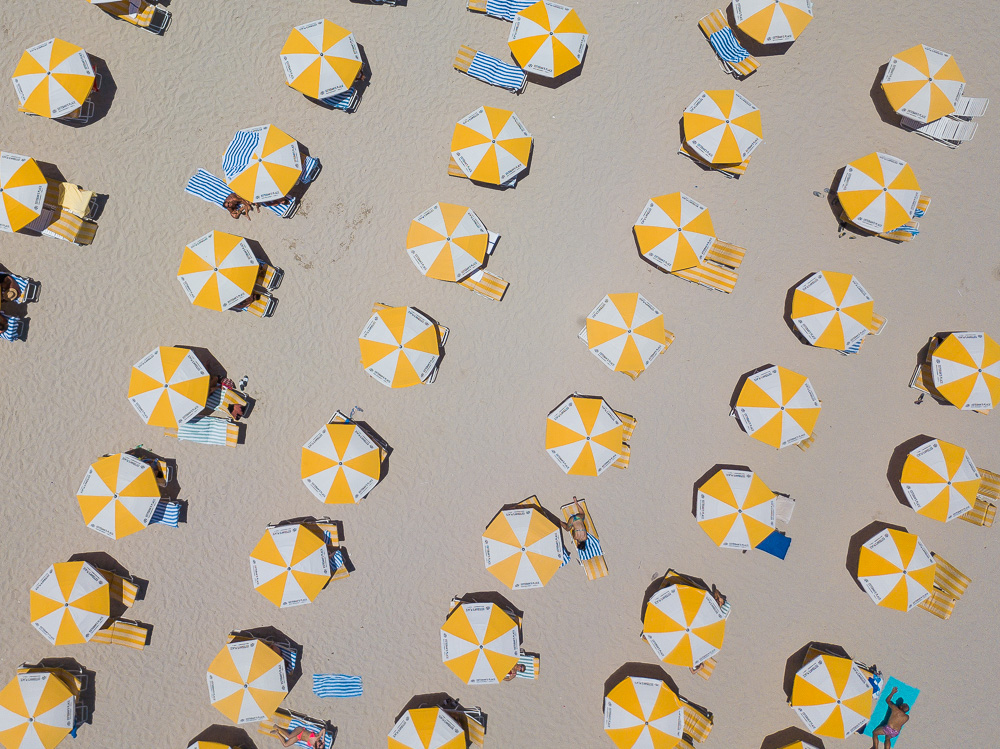 Save
Save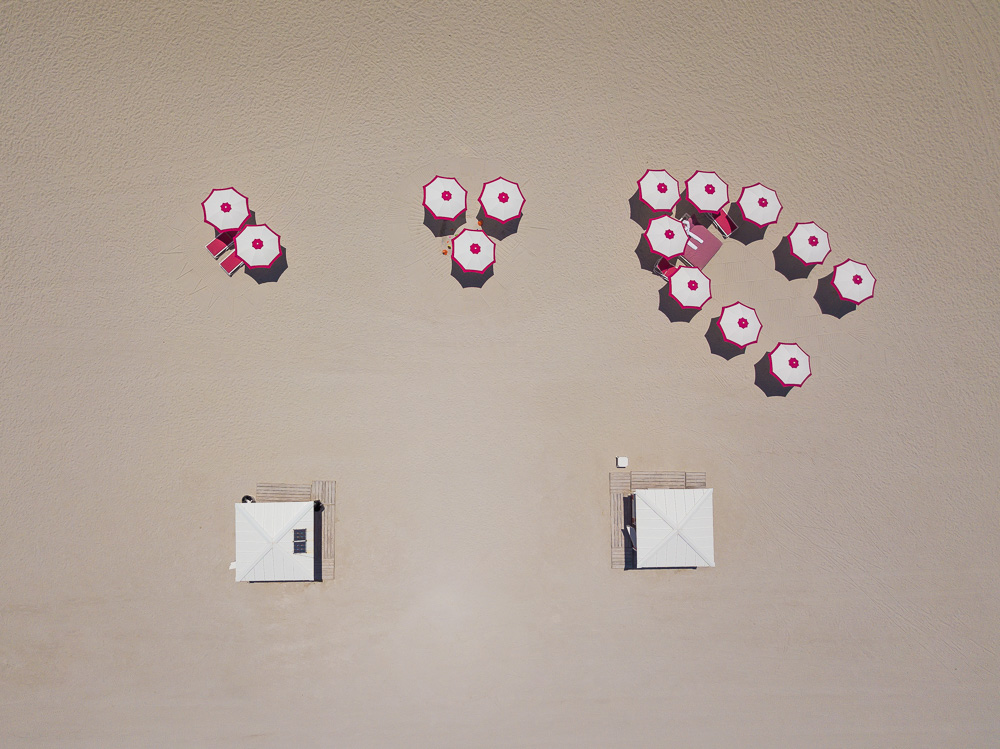 Save
Save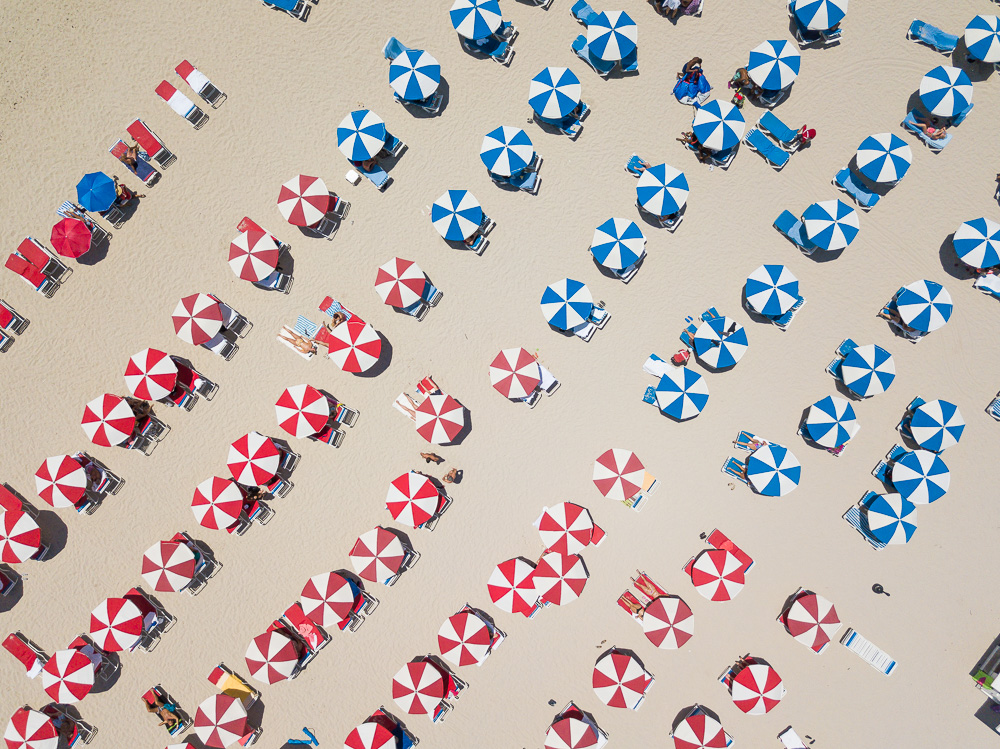 Save
Save Save
Save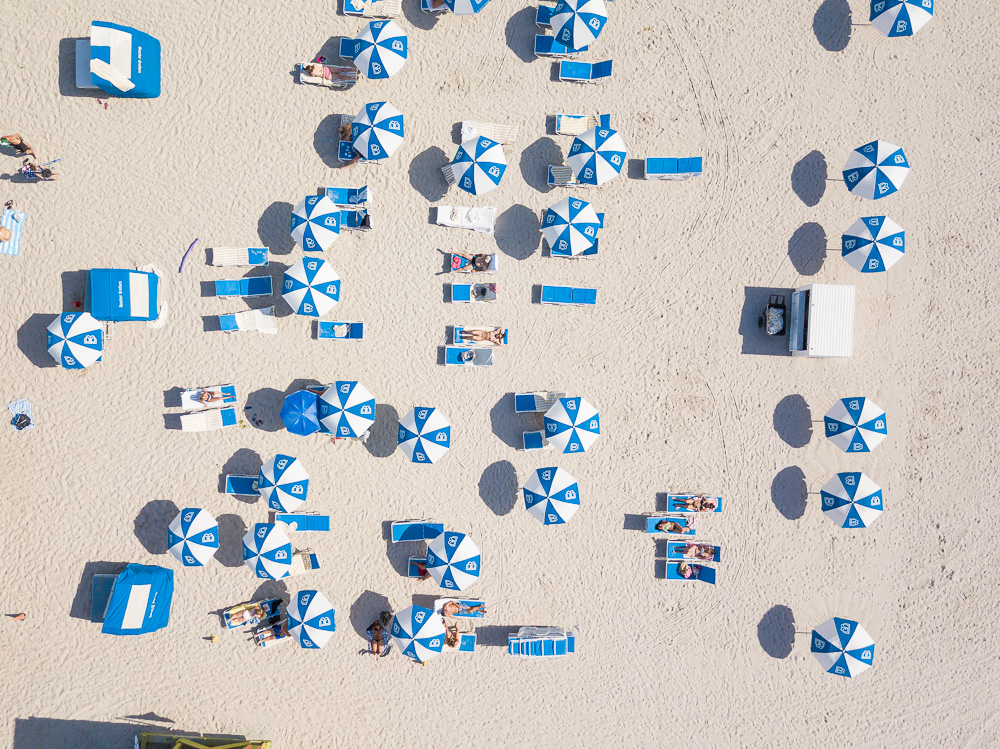 Save
Save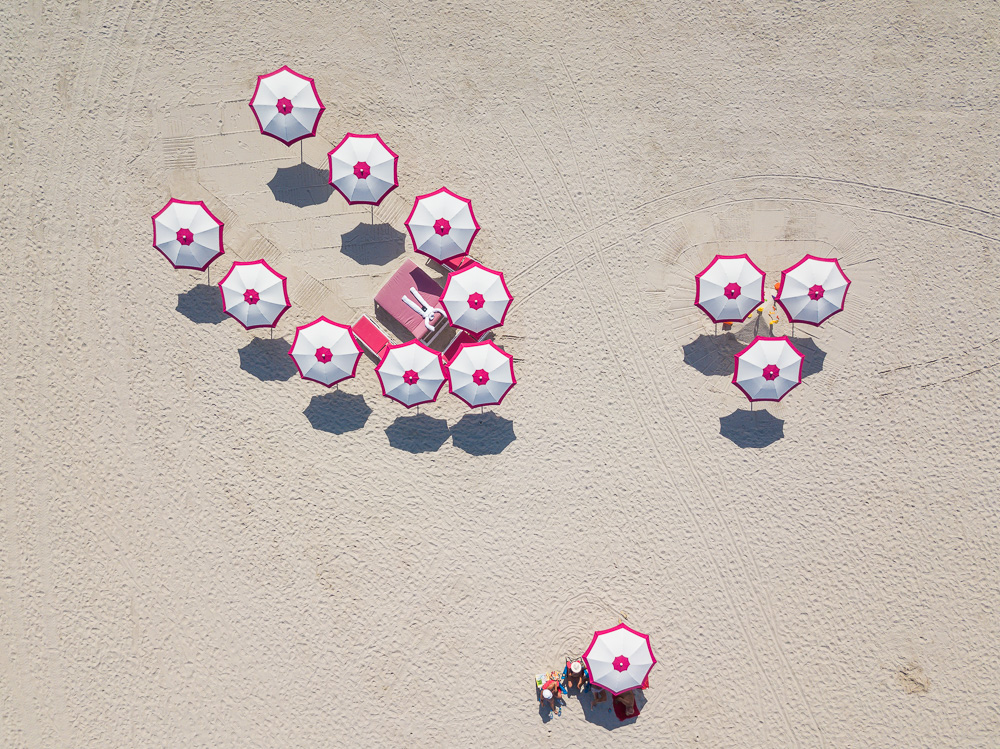 Save
Save Save
Save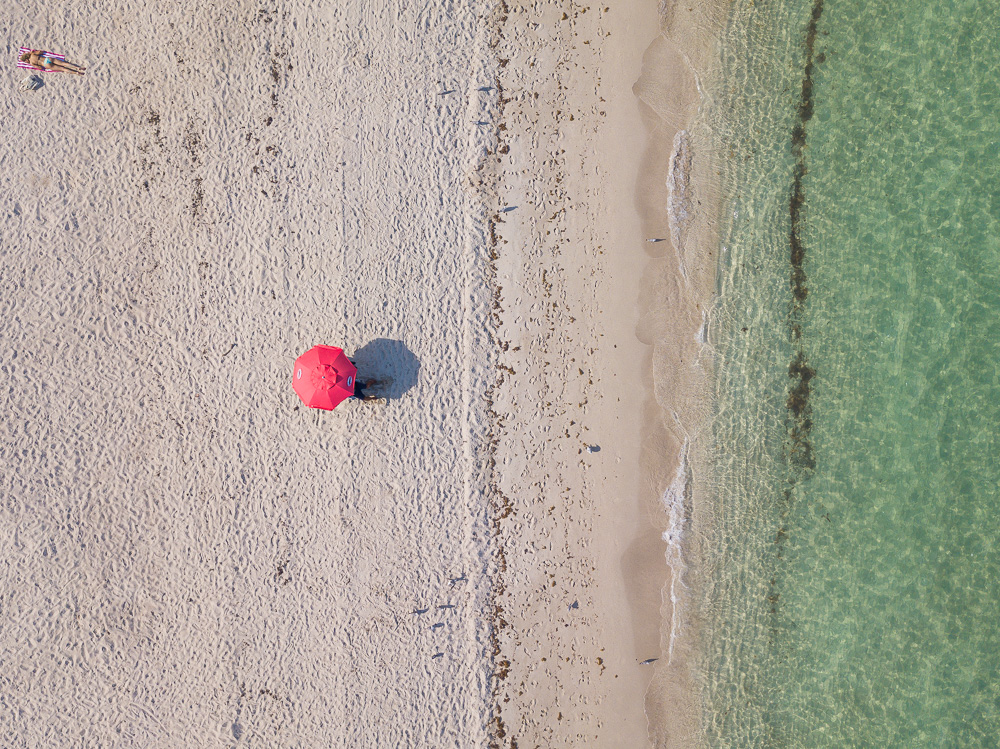 Save
Save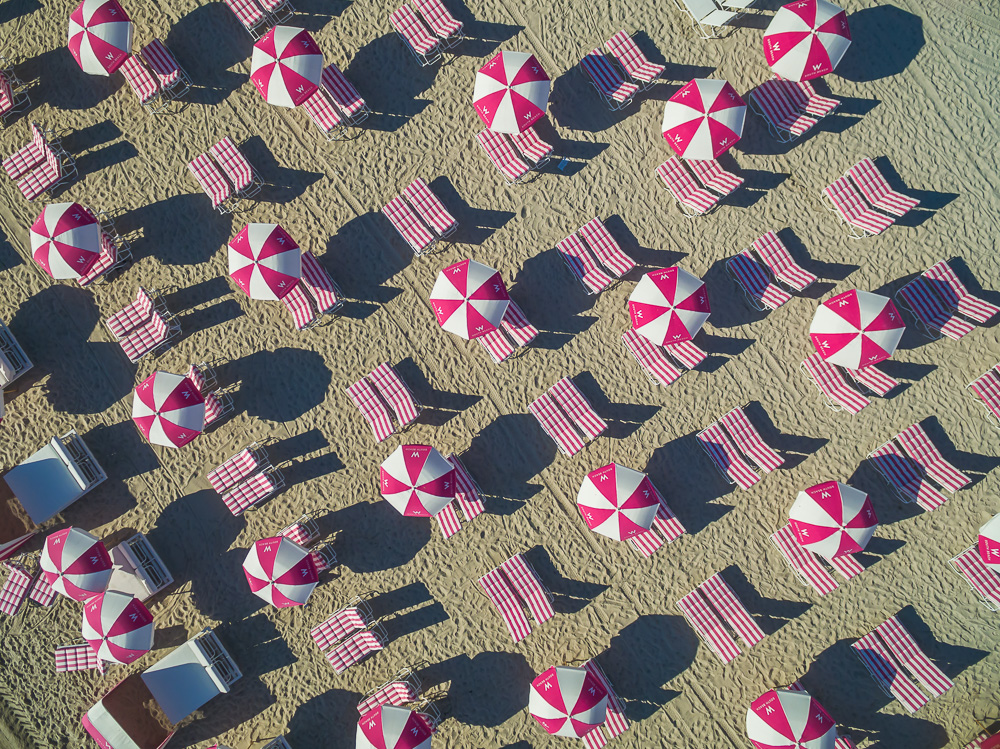 Save
Save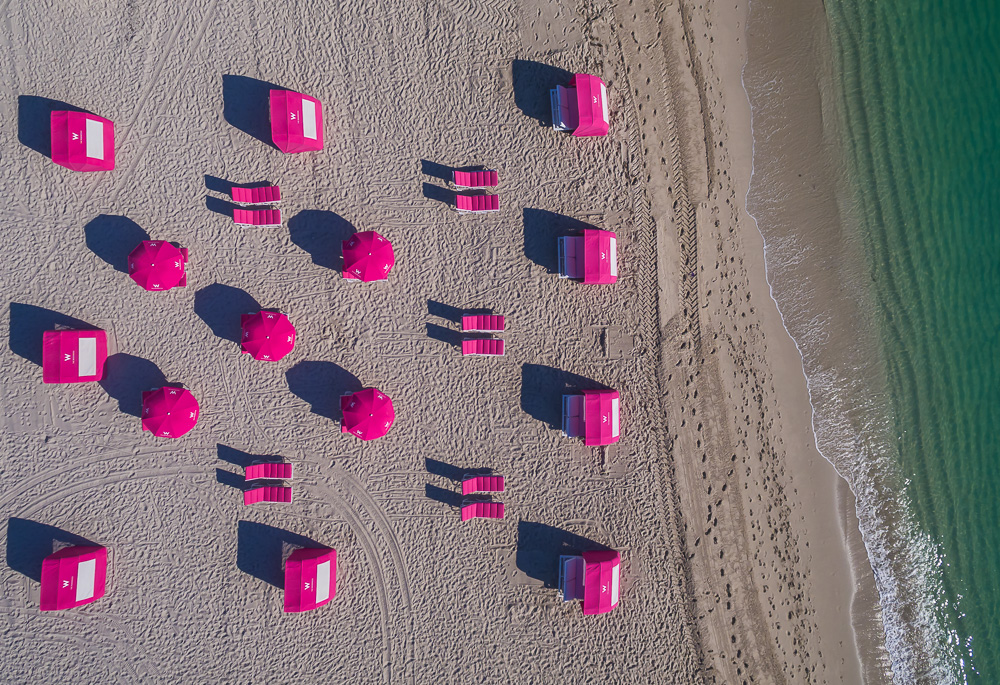 Save
Save Save
SavePattern photography FAQ
What is pattern photography?
It uses repeating shapes, colors, spacing, or textures as an important part of the composition. The repetition can be strict or irregular.
Do I need a drone to photograph patterns?
No. Tiles, empty chairs, architecture, and arranged objects offer patterns at ground level. Choose a safe and permitted viewpoint.
Why include a break in the pattern?
An exception can create a clear subject within a repeating field. It should support the composition rather than overwhelm it.
Should I remove all empty space?
No. Empty space can emphasize scale, separation, and color. Keep it when it helps the arrangement and check it for distractions.
Can I repeat the flights shown by an old photo?
No. An old photograph does not establish current flight permission, airspace authorization, or safe conditions. Verify the specific operation before flying.
Want to go further? The ShutYourAperture Academy’s Color Theory for Photographers (6 modules, 24+ lessons) is built to help you see in color and shoot with intention.
Gear for pattern photography
Start with your current camera and a safe viewpoint. These are comparison searches, not promises of stock, price, or compatibility. Check the exact product before buying.
Straps and camera bags: verify load capacity, fit, and room for the complete kit. Compare on Amazon | Compare on B&H
For more work on the photograph itself, visit Shut Your Aperture Academy.
Affiliate disclosure: As an Amazon Associate I earn from qualifying purchases. Purchases through Amazon and B&H links may earn a commission at no extra cost to you.


