The concrete jungle is a living, breathing entity. To the untrained eye, it’s just a chaotic mess of traffic, grey walls, and hurried commuters. But to us, dear hobbyists, the city is an infinite canvas. Every corner turned is a new brushstroke, every flickering streetlight a potential masterpiece. Street photography is more than just clicking a button; it is a stoic observation of the human condition, an attempt to capture the ephemeral beauty of a world that never stops moving.
I’ve spent countless hours wandering through alleyways and boulevards, from the neon-soaked streets of Tokyo to the sun-drenched plazas of Spain. If you’ve been feeling like your portfolio is hitting a plateau, it’s time to shake things up. We aren't just taking pictures; we are documenting the intrinsic pulse of life.
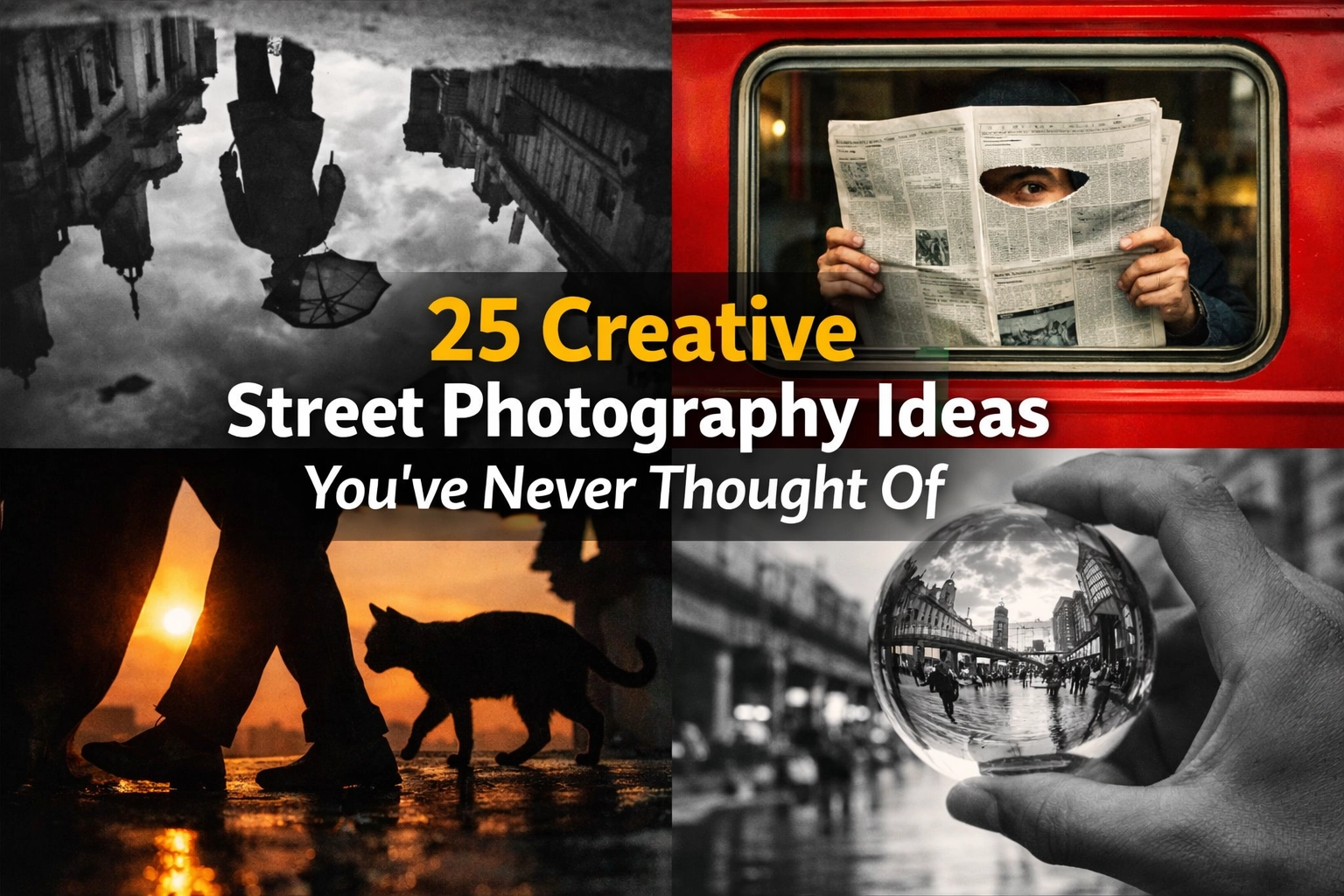
Now that we’ve delved into the philosophy of the craft, it’s time to get down to the nitty-gritty. Here are 25 creative street photography ideas to help you see the world through a brand-new lens.
Luminous Light and Shadow
Light is our primary paintbrush. Without it, the canvas remains dark and void. In street photography, the way the sun dances with the architecture creates a drama that no studio setup could ever replicate.
1. Chasing Chiaroscuro
Look for high-contrast environments where the light is harsh and the shadows are deep. Position yourself where the sun creates a "spotlight" on the sidewalk. Wait for a subject to walk into that pool of light, leaving the rest of the frame in total darkness. This creates a sense of mystery and reverence for the subject.
2. Silhouetted Strangers
Find a bright background: a sunset, a backlit shop window, or a bright neon sign: and underexpose your shot. This turns your subjects into anonymous, black shapes. It’s a fantastic way to tell a story without revealing a face, focusing instead on the gesture and form of the person. If you're looking for more inspiration on capturing light, check out ProShoot for some incredible gear setups.
3. The 'Light Fishing' Technique
I have tried every method of hunting for shots, but "fishing" is often the most rewarding. Find a beautiful patch of light, set your composition, and stay there. Let the world come to you. It requires a bit of a stoic mindset, but when that perfect subject walks into your frame, it’s pure magic.
4. Shadow Puppetry
Sometimes, the shadow is more interesting than the person casting it. Try photographing just the long, distorted shadows stretching across a brick wall or a cobblestone street. It adds an ethereal quality to your work that feels almost like a dream.
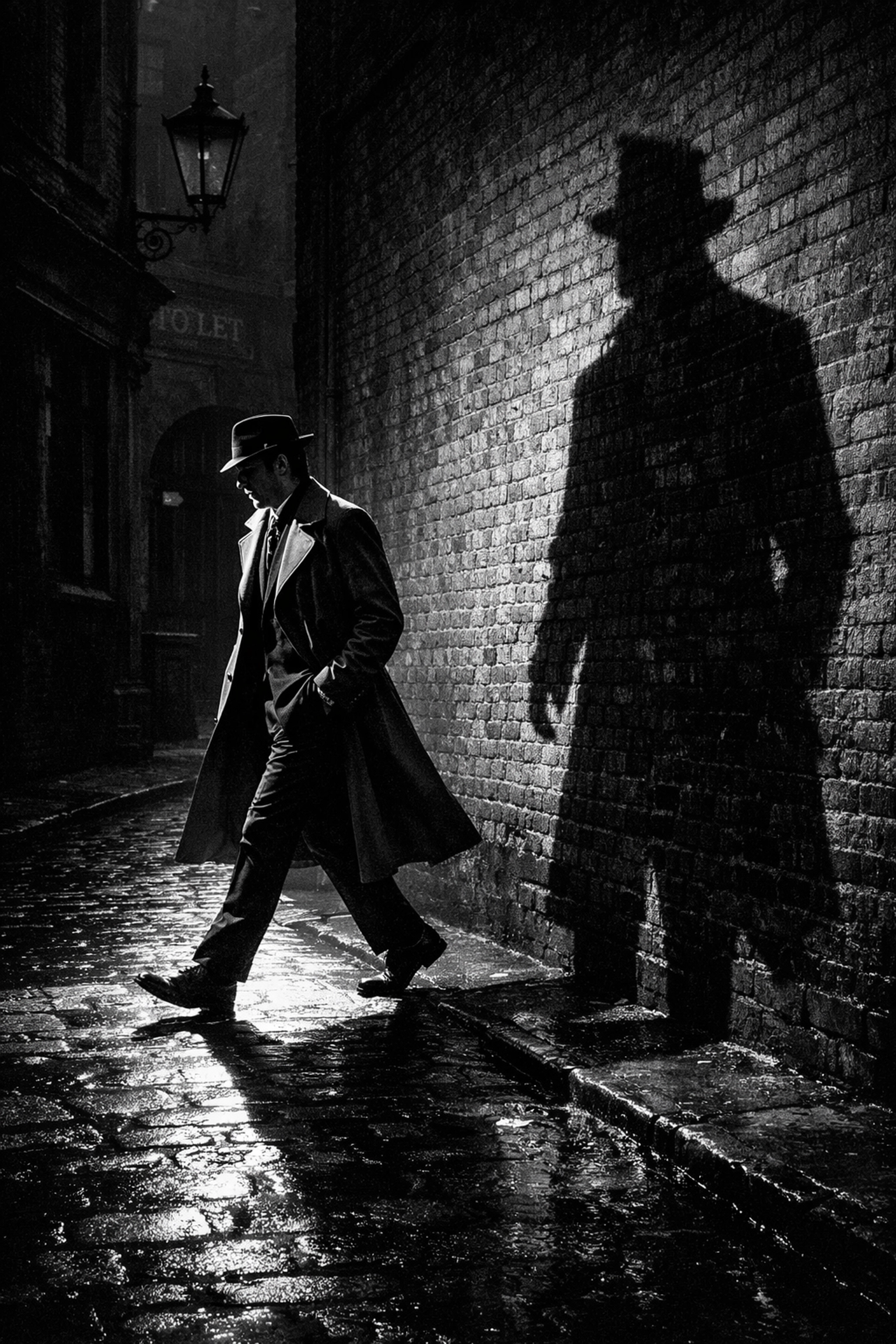
Alt text: A dramatic black and white street photograph showing a long shadow of a person walking across a textured city wall during golden hour.
5. Neon Dreams
Nighttime in the city is a playground of color. Use the vibrant glows of red and blue neon signs to illuminate your subjects. This is where your camera becomes a tool for capturing the "noir" vibe of urban life. For those interested in high-dynamic-range techniques for these tricky lighting situations, my HDR tutorial is a game-changer.
Reflections and Urban Mirrors
The world isn't always what it seems. By looking into reflections, you can create layers of reality that challenge the viewer’s perspective.
6. Puddle Portals
After a rainstorm, the city transforms. Every puddle becomes a mirror. Flip your camera upside down and get as close to the water as possible. Capture the reflection of the buildings and the people walking by. It creates an upside-down world that is absolutely captivating. You can see some of my favorite reflective prints over at Edin Fine Art.
7. Storefront Stories
Glass windows offer a unique opportunity to blend two worlds: the interior of the shop and the exterior street life. By focusing on the reflection on the glass, you can create a double-exposure effect that looks sophisticated and intentional.
8. Rainy Day Radiance
Don't hide when the clouds gather! Rain brings out the best in street photography. The streets become glossy, the lights blur, and people carry colorful umbrellas. These moments are ephemeral, lasting only as long as the storm, so seize these moments!
9. Chrome Chronicles
Modern cities are full of reflective surfaces: polished cars, stainless steel sculptures, and glass skyscrapers. Use these warped surfaces to create abstract versions of the street. If you enjoy the more artistic side of photography, you’ll love the abstract category on our site.
10. Sunglasses Spectacles
This is a fun, close-up idea. If you see someone wearing mirrored sunglasses, ask (or capture candidly) if you can get a shot of the city reflected in their lenses. It’s a "miniature" street scene within a portrait.
The Human Element
People are the heart of the street, but you don't always have to show their faces to tell their stories.
11. The Anonymous Back
If you’re feeling shy about street photography, start by shooting people from behind. It takes the pressure off "confronting" a subject. Look for interesting textures in their clothing or a unique silhouette against a grand background. You can find more tips on professional street setups at Edin Studios.
12. Hands at Work
A person's hands can tell a thousand stories. The weathered hands of a street vendor, a couple holding hands, or someone typing on a phone. Zoom in on these details to create an intimate portrait of daily life.
13. Feet on the Fleet
Set your camera to a low angle and focus on the footwear. A pair of scuffed boots next to shiny high heels tells a story of class, destination, and pace. It’s a "ground-up" view of the world that most people ignore.
14. Motion Blur Magic
The city is fast. Sometimes, freezing the action doesn't do it justice. Use a slower shutter speed to let the subjects blur as they walk past a static background. This emphasizes the frantic energy of urban existence. For more on capturing time in motion, take a look at our Dubai timelapse project.
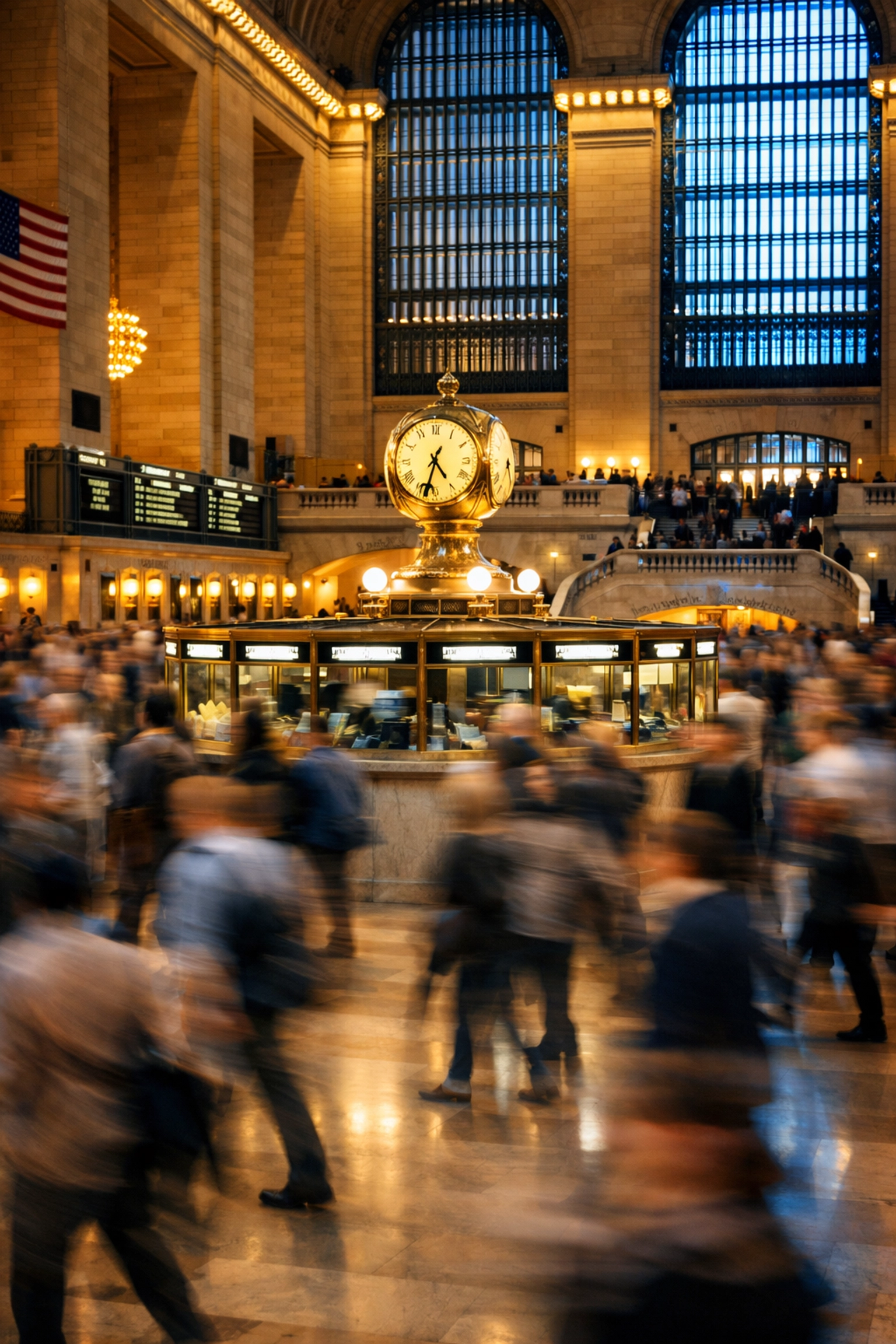
Alt text: A long exposure street photograph showing the motion blur of people walking through a busy train station while the architecture remains sharp.
15. The Stoic Statue
In the middle of the rush, you’ll often find someone standing perfectly still: a street performer, someone lost in thought, or a person waiting for a bus. Use them as an anchor in your composition while the rest of the world blurs around them.
Architectural Accents and Geometry
The "bones" of the city provide the structure for our images. Use the lines and shapes to lead the eye.
16. Juxtaposition Junctions
Look for the old meeting the new. A crumbling brick wall next to a sleek glass skyscraper, or a vintage bike leaning against a modern electric car. These contrasts highlight the evolution of our environment.
17. Minimalist Monoliths
Sometimes, less is more. Find a single subject: a lone person on a vast staircase or one bird on a wire: and use plenty of negative space. This creates a sense of isolation and peace amidst the noise. If you're a Nikon user like me, the Nikon D850 is an unsung hero for capturing this kind of sharp, high-resolution detail.
18. Texture Travels
Get close to the walls. Peeling paint, rusted metal, and mossy bricks are the "skin" of the city. These textures add a tactile dimension to your photos. Check out Photo Guides for more on how to capture fine detail in urban environments.
19. Geometric Grids
Architecture is full of patterns. Look for repeating windows, staircases, or floor tiles. Breaking these patterns with a human subject creates a powerful focal point.
20. Color Blocking
Find a wall that is one solid, vibrant color. Wait for someone wearing a contrasting color to walk past. For example, a person in a yellow jacket walking past a blue wall. It’s simple, punchy, and incredibly effective for social media.
Experimental Perspectives
To get shots "you've never thought of," you have to move your body in ways you've never moved before.
21. The Low-Down Look
Don't be afraid to get dirty. Place your camera on the actual pavement. This "worm's eye view" makes buildings look like giants and gives a heroic scale to everyday people.
22. Bird’s Eye Brilliance
Find a balcony, a rooftop, or a pedestrian bridge. Shooting straight down on the street turns people into graphic elements and reveals patterns in traffic that you can't see from the ground. It’s an ethereal perspective that detaches the viewer from the scene.
23. Light Trail Labyrinths
When the sun goes down, grab a tripod. Capture the long trails of red and white lights from passing cars. This turns the street into a flowing river of energy. If you want to see how we handle high-end urban visuals, explore our work on Tiny Sydney.
24. Frame within a Frame
Use elements of the environment to frame your subject. An archway, a gap between two parked cars, or even the space between someone’s arm and torso. This adds depth and directs the viewer’s eye exactly where you want it to go.
25. The 'Groundhog Day' Project
Pick one street corner and visit it every day for a week at different times. Notice how the light changes, how the "cast of characters" shifts, and how the mood evolves. It’s a masterclass in observation and will teach you more about street photography ideas than any gear upgrade ever could. For more structured learning, dive into our tutorials category.
Venture Forth!
Street photography is a journey without a destination. It is a constant practice of presence and a deep reverence for the mundane. Nothing compares to the rush of capturing a "decisive moment" that will never happen again in exactly the same way.
I’ve explored many paths in this industry, from nature photography to complex biolapses, but the street remains my most consistent teacher. It is raw, honest, and infinitely forgiving if you approach it with an open heart and a quick shutter finger.
Fellow enthusiasts, the city is calling. Grab your gear: be it a professional rig or just your smartphone: and start looking for the extraordinary in the ordinary. Don't worry about being perfect; worry about being present.
If you have some killer street shots you've recently taken, I’d love to see them! Head over to our submissions page and share your vision with our community.
Now, I want to hear from you. Which of these ideas are you going to try first? Do you have a "secret" street photography tip that I missed? Drop me a line below in the comments, and let's keep the conversation going.
Stay creative, keep shooting, and remember to always shut your aperture when the moment demands it! For more daily inspiration, you can always visit Edin Chavez’s blog.