Let’s be real for a second. You probably have a camera that’s smarter than the computer that landed humans on the moon. You might even have a bag full of lenses that cost more than your first car. But your photos? They still feel a little… "meh."
You’re not alone. Most photographers hit a plateau where they know how to push the button, but they don't know how to make a statement. They think the answer is a new piece of gear, but the secret isn't in the box: it’s in the brain.
The fastest way to bridge the gap between where you are and where you want to be isn't by spending five years in art school. It’s through daily photography tutorials. At Shut Your Aperture, we believe that consistent, bite-sized learning is the ultimate "cheat code" to mastering this craft. Here is why daily tutorials are your secret weapon and how you can use them to dominate the field.
The Myth of the Natural-Born Photographer
We’ve all seen those photographers who seem to walk into a room and instantly capture a masterpiece. We call them "naturals." But here is a little secret: there is no such thing. Every great photographer you admire: from the legends like Steve McCurry to the modern masters: spent thousands of hours failing before they succeeded.
The problem with trying to learn on your own is that you don't know what you don't know. You might be struggling with blurry images and think you need a faster lens, when in reality, you just need to understand the relationship between shutter speed and focal length. Daily tutorials act as a roadmap, showing you the shortcuts that took the pros decades to figure out.

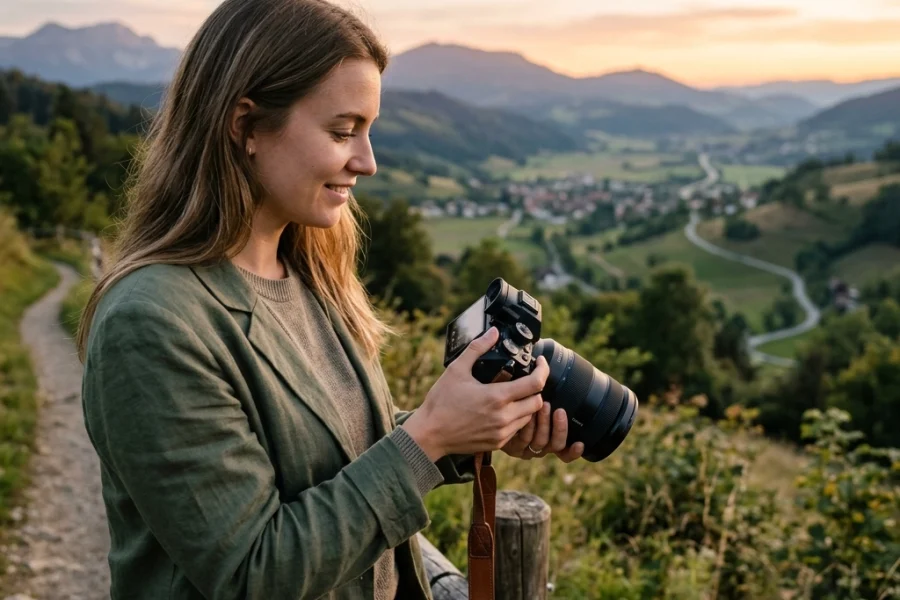
SEO Alt Text: A photographer standing in a neon-lit street during a rainstorm, holding a high-end mirrorless camera and looking at the screen with an intense focus on composition.
How to Use Manual Mode Camera: The First Pillar of Mastery
If you are still shooting in "Auto," you aren't a photographer; you're a camera operator for a robot. To truly unlock your potential, you have to learn how to use manual mode camera. This is usually the first hurdle that stops people from getting better, but with a daily tutorial approach, you can master it in a week.
Manual mode is all about balancing the Exposure Triangle: Aperture, Shutter Speed, and ISO.
- Aperture: This controls your depth of field. Want that blurry background (bokeh) for a portrait? Open it up (low f-number). Want everything sharp in a landscape? Close it down (high f-number).
- Shutter Speed: This controls motion. Want to freeze a bird in flight? Use a fast speed (1/1000s). Want to blur a waterfall? Use a slow speed (1/2s) and a tripod.
- ISO: This is your sensor's sensitivity to light. Keep it low (100) for clean shots in daylight. Raise it (3200+) when it's dark, but watch out for digital noise.
By watching a 5-minute tutorial on just one of these elements every day and then going out to practice it, you build muscle memory. Soon, you won't even have to think about the settings. You’ll just feel them. If you want to dive deeper into these basics, check out our guide on how to take better photos.
Why "Daily" is the Key
The human brain is terrible at retaining information it doesn't use. If you go to a weekend workshop once a year, you’ll be inspired for two days and then forget 90% of what you learned by Tuesday.
Daily tutorials work because of micro-learning. When you consume a small, focused tutorial every morning: maybe it’s about Steve McCurry composition tips or how to capture nature and wildlife: your brain stays in "photography mode." You start seeing the world in frames. You notice the way light hits a coffee cup or how the leading lines of a sidewalk draw your eye.
This consistency builds a creative momentum that gear simply can't buy. It’s the difference between being a hobbyist and being a professional.

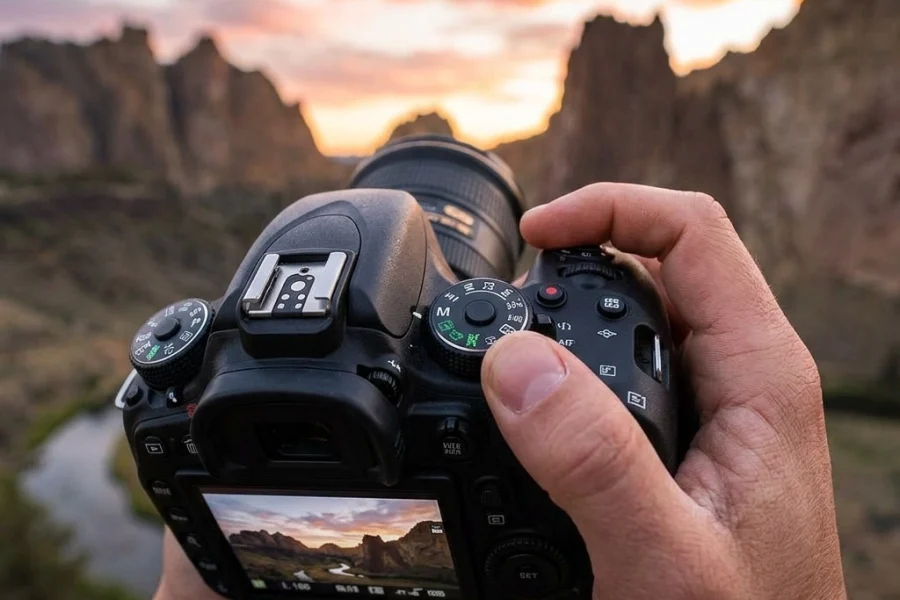
SEO Alt Text: Close-up shot of a camera lens showing the internal glass elements reflecting a sunset, symbolizing the technical and artistic side of photography.
Mastering Composition: Beyond the Rule of Thirds
Once you’ve tackled the technical side, the next step is composition. This is where you move from taking a picture of something to creating a piece of art. Most beginners learn the "Rule of Thirds" and stop there. But there is so much more.
Daily tutorials can introduce you to advanced concepts like:
- Leading Lines: Using roads, fences, or shadows to lead the viewer's eye.
- Frame within a Frame: Using a window or a doorway to add depth.
- Symmetry and Patterns: Finding order in the chaos of the world.
- Negative Space: Understanding that what you leave out is just as important as what you put in.
If you’re looking for inspiration on how to push your compositions further, look at the work of others. Check out this shot of the day by Pongtawat Photography to see how pros use lighting and framing to tell a story.
The Power of Post-Processing
Let’s address the elephant in the room: editing. Some people think editing is "cheating." Those people are wrong. Back in the day, photographers spent hours in the darkroom "dodging and burning" their prints. Today, our darkroom is on our computer.
A daily tutorial on post-processing can change your life. You’ll learn how to recover shadows, color grade for a specific mood, and sharpen your images without making them look crunchy. One of the best tools for this is Luminar. It uses AI to handle the tedious stuff, allowing you to focus on the creative vision. Whether you are dealing with a polar vortex or a bright beach day, knowing how to edit is what gives your work a "signature look."

SEO Alt Text: A split-screen comparison of a raw landscape photo versus a post-processed version with vibrant colors and enhanced lighting, showing the power of editing.
Expanding Your Horizons
One of the best things about following a stream of photography tutorials is that it forces you out of your comfort zone. If you only shoot portraits, you might never think to try long exposure folk dance photography or aerial photos.
By exposing yourself to different genres daily, you pick up techniques that you can apply to your own niche. A lighting trick used in sexy light-hearted surrealism might be exactly what your corporate headshots need to stand out.
How to Start Your Daily Practice
If you’re ready to get serious about being the best, here is a simple 30-day plan:
- Morning Tutorial: Spend 10 minutes watching a video or reading a blog post on a specific technique. (Pro tip: Bookmark PhotoGuides.org for some excellent deep dives).
- The One-Hour Challenge: Go out and shoot for at least one hour using only that technique. If the tutorial was about "bokeh," spend the hour finding things to blur.
- Review and Edit: Bring your photos into your editor. If you’re stuck, watch a tutorial on how to process that specific type of shot.
- Repeat: Do this every day. No excuses.

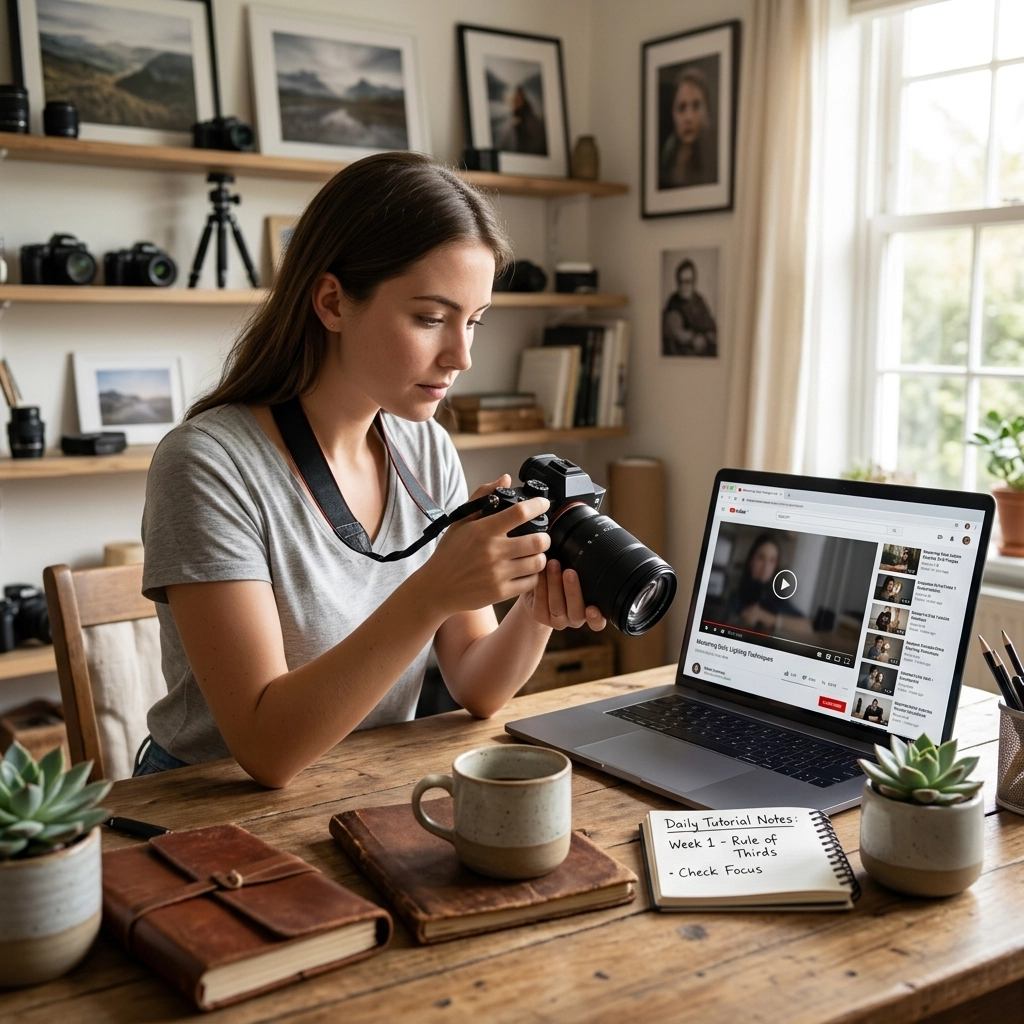
SEO Alt Text: An organized desk with a laptop, a camera, and a notebook filled with photography sketches and notes, representing a dedicated learning space.
Why Shut Your Aperture is Your Go-To Resource
We didn't build Shut Your Aperture just to sell gear reviews. We built it to be the number one photography school online. We want to provide the "how-to" that actually makes a difference in your portfolio. Whether you want to learn how to become a freelance photographer or you just want to know the art of taking the perfect candid photos, we’ve got the tutorials to get you there.
We also believe in looking at the industry as a whole. Sometimes that means looking at the most expensive photographs ever sold to understand value, or checking out the latest Sony deals so you don't overpay for your next body. For more professional insights, you can always visit blog.edinchavez.com or check out the fine art side of things at www.edinfineart.com.
The Compound Effect of Learning
If you improve by just 1% every day, by the end of the year, you will be 37 times better than when you started. That is the power of daily tutorials. You aren't just learning a skill; you are building a lifestyle.
Don't wait for the "perfect" light or the "perfect" camera. The best camera is the one you have, and the best time to learn is right now. Go grab your gear, put it in manual mode, and go make something worth looking at.

SEO Alt Text: A silhouette of a photographer standing on a mountain peak at sunrise, holding a tripod and camera, capturing the vast landscape below.
Final Thoughts on Mastery
Photography is a journey with no finish line. There will always be a new technique to master, a new piece of technology like the DJI Mavic Air to learn, or a new way to see the world. But if you commit to the "secret weapon" of daily tutorials, you’ll find that the journey is a lot more fun when you actually know what you’re doing.
Stop guessing. Start learning. Shut your aperture and open your mind. Your best photo is still out there waiting to be taken( you just need the skills to capture it.)