For a tighter post-processing workflow that matches the look discussed below, see our Lightroom presets guide.
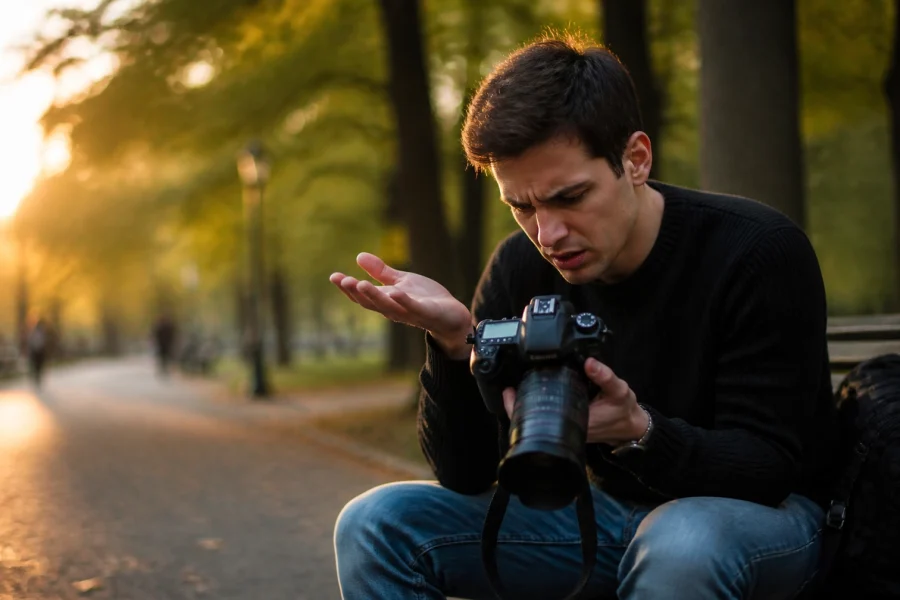
Let’s be real for a second. If you’ve picked up a camera or opened a laptop in the last few years, you’ve heard the buzz. It’s loud, it’s constant, and it’s a little bit scary. I’m talking about AI.
A few years ago, AI in photography was a novelty. It was that weird tool that could swap a sky or make a blurry face look slightly less blurry. Fast forward to 2026, and we aren't just talking about it anymore; we’re living in it. AI isn't just a "feature" in a menu; it’s the engine under the hood of almost every piece of software we use.
If you’re still holding out, thinking that "real photographers don't use AI," I hate to break it to you, but the train has left the station. And honestly? The view from the train is pretty spectacular. Here is why everyone: from hobbyists to the pros: is talking about AI editing, and why it’s time for you to hop on board.
The Death of the "Grind"
Remember the days of sitting in a dark room for eight hours, clicking a mouse until your wrist developed a permanent twitch just to mask out some stray hairs or remove a telephone pole? Those days are dead.
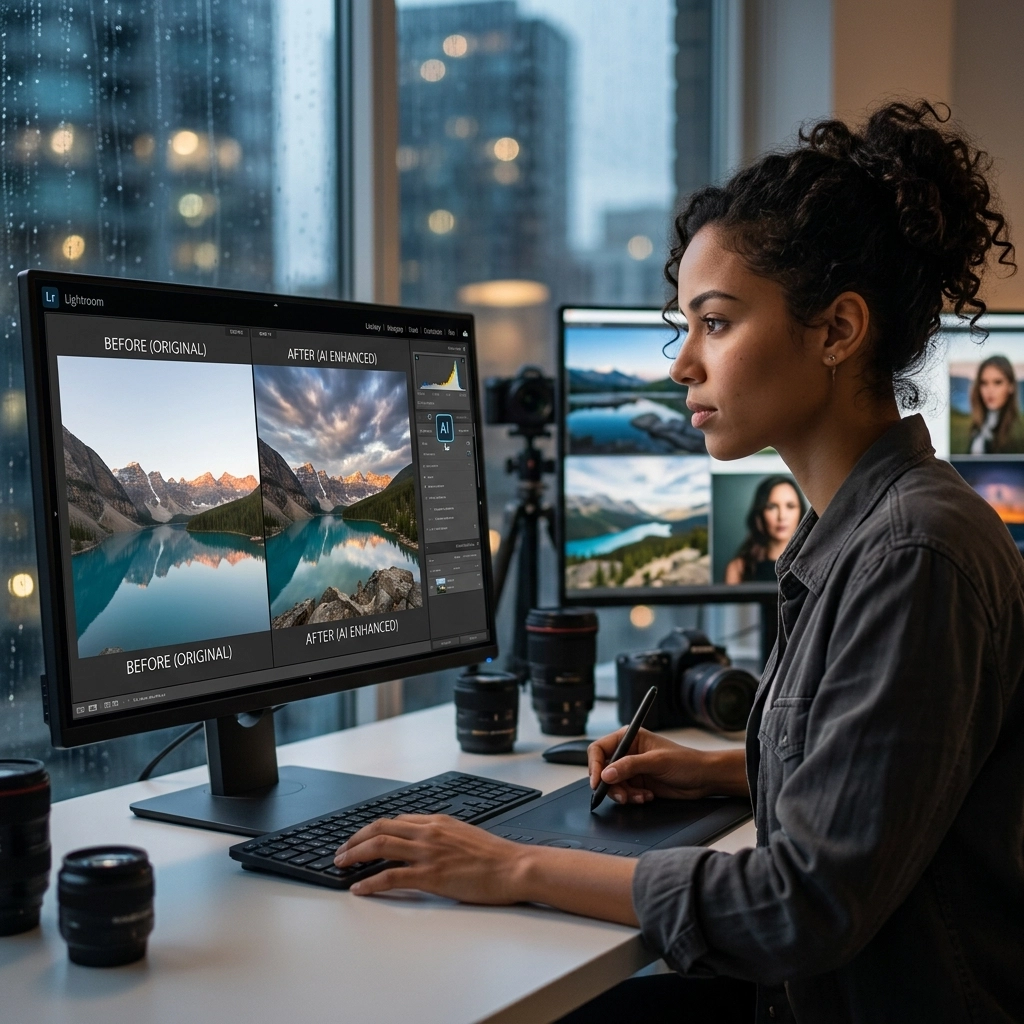
AI editing has turned the "grind" of post-processing into a series of intentional clicks. We are moving away from the era of manual labor and entering the era of creative direction. Instead of spending 20 minutes creating a perfect mask for a subject, tools like Adobe Photoshop and Luminar do it in roughly 1.5 seconds.
This isn't just about being lazy. It’s about efficiency. If you can edit a wedding gallery in two hours instead of twelve, you’ve just gained a full day of your life back. That’s a day you could spend shooting, marketing, or, I don't know, sleeping. For professional insights on how to streamline your process, check out our ultimate guide to photography tutorials.
Generative Fill: The Ultimate "What If?"
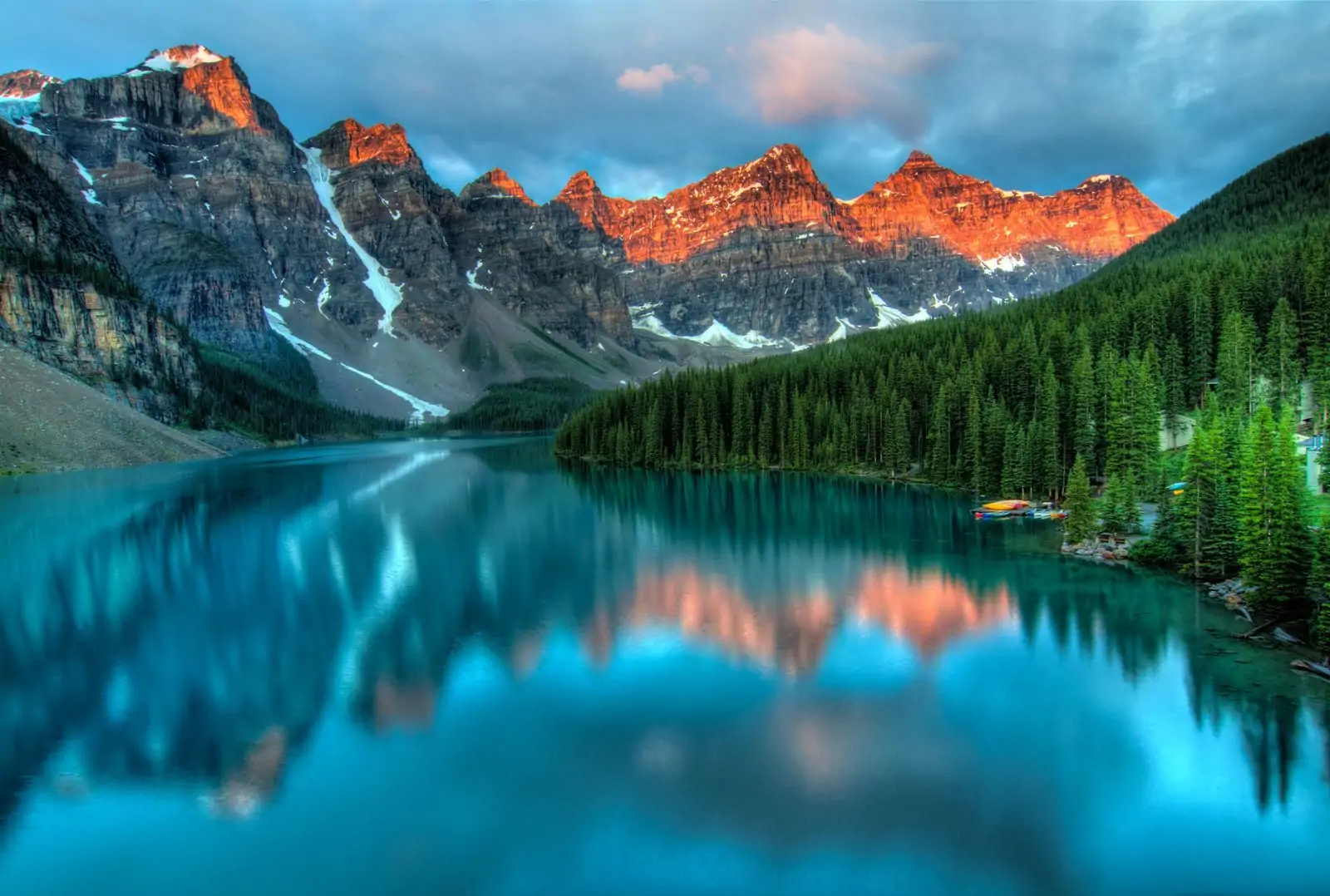
The biggest game-changer in the last couple of years has been Generative Fill. We’ve all been there: you take a stunning landscape shot, but there’s a trash can in the corner, or the composition is just slightly too tight on the left.
In the old days, you’d either crop it (losing resolution) or spend an hour with the clone stamp tool praying nobody noticed the repeating patterns. Now? You highlight the area, type "remove trash can" or "extend field," and the AI looks at the rest of your image, understands the lighting, the texture, and the depth, and creates pixels out of thin air.
It feels like magic because, technically, it kind of is. It allows us to fix mistakes that would have previously ruined a shot. It allows us to manipulate vistas and perspectives in ways that were once reserved for high-budget movie studios.
The Quality Leap: Rescuing the "Unusable"
We’ve all had those shots. The light was perfect, the expression was incredible, but you bumped your ISO to 12,800 and the image looks like it was taken through a bowl of oatmeal. Or maybe you missed the focus by just a hair.
AI-powered denoise and sharpening tools (like those found in Luminar and Topaz) have essentially moved the goalposts of what "usable" means. We are now seeing "Super Resolution" tools that can take a low-res crop and upscale it into a 40-megapixel file that looks native.
This has massive implications for sports and wildlife photographers who often have to crop heavily. It also means that older cameras: those "vintage" DSLRs from 2015: suddenly have a second lease on life because the software can compensate for their sensor limitations.
Real Estate and the AI Revolution
If there is one niche that has been completely flipped on its head by AI, it’s real estate. If you’ve ever tried to shoot a dark living room with a bright window, you know the struggle of the role of luminosity in real estate photography.
AI now handles HDR merging, vertical alignment, and even virtual staging with terrifying accuracy. You can take a photo of an empty, depressing basement and, with a few prompts, turn it into a cozy home theater. This isn't just "editing"; it’s marketing. Real estate agents are realizing that photography is essential for real estate marketing, and AI is the tool making that marketing more effective and affordable.
We are even seeing cinematic techniques transform property showcases, where AI helps create fly-through videos from static photos. It’s a brave new world for property shooters.
The "Art" Debate: Is It Still Photography?
Here is where the comments section usually catches fire. "If the AI generated the sky, did you really take the photo?"
It’s a fair question. Photography has always been a blend of tech and soul. When the first digital cameras came out, film purists said it wasn't "real" photography. When Photoshop arrived, darkroom enthusiasts said it was "cheating."
Now, we’re looking at icons like Peter Lik and wondering how these technologies influence the "fine art" world. Lik’s work has always pushed the boundaries of what a landscape can look like, often using distinctive elements of real estate photography techniques in nature to create high-impact, ethereal imagery.
AI is just another tool in that belt. If you use AI to enhance the mood of a scene: to create ethereal imagery that elevates a listing: are you a "fake" or are you just a modern artist?
At the end of the day, the viewer doesn't care if you spent six hours masking or six seconds using an AI slider. They care about how the image makes them feel. If you want to dive deeper into the mindset of a master, read about Peter Lik’s creative process.
Why You Should Care (Even If You’re a Purist)
You don't have to use Generative Fill to replace your entire background with a Martian landscape. But you should care about AI because it’s making the boring stuff disappear.
Even the most "purist" landscape photographer can benefit from AI-powered "Dust Removal." Nobody likes cleaning sensor spots. AI recognizes them and zaps them instantly. AI can help with shot composition’s impact on buyer attraction by suggesting better crops based on millions of high-performing images.
If you’re a professional, ignoring AI is a business risk. Your competitors are using these tools to work faster and deliver higher-quality results. If you’re charging $500 for a shoot that takes you 10 hours to edit, and your competitor is doing the same quality work in 2 hours because they’ve mastered Luminar, they are going to win. It’s that simple.
Learning the New Language of Light
We’ve spent decades learning about apertures, shutter speeds, and ISOs. Now, we have to learn a new language: Prompts and Parameters.
The most successful photographers in 2026 are those who treat AI as a partner. They know when to let the AI take the lead (like with noise reduction) and when to keep the reins tight (like with color grading and emotional intent).
If you’re looking to sharpen your skills, I highly recommend checking out Shut Your Aperture. They have some great breakdowns on how the tech is evolving. And for more hands-on tips, our post on mastering photography: 10 essential tips covers the fundamentals that AI can't replace: like vision and timing.
The Economic Impact
The photography industry is shifting. Stock platforms are now paying photographers to "train" their AI models. Companies like Shutterstock and Adobe are creating huge revenue streams by licensing the data: your photos: to help AI get smarter.
While this sounds scary, it also opens up new ways to monetize. We are seeing a rise in "Hybrid Photographers" who offer AI-assisted services like aerial photography simulations or digital environment creation.
The cost of entry for high-end editing has dropped. You no longer need a $5,000 computer and a decade of experience to produce world-class results. You need a decent eye, a basic understanding of the tools, and the willingness to experiment.
Is the Photo Still "The Product"?
Some argue that the photograph is no longer the final product; it’s just the "data input." We take a RAW file, feed it into the AI machine, and tweak it until it matches the vision in our heads.
In some ways, this brings us back to the roots of photography. In the early days, the negative was just a starting point for the print. The "magic" happened in the darkroom. AI is just the digital darkroom on steroids.
The impact of these trends is undeniable. If you look at the impact of Peter Lik on photography trends, you can see how the world craves hyper-real, perfectly polished imagery. AI is the most efficient way to give the people what they want.
Wrapping Your Head Around the Future
AI editing isn't going away. It’s only getting smarter, faster, and more integrated. It’s moving into our cameras (real-time AI subject tracking is already old news) and into our phones.
The best thing you can do right now is play with it. Download a trial of Luminar. Open up the latest version of Photoshop. See what happens when you let the algorithms take a crack at your "unusable" files.
You might find that it doesn't take away your creativity: it unlocks it. By removing the technical barriers, AI allows you to focus on the "why" of your photography instead of the "how."
If you want to stay updated on how professionals are using these tools to create art that sells, head over to blog.edinchavez.com or browse the gallery at edinfineart.com to see what top-tier landscape work looks like in the modern era.
The conversation about AI is loud for a reason. It’s the biggest shift in our industry since the invention of the digital sensor. Don't just watch everyone else talk about it: get in there and start creating.
Whether you’re exploring techniques behind landscape photography or trying to figure out if photography is essential for your marketing, remember that the tool is only as good as the person holding it. AI is a powerful tool, but it still needs your eye to find the beauty in the world.
Skylum’s Luminar Neo runs as a Lightroom plugin and adds AI-powered sky replacement, portrait retouching and noise reduction to your existing workflow. Tagged as affiliate per FTC.