shutyouraperture-20). Buying through these links costs you nothing extra and helps fund our free guides.
If you’ve been hanging around the photography world lately, you know that the DSLR is basically the vinyl record of the camera world, cool, classic, but definitely being overtaken by the digital revolution. Mirrorless cameras are the present and the future. They are smaller, faster, and smarter. But with every brand from Sony to Nikon dropping new models every few months, how do you actually pick one without getting a headache?
Choosing the best mirrorless cameras isn't about finding the one with the most megapixels. It’s about finding the one that fits your hand, your budget, and most importantly, your "vibe." Whether you’re into landscape photography tips or looking for fresh street photography ideas, the gear you carry changes how you see the world.
Let’s break down the world of mirrorless cameras and find the perfect match for your specific style.
Why Mirrorless is Winning
Before we dive into the specific styles, let’s talk about why we’re even having this conversation. A mirrorless camera, as the name suggests, doesn’t have the internal mirror that flips up when you take a picture (like a DSLR).
Because that mirror is gone, the camera can be much thinner and lighter. But the real magic is the Electronic Viewfinder (EVF). When you look through the eyelet, you aren't seeing a reflection; you’re seeing a tiny digital screen that shows you exactly what your photo will look like before you press the shutter. This makes learning how to use manual mode camera settings ten times easier because if you turn your shutter speed up too high, the screen goes dark. No more guessing.
 Save
Save
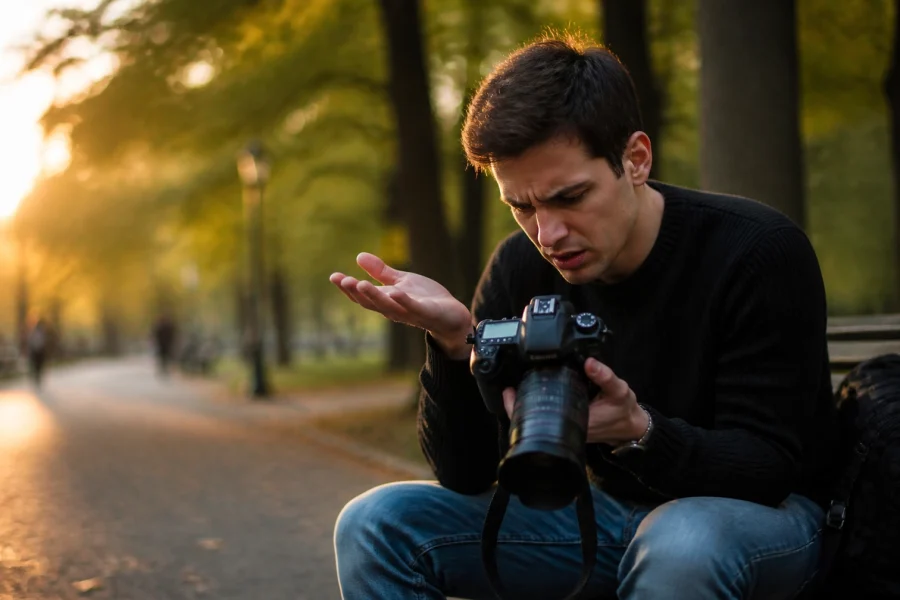
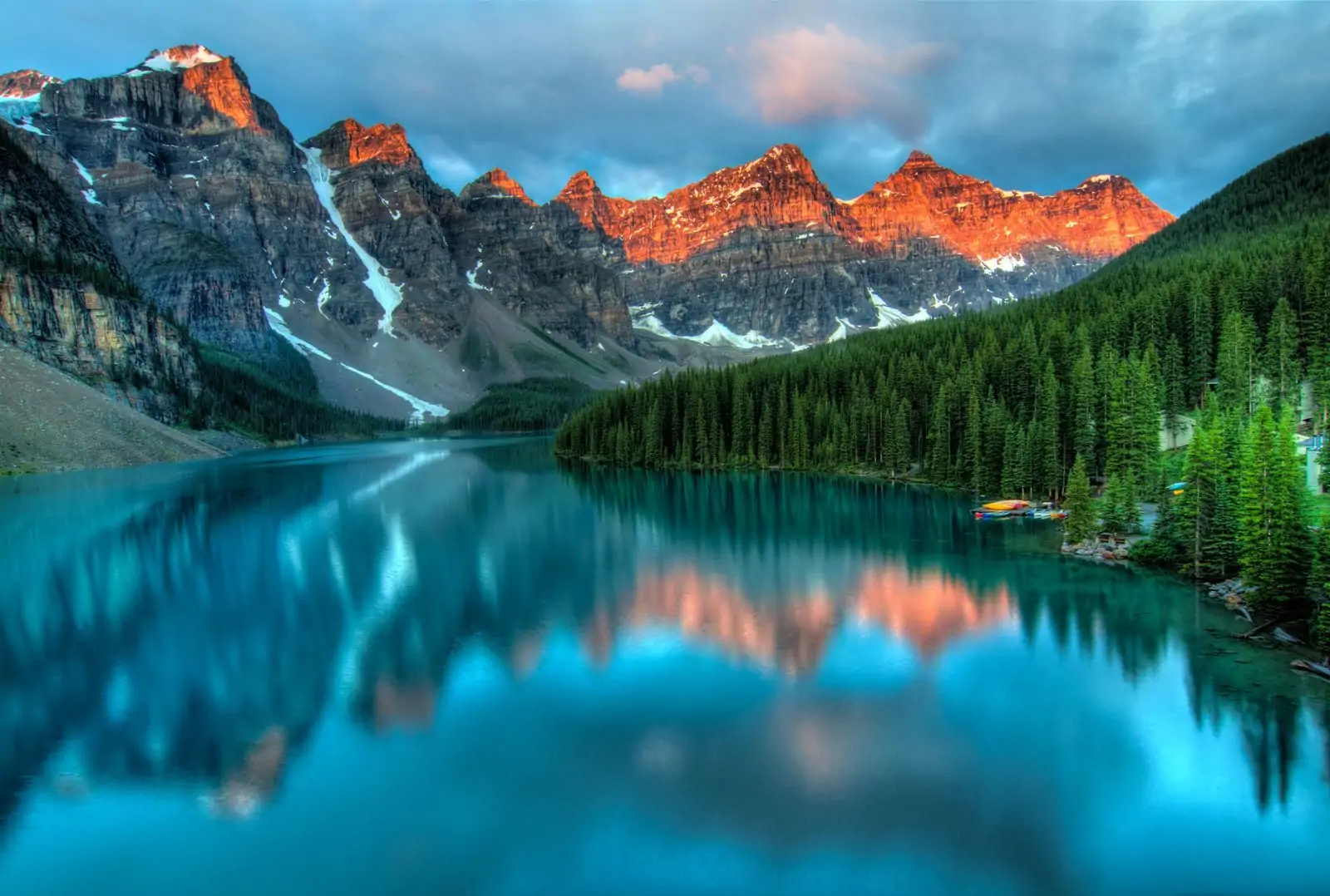
Alt text: A photographer holding a sleek mirrorless camera during a golden hour shoot, showing the compact design compared to a traditional DSLR.
Defining Your Style: What Do You Actually Shoot?
The "best" camera for a wedding photographer is a nightmare for a hiker. To choose correctly, you have to be honest about what you spend 90% of your time shooting.
1. The Landscape Junkie
If you find yourself waking up at 4:00 AM to catch the first light hitting a mountain peak, you are a landscape photographer. You need two things: resolution and weather sealing.
When you’re out in the elements, you need a camera that won't die because a bit of mist hit it. You also want high megapixels so you can print your work large. If you’ve ever seen the incredible prints over at Edin Fine Art, you know that detail matters.
Top Picks for Landscapes:
- Sony A7R V: 61 megapixels of pure detail. It’s a beast for landscapes.
- Nikon Z8: Incredible dynamic range, which is perfect for those bright skies and dark shadows.
- Fujifilm GFX100 II: If you want to go "Medium Format" for ultimate quality.
Pro Tip: Don't forget a sturdy tripod. Even the best mirrorless cameras can't fix a shaky hand during a 30-second exposure. Check out more landscape photography tips on our blog to master the art of the Great Outdoors.
2. The Street Stalker
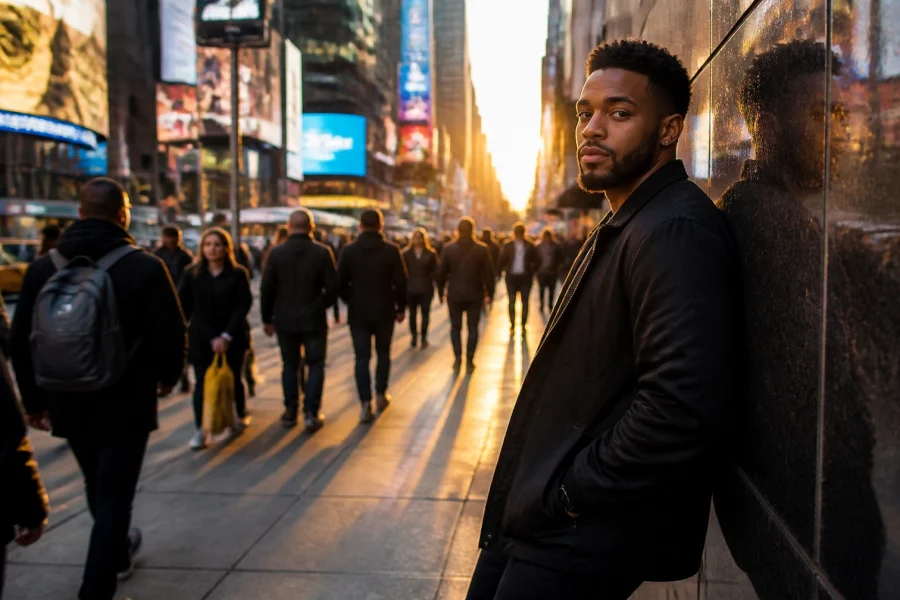
Street photography is all about being a ninja. You want something small, quiet, and fast. If people see a giant lens coming at them, they freeze up. You want to capture life as it happens.
For street photography ideas, think about "candid" moments. You need a camera with an "invisible" feel. This is where rangefinder-style mirrorless cameras shine.
Top Picks for Street:
- Fujifilm X101V / X100VI: The cult favorite. It’s tiny and looks like a vintage film camera.
- Ricoh GR III: Literally fits in your pocket but has a massive sensor.
- Sony A7C II: Full-frame power in a tiny, compact body.
3. The Portrait Pro
If you’re all about portrait photography techniques, your focus is on the eyes. Mirrorless cameras have revolutionized this with Eye-Autofocus. The camera literally locks onto the person's eye and follows it as they move. It’s like magic.
You also want a camera that handles skin tones well. This is a subjective thing, but many pros swear by the "color science" of Canon or Fujifilm for portraits.
Top Picks for Portraits:
- Canon EOS R5: Incredible colors and the best Eye-AF in the business.
- Sony A7 IV: The "everyman" camera that does everything well, especially portraits.
- Nikon Zf: It looks retro, but the tech inside is modern and produces beautiful skin tones.
Save
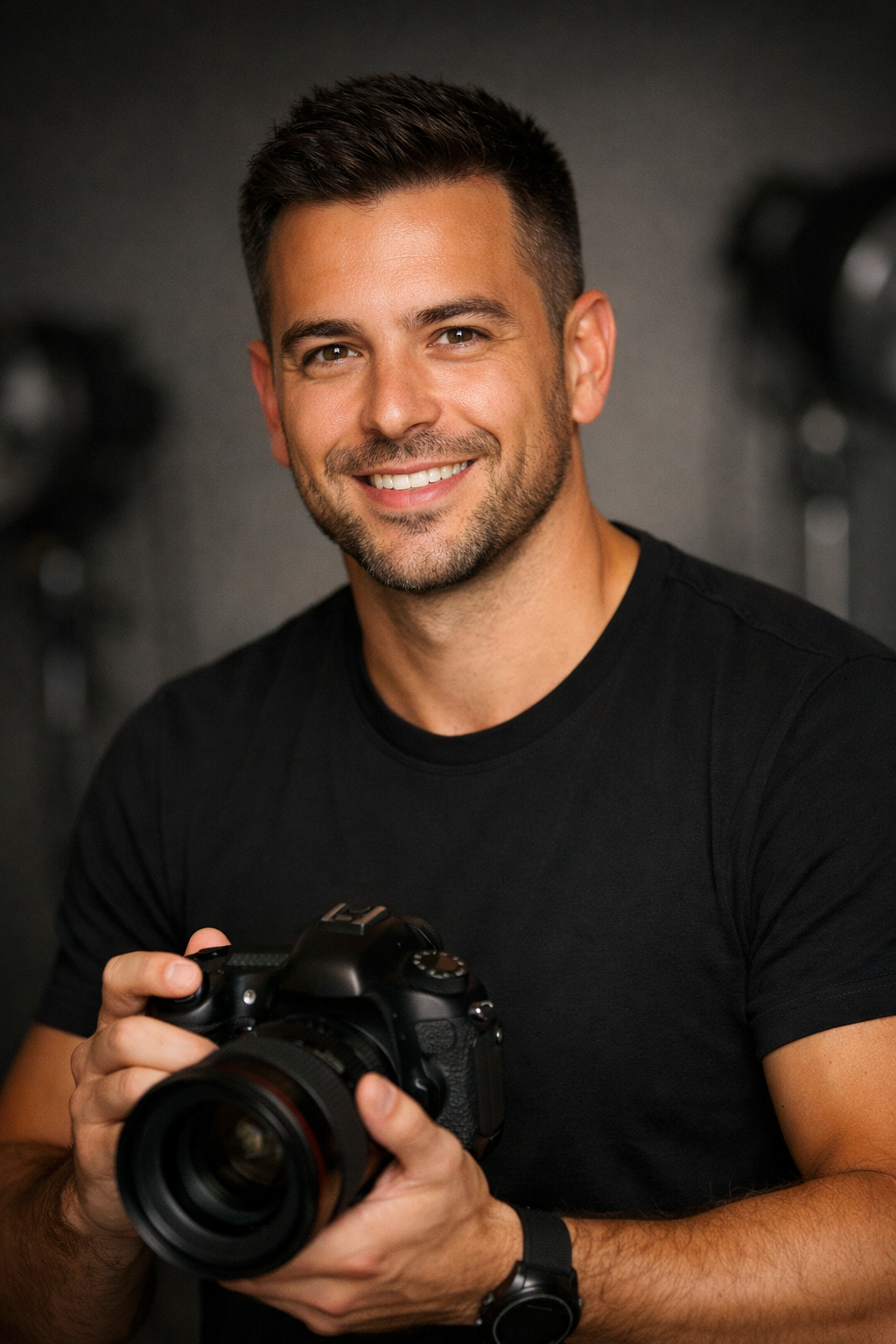
Alt text: A close-up of a mirrorless camera lens with the Eye-Autofocus box tracking a subject's eye, illustrating modern portrait photography techniques.
Photography for Beginners: Don't Overbuy
I see it all the time. Someone decides they want to get into photography, and they go out and buy a $4,000 setup. Two months later, it’s sitting in a closet because it’s "too heavy" or "too complicated."
If you are just starting out with photography for beginners, look for an APS-C sensor camera. These are "cropped" sensors. They are smaller than full-frame sensors, which makes the cameras and the lenses much cheaper and lighter. Honestly, for 95% of people, an APS-C sensor is more than enough.
For more guidance on starting your journey, Shut Your Aperture has some great resources to get you moving without breaking the bank.
The Technical Stuff (Explained Simply)
When you’re reading camera gear reviews, you’ll run into a lot of jargon. Let’s cut through the noise.
IBIS (In-Body Image Stabilization)
This is a fancy way of saying the sensor "floats" inside the camera to cancel out your shaky hands. If you plan on shooting in low light without a tripod, IBIS is a lifesaver. It allows you to use slower shutter speeds without getting blurry photos.
EVF vs. LCD
Most mirrorless cameras have both. You use the screen (LCD) for high or low angles, and the viewfinder (EVF) when it’s too bright outside to see the screen. Look for an EVF with a high "refresh rate" so it doesn't look laggy when you move the camera.
Lens Ecosystem
This is huge. When you buy a camera, you aren't just buying a box; you’re buying into a system. Sony has the most lenses available because they opened their system up to third-party brands like Sigma and Tamron. Canon and Nikon are catching up, but their lenses can be pricier.
Video and Vlogging: The Hybrid Era
Maybe you don’t just want to take photos. Maybe you want to be the next big YouTuber. In that case, you need a "hybrid" camera.
You’ll want to look for things like a "flip-out screen" (so you can see yourself), a microphone input, and good "4K" video specs. Many of the best mirrorless cameras now are just as good at video as they are at stills.
If you’re looking for photography tutorials that cover both video and stills, make sure to check out our recent guides.
Comparison Table: At a Glance
| Style | Recommended Camera | Why? |
|---|---|---|
| Landscape | Nikon Z8 | High resolution, great weather sealing. |
| Street | Fujifilm X100VI | Compact, discreet, and stylish. |
| Portrait | Canon EOS R5 | Amazing Eye-AF and skin tones. |
| Beginner | Sony A6400 | Affordable, great autofocus, huge lens selection. |
| Action/Wildlife | Canon R7 | Fast burst rates and extra "reach" from the crop sensor. |
Post-Processing: Making Your Photos Pop
Buying the camera is only half the battle. To get those "wow" shots, you need to edit. Whether you’re following photo editing tutorials or just winging it, the software you use matters.
For most of my quick edits, I love using Luminar. It uses AI to handle the boring stuff: like masking and sky replacement: so you can focus on the creative side. It’s much more intuitive than some of the older, "clunkier" professional softwares. If you’re just getting into photography for beginners, Luminar is a great place to start because the learning curve is nice and shallow.
Save
Alt text: A split screen showing a raw photo on the left and a vibrantly edited landscape photo using Luminar on the right.
Common Mistakes to Avoid
- Ignoring Ergonomics: Don't just buy a camera because it has good reviews. Go to a store and hold it. If your pinky finger is hanging off the bottom or the buttons feel "mushy," you won't enjoy using it.
- Spending Everything on the Body: If you have a $2,000 budget, spend $1,000 on the camera and $1,000 on a good lens. A cheap lens on an expensive camera will give you mediocre photos. An expensive lens on a cheap camera will give you great photos.
- Megapixel Myth: You do not need 60 megapixels for Instagram. Most people are fine with 24 megapixels. Higher megapixels mean larger file sizes, which means you’ll need to buy more hard drives and a faster computer.
Staying Updated
The world of photography moves fast. New firmware updates can actually make your "old" camera feel brand new by adding better autofocus or new menu features. Stay on top of photography news to make sure you’re getting the most out of your gear.
Edin Chavez often shares his latest thoughts on gear and industry shifts over at blog.edinchavez.com, which is a fantastic resource if you want the "real talk" on what’s worth buying and what’s just hype.
How to Choose: The Final Verdict
Still stuck? Here is a simple 3-step plan:
- Set a Budget: Include a lens and an extra battery in this number.
- Pick Two Must-Haves: Is it size? Is it autofocus speed? Is it the "look" of the camera?
- Rent Before You Buy: Use a service to rent your top choice for a weekend. Take it out, shoot a bunch of stuff, and see if it feels right.
Save
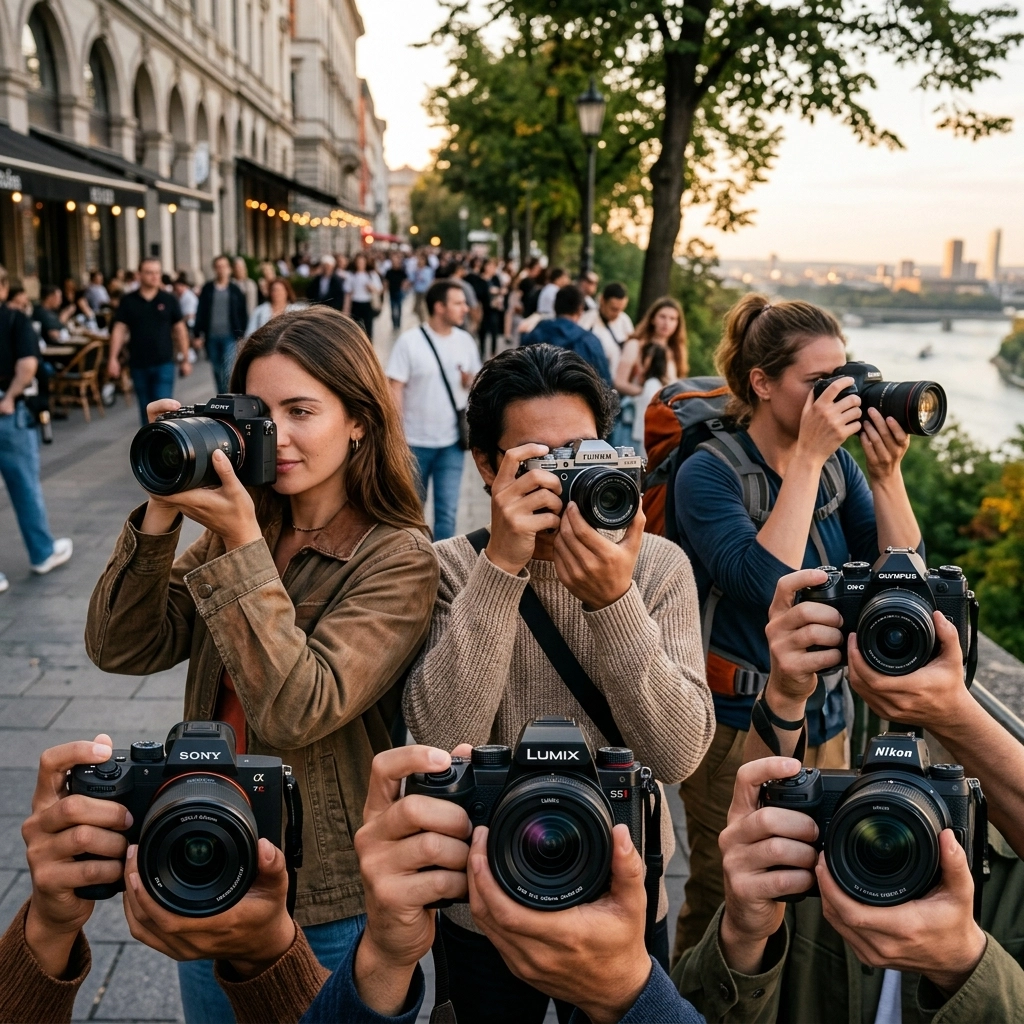
Alt text: A collection of various mirrorless cameras from different brands laid out on a table, symbolizing the many choices available to photographers.
Photography is about pinning down a fleeting expression. Whether you are using a top-of-the-line Sony or a budget-friendly Canon, the best camera is the one you actually have with you when the light gets good.
Don't get too bogged down in the specs. Grab a camera, learn how to use manual mode camera settings so you have total control, and go shoot. For more tips, check out our sitemap to find specific tutorials on everything from lighting to composition.
The mirrorless world is waiting for you. It’s lighter, it’s faster, and honestly, it’s a whole lot of fun. Go find your style.
Quick Amazon shortcuts for the camera categories covered in this guide. Use them if Prime shipping or your existing Amazon credit makes more sense than B&H. As an Amazon Associate ShutYourAperture earns from qualifying purchases.