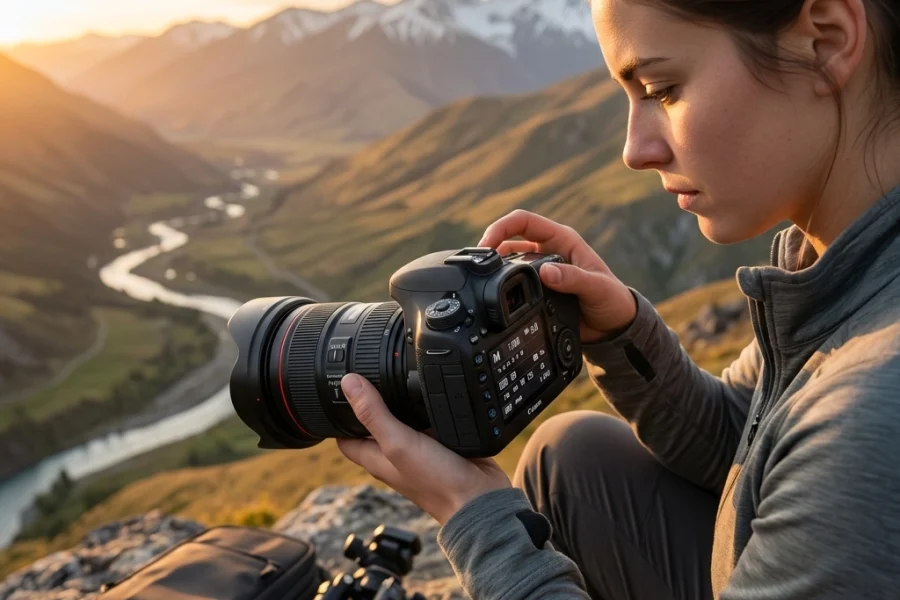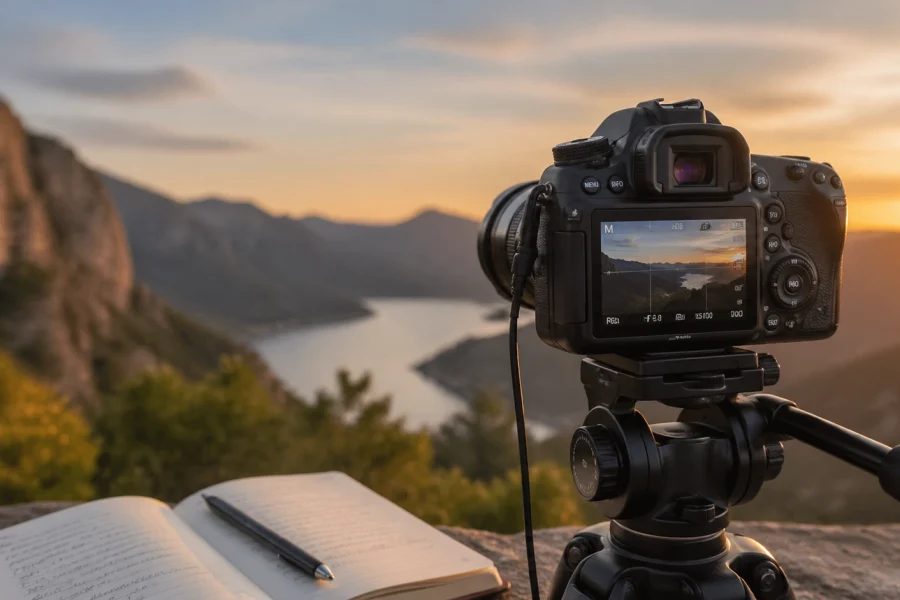

Grab your coffee. It’s Thursday, April 30, 2026, and I’m sitting here looking at a spec sheet for a new sensor that just leaked overnight. It’s a 150-megapixel monster designed for a full-frame body. My first thought? "Here we go again."
We’ve been in the "Resolution Wars" for decades now, but in 2026, the conversation has shifted. It’s no longer just about whether your camera can capture the pores on a ladybug’s nose from fifty yards away. It’s about workflow, artificial intelligence, and the harsh reality of where our photos actually end up. If you’re eyeing the best mirrorless cameras of 2026, you’ve probably asked yourself: Do I really need all those pixels, or am I just buying into the hype?
Let’s break down the morning tech truth.
The News Wire: What’s Dropping Today?
Before we dive into the pixel-peeping madness, let’s look at what’s hitting the headlines this morning.
Sony just pushed a firmware update for the A7R V (yes, we’re still talking about this legendary workhorse) that improves its AI-based focus tracking for high-res bursts. Meanwhile, rumors are swirling about a new global shutter flagship from Canon that might sacrifice raw resolution for pure speed. It seems the industry is split down the middle: those chasing the "Big Number" and those chasing the "Perfect Shot."
If you’re still trying to decide between the classics, check out our breakdown of the Canon EOS R5 vs Sony A7R V to see which resolution king fits your 2026 workflow.
Does Anyone Actually See 100 Megapixels?
Here is the honest truth: 99% of the world sees your work on a screen that is roughly six inches tall.
Even with the advancements in mobile display tech in 2026, most social platforms still compress the living daylights out of your images. You upload a 100MB RAW file, and by the time it hits someone’s feed, it’s a tiny fraction of that size.
So, why bother?
Ultra-high resolution matters most when you are doing two things: cropping and printing. If you’re a wildlife photographer and you can’t get close enough to that rare bird, having 100 megapixels allows you to crop 80% of the image away and still have enough detail for a stunning 11×14 print. For the rest of us, it’s often "overkill for the 'Gram."

SEO Alt Text: Professional photographer reviewing ultra-high resolution landscape photos on a 12K monitor in a modern studio setting.
The "AI Factor" and Software Evolution
In 2026, resolution isn’t just a hardware spec: it’s a software game. We’ve reached a point where AI upscaling is so good that "native" resolution isn't the only way to get a big file.
Programs like Luminar have revolutionized how we handle detail. With their latest generative AI tools, you can take a 24-megapixel shot and "enhance" it to look like it was shot on a medium format camera. It’s not just making things bigger; it’s intelligently reconstructing textures like skin, fabric, and foliage.
This brings up a massive question: If I can use Luminar to upscale my photos perfectly, why would I carry around a camera that produces 200MB files? The answer usually lies in the "data integrity." AI is great, but starting with more real data always yields a better result than guessing with algorithms.
If you're looking to master these modern post-processing workflows, you should definitely check out the resources over at Learn Shut Your Aperture.
The Hidden Cost of High Resolution
Everyone talks about the price of the camera body, but nobody talks about the "Resolution Tax."
When you jump into the world of ultra-high-res photography in 2026, you aren't just buying a camera. You’re buying:
- Storage: Your 1TB SSD that used to last a month? It’s full in three days.
- Processing Power: Even the latest M5 chips (or whatever powerhouse you’re using) will feel the heat when rendering 150MP files with multiple layers.
- Lens Quality: You can’t put a budget lens on a high-res sensor. The sensor will literally show you how "soft" your cheap glass is.
I often tell people to look at the Sony A7 IV vs Canon EOS R6 Mark II comparison. These are "moderate" resolution cameras that produce incredible images without breaking your computer or your bank account.

SEO Alt Text: A stack of high-speed external SSD drives and memory cards used for storing high-resolution 8K video and large RAW photo files.
Printing Large: The Final Frontier
If you aspire to see your work on a gallery wall, resolution is your best friend. I’ve seen prints at Edin Fine Art where the detail is so sharp you feel like you could walk into the frame. For that level of immersion, you need those pixels.
When you print at 40×60 inches or larger, the difference between 24MP and 61MP is night and day. At 24MP, you start seeing the "dots" or softness when you stand close. At 60MP+, the print looks like a window.
However, how many of us are printing that big every week? If you are a commercial pro or a fine art seller, go big. If you are a hobbyist, maybe save your money for a flight to a cool location instead. You can find some great destination inspiration over at PhotoGuides.org.
The Video Reality: 8K, 12K, and Beyond
We can't talk about resolution in 2026 without mentioning video. Most flagship cameras now shoot 8K as a standard. Some are pushing into 12K.
Is 8K worth it? For delivery? Almost never. Most people are still watching YouTube in 1080p or 4K. But for editing? It’s a superpower.
Shooting in 8K allows you to:
- Crop in for a "close-up" in a 4K timeline without losing quality.
- Pan and scan across a static shot to create artificial camera movement.
- Get much better "grab frames" (stills) from your video.
It’s about flexibility. For a deeper dive into the professional side of things, check out the latest tech reviews at blog.edinchavez.com.

SEO Alt Text: A videographer editing 8K footage on a multi-monitor setup with color grading tools and high-end cinema lenses in the background.
Practical Settings for the Modern Pro
If you do own a high-resolution beast, you don't always have to use all that power. One of the best trends in 2026 is "Small RAW" or "Medium RAW" settings. Many cameras now let you shoot at a lower resolution while still keeping the benefits of the RAW format.
For example, if you’re shooting a wedding, you might use 60MP for the portraits but switch to 24MP for the reception. It’s a smart way to manage your data without sacrificing quality where it counts.
If you're doing something specific, like product shots, you might want to look into the OM System OM-1 Mark II settings for product photography. Even with a smaller sensor, the right settings can give you incredible detail that rivals higher-resolution full-frame setups.
The Morning Tech Verdict
Does ultra-high resolution matter in 2026?
Yes, but not for the reasons the marketing departments tell you.
It matters because it gives you options. It gives you the option to crop, the option to print massive, and the option to manipulate your video in post. But it is not a requirement for "good" photography. A boring photo at 150 megapixels is just a very large boring photo.
Before you drop $5,000 on the latest high-res body, ask yourself if your current gear is actually limiting you. If you’re just posting to social media and doing occasional small prints, a 24-33MP sensor is still the "sweet spot" for most creators.

SEO Alt Text: Close-up of a 2026 era mirrorless camera sensor reflecting light, showing the intricate detail of modern high-megapixel technology.
If you want to stay ahead of the curve and see how the pros are handling these massive files in their actual businesses, head over to www.proshoot.io. They have some great insights on integrating high-res workflows into a profitable photography business.
Summary: Pixel Peeping in 2026
- Social Media: Still doesn't care about your megapixels.
- Cropping: The biggest benefit for wildlife and sports.
- AI: Software like Luminar is making high-res hardware less "mandatory" for casual use.
- Costs: Be prepared for the "Resolution Tax" on your storage and computer.
- Video: 8K is for the editor, not necessarily the viewer.
At the end of the day, the best resolution is the one that lets you work fast, stay creative, and not go broke buying hard drives. Keep shooting, keep cropping (if you have to), and most importantly, keep having fun with it.
We'll be back tomorrow with more tech truths. Until then, go take some photos.