
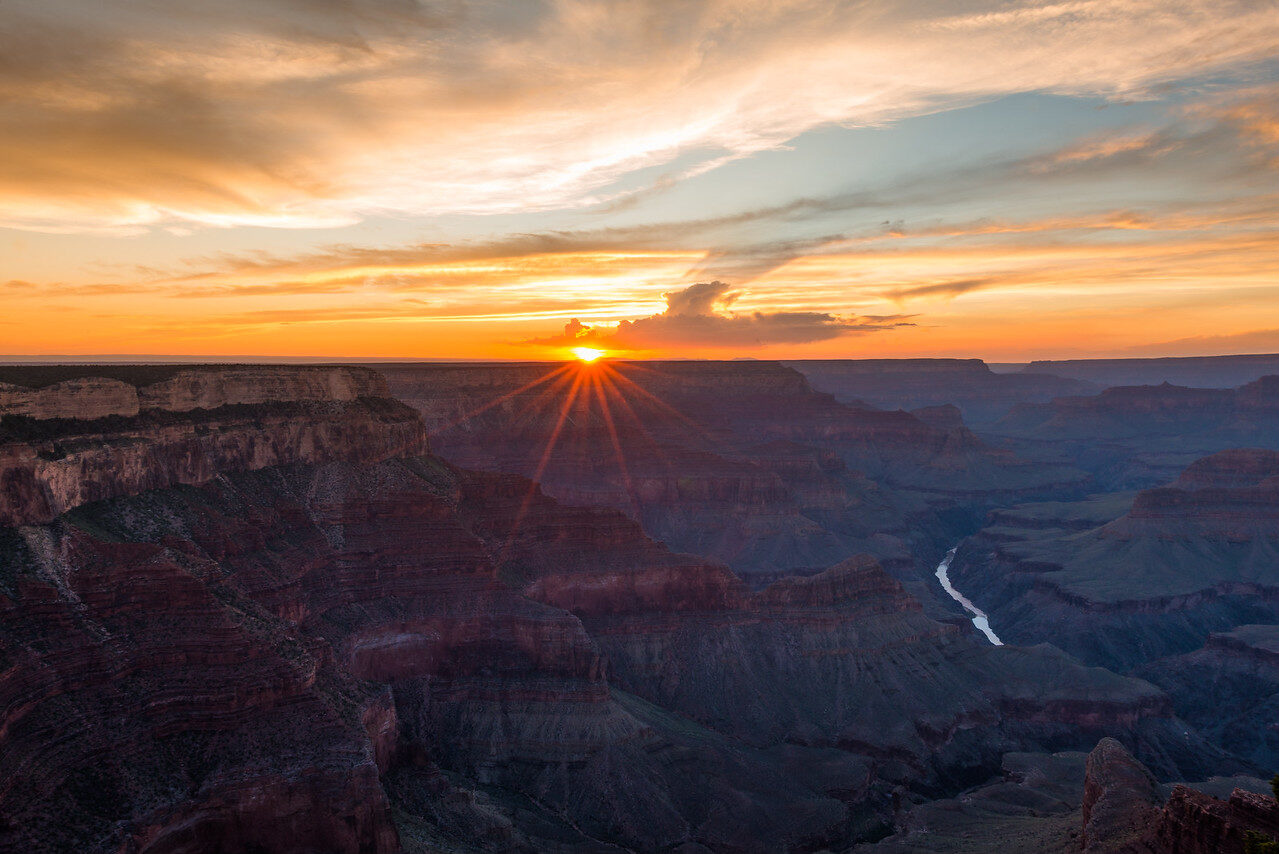
A field guide to photographing Grand Canyon National Park: 12 photography spots across both rims, exact camera settings for every condition — golden hour, blue hour, monsoon lightning, and Milky Way — sun direction diagrams, a multi-season shooting calendar, a full safety briefing, and a photographer’s packing checklist. Print-ready layout.
Read the free article first: best photography spots in Grand Canyon National Park. More parks are in the US National Parks photography library.
What you get
- Downloadable PDF — landscape letter format, optimized for tablet and print
- 12 photography spots with planning details inside the PDF.
- Camera settings table for every spot and every condition: sunrise, sunset, blue hour, milky way, monsoon lightning — aperture, shutter, ISO, focal length, filter recommendations
- Sun direction notes — when and where the light hits each viewpoint
- Monsoon lightning tactics — storm photography planning with bulb-mode settings and composition guidance. Open or covered rim viewpoints are not safe lightning shelter. When thunder roars, go indoors: immediately enter a substantial building with electricity or plumbing, or an enclosed hard-top vehicle with windows closed. Remain in safe shelter for at least 30 minutes after the last thunder. See National Weather Service lightning safety guidance
- Milky Way guide — Grand Canyon is a certified International Dark Sky Park; the guide identifies South Rim and North Rim positions and gives astrophotography settings
- Year-round seasonal breakdown — spring wildflowers, summer monsoons, autumn cottonwood gold, winter snow-on-rim
- Getting there — nearest airports, shuttle system, North Rim access notes
- Full safety briefing — edge safety (no continuous railing), lightning, heat, altitude, wildlife including California condors
- Photographer’s packing checklist — body, lenses, filters, tripod, rain cover, microspikes, apps
Why Grand Canyon demands its own guide
Grand Canyon has no “one best spot.” Sunrise and sunset require completely different viewpoints — the South Rim faces north. The telephoto (200-400mm) is as important as the ultra-wide. Monsoon season (July–August) requires planning around thunderstorms, not remaining on an exposed rim for dramatic light. Do not wait at a viewpoint when thunderstorms approach; reach safe shelter before the storm arrives. No outdoor viewpoint, open-sided shelter, shade structure, or rock overhang is safe during a thunderstorm. The park’s International Dark Sky designation makes Milky Way photography here worth planning for — if you know which viewpoints face the right direction. This guide covers all of it.
License
Single-user personal license. Not for resale, redistribution, or commercial reproduction. See the back cover of the PDF for full terms.
Grand Canyon photography guide FAQ
Is the Grand Canyon photography guide a digital download?
Yes. This product is a downloadable PDF photography guide, not a printed book or a guided tour.
Which destination does the Grand Canyon photography guide cover?
This is a photography guide to Grand Canyon. It is a single-destination guide, not a multi-destination bundle.