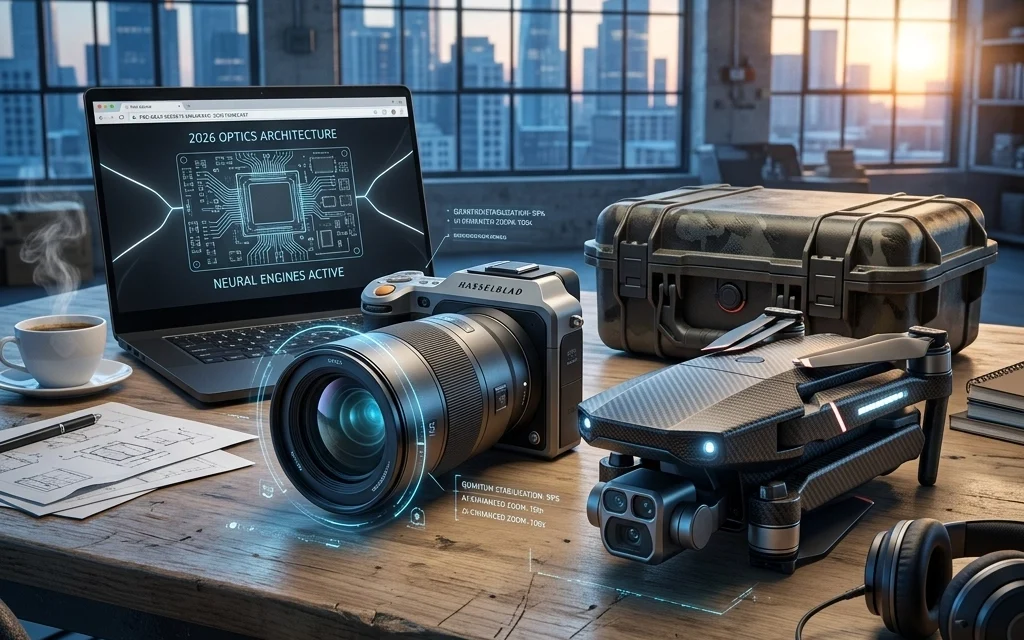
It is Monday morning, April 6, 2026, and if you haven’t checked your gear bag lately, you might already be behind. The world of photography and videography is moving faster than a shutter at 1/8000th of a second. We aren’t just talking about a few more megapixels or a slightly faster autofocus system. We are talking about a fundamental shift in how professionals are capturing the world.
While the big manufacturers want you to keep buying the most expensive, heaviest glass on the market, a quiet revolution is happening among the top 1 percent of shooters. They are ditching the "bigger is better" mantra and moving toward gear that prioritizes something we haven’t talked about enough: forgiveness and agility.
The Secret Shift: Why Forgiveness is Beating Speed in 2026
For years, the industry was obsessed with speed. Who has the fastest burst rate? Who has the quickest autofocus? But as we settle into 2026, the pros are pivoting. Much like how top athletes are choosing equipment that offers more "forgiveness" over raw power, photographers are choosing cameras that handle mistakes better.
We’re seeing a massive trend where high-end pros are trading in their 100-megapixel monsters for 45-megapixel sensors with incredible "dynamic recovery." Why? Because in the heat of a shoot, having a file that can be pushed four stops in post-production without falling apart is more valuable than having a file that is too large to store.
This shift is making professional club fitting: or in our case, professional gear calibration: more important than ever. If your sensor isn't tuned to your specific style, you're just wasting data. Experts aren't telling you this because they want you to keep chasing the "spec sheet" high. But if you look at what’s actually being used on the sidelines of major sporting events and high-fashion sets this morning, it’s all about reliability and file flexibility.
The Rise of "Mini" Pro Gear
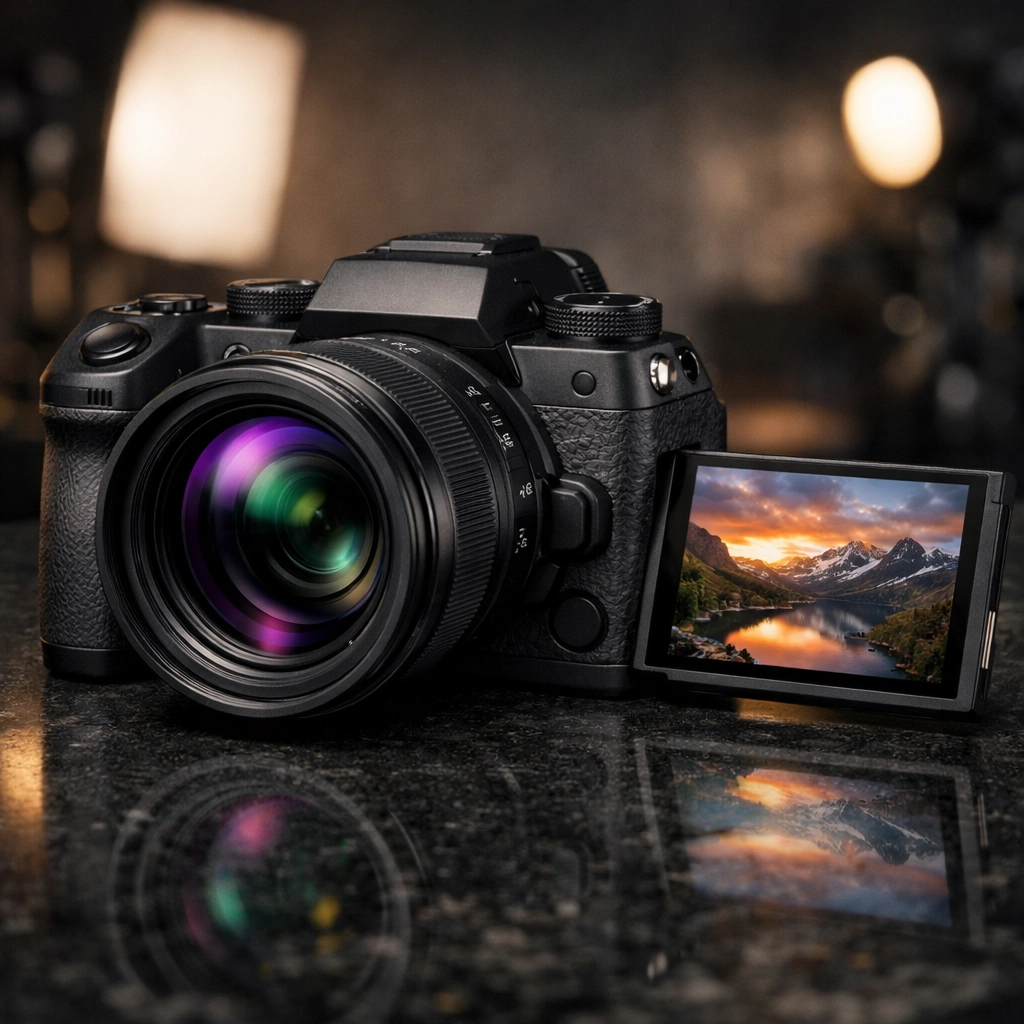
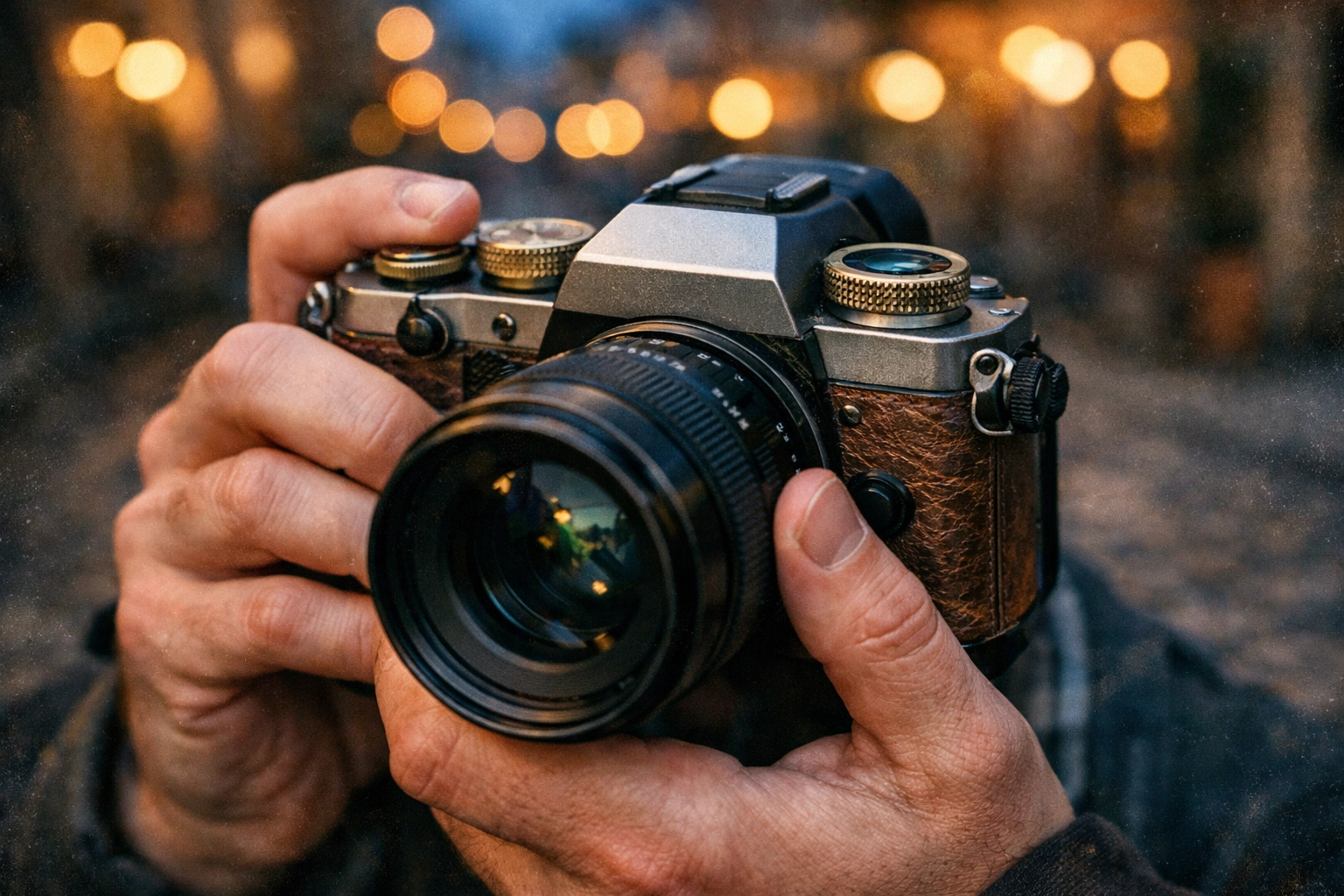
One of the most interesting developments this year is the adoption of "mini" professional bodies. Think of these as the "mini drivers" of the photography world. All the major manufacturers have finally realized that pros want the power of a flagship body in the size of a street camera.
We are seeing a rapid adoption of these compact powerhouses across the industry. Whether you are shooting a destination wedding in one of those secluded paradises to enhance your photography portfolio or hitting the streets for some gritty documentary work, the "mini" pro cameras are winning. They offer the same dual-processor speeds and weather sealing as the big rigs but don't require a chiropractor visit after a twelve-hour day.
The secret? These smaller bodies are now integrating heat dissipation technology that was previously only possible in larger frames. This means you can shoot 8K video for an hour without the camera turning into a toaster.
Smart Technology: Beyond the Mirrorless Horizon
If you haven't looked into smart accessories lately, you're missing out on the biggest efficiency gains of the decade. We are seeing a surge in rangefinder-integrated technology that talks directly to your lenses and your software.
Imagine a lens that doesn't just focus, but actually communicates data back to a device like a launch monitor for light. New sensors are being integrated into standard 35mm and 50mm primes that provide metrics like light fall-off, diffraction limits in real-time, and even "hit rates" for focus. By June or July of this year, we expect a new wave of Kickstarter-backed smart filters that will provide carry-distance metrics for light, basically telling you exactly how far your flash needs to be to hit that perfect exposure without a single test shot.
This kind of tech is bridging the gap between "spraying and praying" and "surgical precision." It’s the kind of stuff you can find more deep dives on over at PhotoGuides.org.
The Software Revolution: AI is No Longer an Option
Let’s talk about the elephant in the room: AI. In 2026, if you aren't using AI to streamline your workflow, you aren't a pro; you're a hobbyist with an expensive habit.
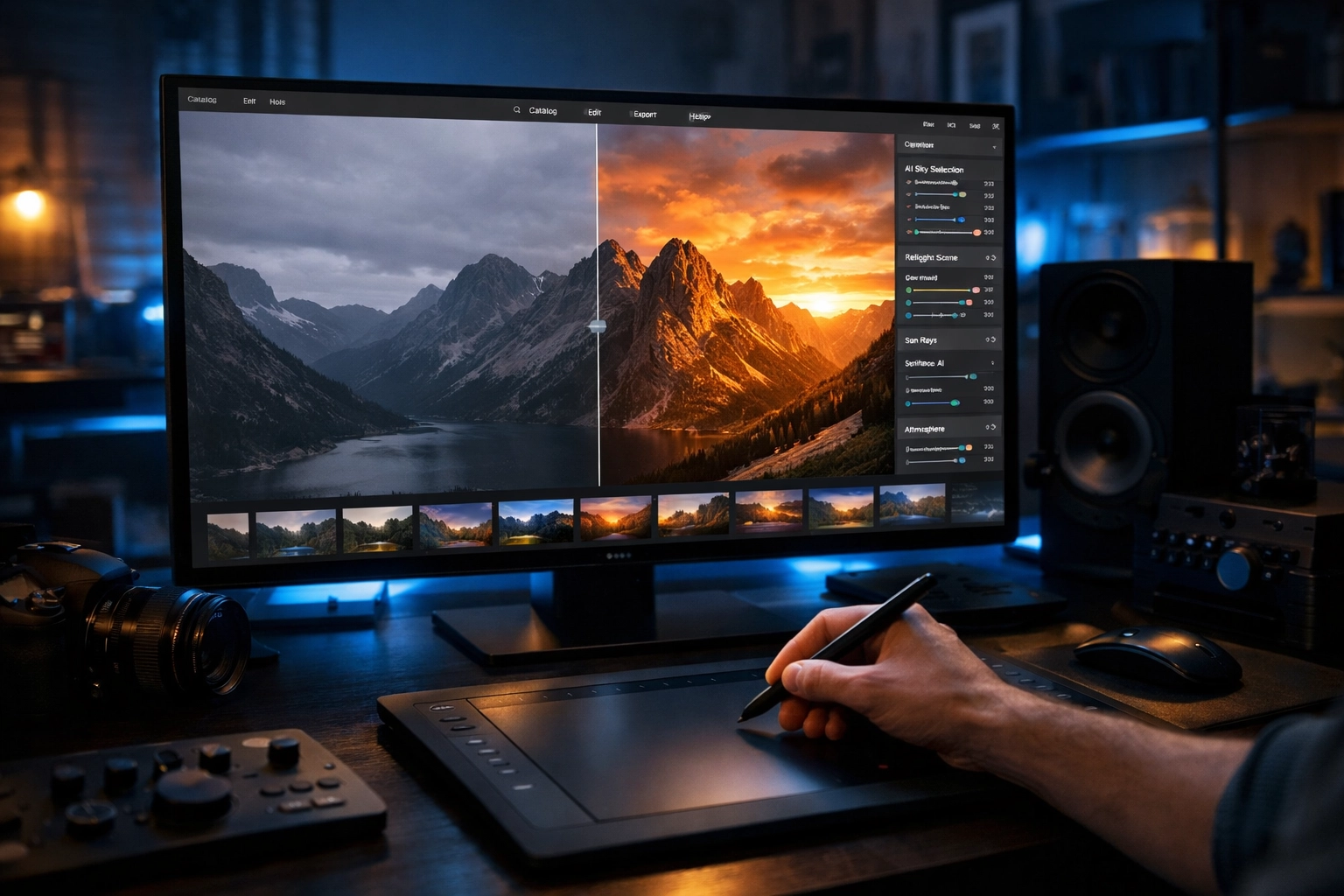
The latest updates to Luminar have completely changed the game. We are no longer talking about simple sky replacements. The new generative AI engine inside Luminar allows photographers to "re-light" an entire scene based on the physical properties of the 3D space captured in the image. It’s about more than just filters; it’s about reconstructing the light to match the mood you intended, even if the sun didn't cooperate.
The "pros" who claim they "do everything in-camera" are usually the ones spending the most time secretly using these tools. They don't want you to know how easy it's become to turn a mediocre shot into a masterpiece with a few clicks in Luminar.
Finding Hidden Vistas in a Crowded World
With everyone owning a 48-megapixel phone, the "trophy shots" are dead. To stay relevant in 2026, you have to find the lesser-known vistas for enigmatic photos. The gear helps, but the location is still king.
We’ve spent a lot of time lately looking for hidden gem locations for travel photography. The trend this morning is moving away from the "Instagram spots" and toward tangible, aesthetic photography. People want to see things that feel real, textured, and rare. Using rare textures for tangible aesthetic photography is one way to separate yourself from the AI-generated imagery that is flooding the market.
If you are looking to build a portfolio that actually stands out, you need to go where the others aren't. Check out our guide on finding hidden gems for stunning travel photography to get a head start.
The Gear Economy: Renting vs. Owning in 2026
The cost of staying current is higher than ever. That’s why we’ve seen a massive shift toward the "gear economy." Instead of dropping $10,000 on a new kit every two years, the smartest pros are leveraging platforms like www.proshoot.io to access the latest tech on a project-by-project basis.
This allows you to use the absolute best tools for a specific job: like those specialized lenses needed for top spots for stunning nature imagery: without the long-term depreciation. In 2026, gear is a utility, not an heirloom.
Why You Should Care About "Analog" Trends
Interestingly, as digital tech gets more perfect, the "imperfections" of analog are becoming more valuable. We are seeing software updates that don't just add grain, but actually simulate the chemical reaction of film stocks from the 1970s.
Experts are using these tools to give their digital files a soul. It’s a bit ironic, isn’t it? We spend thousands on the sharpest lenses only to use software to make them look "worse." But that "worse" is what humans connect with. It’s that tangible, organic feel that separates a professional's work from a generic AI render. You can see some of these aesthetics in action over at blog.edinchavez.com.
Industry Trends: The Death of the Traditional Studio
The traditional studio is dying. In its place, we are seeing "modular content spaces." These are high-tech hubs equipped with pre-lit sets and high-speed fiber for instant cloud uploading.
If you’re still lugging around ten C-stands and a dozen sandbags, you’re working too hard. The new trend is about being lean. Portable LED panels that are thinner than a tablet have replaced the massive strobes of the past. These lights can be controlled via an app on your phone, allowing you to change the color temperature and intensity without leaving your camera position.
This morning's news is clear: the gear is getting smarter so you can focus on being more creative.
How to Stay Ahead of the Curve
So, what should you do with this information?
- Stop Chasing Resolution: Unless you are printing billboards, 45MP is your sweet spot. Focus on dynamic range and low-light performance instead.
- Embrace the Mini: Look into the compact "pro" bodies. Your back will thank you, and your shots will be more candid and natural.
- Master Your Software: Stop looking at Luminar as a "cheat" and start looking at it as a digital darkroom. The power it gives you over light is unprecedented.
- Interlink Your Skills: Photography isn't just about the camera anymore. It's about tech, travel, and networking. Use resources like www.edinstudios.com to see how pros are diversifying their business models.
- Get Out There: All the gear in the world won't save a boring subject. Go discover ethereal landscapes for captivating shots and put your gear to the test.
Final Thoughts on the 2026 Gear Landscape
The gear landscape this morning is more competitive than it has ever been. This competition is driving innovation at a breakneck pace. Whether it's a sensor-equipped 7-iron-style lens or an AI that can re-light a scene in seconds, the tools are here to help us tell better stories.
The "secrets" that experts don't want you to know aren't really secrets: they are just shifts in perspective. Moving from "raw specs" to "usable tech" is the biggest leap you can make this year. Don't let the marketing departments fool you into thinking you need more megapixels. What you need is gear that works with you, not against you.
Keep an eye on the latest industry events and updates. Things are changing fast, and we’ll be here every morning to help you navigate the noise. For more inspiration and to see the world through a different lens, check out www.edinfineart.com.
Summary of Pro Tips for 2026:
- Prioritize Stability: High MOI (Moment of Inertia) isn't just for golf clubs; it's for sensor stabilization too.
- Smart Data: Use devices that integrate app data directly into your shooting workflow.
- Humanize Your Work: Use digital tools to bring back the "flaws" that make photography feel real.
- Stay Agile: A heavy bag is a slow bag. Lighten the load and increase your creativity.
Now, grab your gear (the light stuff) and go capture something the world hasn't seen yet. The morning light is perfect, and you've got the secrets to make the most of it.