Street photography is often misunderstood. People think it’s just about lurking on a corner with a Leica, waiting for someone in a trench coat to walk by. But if you’ve been doing this for a while, you know the "guy walking past a wall" shot gets old fast.
At Shut Your Aperture, we believe the street is a living, breathing canvas. Whether you are in the heart of NYC or a quiet suburb, there are stories hiding in plain sight. If you’re feeling stuck in a creative rut, it’s time to stop looking for the "perfect" shot and start looking for the weird, the overlooked, and the downright abstract.
I’ve been chatting with Sonny, our Social Media Manager, about these ideas. He’s going to be sharing some of these challenges on our Instagram soon, so make sure you’re ready to tag us. Let’s dive into 25 street photography ideas that will help you unlock secrets to enchanting urban photography and see your city in a whole new light.
1. The Puddle Portal
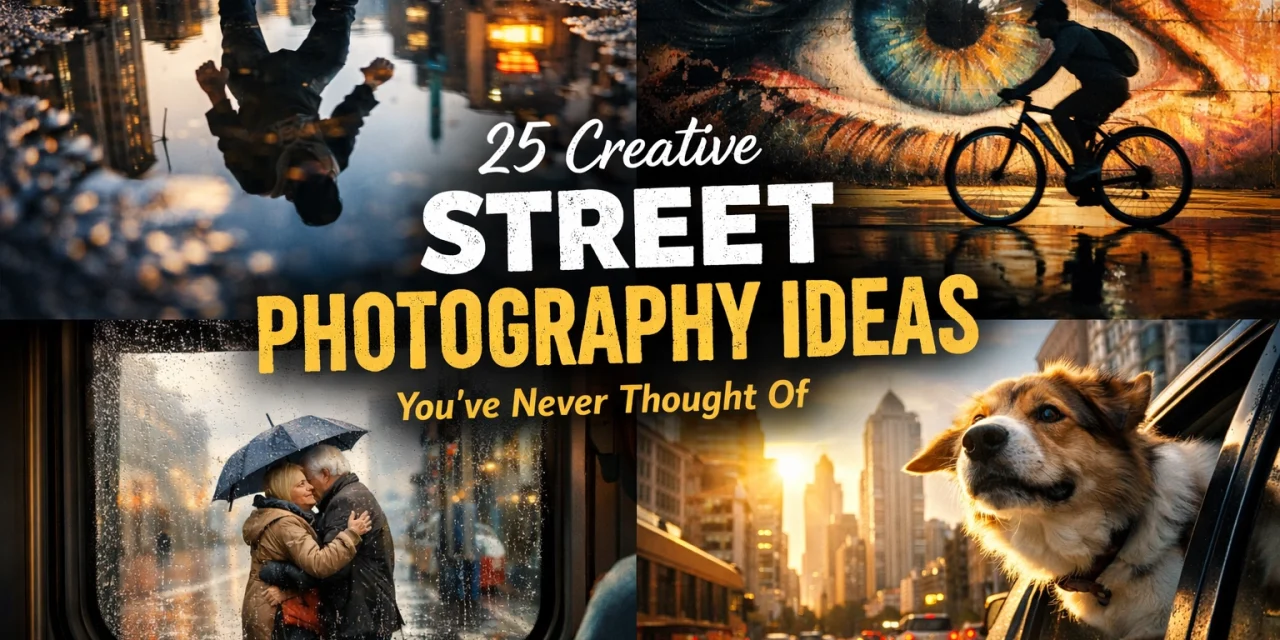
Don’t pack your camera away when it rains. Some of the best street shots happen in the reflections of a dirty puddle. Get your lens as close to the water as possible (without dropping it in) and flip the image in post-processing. Suddenly, the street looks like a parallel universe. For more on handling wet environments, check out our guide on water photography techniques.
2. Shooting Through "Trash"
Next time you see a fence, some overgrown weeds, or even a discarded plastic bottle, use it as a foreground element. Shooting through objects creates layers and depth. It makes the viewer feel like they are peeking into a private moment.
3. The "V" Shape Mid-Stride
Wait for a subject to walk across your frame and capture them at the exact moment their legs form a perfect "V." It adds a sense of motion and geometric balance that a static standing subject just doesn’t have. It’s a classic technique used by the greats, often discussed over at PhotoGuides.org.
4. Abstract Textures
Street photography doesn't always need a human subject. Look for peeling paint, rusted metal, or weathered posters. These "urban scars" tell a story of time and decay. We actually have a whole deep dive on using rare textures for tangible aesthetic photography if you want to master this look.
5. The "Fishing" Technique
Instead of hunting for shots, find a great background and wait. This is the "fishing" method. Find a wall with interesting light or a cool sign and stay there for 20 minutes. Eventually, the right person will walk into your "trap."
6. Extreme Low Angles
Crouch down. No, lower. Put your camera on the pavement. Shooting from a worm’s-eye view makes ordinary pedestrians look like giants and gives buildings a towering, cinematic feel. It’s one of the easiest ways to change your perspective instantly.
7. Motion Blur for Busy Streets
If the street is crowded and overwhelming, don't try to freeze the frame. Instead, slow your shutter speed down to 1/15th or 1/8th of a second. Let the crowd turn into a ghostly blur while the architecture stays sharp. This captures the "energy" of a city better than a sharp shot ever could.
8. Focus on Hands
Hands can be more expressive than faces. A street vendor counting change, a couple holding hands, or an old man gripping a cane: these details are intimate and powerful. They tell a story without revealing the subject's identity, adding a layer of mystery.
9. The Decisive Shadow
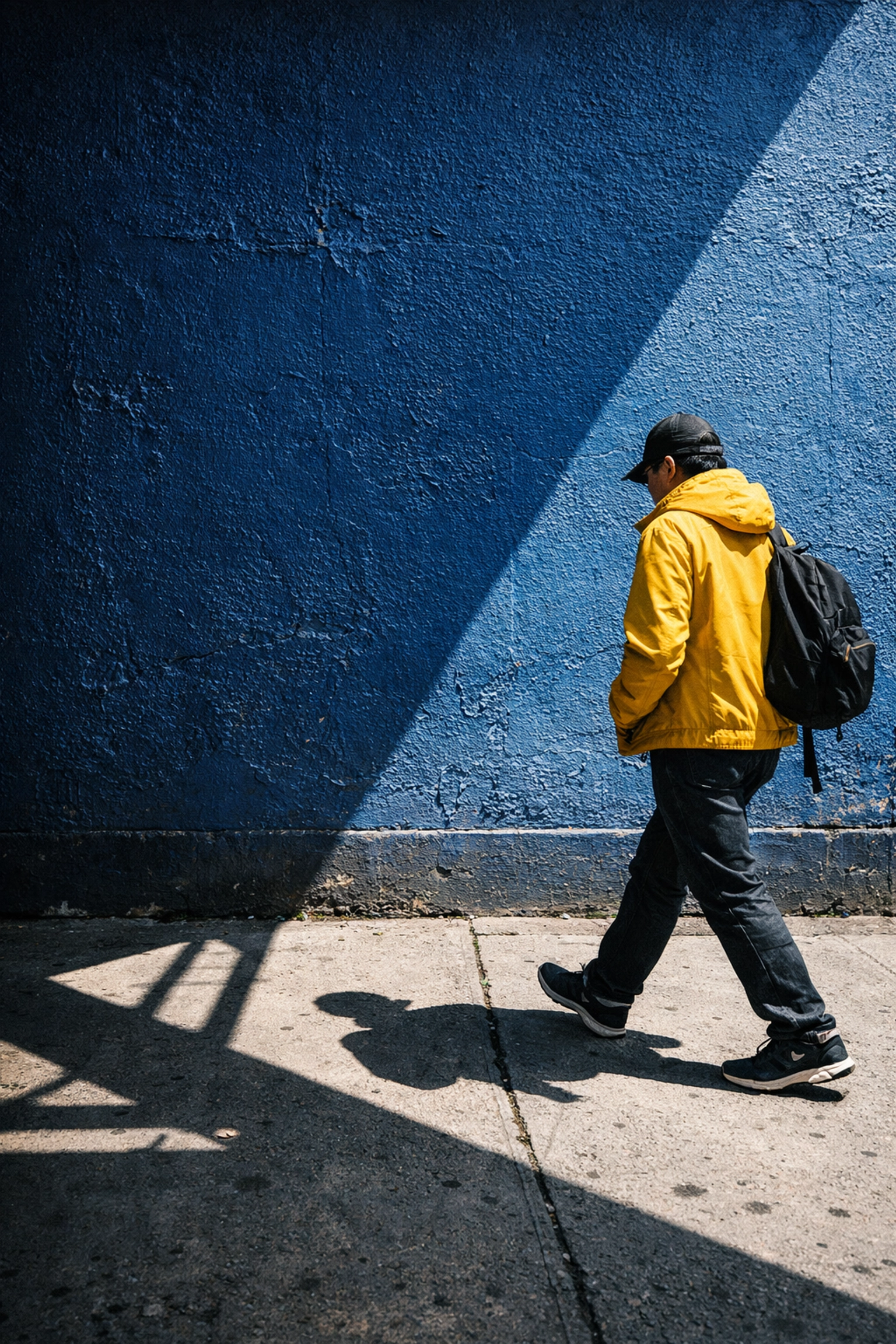
In the harsh midday sun, don't look for people; look for shadows. Sometimes the shadow cast by a person is more interesting than the person themselves. Look for long, distorted shapes on the pavement or shadows falling across textured walls.
10. Shop Window Juxtaposition
Windows are a street photographer’s best friend. You can capture the reflection of the street layered over the products inside the store. Look for ironic pairings: like a luxury watch display reflected over a person sitting on a bench outside.
11. Shooting from the Hip
If you’re feeling shy or want truly candid moments, try shooting from the hip. Don’t bring the camera to your eye. Use a wide-angle lens, a narrow aperture (like f/8), and just click as you walk. It takes practice to frame correctly, but the results are raw and unposed.
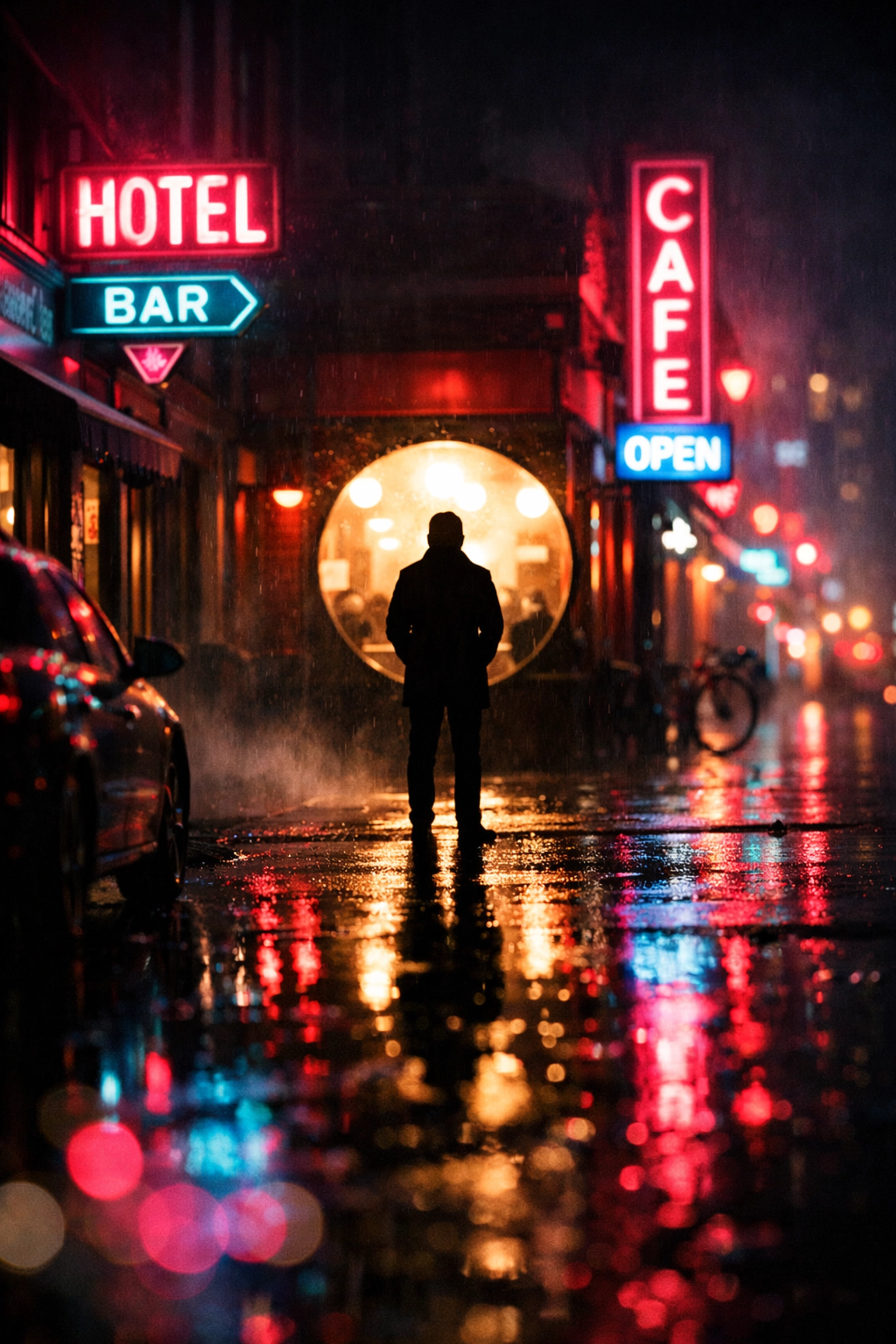
12. Silhouettes Against Neon
At night, find a bright neon sign or a backlit shop window. Position your subject between you and the light source. Underexpose the shot to turn the person into a solid black silhouette against a pop of color. For more night-time inspiration, check out our tips on majestic sunset photography which often transitions into these "blue hour" street vibes.
13. The "Dog’s Eye" View
Cities are full of animals. Instead of focusing on the owners, focus on the dogs, cats, or even the pigeons. Getting down to their level provides a unique narrative on urban life that most people literally walk right over.
14. Minimalism in the City
Find a single, solid-colored wall and wait for one person wearing a contrasting color to walk by. This minimalist approach strips away the chaos of the city and focuses purely on color and form. If you're struggling to find these spots, look at blog.edinchavez.com for some of my favorite minimalist urban locations.
15. The "Backwards" Portrait
Capture people from behind. It sounds counterintuitive, but seeing a person walking away into a vast urban landscape can evoke a sense of loneliness, journey, or mystery. It’s a great way to practice composition without the pressure of making eye contact.
16. Using Glass Distortions
Look for old, wavy glass or ribbed glass panels in bus stops or office buildings. These surfaces distort the people behind them into painterly, impressionistic shapes. It’s a fantastic way to create fine art street photography.
17. Use a Flash in Daylight
Bruce Gilden made this famous, but you don’t have to be as aggressive. Using a small fill flash on a sunny day can make your subjects "pop" from the background and add a gritty, high-fashion look to your street work.
18. Triangular Compositions
Your brain loves triangles. Try to frame your shot so there are three points of interest: perhaps three people standing in a way that forms a triangle, or a person, a street sign, and a distant building. This creates a balanced, professional-looking frame.
19. Reflections in Car Mirrors
Side mirrors on cars are like tiny, framed canvases. You can capture the street behind you while still facing forward. It’s a subtle, clever way to play with perspective.
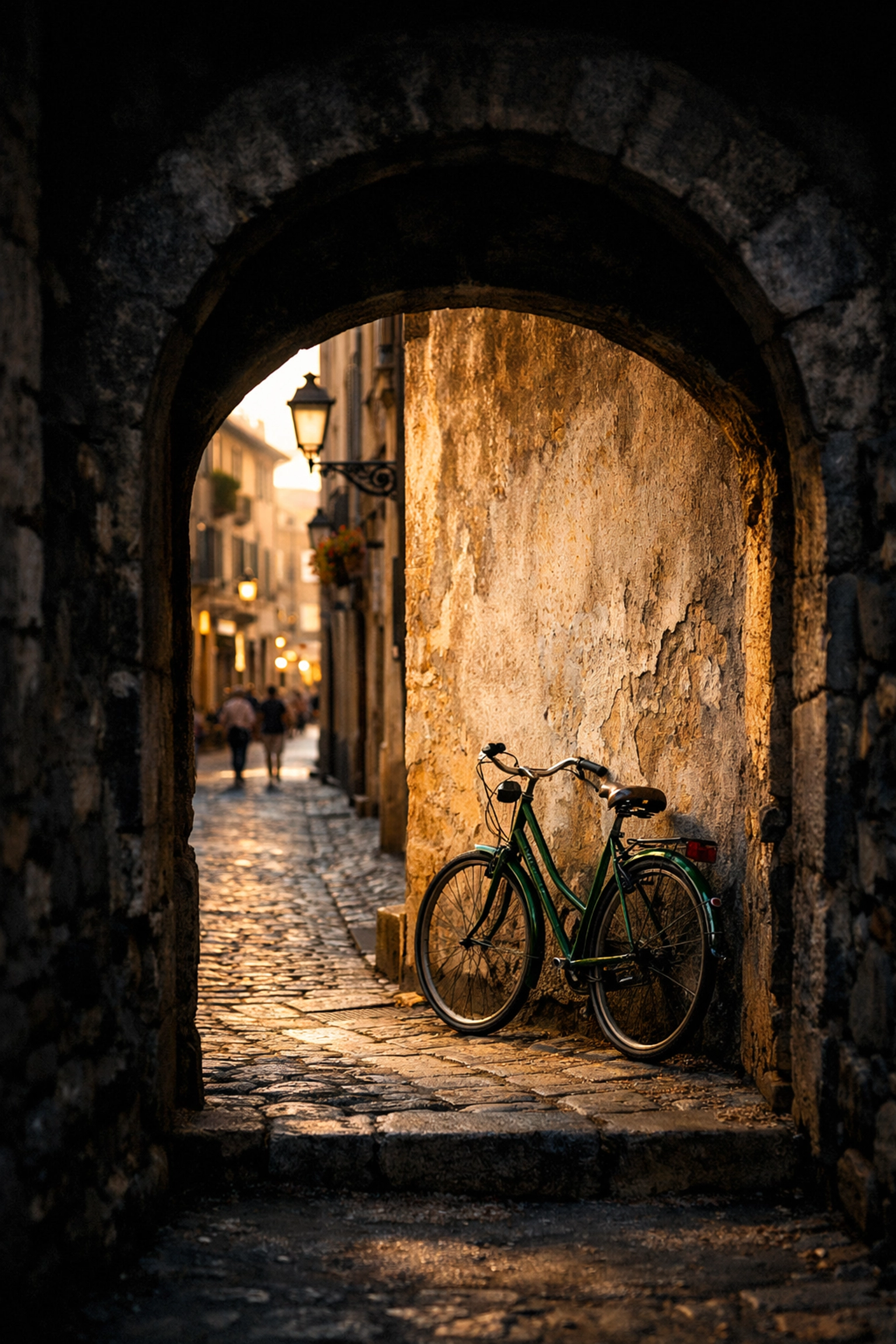
20. The "Frame Within a Frame"
Look for arches, doorways, or even the space between two parked trucks. Use these to "frame" your subject. This technique draws the viewer's eye exactly where you want it to go and adds a sense of voyeurism.
21. Night Motion (Light Trails)
Find a busy intersection at night, set up a tripod (or a steady trash can), and do a long exposure. The streaks of red and white light from cars contrasting against the static figures of people waiting at a crosswalk creates a high-energy urban scene.
22. Focus on Footwear
Sometimes the most interesting thing about a person is their shoes. In a world of fast fashion and unique sneakers, a tight shot of feet walking through a puddle or standing on a subway line can be a great cultural snapshot.
23. Color Blocking
Pick a color: let's say yellow. Walk around the city and only take photos where yellow is the dominant element. This "color hunting" forces you to ignore the obvious shots and look for specific details you’d otherwise miss.
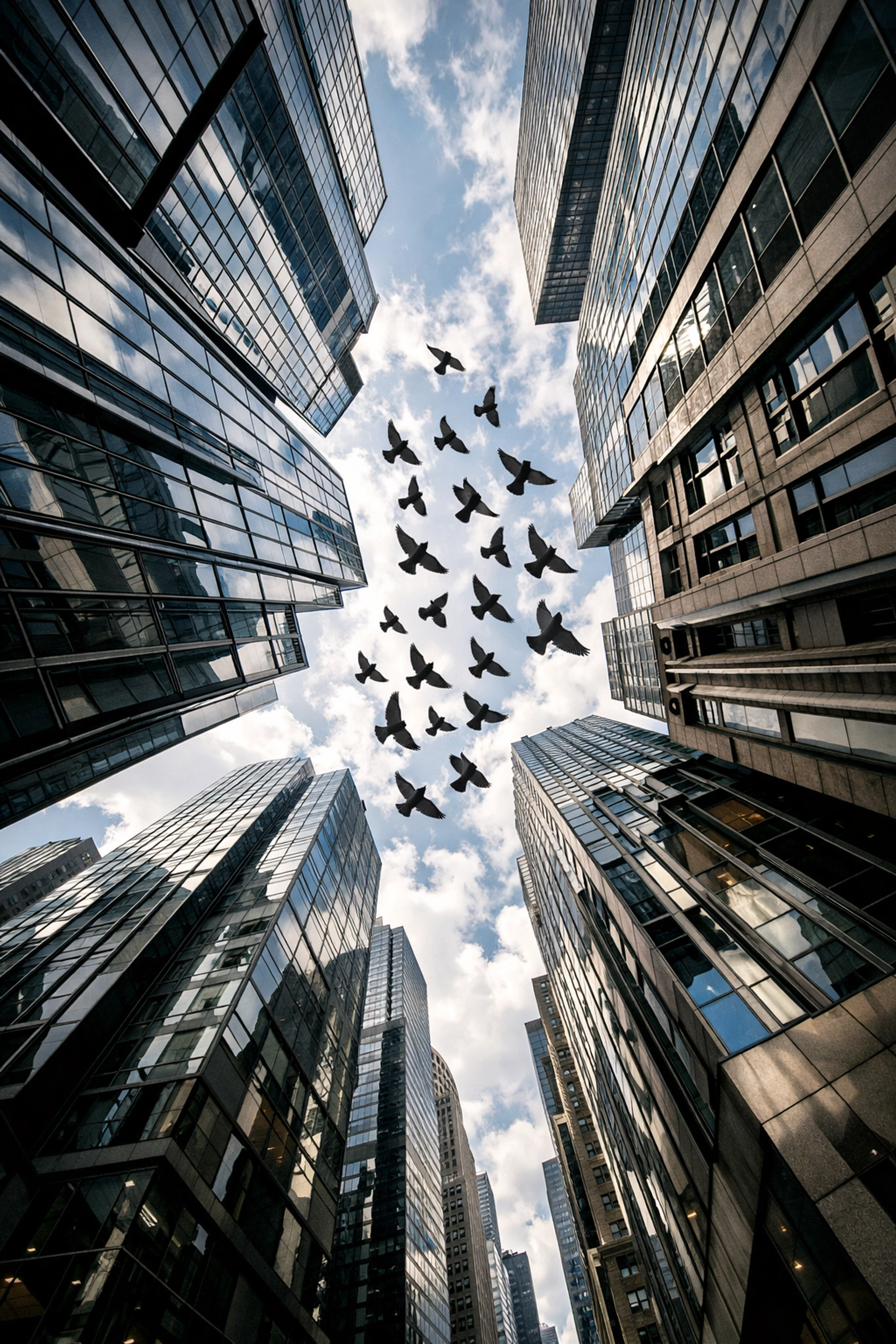
24. Look Up
We spend so much time looking at eye level that we miss the geometry of the rooftops. Use a wide-angle lens and point it straight up between skyscrapers. Wait for a bird or a plane to cross the "canyon" of buildings for a perfect focal point.
25. The Cinematic Wide
Instead of a tight portrait, go wide. Show the scale of the city. A tiny person at the bottom of a massive architectural structure highlights the relationship between humans and the environments we build. For finding these epic scales, check out our post on lesser-known vistas for enigmatic photos.
Perfecting Your Street Shots in Post
Once you’ve captured these moments, the magic really happens in the edit. Street photography often benefits from a bit of "grit." I personally love using Luminar to enhance the textures and shadows in my urban shots. The AI tools in Luminar are great for quickly bringing out detail in those "shooting through trash" shots or fixing the exposure on a tricky silhouette.
If you are looking to take your editing to a professional level, you might also want to check out proshoot.io for some advanced workflows.
Practice Makes Perfect
Street photography is a muscle. The more you do it, the more "invisible" you become, and the more these creative opportunities reveal themselves. Don't be afraid to fail: for every 100 shots you take, you might only get one that you truly love. But that one shot makes the whole day worth it.
If you’re traveling and looking for the best places to test these ideas, we’ve mapped out some hidden gem locations for travel photography that are perfect for street work. Whether you're in a bustling metropolis or a coastal town (check out these coastal escapes for a different vibe), the principles remain the same.
So, grab your camera, get out there, and stop taking the same photos as everyone else. The street is waiting. Be sure to head over to www.edinfineart.com to see how some of these street techniques translate into gallery-quality prints.
Keep shooting, stay curious, and remember: the best camera is the one you have with you, but the best eye is the one that looks for the story nobody else sees. Check out more gear tips at www.edinstudios.com if you're looking to upgrade your street kit soon.