Let’s be real: street photography can get a bit stale. You walk the same three blocks, wait for the same "decisive moment" at the same crosswalk, and go home with 400 photos of people looking at their phones. We’ve all been there. It’s the creative wall that every photographer hits eventually.
At Shut Your Aperture, we believe the best way to break through that wall isn't by buying a new lens (though a Nikon Z6 III or Sony A7 IV certainly helps). It’s about changing how you look at the world. It’s about setting rules for yourself that force your brain to stop scanning for the "perfect" shot and start seeing the weird, the messy, and the beautiful stuff hiding in plain sight.
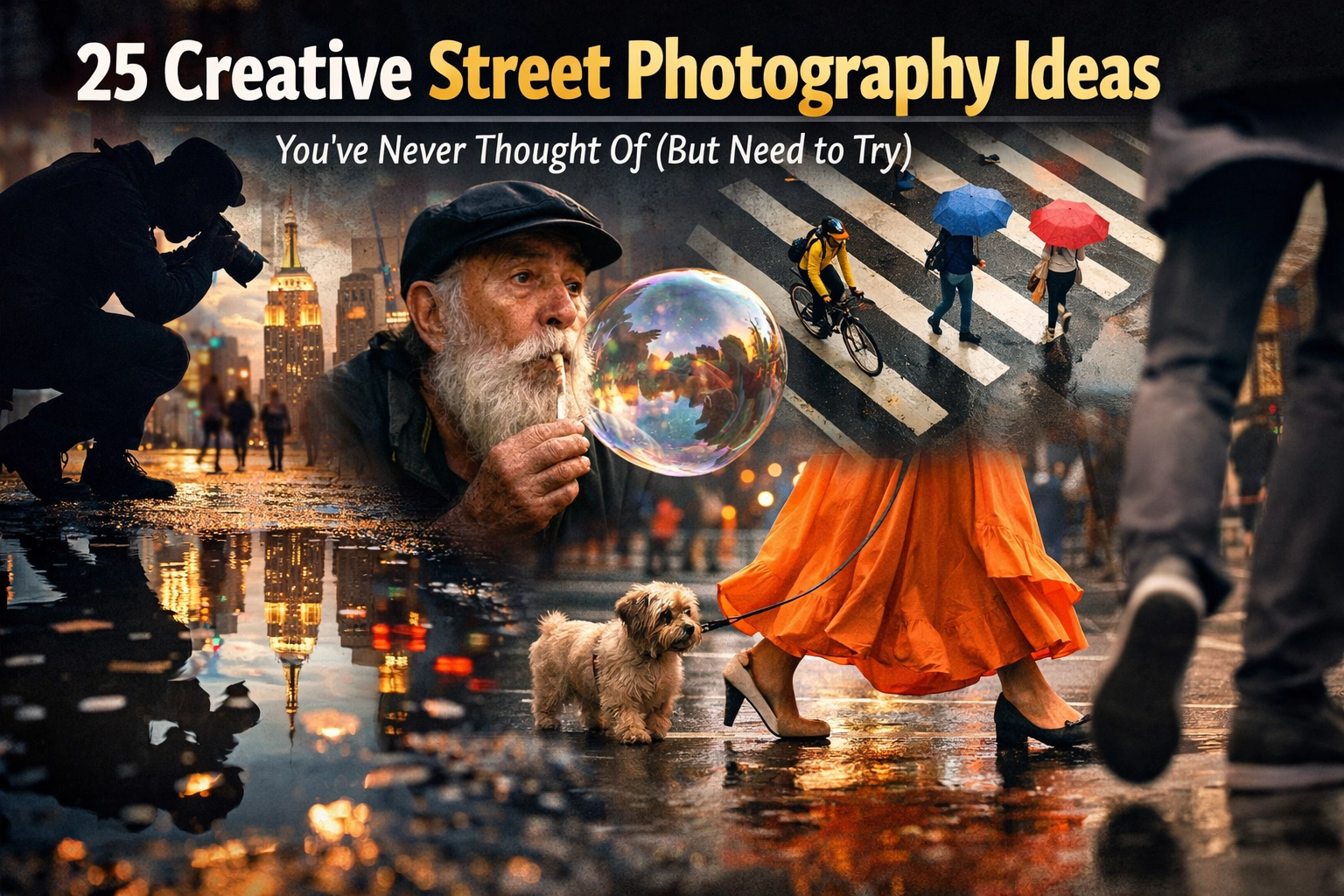
Here are 25 creative street photography ideas to get your shutter clicking again.
1. The "One Block, One Hour" Challenge
This is the ultimate cure for "photographer’s wanderlust." Pick one single city block. Don't leave it for 60 minutes. At first, you’ll think there’s nothing to shoot. By minute 40, you’ll start noticing the way the gum on the sidewalk creates a pattern, how the delivery guy’s routine is like a dance, and how the light hits a specific window for exactly three minutes. It’s about deep observation rather than hunting.
2. No Faces Allowed
Try a whole afternoon where you aren't allowed to show a single face. Focus on hands, shoes, the back of a jacket, or a silhouette. This forces you to tell a story through gesture and clothing rather than facial expressions. Plus, it’s a great way to stay compliant with our privacy policy while still getting high-impact shots.
3. Photograph People Photographing
We live in the era of the "content creator." Capture the tourists with their selfie sticks, the influencers posing in the middle of traffic, or the grandma trying to figure out her iPad. It’s a meta-commentary on our modern world and often results in some hilarious candid moments.
4. Hunt for Accidental Diptychs
Look for scenes where two unrelated things mirror each other in a single frame. Maybe a man in a red hat walking past a red fire hydrant, or a person’s posture matching the curve of a nearby statue. These "glitches in the matrix" make for incredibly satisfying images.
5. Shoot Only Reflections
Forget the subjects standing right in front of you. Look into shop windows, puddles, or the chrome of a parked car. Using reflections allows you to layer the world, mixing the interior of a store with the chaos of the street outside. If the colors feel a bit muddy, you can always clean them up using Luminar to bring back that punchy contrast.
6. The "Shadow Puppet" Assignment
Wait for high-contrast light: usually mid-day or late afternoon. Instead of photographing the people, photograph their shadows. Look for long, stretched-out limbs or shadows interacting with street markings. It’s minimalist, graphic, and visually striking.
7. Hands of the City
Hands tell a story that faces sometimes hide. Focus on a street vendor’s weathered hands, a couple holding hands, or someone gripping a subway pole. If you’re looking to improve your detail shots, check out some resources on macro techniques that can be applied to street work.
8. Street Still Life
Treat the junk on the street like a high-end product shoot. A crushed soda can, a lone shoe, or a discarded newspaper can be beautiful if the lighting is right. This is where your composition skills really get tested.
9. The Tilt Illusion
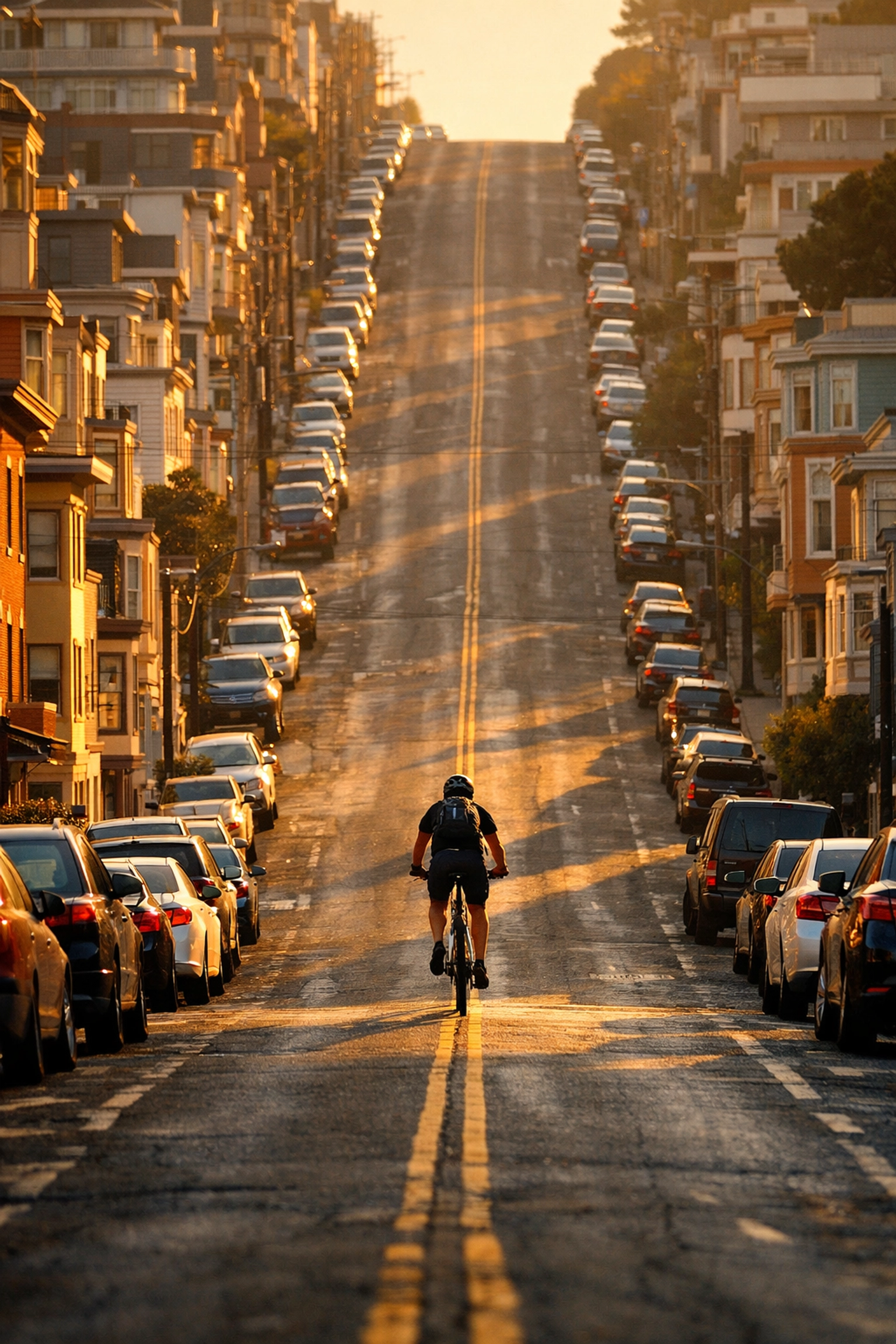
Instead of keeping your horizon perfectly level, experiment with "gravity-bending" angles. If you’re on a hill, try to keep a vertical line (like a building) straight while the street slants aggressively. It creates a sense of vertigo and energy that a standard shot just can't match.
10. Crowds as Landscapes
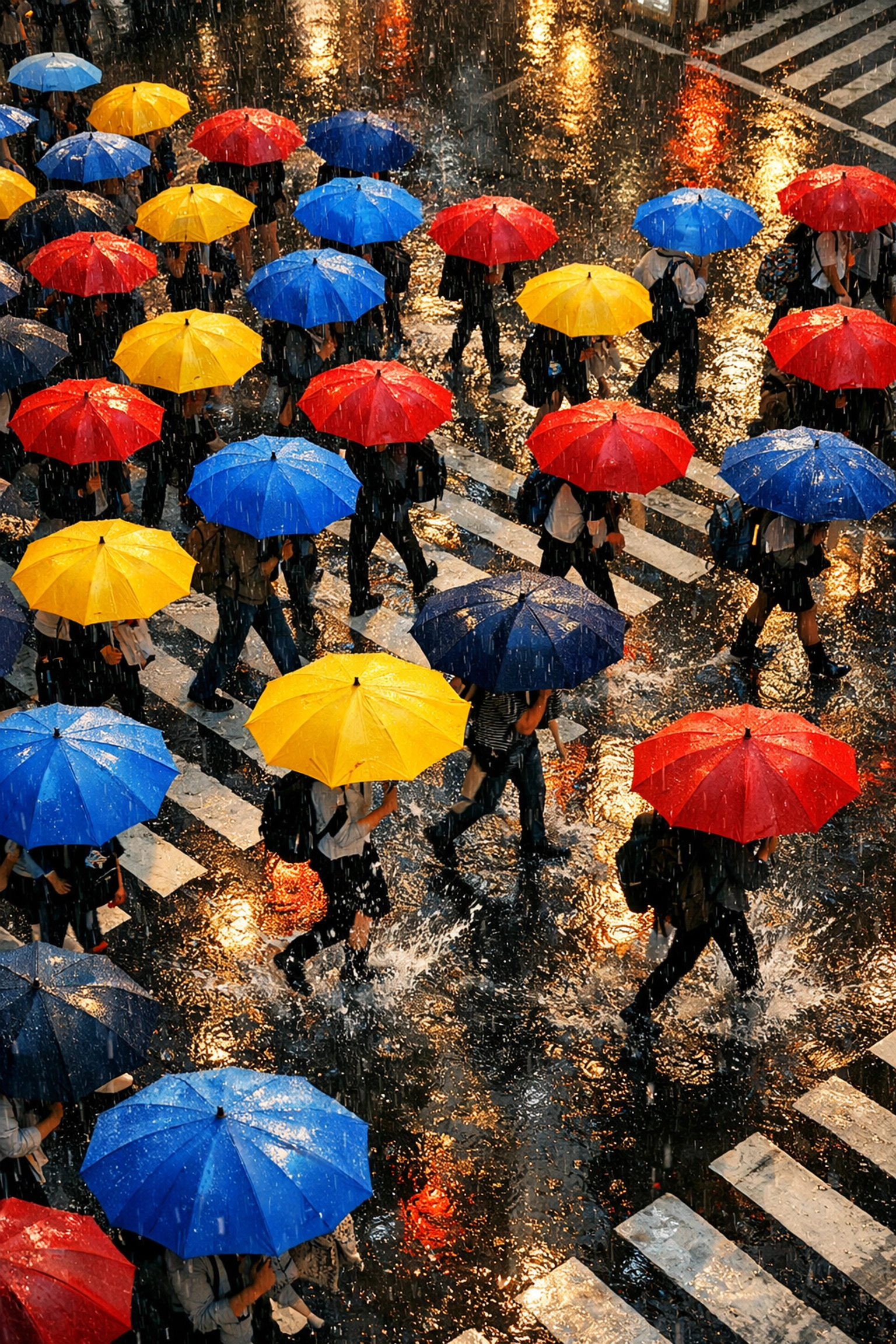
When you’re in a crowded area, stop looking for individuals. Treat the crowd as a texture. Look for patterns in umbrellas during a rainstorm or the synchronized movement of commuters at a crosswalk. Shoot from a high vantage point to emphasize the geometry.
11. Shoot Through Things
Add depth to your photos by shooting through fences, leaves, or dirty windows. It creates a "voyeuristic" feel, as if the viewer is peeking into a private moment. This layer of foreground blur can make a flat image feel three-dimensional.
12. Vacant Streets at the "Wrong" Time
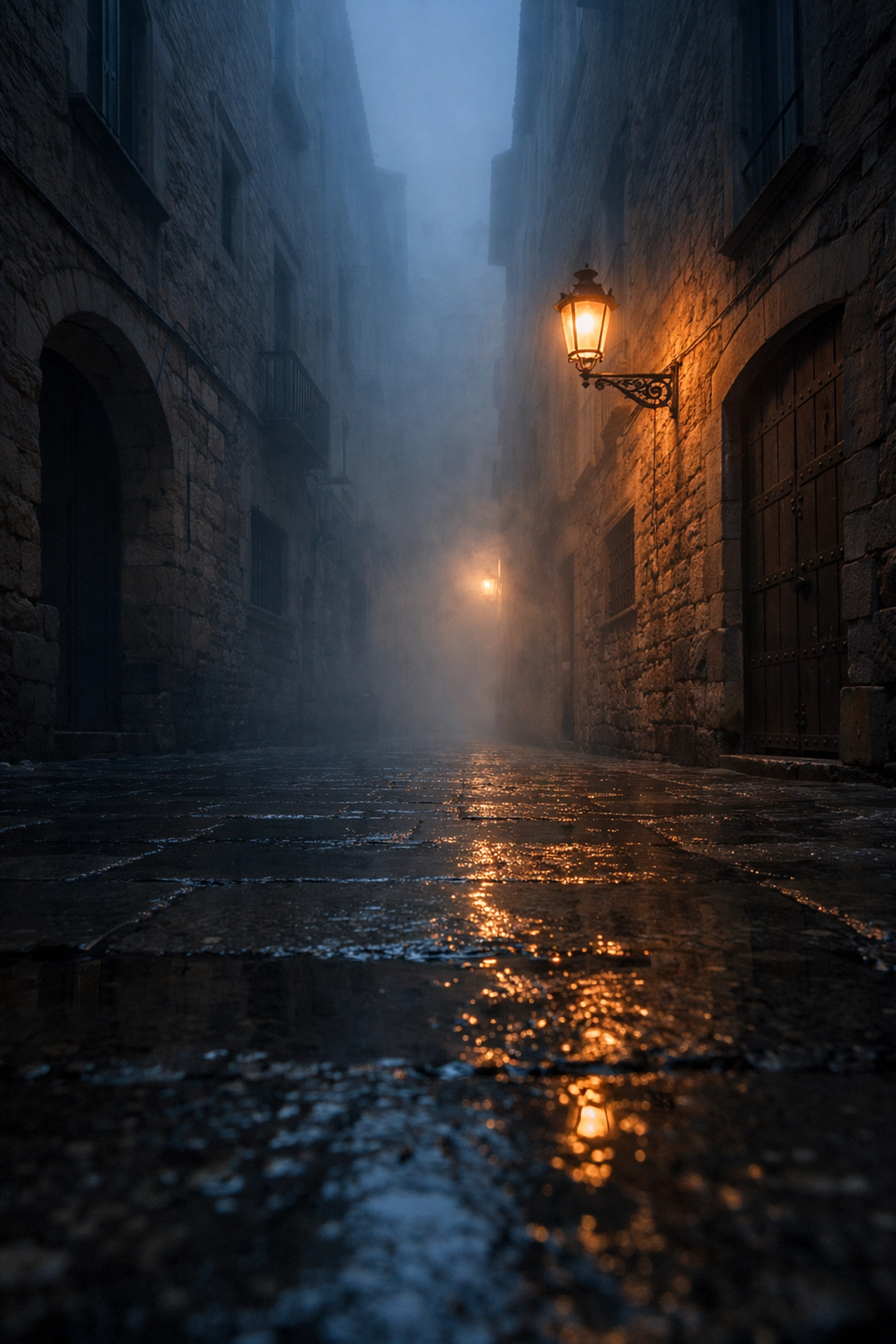
Go to a busy financial district on a Sunday morning or a popular park during a massive storm. Capturing usually crowded places when they are dead empty creates a haunting, cinematic atmosphere. It makes the architecture of the city the main character.
13. The "Color Coded" Outing
Pick one color: let’s say yellow. Spend two hours only taking photos where yellow is the dominant element. This trains your brain to filter out the noise and focus on specific visual cues. It’s a great exercise for any photographer, from beginners to pros who post on PhotoGuides.org.
14. Motion Blur and Panning
Don't be afraid of a little blur. Set your shutter speed slow (1/15th or 1/30th) and pan your camera with a passing cyclist or car. The subject will be relatively sharp while the background streaks away, giving the image a sense of speed and urban energy.
15. The Low-Angle "Dog’s Eye View"
Get your camera as close to the ground as possible. Use a flip-out screen if you have one. Shooting from a low angle makes ordinary people look like giants and gives a unique perspective on the textures of the street.
16. Silhouettes and Negative Space
Find a bright light source (like the sun peeking between buildings) and expose for the highlights. This will turn your subjects into black silhouettes. Focus on the shape and outline of the person to create a mysterious, artistic vibe.
17. The "Unlikely Connection"
Look for moments where two strangers who have nothing in common appear to be interacting. Maybe a businessman and a street performer are framed in a way that makes them look like they’re having a conversation. It’s all about the timing.
18. Follow the Leading Lines
The city is full of them: subway tracks, power lines, painted road markings. Use these lines to lead the viewer’s eye directly to your subject. It’s a classic composition trick that never fails to make a photo look professional.
19. Window Shopping
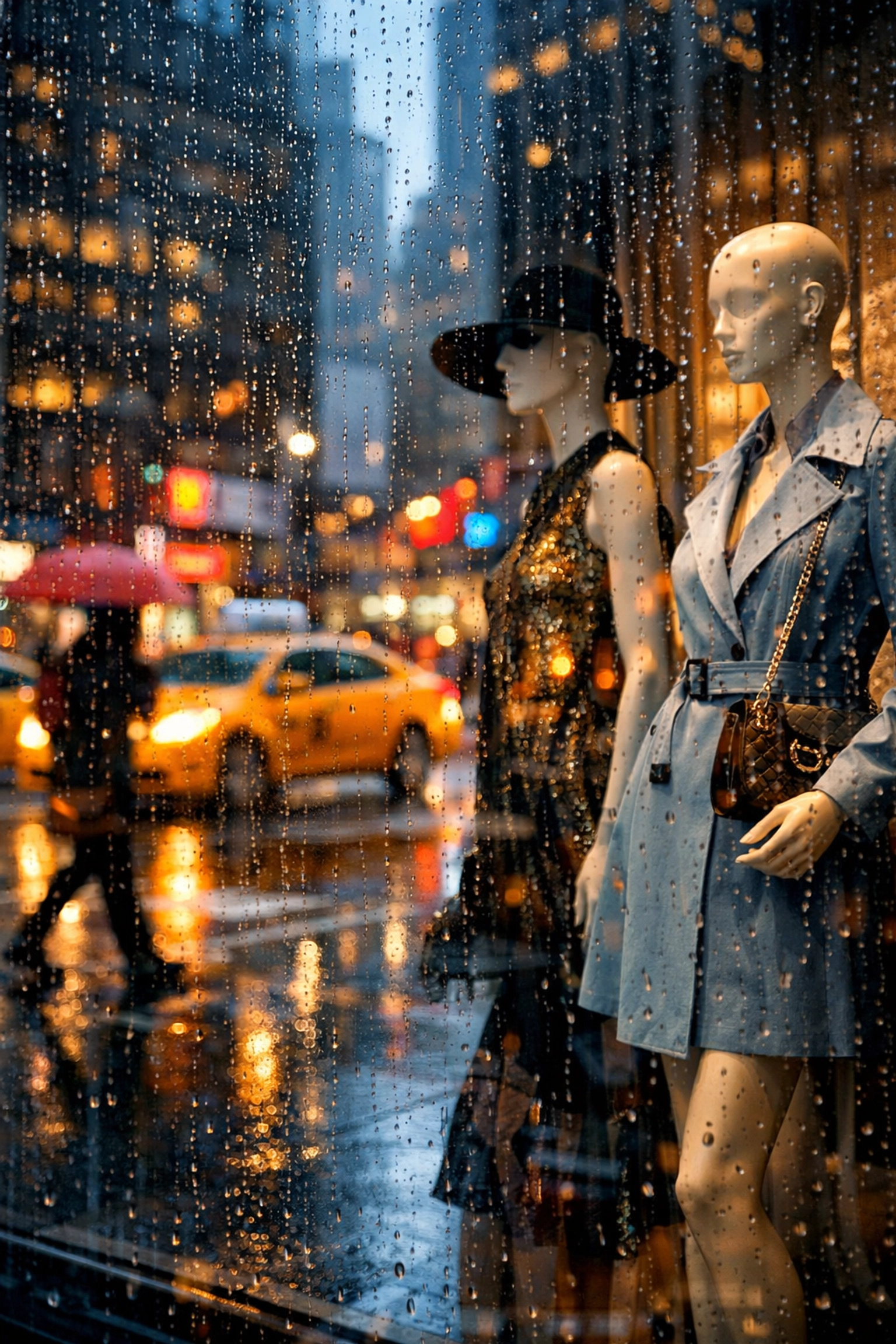
Photograph the interaction between the mannequins inside a store and the real people outside. Sometimes the mannequins look more "alive" than the tired commuters walking past them. It’s a great way to play with themes of consumerism and identity.
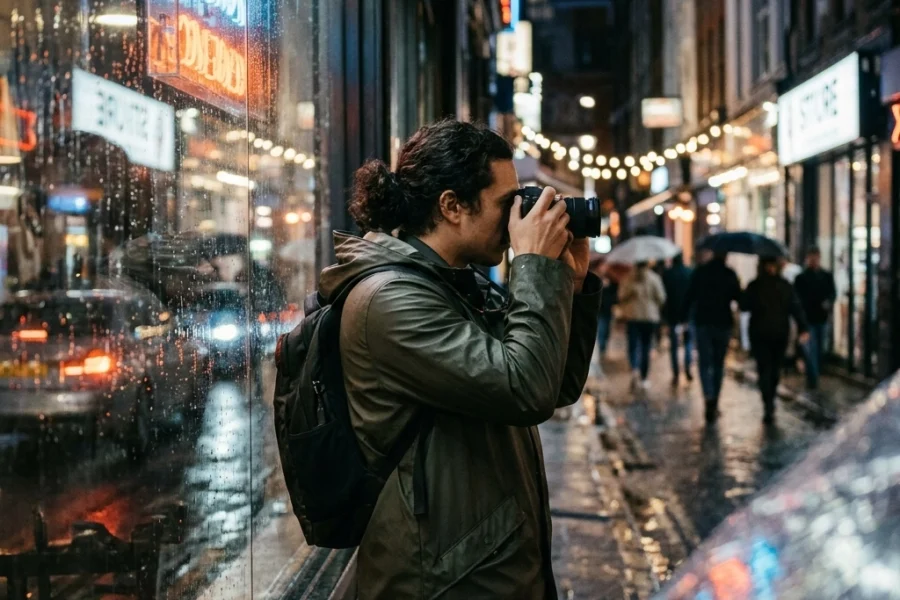
20. Weather Extremes
Most photographers stay home when it rains or snows. That’s a mistake. Rain creates puddles for reflections, and umbrellas add pops of color. Snow simplifies the landscape and hides the "clutter" of the city. If you’re worried about editing these tricky lighting conditions, our Ultimate Lightroom Preset Collection has plenty of tools to help you balance those tones.
21. Night Neon
Street photography doesn't end when the sun goes down. Use the neon signs of bars and theaters as your primary light source. The high-contrast, colorful glow creates a "Cyberpunk" aesthetic that is incredibly popular right now. If you're struggling with noise in low light, check out proshoot.io for tips on high-ISO management.
22. Focus on Typography
The city is covered in words. Signs, graffiti, billboards: use these to add literal meaning to your photos. A person walking past a "STOP" sign or a "DREAM" mural can create a powerful, albeit sometimes ironic, message.
23. The "Waiting Game"
Find a background that is visually stunning: a colorful wall, a perfect shaft of light, or an interesting piece of architecture. Now, just wait. Eventually, the right person will walk into that frame. This is how the masters do it. It’s less about hunting and more about fishing.
24. Public Transport Life
Buses, subways, and trains are goldmines for street photography. People are often in their own world, lost in thought or a book. The framing of windows and doors provides a natural "frame within a frame" for your subjects.
25. The "Wrong" Lens Experiment
Try doing street photography with a lens you "shouldn't" use. Use a 200mm telephoto to compress the scene from a block away, or a 14mm ultra-wide to get right in the middle of the action. Breaking the "rules" of gear is often where the most creative work happens.
Elevating Your Street Shots
Once you've spent the day out in the wild capturing these ideas, the work isn't done. The "raw" files are just the ingredients. To really make these street shots pop, you need a solid post-processing workflow.
While Lightroom is the industry standard: and you can find our installation instructions here: don't sleep on tools like Luminar. Its AI-driven tools are perfect for street photographers who want to quickly enhance sky detail or add atmospheric fog without spending hours on manual masking.
If you’re moving into professional territory, like real estate or fine art, the skills you learn on the street: composition, lighting, and timing: transfer perfectly. We even have a Real Estate Lightroom Preset System for those looking to turn their photography hobby into a business.
Why Street Photography Matters
In a world that is increasingly curated and filtered (thanks, Instagram), street photography remains one of the few ways to capture raw, unvarnished truth. It’s a historical record of how we live, dress, and interact in the year 2026.
Whether you’re shooting with a high-end kit or just your phone, the goal is the same: to find the extraordinary in the ordinary. If you ever feel like you've run out of things to photograph, just look at your feet, look at the shadows, or look at the person across the street. There is a story everywhere: you just have to be willing to see it.
For more inspiration and a look at some stunning street-adjacent work, check out Edin Chavez’s personal blog or explore the fine art side of things at Edin Fine Art.
The street is waiting. Go get it. And if you have some shots you're particularly proud of, feel free to check out our submissions page to share your work with the community.
Happy shooting.