

Most sports photographers focus on capturing action and technical prowess, but to truly elevate your work, you need to infuse emotional resonance into your images. By understanding the deeper narratives behind the sport, connecting with your subjects, and honing your observational skills, you can create powerful visual stories that evoke feelings and memories. In this post, we’ll explore strategies that will help you capture the essence of the moment, allowing your audience to not just see, but feel the excitement and passion of the game.
Understanding Emotional Sports Photography
To create emotional resonance in your sports photography, you must first recognize the moments that evoke strong feelings in both athletes and spectators. Emotional sports photography goes beyond capturing action; it tells a story filled with passion, struggle, and triumph. By understanding what strikes a chord with your audience, you can frame your shots to elicit the intended emotions and connect with viewers on a deeper level.
Defining Emotional Impact in Sports Images
On the surface, emotional impact in sports images is defined by the intensity of expression, the thrill of competition, and the rawness of human experience. Each photograph serves as a snapshot of an athlete’s journey, conveying their highs and lows. When an image resonates, it has the power to transcend the event itself, creating lasting impressions that stir feelings and memories in your audience.
The Psychology Behind Powerful Sports Moments
Powerful moments in sports evoke a range of emotions thanks to the psychological principles of storytelling, empathy, and connection. You can harness these elements to create images that resonate deeply with your audience. By capturing the nuances of emotion—whether it’s the joy of victory, the pain of defeat, or the spirit of perseverance—you allow viewers to relate to the image on a personal level.
Impact is a significant factor in understanding the psychology behind powerful sports moments. Each frame carries an emotional weight that can trigger memories or aspirations within the viewer. By conveying vulnerability, nostalgia, or exhilaration, you offer a glimpse into the human experience through your lens. This connection fosters a sense of empathy, allowing individuals to engage with your photography in a more profound way, ultimately enhancing the emotional impact of your work.
Technical Foundations
Any successful sports photographer must grasp the technical foundations of their craft. This means understanding your camera settings, lens selection, and composition techniques that can help convey the emotions of athletic competition. By mastering these elements, you can enhance the emotional impact of your images, making them resonate more deeply with your audience. Investing time in these technical details ensures that when the moment arrives, you are ready to capture it with skill and precision.
Camera Settings for Capturing Emotion
To depict powerful emotions in sports photography, you need to optimize your camera settings. Aim for a fast shutter speed to freeze action, while adjusting your aperture to create a shallow depth of field. This blurs the background, helping to isolate your subject and emphasize their emotion. Additionally, increasing the ISO can aid in low-light situations, allowing you to capture the intensity and drama of the moment without sacrificing image quality.
Lens Selection and Composition Techniques
The lens you choose and how you compose your shot can greatly influence the emotional tone of your photographs. Selecting the right focal length can isolate subjects, while strategic framing can draw the viewer’s eye to the action or emotion you wish to highlight.
In fact, using a wide-angle lens allows you to capture the energy of the environment, including the crowd’s reactions, while a telephoto lens helps you zoom in on the athlete’s expressions and body language. Experimenting with composition techniques, such as the rule of thirds or leading lines, can also enhance emotional resonance. By thoughtfully arranging your subjects within the frame, you guide the viewer’s focus and evoke a stronger emotional response to the captured moment.

Anticipating Key Moments
Now, capturing the essence of a sporting event hinges on your ability to anticipate key moments. This skill allows you to be ready for the unexpected, ensuring that you can capture those intense emotions as they unfold. By maintaining a keen awareness of the flow of the game, you position yourself to document the pivotal actions that resonate deeply with your audience. Your instincts will guide you in seeking the most powerful images that tell a compelling story.
Reading Player Body Language
Body language plays a significant role in sports; it conveys emotions and intentions that words cannot express. By closely observing players, you can identify subtle cues—such as posture, facial expressions, and gestures—that hint at mounting tension or celebration. This insight allows you to adjust your positioning and camera settings in anticipation of those emotive moments, leading to more impactful images.
Recognizing Game-Changing Situations
Recognizing game-changing situations is crucial for capturing emotions that resonate with your audience. This could be a last-minute goal, a surprising foul, or the moment a player overcomes an injury, all of which can shift the momentum of the game and evoke powerful responses from players and fans alike.
Plus, being attuned to the game’s dynamics means you need to stay engaged with the interactions among players, coaches, and the crowd. Watch for escalating tensions, intense celebrations, or pivotal decisions made during the game; these elements can signal the onset of a powerful moment. Paying attention to the flow of the event will help you to instinctively bracket your shots to catch the peak of these emotional surges, enriching your sports photography portfolio.

Capturing Human Connection
Despite the athletic prowess displayed in sports photography, the true heart of the moment lies in the human connections that unfold. By focusing on the relationships between players, coaches, and fans, you can evoke a deeper emotional response from your audience. Look for moments of camaraderie or rivalry, and capture how these interactions reflect the passion and dedication of everyone involved. This approach allows you to not only document the action but also convey the emotional energy inherent in sports.
Focus on Facial Expressions
Before you press the shutter, attentively observe the athletes’ facial expressions. The face often serves as a powerful storyteller, conveying emotions ranging from elation and determination to disappointment and vulnerability. By capturing these nuanced expressions, you can create a stronger connection with your viewers, allowing them to experience the highs and lows of the sporting event alongside the athletes.
Documenting Athlete-Crowd Interactions
Documenting athlete-crowd interactions adds a dynamic layer to your sports photography that resonates emotionally. These moments reveal the synergy between players and fans, showcasing the energy and support that fuels athletes on the field. From the exhilaration of a winning goal to the heartbreak of a missed opportunity, capturing these exchanges invites your audience into the experience, illustrating how these events impact everyone involved.
Understanding the powerful bond between athletes and their supporters is key to enriching your sports photography. These interactions can manifest in exuberant celebrations, heartfelt gestures, or silent moments of reflection. By honing in on these connections, you convey a narrative that transcends the mere action of the sport. Your images will not only depict athletic skill but also encapsulate the environment that surrounds it, ultimately fostering a more profound emotional resonance with your audience.
Beyond the Action
After capturing the high-octane moments of the game, the heart of your sports photography lies in the quieter, more intimate scenes that unfold around the action. These moments often reveal the true spirit and emotional depth of the sport, allowing you to connect with your audience on a deeper level. By focusing on the environment, the athletes’ interactions, and the audience’s reactions, you can tell a more complete story that resonates long after the final whistle.
Pre and Post-Game Emotions
Among the most telling moments in sports are those that occur before and after the game. Athletes prepare both physically and emotionally, and capturing these moments allows you to convey their anticipation, focus, and sometimes even vulnerability. Look for interactions between teammates, coaches, and fans, as these connections add layers to the narrative you are creating.
Behind-the-Scenes Storytelling
An often-overlooked aspect of sports photography is the behind-the-scenes storytelling that takes place outside of the intense action. This involves capturing the world beyond the field—the training sessions, the team locker room dynamics, and the daily lives of the athletes. These images provide context and help humanize the players, allowing your audience to connect on a more personal level.
Action is only part of the story in sports photography. By exploring behind-the-scenes moments, you can highlight the dedication, teamwork, and challenges that athletes face daily. Seek out candid shots: a coach giving advice, teammates celebrating a small victory in practice, or an athlete reflecting in solitude. These images not only add depth to your portfolio but also create emotional connections that resonate with viewers and draw them into the sport’s broader narrative.

Post-Processing for Impact
Not every shot speaks volumes right out of the camera. Post-processing allows you to refine your images, enhancing emotional resonance and drawing viewers into the action. By adjusting elements like color and contrast, you can elevate the overall mood, helping your audience to feel the intensity of the moment captured in your sports photography.
Color and Contrast Enhancement
To create a vivid and dramatic atmosphere, select colors that reflect the energy of the sport. Boosting contrast not only adds depth to your images but also helps highlight the emotions displayed by your subjects. Fine-tuning these elements will transform your photographs into compelling visual stories that resonate with viewers.
Selective Editing for Emotional Focus
For certain moments, you might want to emphasize specific elements that evoke emotion. By selectively editing parts of your image, you can draw attention to a player’s expression or the dynamic action of the game. This technique highlights the raw feelings of triumph, defeat, or determination, making your sports photography more impactful.
Also, consider using tools like cropping or vignetting to direct the viewer’s eye toward the focal points of your images. By softening background distractions or enhancing the sharpness of your subjects, you can create a stronger emotional connection. This approach ensures that your audience feels the narrative you’re portraying, whether it’s the thrill of victory or the agony of defeat.
To wrap up
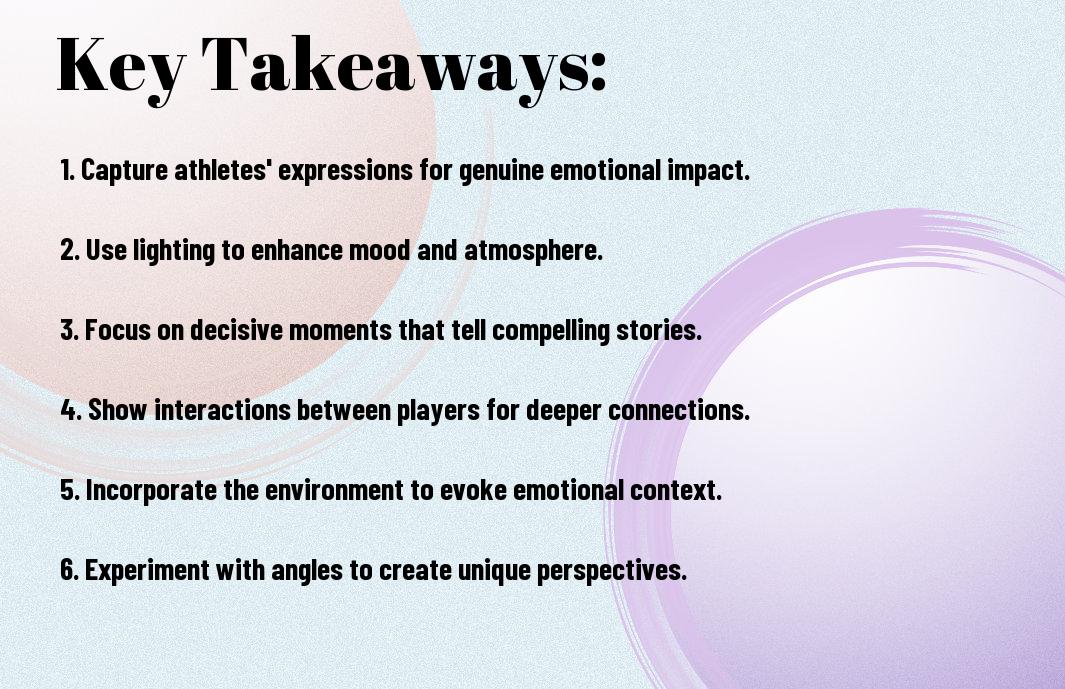
Conclusively, infusing emotional resonance into your sports photography requires a deep understanding of the sport, the athletes’ emotions, and the contexts in which moments unfold. By focusing on candid moments, utilizing light effectively, and being in the right place at the right time, you can capture the intensity and passion that make sports memorable. Don’t hesitate to explore different perspectives and angles, as these can reveal stories that resonate with both the athletes and your audience, elevating your work beyond mere images to impactful visual narratives.




