

With the photography industry becoming increasingly competitive, understanding the arcane techniques that can set you apart is vital for your success. There are specific strategies and practices that not only enhance your creative skills but also bolster your business acumen. In this blog post, you will discover necessary techniques that will elevate your photography venture, from mastering your technical equipment to developing a distinct brand identity. Let’s probe into what you need to know to turn your passion into a thriving business.
Understanding the Photography Market
To successfully launch your photography venture, you must first grasp the intricacies of the photography market. This involves recognizing current trends, pricing structures, and the demands of different demographics. By familiarizing yourself with the marketplace, you can tailor your approach to meet the specific needs and preferences of your target audience, ultimately positioning your skills and services to stand out in a competitive field.
Analyzing Target Audiences
Behind every successful photography business is a deep understanding of your target audience. You need to identify who your ideal clients are, what they value in photography, and how they prefer to engage with photographers. This knowledge enhances your marketing strategies and helps you create a portfolio that resonates with your audience’s tastes and interests.
Identifying Competitive Landscape
Identifying the competitive landscape is necessary for carving out your niche in the photography market. You should investigate other photographers in your area or specialty, analyzing their services, pricing, and marketing techniques. Understanding what they do well—and where there may be gaps—can provide you with valuable insights to differentiate your offerings and enhance your business strategy.
The competitive landscape is not only about knowing who your competitors are but also understanding their strengths and weaknesses. You can analyze their portfolios, client testimonials, and online presence to gauge what attracts customers. This information is vital as it allows you to find your unique selling proposition and tailor your services to better meet the demands of potential clients, giving you the edge in a crowded market.

Essential Equipment and Tools
Some key equipment and tools can make a significant difference in your photography venture. From high-quality cameras to lenses and accessories, having the right gear enhances your ability to capture stunning images. Additionally, necessary tools like tripods, lighting equipment, and camera bags will support your workflow and enable you to adapt to various shooting environments, ensuring your success in the field.
Camera Gear Recommendations
With so many options available, selecting the best camera gear can be overwhelming. Start with a DSLR or mirrorless camera that fits your budget and shooting style. Invest in versatile lenses, such as a 24-70mm zoom for everyday use and a prime lens for low-light situations. Don’t forget to consider accessories like filters, battery grips, and external flashes to elevate your photography outcomes.
Software for Editing and Management
Among the many software options available, selecting the right editing and management tools is vital for your photography business. Programs like Adobe Lightroom and Photoshop offer powerful editing features that allow you to enhance your images while maintaining their quality. Additionally, software for organizing your photos, such as Capture One or Photo Mechanic, can save you time and help you stay efficient.
Further, utilizing a digital asset management system will streamline your workflow. By categorizing and tagging your images, you make it easier to find specific photos when needed. Additionally, cloud storage solutions provide secure backups of your valuable work, ensuring that your images are protected while allowing you to access them from anywhere. Mastering these software tools is necessary for presenting your work professionally and efficiently managing your growing portfolio.
Developing a Unique Style
After establishing the foundation of your photography venture, developing a unique style becomes paramount. This personal aesthetic will not only differentiate you in a crowded market but will also resonate with your ideal clients. Embrace your individuality, experiment with techniques, and let your personality shine through your work, creating a signature look that speaks to your audience.
Importance of a Personal Brand
Style is necessary when building a personal brand. It reflects your visual identity and values, helping potential clients to connect with you on a deeper level. A strong personal brand fosters credibility and recognition, as clients will associate your unique style with the quality and consistency of your photography. Crafting a recognizable brand will ultimately lead to building trust and attracting a loyal clientele.
Exploring Various Photography Styles
On your journey to define your unique style, exploring various photography styles is fundamental. This process allows you to discover the techniques and visual narratives that resonate with you, paving the way for authentic creative expression. You might experiment with portrait, landscape, street, or macro photography, among others, to see what aligns with your artistic vision and the stories you want to tell.
And as you probe into these diverse styles, keep in mind that this exploration is not about imitation but rather inspiration. By understanding the nuances of each photography style, you can selectively incorporate elements that enrich your work. This blend of inspirations will help you refine your unique approach, creating a signature style that distinguishes your photography and captivates your audience. Through practice and experimentation, you will find the visual language that best represents your artistic voice.

Marketing Strategies for Photographers
Not mastering marketing strategies will hinder your photography venture’s potential for success. Effective marketing techniques play a vital role in increasing your visibility, attracting clients, and showcasing your unique style. By understanding your target audience and utilizing various promotional channels, you can significantly enhance your reach and create a sustainable business.
Leveraging Social Media Platforms
Marketing through social media allows you to connect with a broader audience and showcase your work in real-time. Platforms like Instagram and Pinterest are particularly effective for photographers due to their visual nature. Regularly posting high-quality images, behind-the-scenes content, and engaging stories enhances your brand presence and invites potential clients to reach out.
Building an Effective Portfolio
Against common belief, a successful portfolio goes beyond simply compiling your best work; it tells a story that aligns with your brand identity. Your portfolio should reflect a cohesive style that resonates with your target audience while showcasing your versatility. Tailor your selection of images to highlight specific niches, and consider updating it regularly to include your latest projects.
Leveraging a well-structured and visually appealing portfolio can set you apart from the competition. As you curate your collection, focus on quality over quantity, ensuring that each image demonstrates your skills and unique perspective. Including a mix of personal projects, client commissions, and styled shoots can illustrate your versatility, while also drawing in potential clients who relate to your artistic vision.

Networking and Collaborations
All aspiring photographers must understand the importance of networking and collaborations to elevate their ventures. Building relationships with other professionals in the industry can open doors to new opportunities, sharing knowledge, and enhancing your creative vision. Engaging with others can lead to exciting projects and expose you to a wider audience, helping you establish your brand and reputation in the photography community.
Connecting with Other Professionals
Below, you’ll discover that connecting with other professionals can amplify your reach and support your growth. Whether it’s reaching out to fellow photographers, makeup artists, or event planners, forming these connections can result in fruitful collaborations that showcase your work and introduce you to new clients. Attend workshops, industry events, or even local meet-ups to initiate these relationships and foster a collaborative spirit.
Joining Photography Communities
Against the backdrop of a vibrant photography scene, joining local or online photography communities can greatly enrich your experience. These communities often provide valuable resources, critique sessions, and networking opportunities that you might not find elsewhere. By engaging with like-minded individuals, you can expand your knowledge, share experiences, and even collaborate on projects, which can be a game changer for your photography venture.
But joining photography communities isn’t just about networking; it’s also about learning and growing together. Engaging in discussions, participating in photo challenges, and attending group outings can significantly enhance your skills and creativity. These networks can serve as your support system, helping you navigate the challenges of the photography business while also fostering a sense of belonging in a community that shares your passion.
Legal Considerations
Many aspiring photographers overlook the importance of legal considerations when launching their business. Understanding the legal landscape can protect your work and ensure compliance, allowing you to focus on your craft. From copyright issues to business structures, addressing these aspects early will save you time and potential headaches in the future.
Understanding Copyright and Licensing
Considerations surrounding copyright and licensing are vital for protecting your images. You need to understand your rights as a creator and how to navigate the licensing process. This will not only safeguard your work but also outline how you can monetize it legally.
Structuring Your Business Legally
Considerations for structuring your business legally involve choosing the right business entity, such as a sole proprietorship, LLC, or corporation. Each type has distinct legal and financial implications that can impact your operations and taxes.
This decision shapes how your business is viewed legally and affects liability, taxes, and management. For example, an LLC can offer personal liability protection, separating your personal assets from your business risks. It’s advisable to consult a legal professional to help you choose the best structure that aligns with your business goals and personal circumstances.
Summing up
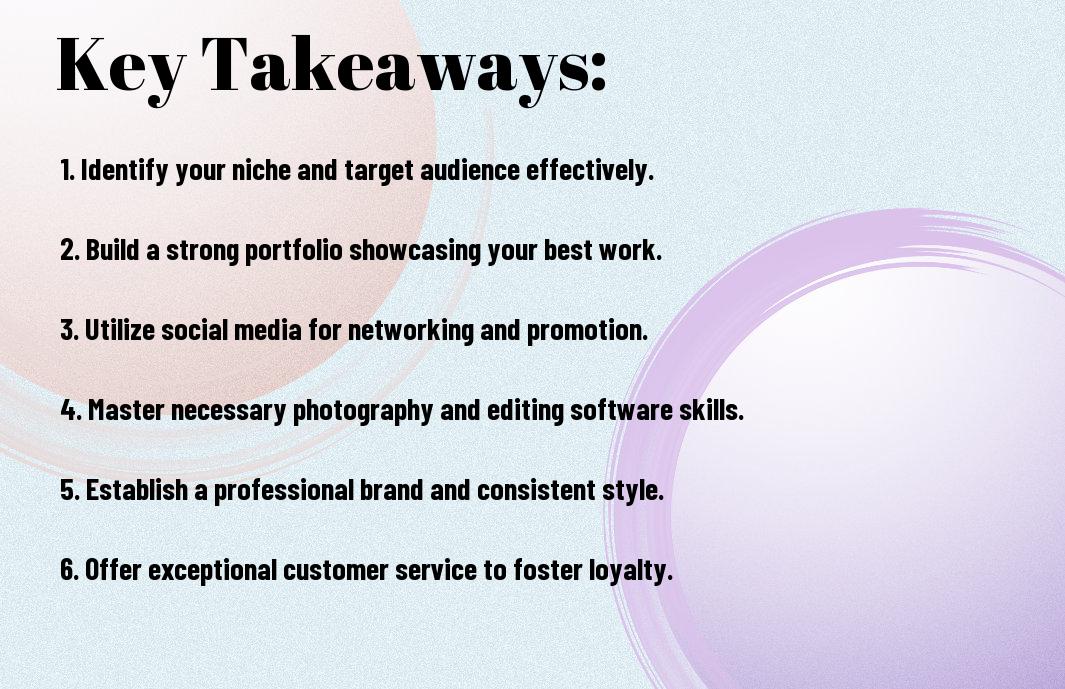
Considering all points, launching a successful photography venture requires a blend of technical skills and effective business strategies. You must hone your photography techniques to deliver high-quality images while mastering marketing approaches to promote your brand. Building a strong online presence through a portfolio website and social media is necessary for attracting clients. Additionally, networking with other professionals and continuously seeking feedback will enhance your credibility. By combining your artistic vision with strategic planning, you can elevate your photography business to new heights.