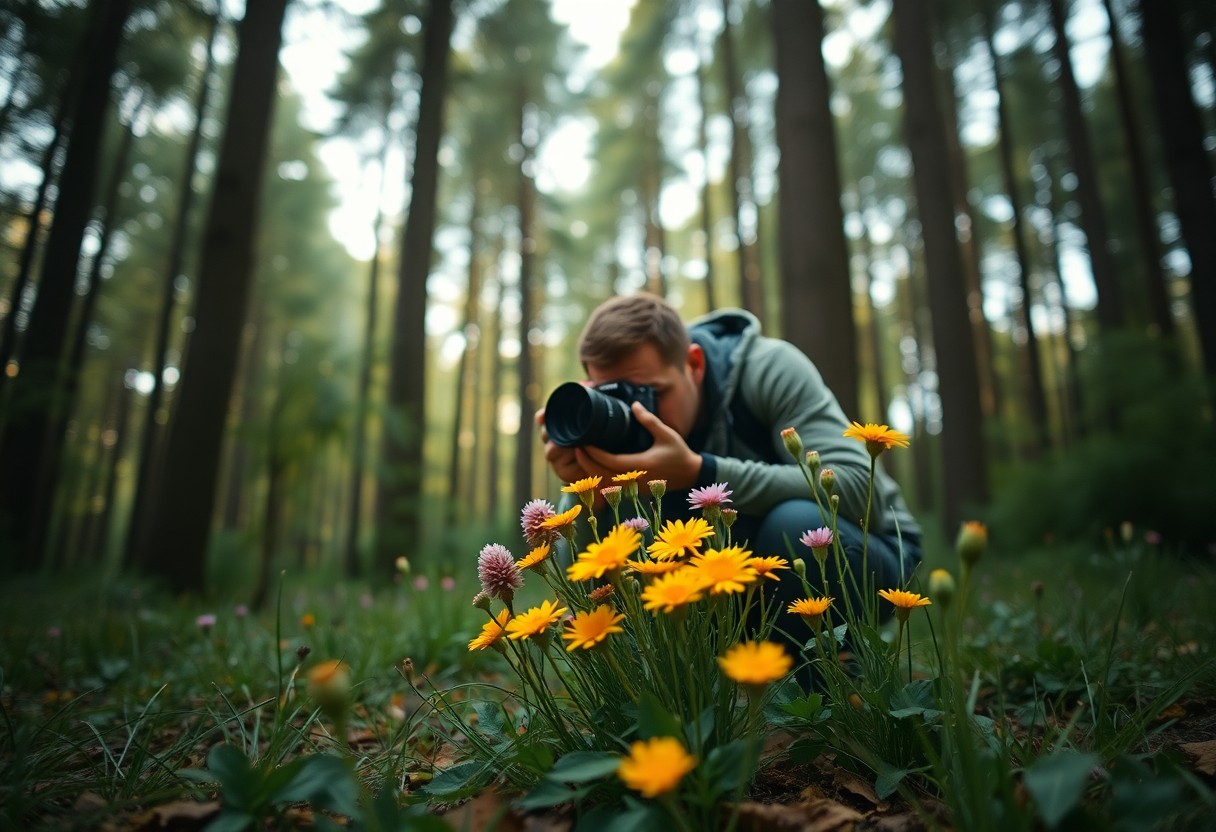
There’s a common perception that chromatic aberrations are purely negative artifacts in photography, impacting the sharpness and quality of your images. However, understanding these distortions can actually enable you to harness their creative potential. Instead of viewing them solely as flaws, you can explore how they might add a unique artistic touch to your photographs, enhancing the overall visual experience. This guide will help you navigate through the complexities of chromatic aberrations and discover their unexpected benefits in your photography journey.

Key Takeaways:
- Chromatic aberrations can add unique artistic effects to images.
- They can enhance the perception of depth and three-dimensionality.
- Understanding and controlling aberration can improve overall image quality.
- Post-processing techniques can effectively correct or emphasize these effects.
- Chromatic aberrations are a natural phenomenon that photographers can intentionally use for creative purposes.
Understanding Chromatic Aberration
Chromatic aberration occurs when a lens fails to focus all colors to the same convergence point, leading to a misalignment of color wavelengths in your images. This optical defect is particularly noticeable around edges of objects, where color fringing appears, often compromising the overall quality and sharpness of your photographs.
Definition and Causes
Chromatic aberration primarily arises from the dispersion of light within a lens. Each wavelength of light refracts differently, causing color distortion in the final image. Commonly found in low-quality lenses, this issue can also result from using lenses with inappropriate aperture settings or experiencing extreme focal lengths.
Types of Chromatic Aberration
Chromatic aberration can be categorized into two main types: longitudinal and lateral. Longitudinal chromatic aberration occurs along the optical axis and leads to color fringing that varies with focus. Lateral chromatic aberration, on the other hand, manifests as color shifts at the edges of the frame, visible at a constant focus. Understanding these types helps you manipulate light to your advantage, emphasizing certain aspects of your photographs.
| Type | Description |
| Longitudinal | Color fringing along the optical axis. |
| Lateral | Color shifts visible at the image edges. |
| Primary Causes | Lens dispersion and quality. |
| Effects | Image quality degradation and softness. |
| Examples | Lower-quality lenses vs. premium lenses. |
In photography, the two types expose varying characteristics of chromatic aberration. Longitudinal aberration often leads to blurry contrast in in-focus areas, while lateral aberration primarily affects the image’s periphery. You can counteract these effects by utilizing higher quality lenses or post-processing techniques. Understanding these intricacies can vastly improve your photographic outcomes.
- Longitudinal causes fringing in focus areas.
- Lateral leads to edge color shifts.
- Quality of lenses impacts incident light.
- Dispersion contributes to light distortion.
- Thou can greatly enhance your photos by addressing these issues.
| Impact | Maintenance |
| Decreased sharpness | Use quality lenses |
| Inaccurate colors | Selective editing techniques |
| Softness in details | Aperture adjustments |
| Effect on contrast | Lens calibration |
| Thou need to understand these impacts for improved results. |

The Impact of Chromatic Aberration on Images
Chromatic aberration can significantly affect the overall quality of your images. You may notice unwanted color fringing around high-contrast edges, leading to a reduction in sharpness and detail. This effect, particularly prevalent in wide-angle lenses or when shooting in bright conditions, can detract from your intended composition, making it imperative to understand its impact on your visual storytelling.
Effects on Image Quality
The presence of chromatic aberration often results in blurred edges and ghostly outlines. It can obscure fine details and introduce unwanted hues, which can be frustrating if you’re aiming for pristine clarity. This optical distortion may necessitate post-processing corrections, which can consume valuable time, ultimately impacting your workflow and the integrity of your final images.
Perception in Different Genres of Photography
In various photography genres, the perception of chromatic aberration can vary widely. For instance, in portrait photography, you might find that this distortion disrupts the subject’s skin tones, while in landscape photography, it can add a surreal quality to scenes. Understanding how chromatic aberration is received in different contexts helps you make informed choices about its use or correction.
In genres like fashion or fine art photography, chromatic aberration may be embraced for its artistic flair, enhancing a creative narrative. Conversely, in commercial or documentary photography, precision trumps aesthetics, and aberrations can be viewed negatively. For example, you might find that a subtle hint of fringing in a speculative landscape image adds depth, while the same in a real estate listing could reduce the perceived value of a property. Balancing creativity with technical clarity based on the genre is key to leveraging chromatic aberration effectively.
Chromatic Aberration as a Creative Tool
Instead of seeing chromatic aberration solely as a flaw, you can leverage it as a creative tool in your photography. By intentionally allowing color fringing to occur, you can enhance mood, create a dreamlike atmosphere, or evoke nostalgia. Embracing this imperfection opens a gateway to unique, captivating visuals that can set your work apart.
Artistic Applications
Consider using chromatic aberration to accentuate the edges of subjects in your composition. By highlighting contrasting colors, you can draw attention to specific areas in your photograph, transforming an ordinary image into something extraordinary. Many artists incorporate it as a deliberate effect, channeling its unpredictability into their creative process.
Enhancing Visual Storytelling
When employed thoughtfully, chromatic aberration can play a significant role in enhancing visual storytelling. Instead of detracting from your narrative, the vibrant color shifts can allude to emotions, time, or place, thus enriching the viewer’s experience. For instance, in a landscape photo, a hint of color fringe could evoke twilight’s magical quality, adding layers to your story.
By juxtaposing chromatic aberration with your subjects, you can expertly manipulate viewer perception. This technique can evoke feelings of tension or tranquility, depending on your image’s context. Infusing your images with intentional color shifts allows you to craft narratives that are richer and more immersive, propelling the story forward while engaging the audience on a deeper level. Additionally, iconic photographers such as William Eggleston often employ such techniques to evoke feelings tied to memory and place, showcasing how impactful this method can be when used thoughtfully.
Techniques to Manage Chromatic Aberration
Addressing chromatic aberration in photography requires a blend of preventive measures and corrective techniques. You can effectively manage these color fringing issues through careful lens selection, shooting technique, and post-processing tools. By developing an understanding of both the origins of these aberrations and how to mitigate them, your final images can maintain their vibrancy and clarity.
Prevention and Minimization
To prevent chromatic aberration, start by using high-quality lenses known for their optical performance. Lenses with low dispersion glass are designed to minimize these imperfections. Additionally, shooting at optimal apertures—typically between f/5.6 and f/8—helps reduce the likelihood of aberrations. Avoiding extreme angles and excessive zoom can also be beneficial.
Post-Processing Solutions
Post-processing offers powerful tools to correct chromatic aberrations. Software like Adobe Lightroom and Photoshop includes specific modules to identify and reduce color fringing. You can effectively use these tools by applying adjustment sliders to control colors at the edges of your photos, ensuring a polished final product.
In programs like Lightroom, navigate to the ‘Lens Corrections’ tab, where you can find options to remove chromatic aberration automatically. This feature is particularly effective, as it utilizes lens profiles to understand the specific aberrations associated with your lens. You can also manually adjust the green and purple fringe sliders for precise control, restoring the true color representation in your images. For more extreme cases, Photoshop allows for selective color adjustments using masking techniques, ensuring that your corrections don’t unintentionally alter the rest of the photo.

Case Studies: Chromatic Aberration in Action
Examining real-world examples of chromatic aberration reveals both its challenges and unique aesthetic qualities. Photographers often embrace these effects to create striking visuals that stand out. Here are notable case studies:
- Case Study 1: Ansel Adams – “Moonrise, Hernandez” – Exhibited slight green fringing near contrasting edges, enhancing the ethereal feel.
- Case Study 2: Andreas Gursky – “Rhein II” – Amplified color separation to evoke emotion, with distinct chromatic shifts enriching the landscape.
- Case Study 3: Henri Cartier-Bresson – Signature street images show under-corrected lenses revealing red and blue edges, adding a layer of dynamism.
- Case Study 4: Viviane Sassen – Fashion photography integrating fringe effects to blur lines, creating an avant-garde aesthetic.
Notable Photographers and Their Use
Several renowned photographers have intentionally employed chromatic aberration to enhance their art, using it as a stylistic choice rather than a flaw. By embracing this phenomenon, they produce images with a distinctive character, transforming potential distractions into focal points that provoke thought and engage viewers.
Analyzing Iconic Images
Exploring iconic photographs that showcase chromatic aberration allows for a deeper understanding of its artistic implications. Take for example Gursky’s “Rhein II,” where shifting colors not only add depth but also challenge your perception of landscape photography. Analyzing these works opens a dialogue on the interplay between lens properties and creative expression, revealing how imperfections can produce profound visual narratives. The strategic use of color fringing elevates the composition, urging you to reconsider the boundaries of conventional photography.
To wrap up
Now that you understand the role of chromatic aberrations in photography, you can appreciate how they can enhance your creative expression. Instead of viewing them purely as flaws, consider how they can add unique qualities to your images. By experimenting with different techniques to either minimize or embrace these aberrations, you can discover a distinctive style that reflects your vision. Ultimately, recognizing these elements as a potential asset allows you to expand your photographic skills while enriching your artistic journey.
FAQ
Q: What are chromatic aberrations in photography?
A: Chromatic aberrations occur when a lens fails to focus all colors to the same convergence point, leading to colored fringes around high-contrast edges in an image.
Q: How can chromatic aberrations be utilized creatively in photography?
A: Photographers can use chromatic aberrations to create artistic effects, adding a unique aesthetic to images, especially in portrait or abstract photography.
Q: What types of chromatic aberrations exist?
A: There are two main types: longitudinal chromatic aberration, which varies with distance from the lens, and lateral chromatic aberration, which affects colors along the edges of the frame.
Q: Can chromatic aberrations be corrected in post-processing?
A: Yes, most photo editing software offers tools to correct chromatic aberrations, allowing photographers to minimize or eliminate their impact on final images.
Q: Are chromatic aberrations more noticeable with specific types of lenses?
A: Yes, low-quality or wide-angle lenses tend to exhibit more chromatic aberrations, while high-quality lenses with better optical designs can minimize these issues.