We’ve all been there. You decide to level up your photography game, you sign up for the industry standard, and for a few months, everything is great. Your colors are popping, your masks are precise, and you feel like a pro. Then, life happens. Maybe you want to switch to a different workflow, or maybe you realized you aren't using the software enough to justify the monthly drain on your bank account. You go to click "cancel," and suddenly, it feels like you’re trying to break out of a maximum-security prison.
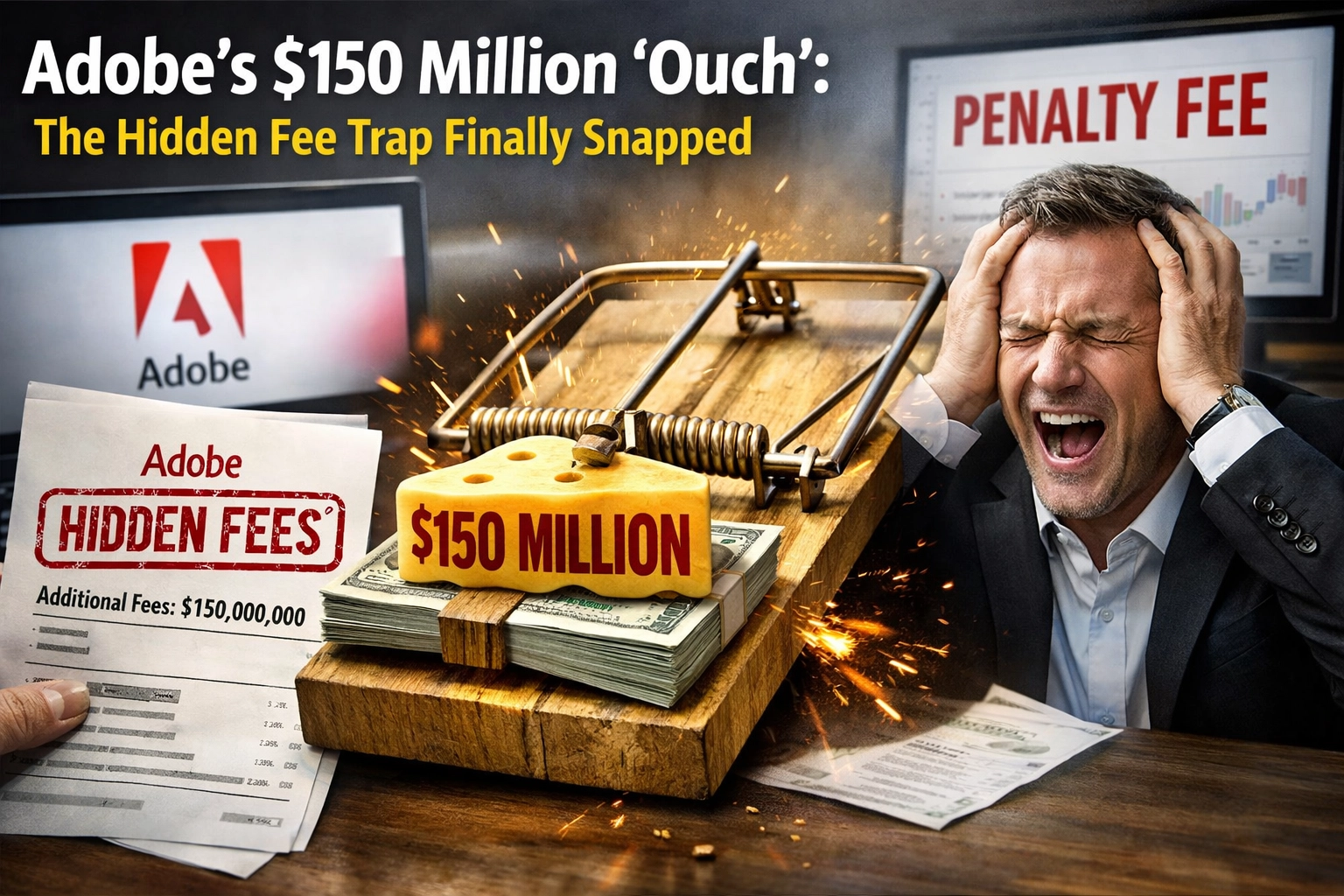
Adobe has finally been called out for this digital maze. The Department of Justice (DOJ) just slapped Adobe with a $150 million settlement after a long-running battle over what the government calls "deceptive" subscription practices. If you’ve ever felt like Adobe was holding your credit card hostage, you aren't crazy: and you aren't alone.
The "Annual Paid Monthly" Mirage
The core of the issue: and the reason Adobe is currently writing a very large check: is the "Annual Paid Monthly" (APM) plan. To the average photographer, "monthly" usually means "pay by the month and leave when I want." But Adobe’s version was more like a "you’re in this for a year, and if you try to leave early, we’re taking half of what’s left in your wallet" plan.
According to the FTC and the DOJ, Adobe buried the details of these early termination fees (ETF) in fine print and behind inconspicuous hyperlinks. They basically made the APM plan the default option, leading thousands of users to believe they were signing up for a flexible month-to-month commitment when they were actually signing a year-long contract.
Imagine buying a Sigma 24mm f1.4 DG HSM Art Lens for Canon EF, but the store tells you a year later that if you stop using it, you owe them another $400. That’s essentially what was happening in the digital space. Adobe pushed users toward this plan because it guaranteed a year of revenue, but they weren't exactly shouting the "50% cancellation fee" part from the rooftops.

The Cancellation Obstacle Course
If the hidden fees weren’t bad enough, the process of actually trying to cancel was apparently designed by someone who loves "Choose Your Own Adventure" books: except every choice leads to more frustration.
The government’s complaint highlighted "dark patterns": design choices meant to trick users into doing something they didn't intend to do. When a photographer tried to cancel their subscription, they were met with a gauntlet of pages. First, a page asking why you’re leaving. Then, a page offering a "deal" to stay. Then, a page warning you about all the "benefits" you’ll lose. And finally, the "Gotcha!" moment: the disclosure of a massive early termination fee that you didn't know existed.
If you tried to bypass the website and call customer service, the experience wasn't much better. Users reported being dropped from calls, transferred endlessly, or simply ignored. It’s a classic corporate tactic: make it so hard to quit that the customer eventually just gives up and keeps paying the $20, $30, or $50 a month just to avoid the headache.
At Shut Your Aperture, we believe photography should be about storytelling in photography and tips for compelling visuals, not about navigating a legal minefield just to manage your software.
Breaking Down the $150 Million Settlement
So, where is that $150 million going? It’s broken down into two very different piles:
- $75 Million in Civil Penalties: This goes straight to the U.S. government. It’s the "don’t do it again" fine.
- $75 Million in "Free Services": This is where it gets a bit cheeky. Adobe is providing $75 million worth of free services and credits to affected customers.
In the world of corporate settlements, this is what we call a "digital apology." While it sounds like a lot of money, providing "free services" often costs a software company very little in terms of actual cash flow, while also keeping those customers locked into their ecosystem. It’s a bit like someone stealing your bike and then "compensating" you with a free 3-month trial of a bike lock.

Why Photographers Are Jumping Ship
This settlement is the tipping point for a lot of creatives. For years, the photography community has had a love-hate relationship with the Creative Cloud. We love the tools, but we hate the "rent-your-life" model. When you stop paying Adobe, you lose access to your work environment. If you want to see how we used to talk about gear without the subscription baggage, look at the classic Fujifilm X-T10 Mirrorless Digital Camera or the Panasonic Lumix DMC-CM1P. Back then, you bought a tool, and you owned it.
Now, photographers are actively looking for alternatives that don't come with a side of "termination fee." This is why software like Luminar has become so popular. Luminar offers powerful AI-driven editing without the feeling that you’re signing a blood oath. You can get in, edit your photos, and not worry about a hidden $300 fee if you decide to take a break from photography for a few months.
If you're looking for more guidance on how to navigate the post-Adobe world, checking out resources like PhotoGuides.org can help you find the right path for your specific workflow.
The End of "Hidden" in "Hidden Fees"?
The DOJ isn't just taking Adobe's money; they’re also putting them on a short leash. As part of the settlement, Adobe has to:
- Be crystal clear: They must disclose any early termination fees upfront, in plain English (not buried in a "Terms of Service" document the size of a novel).
- Explain the math: They have to show exactly how the fee is calculated before a user signs up.
- Simplify cancellation: No more ten-page digital mazes. If you signed up online, you should be able to cancel online with a simple, straightforward process.
- Trial Reminders: If you sign up for a "free trial," Adobe has to remind you before that trial turns into a paid subscription with an ETF.
This is a huge win for consumer rights. It sets a precedent for all software-as-a-service (SaaS) companies. The "Annual Paid Monthly" trick was a way to inflate subscriber numbers and keep the stock price high, but it came at the cost of customer trust.

Photography is About Freedom
At its heart, photography is an act of freedom. It’s about going to places like Olympic National Park or capturing the mountains and having the freedom to express what you see. When your tools become a source of stress or financial entrapment, it kills the creative vibe.
We see this shift in the community every day. People are moving back to basics or exploring new, more ethical software options. We've seen incredible work from Photographer of the Week Todd Lambert and others who focus on the craft rather than the corporate bloat.
Whether you’re shooting portraits from a kingdom or chasing the Road to the Milky Way, you deserve tools that work for you, not against you.
What Should You Do?
If you’re an Adobe subscriber, now is the time to check your account settings. Look closely at what plan you are on. If you’re on an "Annual Paid Monthly" plan, be aware that while the government has slapped Adobe’s wrist, those plans still exist: they just have to be more honest about them now.
If you’re tired of the subscription treadmill, consider these steps:
- Audit your subscriptions: Are you actually using all the apps in the Creative Cloud, or could you get by with a single-app plan or an alternative?
- Try Luminar: It’s a great way to see if you can achieve your look without the Adobe overhead.
- Support Open Source or One-Time Purchase Software: Companies are starting to realize that "ownership" is a selling point again.
- Educate Yourself: Use sites like PhotoGuides.org to stay informed about the best tools for your niche.

Adobe is a massive company with incredible engineers, and Photoshop is an amazing piece of software. Nobody is denying that. But corporate greed has a way of ruining even the best products. This $150 million settlement is a reminder that even the biggest giants in the industry aren't above the law, and they certainly aren't above the collective frustration of the photography community.
Hopefully, this "Ouch" from the DOJ will encourage Adobe to focus more on making their software indispensable through innovation, rather than making it impossible to leave through deceptive fine print. Until then, keep your eyes on the viewfinder and your thumb off the "Agree to Terms" button until you’ve read the whole thing.
For more inspiration on why we do this in the first place, check out some of the amazing visual stories we've featured, like the first 21 days of a bee's life or the stunning reflections by Khalil Morcos. Those are the things that matter: not the fine print in a subscription contract.
Stay creative, stay free, and for heaven's sake, watch out for the "Annual Paid Monthly" trap. It’s a doozy.