
Let’s be real for a second: your professional headshot is your digital handshake. In a world where first impressions happen on LinkedIn or a company "About Us" page before you ever get to say "hello," your photo is doing a lot of the heavy lifting. If that photo looks like it was taken in a dark basement in 2012, or worse, if it’s a cropped photo of you at a wedding with someone’s shoulder still visible in the frame, you’re sending the wrong message.
At Shut Your Aperture, we see it all the time. People spend thousands on their education and decades on their careers, yet they represent themselves with a blurry selfie. It’s time to stop the madness.
Whether you’re a CEO, a freelancer, or just someone trying to climb the corporate ladder, getting your headshot right is non-negotiable. Today, we’re breaking down the seven most common mistakes professionals make with their corporate portraits and giving you the exact professional corporate headshot tips you need to fix them.
1. Using an Outdated Photo (The "Who Is This?" Factor)
We get it. You had a great hair day in 2018, and that photo makes you look ten pounds lighter. But if you walk into a meeting in 2026 and your client has to double-check their phone to see if they’re talking to the right person, you’ve already lost trust.
An outdated headshot creates a disconnect. Authenticity is the currency of the modern business world. If your photo doesn't look like the person standing in front of me today, it feels like a "bait and switch."
How to Fix It:
You should refresh your headshot every one to two years. If you’ve had a major change: new hair color, significant weight change, or you’ve suddenly started wearing glasses full-time: book a session immediately. Your goal is to look like the best version of yourself right now. For those looking for the gold standard in fresh imagery, check out Perfect Corporate Headshots to see what a modern, up-to-date portfolio should look like.
2. Poor Lighting (The "Ghost in the Office" Look)
Lighting is the difference between looking like a visionary leader and looking like you’re being interrogated by the police. Many people try to take "professional" photos under harsh office fluorescent lights or in direct, midday sun. This results in "raccoon eyes" (deep shadows under the eyes), washed-out skin tones, and a generally sickly appearance.
When we talk about the best lighting for executive portraits, we’re usually talking about soft, directional light that wraps around the face to create subtle shadows and highlights. This adds depth and makes you look three-dimensional.
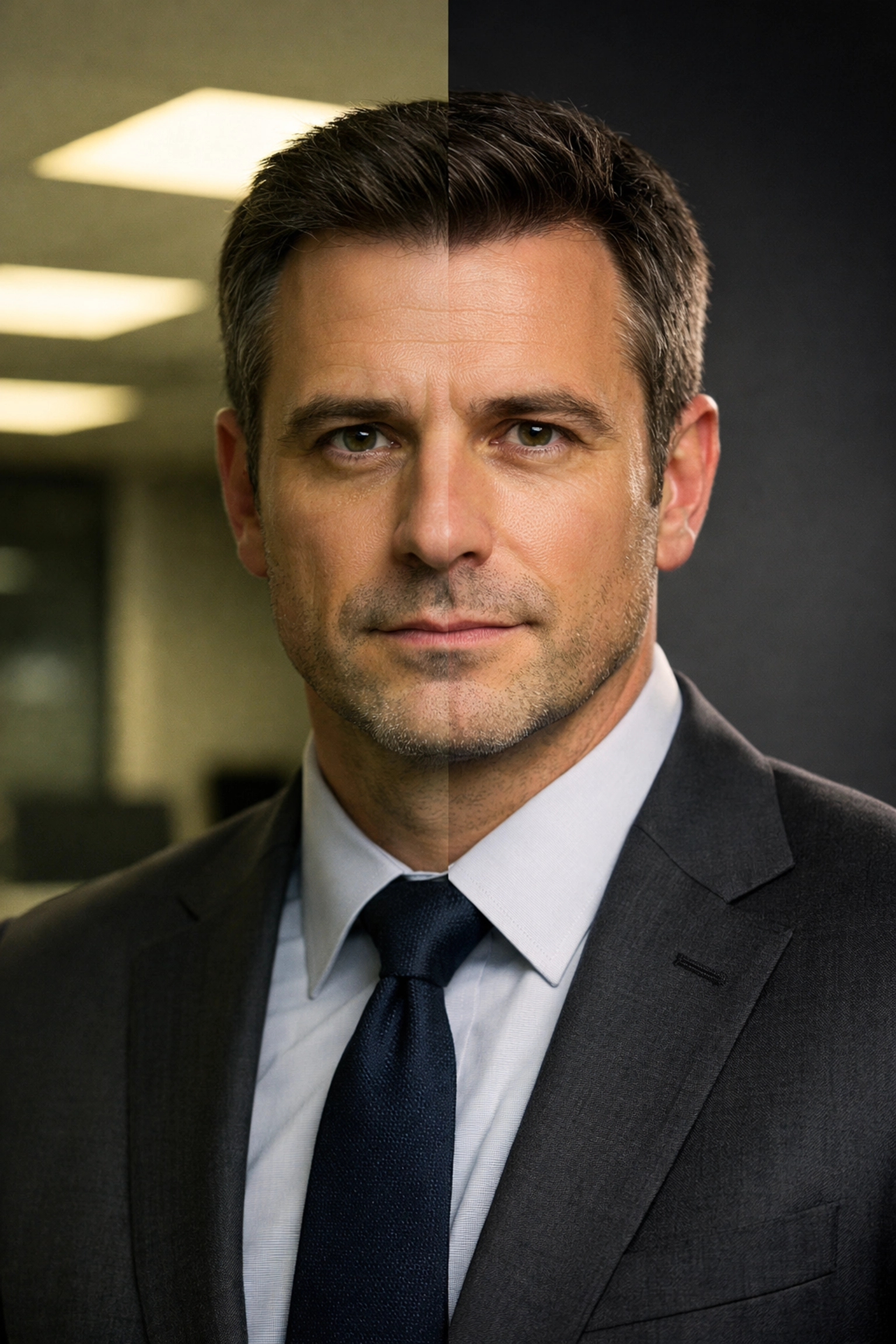
Alt text: A professional corporate headshot showing the difference between harsh overhead lighting and soft, professional studio lighting on a male executive.
How to Fix It:
If you aren't in a studio, find a large window with indirect light. Never stand directly under a light bulb. If you're editing your own shots, using a tool like Luminar can help balance out shadows and improve skin tones, but nothing beats getting it right in the camera. Understanding the principles of mastering light and water for perfect shots can actually help you understand how light reflects off skin as well.
3. Distracting or Inconsistent Backgrounds
You want the focus to be on you, not the tropical plant growing out of your head or the busy street scene behind you. A common mistake is choosing a background that is too "busy." While urban environments can be cool, they often distract the viewer's eye from the subject’s face.
Another issue arises at the corporate level: inconsistency. If your team page has one person against a brick wall, another in a park, and a third against a white screen, your company looks disorganized.
How to Fix It:
Stick to clean, simple backgrounds. A neutral gray, soft white, or a blurred-out professional environment works best. If you want something more modern, you can unlock secrets to enchanting urban photography settings by finding quiet alleys with neutral textures that don't scream for attention. For a truly professional look, consistency is key: ensure everyone in the office uses the same backdrop style.
4. Inappropriate or Unflattering Clothing
When people ask how to prepare for a headshot session, the first thing they worry about is the wardrobe. And for good reason. Your clothes tell a story before you open your mouth.
Mistakes include wearing neon colors (which reflect weird tints onto your skin), busy patterns (which can cause "moiré" patterns on digital screens), or ill-fitting blazers that make you look like you’re wearing your older brother’s suit.
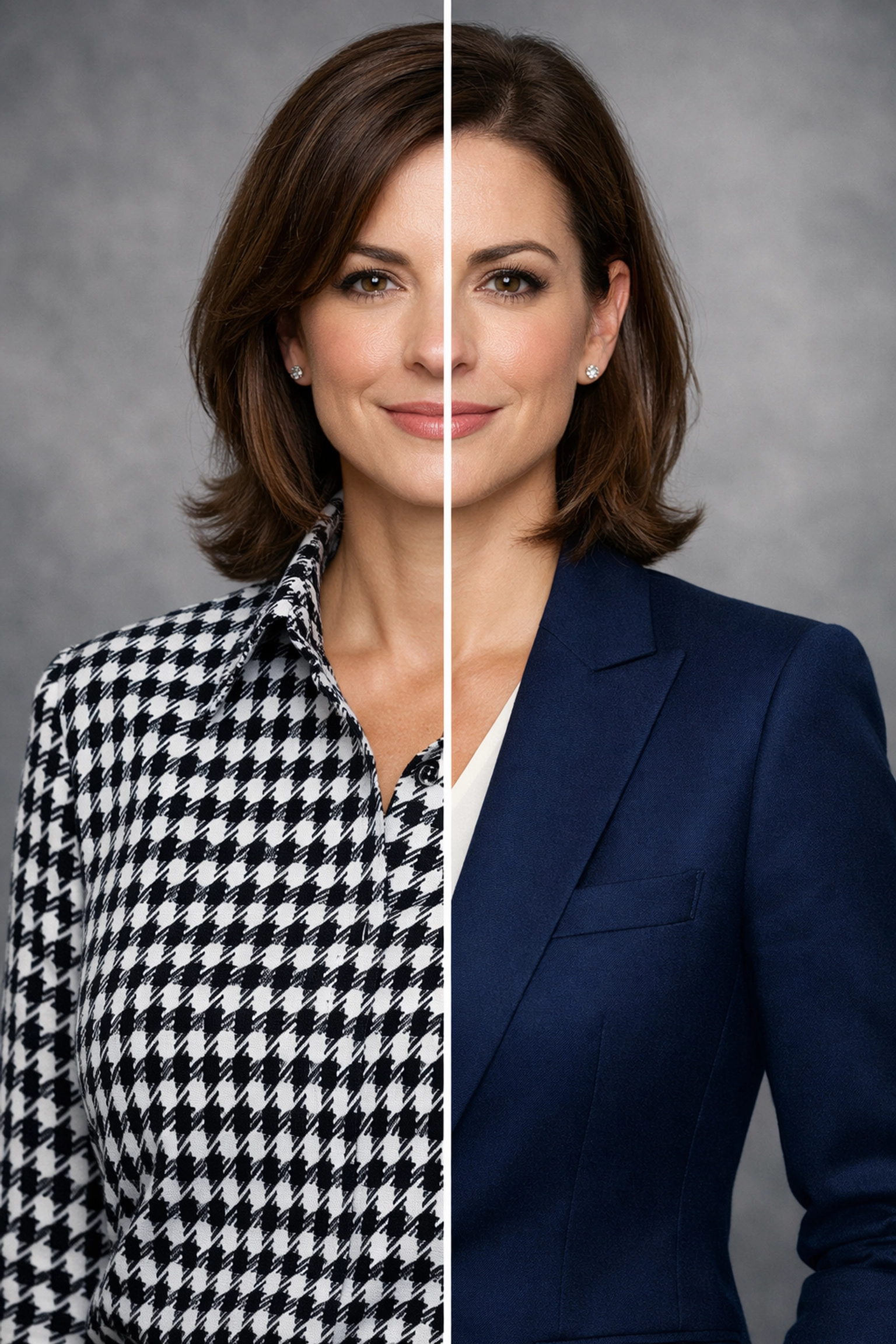
Alt text: A comparison of a woman wearing a busy, distracting patterned shirt versus a solid-colored, professional navy blazer for a corporate portrait.
How to Fix It:
Choose solid, mid-tone colors like navy, charcoal, or forest green. These colors are universally flattering. Ensure your clothes are pressed and fit perfectly. Pay attention to textures; sometimes using rare textures for tangible aesthetic photography can apply to your clothing choices: a high-quality wool or silk can add a sense of luxury and professionalism that flat cotton just can't match.
5. Low-Resolution Files and Poor Cropping
This is the ultimate amateur move. Taking a photo of yourself at a wedding, cropping out your spouse, and blowing it up for your LinkedIn profile is not a headshot. It’s a pixelated mess. When you use a low-resolution file, it tells the world you don't care about the details. If you don't care about your own brand, why should a client trust you with their business?
How to Fix It:
Always use high-resolution files. A professional photographer will provide you with various crops and sizes optimized for different platforms. If you're trying to figure out the technical side of things, checking out resources on PhotoGuides.org can help you understand file formats and resolutions. Don't be afraid to invest in a pro session at Perfect Corporate Headshots to ensure you have the right files for both web and print.
6. The "Robot" Pose (Stiff and Unnatural)
We’ve all seen it: the crossed arms, the forced "I’m a serious businessman" scowl, and the shoulders squared so tightly they look like they’re about to snap. Traditional posing can often feel rigid and unapproachable. In 2026, the trend has shifted toward "approachable authority." You want to look like someone who is great at their job but also someone people actually want to talk to.

Alt text: A professional executive leaning slightly forward with a natural, genuine smile, demonstrating an approachable authority pose.
How to Fix It:
Relax. Shake out your shoulders before the shutter clicks. Lean slightly toward the camera: this creates a sense of engagement and connection. Angle your body 45 degrees away from the camera and turn your head back toward the lens. This is much more slimming and dynamic than standing square-on. If you're looking for inspiration on how to capture motion and life in a still frame, even looking at how photographers handle water photography capturing beauty in motion can give you ideas on how to keep your poses from feeling "stagnant."
7. Over-Retouching (The Uncanny Valley)
There is a fine line between "polishing" and "re-creating." We’ve seen headshots where the person’s skin looks like plastic and their eyes are glowing like they’re a character in a sci-fi movie. If you look like a CGI version of yourself, people will find it jarring when they meet you in person.
The goal of retouching should be to remove temporary distractions: a blemish, a flyaway hair, or a bit of lint on your jacket: not to remove your character.
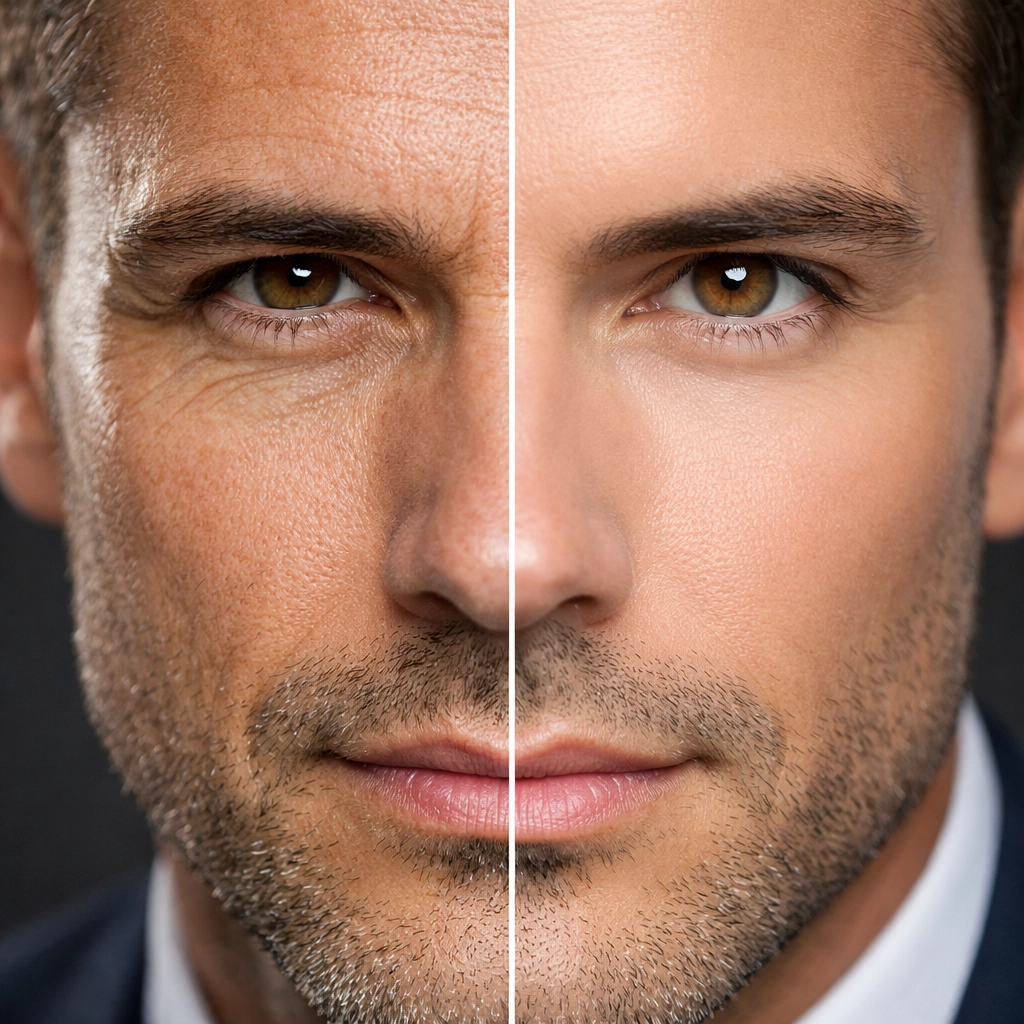
Alt text: A side-by-side comparison of a natural professional retouching versus an over-processed, "plastic" looking skin retouch.
How to Fix It:
Keep it subtle. Use tools like Luminar for its AI-driven but natural-looking skin enhancement features, but keep the "strength" slider low. You want to look like you had a great night's sleep, not like you had a face transplant. Your wrinkles and expression lines are part of your story and your expertise: don't erase them entirely.
How to Prepare for a Headshot Session: A Quick Checklist
To avoid these seven mistakes, you need a plan. Here is a simple workflow to ensure your next session is a success:
- Research Your Photographer: Look at their portfolio. Do their subjects look natural? Is the lighting consistent? Perfect Corporate Headshots is a great benchmark for quality.
- Hydrate and Sleep: Drink plenty of water for 48 hours before the shoot. It sounds like a cliché, but it makes a massive difference in your skin's texture and the clarity of your eyes.
- Prepare Your Wardrobe: Have at least three outfits ready. Make sure they are cleaned and pressed. Bring options with different necklines.
- Communicate Your Brand: Tell your photographer what you do. A creative director in a tech startup needs a different vibe than a partner at a law firm.
- Think Positive Thoughts: Sounds cheesy, right? But your eyes react to your thoughts. If you're thinking about a deal you just closed or something that makes you laugh, it will show in your expression.
The ROI of a Great Headshot
Some people see a professional headshot as an expense. It’s not. It’s an investment. Whether you are browsing www.proshoot.io for gear or looking at www.edinstudios.com for inspiration, the message is the same: quality matters.
A high-quality image can lead to:
- Higher Click-Through Rates: Recruiters and clients are more likely to click on a profile with a professional photo.
- Increased Perceived Value: You can often charge more for your services when you look the part.
- Better Networking: A warm, approachable photo makes people more comfortable reaching out to you.

Alt text: A diverse group of professionals on a company "Team" page, all with consistent, high-quality, and modern corporate headshots.
If you find yourself stuck in the "nature vs. studio" debate, remember that even top spots for stunning nature imagery require an understanding of composition and light: the same principles that make or break your corporate headshot.
Final Thoughts on Professional Corporate Headshot Tips
Your headshot is the foundation of your personal brand. By avoiding these seven common mistakes: outdated photos, bad lighting, distracting backgrounds, poor clothing choices, low resolution, stiff posing, and over-retouching: you’ll be miles ahead of your competition.
Stop settling for "good enough." Take the time to do it right. Whether you’re shooting your own with high-end gear or booking a pro at Perfect Corporate Headshots, make sure the person in the photo is the same person who is ready to take on the world.
For more deep dives into the world of professional photography, check out our guide on techniques for stunning water photography or explore our other tutorials to sharpen your eye. Your career deserves to be seen in the best light possible.