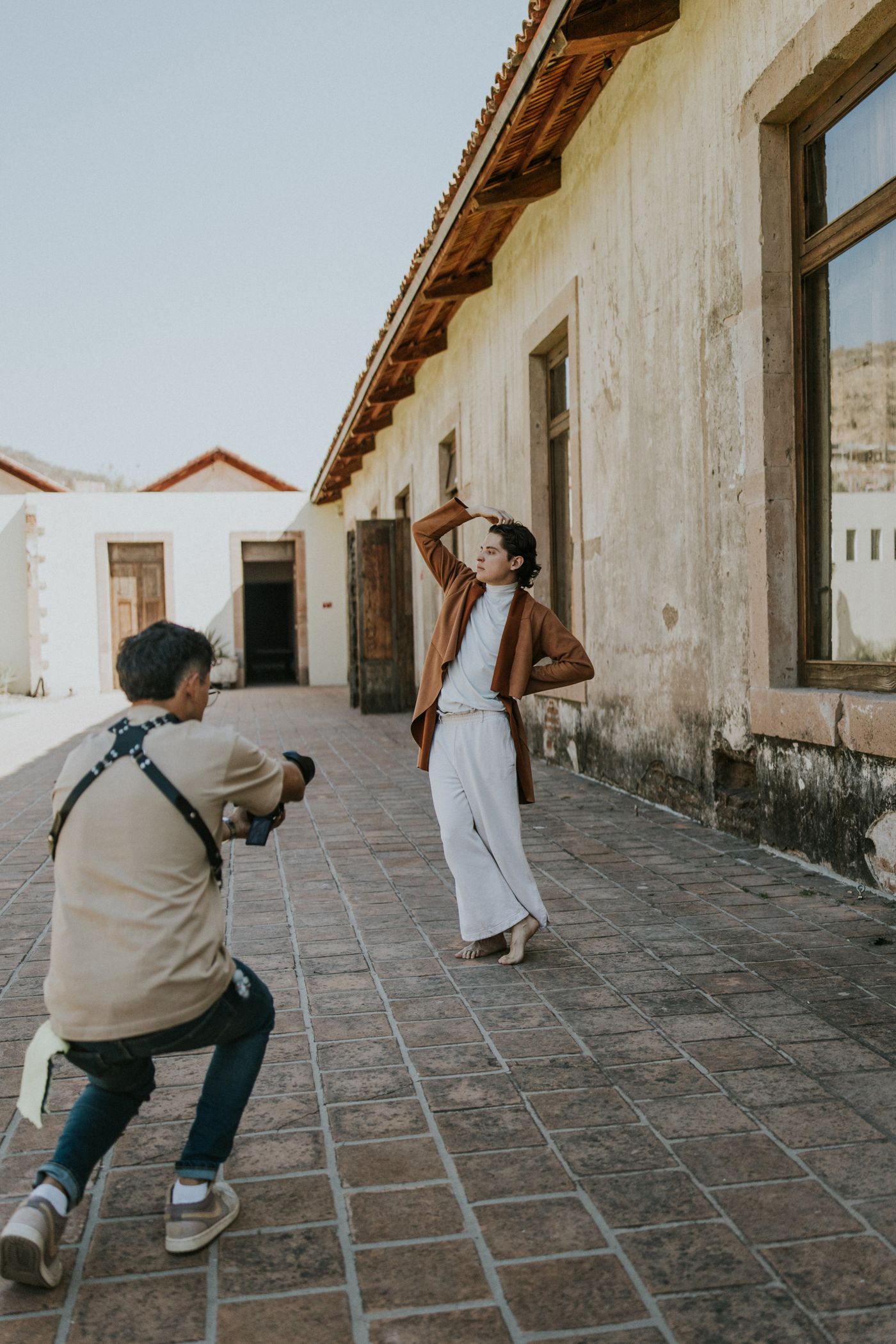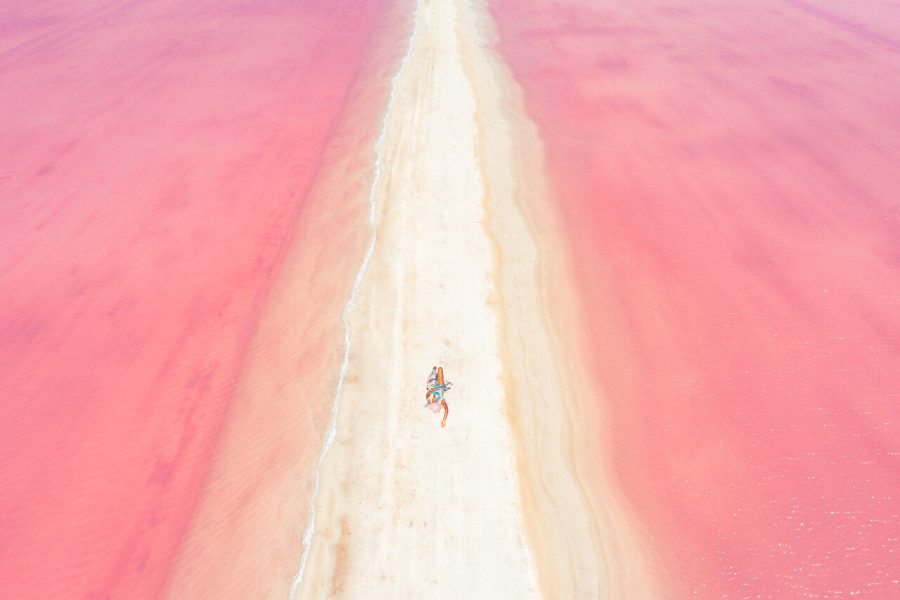
Posing is not about memorizing 50 rigid positions — it is about understanding the principles that make a body look interesting, balanced, and natural in a two-dimensional frame, then applying them intuitively. Once you understand why a 45-degree body angle works, you will find that angle everywhere. Here are 50 portrait posing ideas organized by principle, with specific descriptions for both what to do and why it works.

Foundation Principles Before the 50 Poses

The 45-degree rule: A body facing the camera directly (square-on) looks wide and confrontational. Angled at 45 degrees to the lens, the body appears slimmer, more three-dimensional, and more dynamic. Apply this to shoulders, hips, and the full body. The exception: direct-square-on shots can be powerful for editorial and fashion if the lighting and expression support it.

Chin out and slightly down: The most universally flattering adjustment in portrait photography. Pushing the chin forward (not up) elongates the neck. Tilting slightly down (5–10 degrees) prevents the unflattering view up the nostrils that a chin-up position creates. The “turtle neck” — chin forward, not up — is the first instruction for almost every subject.

Weight distribution: A subject standing with equal weight on both feet looks rigid and posed. Shift weight to one foot — the back foot — and allow the hip to drop naturally on the weight-bearing side. This S-curve through the body is what makes standing poses look relaxed rather than military.

Headshot Poses (1–15)

1. The Classic Three-Quarter Turn

Body angled 45 degrees to camera, face turned back toward the lens. Chin forward and slightly down. Eyes directly into the camera. This is the most commonly used headshot pose because it works on almost every face shape and body type.

2. The Over-Shoulder Look

Body turned away from camera, face turned back over the trailing shoulder. Eyes looking directly at lens from over the shoulder. Creates a sense of movement and mystery. Works best with longer hair that can fall over the near shoulder.

3. The Profile

Body and face both fully perpendicular to camera. Strong jaw and neck visible. Works best for subjects with strong, defined jawlines. Light from the camera side creates a rim of separation around the profile. Shoot on the subject’s stronger side (most people have one side they prefer — ask them).

4. The Chin Rest

Subject rests chin lightly on back of one hand, fingers curled under. Elbow on knee (seated) or near waist (standing). Adds a thoughtful, relaxed quality. Ensure the hand does not press into the cheek hard enough to distort the face.

5. Eyes Cast Down

Full forward-facing pose, but eyes looking down and to one side rather than into the camera. The subject appears introspective and unaware. Works exceptionally well in lifestyle and editorial contexts. The direction of the eye gaze should carry into empty space in the frame, not into the frame edge.

6. The Side Eye

Head turned away from camera, eyes shifted back to look directly at lens. Creates a playful, slightly conspiratorial expression. The tension between head direction and eye direction adds visual interest. Strong for fashion.

7. High Key Direct

Square-on to camera, eyes directly into lens, strong overhead or front lighting. Confrontational, confident. Used for executives, athletes, musicians. Works with clean, bright backgrounds. Not flattering for all face shapes but powerful when it works.

8. The Tilt

Head tilted to one side (toward the raised shoulder) at approximately 10–15 degrees. Softens the expression, adds approachability. Do not over-tilt — a 30-degree tilt reads as excessive and unnatural. Tilt toward the light for the most natural-looking result.

9. Window Sill Look

Subject looks out a window (not at camera), natural side light illuminating the face. Documentary quality. The window reflection in the eyes adds depth. Shoot from slightly behind and to the side to capture the quality of the light on the face.

10. The Hair Touch

Subject reaches one hand up to touch or move through hair. The movement creates a natural, unstaged quality. Works best mid-movement rather than in a static held position. Shoot in burst mode and select the best frame from the gesture sequence.

11. The Collar

Subject holds the collar of a jacket, shirt, or coat with one hand. Strong, confident, fashion-forward. Works particularly well with structured outerwear. Ensure the hand is positioned at the collar bone level, not pulled down toward the chest.

12. The Lip Touch

Subject brings one finger to the lips. Thoughtful, reserved, slightly mysterious. The finger should touch gently — not press in or distort the lips. Works with a neutral or contemplative expression rather than a smile.

13. The Reading Look

Subject looks down at something in their hands (book, phone, letter). Eyes not in camera. Lifestyle and documentary quality. Useful when your subject is not comfortable with sustained camera eye contact — the prop gives them something to “be” rather than “perform.”

14. The Strong Lean Back

Upper body leaned back, shoulders back, chin extended forward and slightly down. Elongates the neck dramatically. Power pose. Works for confident, extroverted subjects. Requires a strong connection between photographer and subject to pull off naturally.

15. The Environment Integration

Subject interacts with their environment — touching a brick wall, leaning against a doorframe, hand resting on a fence. The environmental element becomes part of the composition. Choose clean, uncluttered surfaces that complement rather than compete with the subject.

Full-Length Standing Poses (16–30)

16. The Classic Standing S-Curve

Weight on back foot. Front knee bent and pointing forward (toward camera). Hip drops on the weight-bearing side. One hand on hip, the other hanging naturally or holding a prop. The resulting S-curve through the body is the most universally flattering standing pose for female subjects. Male adaptation: weight on back foot, but avoid the hip drop — keep hips level, use shoulder turn instead.

17. The Lean

Subject leans against a wall or vertical surface, back and shoulders making contact. Arms may be at sides or crossed loosely at the wrist in front. Natural, casual, familiar. The lean angle (how far the back is from vertical) changes the energy — 10 degrees is subtle, 30 degrees is casual.

18. The Walk

Subject walks slowly toward camera. Shoot in burst mode at 10–20fps. The moment of maximum stride extension — one leg forward, one back, shoulders counter-rotated — is the peak moment. The subject should look past the camera slightly, not directly at it, for the most natural walking frames.

19. The Hand on Hip

One hand on hip creates a strong, confident silhouette. The arm creates negative space between body and arm that visually separates the waist. Ensure the hand is on the hip (at waist level), not dropped to the thigh. Both hands on hips is more assertive but can read as confrontational — use with the right expression.

20. The Crossed Arms

Arms crossed at chest level. Often described as closed body language, but in portrait photography, crossed arms on a relaxed, smiling subject reads as comfortable and casual, not defensive. Works well for men in particular. Ensure the cross is loose — not gripping.

21. The Hands in Pockets

One or both hands in pockets — thumbs out, fingers inside. The thumbs-out position keeps the hand visible and avoids the “no arms” look of fully pocketed hands. Works for casual and lifestyle portraits. Ensure pockets are not strained or pulled.

22. Reaching Up

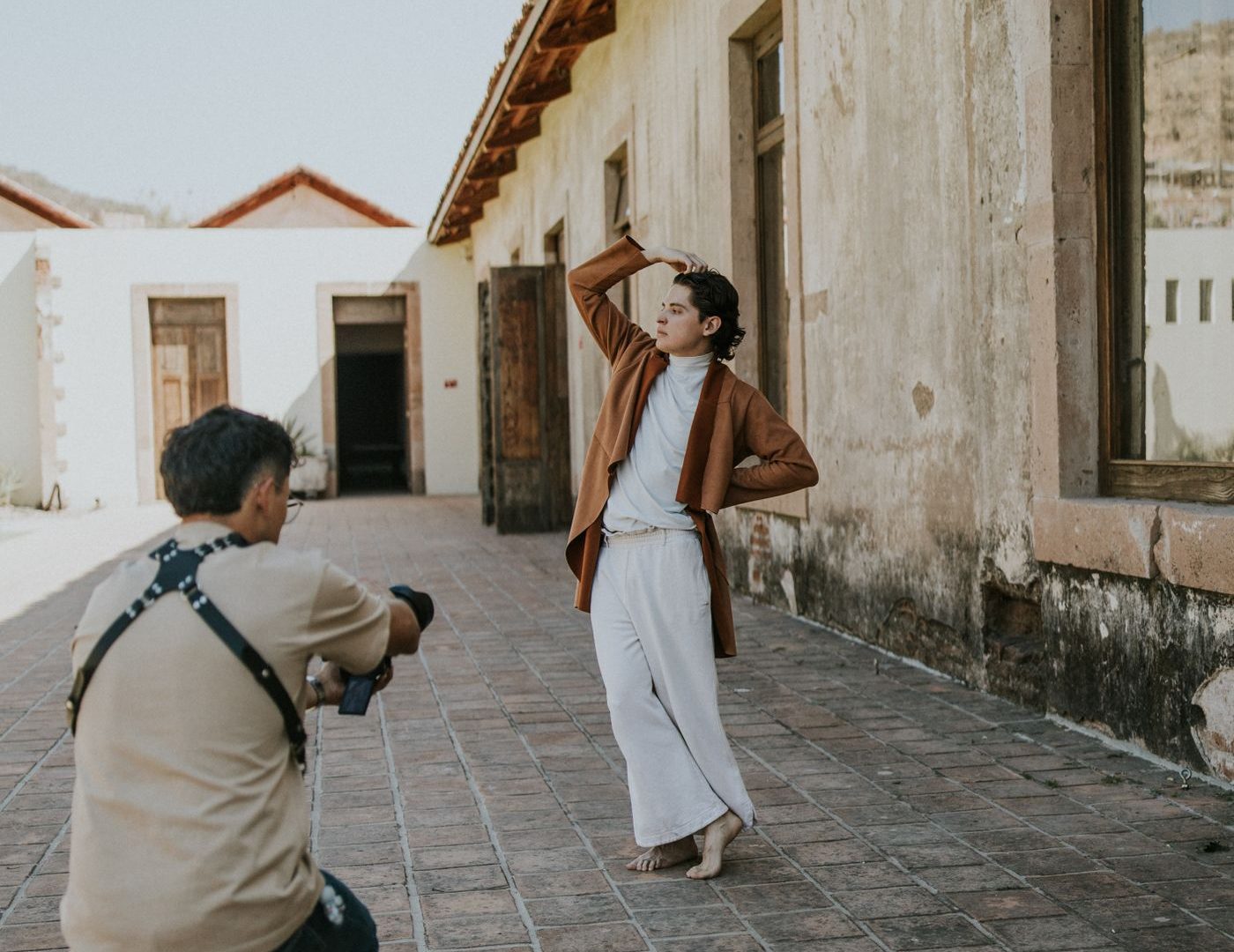
Subject reaches one or both hands upward — toward a branch, a doorframe, or above the frame. Creates vertical leading lines through the arms. Elongates the body. The direction of the reach determines the energy: reaching sideways is elegant, reaching directly up is dynamic.

23. Looking Up

Subject looks upward, away from camera. Light from above (or a bright sky) illuminates the face. Works beautifully in outdoor settings. The subject can have a contemplative or joyful expression. Ensure the chin is extended forward even in the upward gaze — avoid double chin even when looking up.

24. The Candid Laugh

Not technically a “pose” but the most important unguarded shot in a portrait session. Say something genuinely funny. Shoot on burst. The moment 0.5 seconds after the peak of the laugh — the eyes crinkle, the smile settles slightly — is typically the best frame. The full peak-laugh frame often shows too much teeth and scrunched eyes.

25. The Silhouette

Subject positioned against bright light source (sunset, window, bright sky). Camera exposed for the background. Subject rendered as a pure black shape. The pose must be read purely from the outline: clear gap between arm and body, recognizable profile, interesting shape. Many “normal” poses do not read as silhouettes — test the shape by squinting at it.

Seated Poses (26–35)

26. The Classic Cross-Legged

On the floor, legs crossed at the ankle (not full lotus unless the subject is comfortable). Body turned 45 degrees. One hand in lap, one on knee or resting on the floor beside them. A fundamental, accessible seated pose that works in almost any environment with a clean floor.

27. The Low Kneel

One knee on the ground, the other foot flat in front. Body weight forward slightly onto the front knee. Looks dynamic and strong. Works in urban and natural settings. The back knee angle and front foot position can be adjusted to change the energy from casual to heroic.

28. The Seated Lean

Subject seated on a chair, bench, or surface with upper body leaned slightly forward, elbows on knees. Hands loosely clasped or fingers extended. Relaxed, thoughtful. The lean-forward posture reads as engaged and approachable. Works for corporate and personal branding photography.

29. The Window Seat

Subject seated in a window frame, legs hanging or drawn up. Natural light from outside wraps the face. One of the most beautiful natural-light portrait setups — the window provides a large soft light source on one side, with the interior providing open shadow on the other. Shoot from outside or from a slight angle to keep the background window light controlled.

30. The Stair Pose

Subject seated on stairs, one step higher than sitting surface. Steps provide a natural leading line into the frame. Work the angles: shooting from below elevates the subject, shooting from above creates vulnerability. The step level also determines whether the composition is tight/intimate or wide/environmental.

Couple and Group Poses (31–40)

31. The Forehead Touch

Two subjects stand facing each other, foreheads touching or nearly touching. Eyes may be closed (romantic) or one set of eyes open looking at the other (curious). The physical proximity communicates intimacy without requiring any specific expression.

32. The Walk Together

Couple walks toward camera, one slightly ahead of the other, hands held. Shoot from low angle for dramatic sky framing or from eye level for a natural documentary feel. The person “in front” creates depth in the frame.

33. The Dip

One partner holds the other in a deep backward dip — the classic romance novel cover pose. Requires genuine physical trust between partners and a strong partner who can safely support the dip. Shoot from low to mid-height to show the full arc of the dip.

34. The Whisper

One person leans in to whisper in the other’s ear. The listener’s expression — anticipation, surprise, delight — carries the image. This works particularly well for couples when the photographer asks the “whisperer” to say something specific — a compliment, an inside joke — so the listener’s reaction is genuine.

35. The Group V

For 3–5 people: arrange the group in a V-shape pointing toward the camera, with the shortest person or the key subject at the front point of the V. Stagger heights by using natural height differences or have people step onto different levels. Avoid the flat, same-height, same-distance lineup that looks like a police lineup photo.

Creative and Environmental Poses (36–50)

36. The Frame Within a Frame

Subject positioned within a natural or architectural frame: a doorway, an arch, a window, branches overhead. The subject fills the inner frame; the outer frame creates depth. Works at telephoto focal lengths to compress the framing element around the subject.

37. The Reflection

Subject photographed through or alongside a reflective surface — window glass, puddle, mirror, phone screen. The double image creates visual complexity. Compose so both the direct image and the reflection are identifiable and together create an interesting composition.

38. The Leading Limb

An arm or leg extended toward the camera creates a strong diagonal leading line. Extended legs in a full-length portrait draw the eye from feet to face. An extended arm toward the lens is a dramatic gesture. The limb becomes a compositional tool, not just a body part.

39. The High Angle

Camera above the subject, shooting down. Subject typically looks up into the camera. The effect: eyes appear larger, chin appears smaller, the face looks proportionally different than from eye level. Works well for headshots. Can be used for all genders and age groups but particularly popular in social media portrait work.

40. The Dramatic Low Angle

Camera below waist height, shooting upward. Subject looms large in the frame, sky or ceiling visible behind them. Heroic, powerful, imposing. Elongates legs dramatically. Often overdone — reserve for subjects and contexts that warrant the dramatic visual effect.

41–50: Action, Props, and Spontaneous Directions

41. The Run: Subject runs across the frame, not toward the camera. Motion blur at the edges, sharp face at 1/500s or faster.

42. The Jump: Subject jumps in place. Shoot at 1/500s–1/1000s to freeze mid-air. Pre-focus on where they will be at peak jump.

43. The Spin: Subject spins in place. Shoot mid-spin for the skirt or jacket flair. 1/250s allows some motion blur in the spinning element while keeping the face sharper.

44. Hat adjustment: Subject adjusts brim of hat, looking down. A natural, unstaged gesture that reads as casual confidence.

45. Reading a book or prop: Subject engaged with a book, phone, or relevant prop. Documentary quality.

46. The Jacket over shoulder: Jacket held by one finger over the shoulder. Classic editorial pose — works for professional headshots.

47. Eyes-closed with light: Subject closes eyes in strong directional sunlight or artificial light. Light on the eyelids, expression peaceful.

48. The Hug from behind: For couples — one partner hugs from behind, arms around the waist. The front subject may look at the camera or out of frame.

49. Back to camera: Subject walks away or stands with back to camera. The back view is often overlooked but can be powerful — particularly when combined with strong environment.

50. The Genuine moment: Not a pose at all — the photographer captures an authentic, unguarded moment between sessions, between poses, during the walk from one location to another. These are often the images clients choose for their final favorites.

For the camera settings to execute these poses cleanly, see our Canon EOS R5 portrait photography settings guide. For lens selection to pair with these poses, see our best lenses for portrait photography guide.

Frequently Asked Questions

What is the most flattering angle for portrait photography?

A 45-degree body angle to the camera slims the body, creates three-dimensional silhouette, and looks natural. For the face, a 3/4 turn with chin forward and slightly down is the most flattering for most face shapes.

How do I tell a photography subject to look natural?

Give the subject something to do rather than something to be. Instead of “look natural,” say “walk toward me slowly” or “look down then back up.” Movement creates naturalism. Ask questions and genuinely listen during the shoot.

What is the chin forward technique in portrait posing?

Push the chin forward and slightly down — the “turtle neck” position. This elongates the neck, separates the face from the body in the frame, and eliminates double chin. It feels exaggerated to the subject but looks natural in the photograph.

How do I pose hands in portrait photography?

Hands should have a purpose — touching something, holding something, or naturally resting. Slightly bent fingers look more natural than flat or spread. The edge of the hand facing camera reads more elegantly than the back of hand flat to the lens.

What is the leading line technique in portrait posing?

Positioning arms or legs to create diagonal lines that draw the eye toward the face. An extended arm toward the camera or legs at 45 degrees to the frame add dynamic visual interest beyond a static front-facing pose.