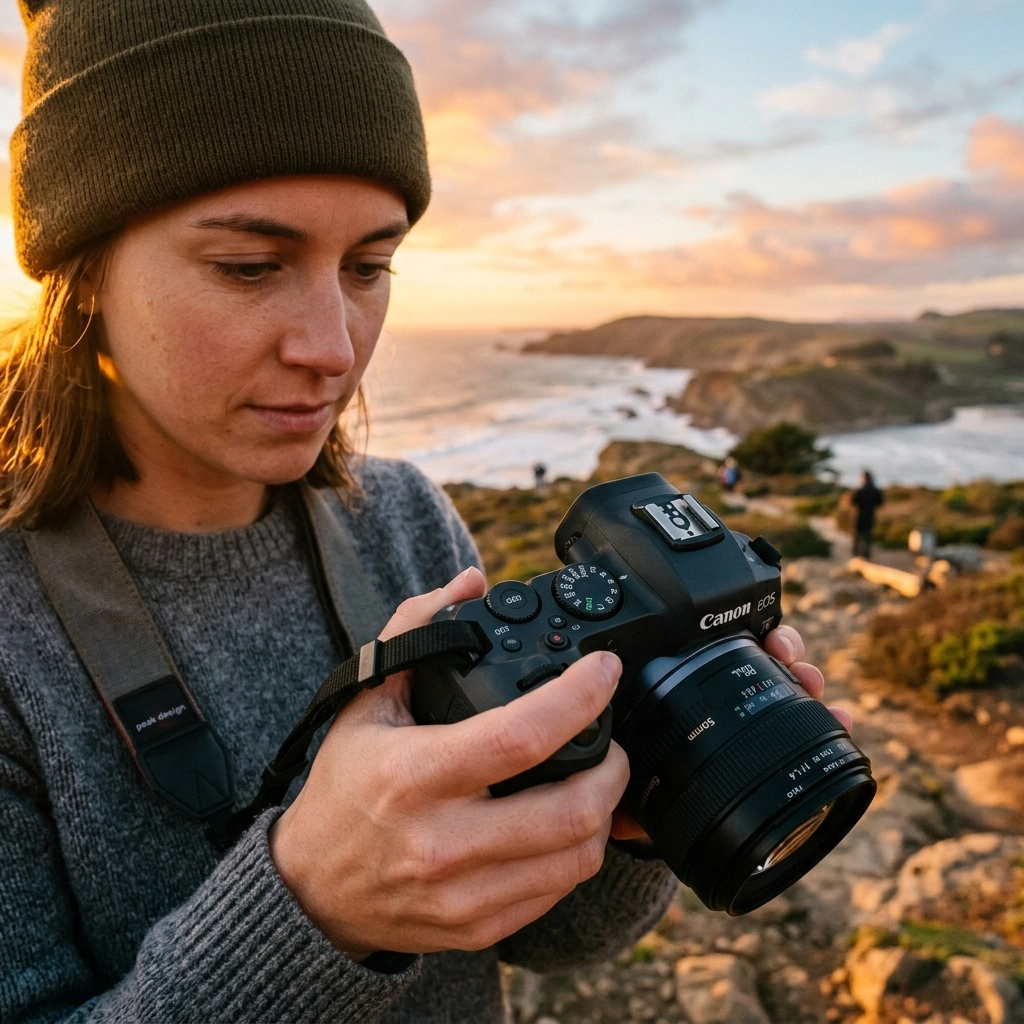
Let’s be real for a second: switching your camera dial to that little "M" is terrifying. It’s like the first time you tried to drive a stick shift, there’s a high probability of stalling, making a weird grinding noise, and looking like you have no idea what you’re doing. But here at Shut Your Aperture, we believe that Manual Mode is the "keys to the kingdom." It’s where the magic happens. It’s how you go from taking "okay" photos to creating art.
I’ve seen it a thousand times. Photographers get a shiny new mirrorless camera, read a few photography tutorials, and then get frustrated when their images come out pitch black or looking like a nuclear explosion.
Most of the time, it’s not the camera’s fault. It’s usually one of a few common mistakes that everyone makes when they’re starting out. If you’re struggling, don’t hang up your camera strap just yet. We’re going to break down the seven biggest mistakes you’re making with Manual Mode and, more importantly, how to fix them so you can start shooting like a pro.
1. Trusting the In-Camera Light Meter Too Much
The little bar at the bottom of your viewfinder (the one with the -3 to +3 scale) is a liar. Okay, maybe not a liar, but it’s easily confused. Your camera is programmed to see the world as middle gray. If you point it at a pile of white snow, the meter will tell you to underexpose because it thinks the snow is too bright. If you point it at a black cat, it’ll tell you to overexpose because it thinks the cat is too dark.
If you’re just chasing the "zero" mark on your meter, you’re letting the camera make the decisions for you. That defeats the whole purpose of Manual Mode.
How to Fix It:
Learn to use Exposure Compensation or, better yet, understand how different lighting scenarios affect your meter. If you’re shooting a bright scene, you might actually need to push that meter into the "+" side to keep your whites white. Conversely, for dark, moody shots, don’t be afraid to let it sit in the "-" zone. A great way to learn about light and how it interacts with the environment is to check out some lessons in landscape photography from Peter Lik. He’s a master of controlling exposure to get that perfect "glow."

2. Setting Your ISO and Forgetting It Exists
ISO is often the forgotten child of the exposure triangle. We focus so much on Aperture for that sweet bokeh and Shutter Speed to freeze motion that we forget ISO is even there. I can’t tell you how many times I’ve seen photographers shoot a gorgeous sunset at ISO 3200 because they forgot to change it from the night before when they were shooting in a dark bar.
High ISO introduces grain (noise) and eats away at your dynamic range. If you’re shooting on one of the best mirrorless cameras in 2026, you have a lot more leeway, but you still shouldn't be lazy about it.
How to Fix It:
Make it a habit to check your settings every time you turn your camera on. Think of it like a pre-flight checklist. Before you even lift the camera to your eye, check your ISO. If you’re outdoors in the sun, you should be at your camera’s base ISO (usually 100). If you’re struggling with noise in post-production because you accidentally bumped your ISO, software like Luminar has some incredible AI-driven denoise tools that can save your skin.
3. Ignoring the Histogram (The Screen Lies!)
Your LCD screen is a dirty liar. It looks great in the dark, and it looks terrible in the sun. If you’re judging your exposure based solely on how the image looks on that 3-inch screen, you’re going to have a bad time when you get home and open the files on a real monitor.
The screen brightness can be adjusted, which means it’s not an accurate representation of your data. You might think your photo is perfectly exposed, but in reality, you’ve "clipped" your highlights (lost all the detail in the bright areas).
How to Fix It:
Turn on your histogram. This is a graphical representation of the tones in your image. If the graph is all the way to the right and touching the edge, you’re losing highlights. If it’s all the way to the left, you’re losing shadows. Aim for a nice "mountain" in the middle, or at least ensure the data isn't crashing into the sides. For a deeper dive into how light and data work together, check out the role of luminosity in real estate photography, it’s a masterclass in technical exposure.

4. Using the Wrong Aperture for the Subject
We all love that "blurry background" look. It’s why we buy expensive f/1.8 or f/1.4 lenses. But just because your lens can go to f/1.4 doesn't mean it should at all times.
If you’re shooting a group of five people and you set your aperture to f/1.8, only one person is going to be in focus while the others look like they’re standing in a fog bank. Or if you’re shooting a landscape and you stay at f/2.8, your foreground will be sharp but the mountains in the back will be soft.
How to Fix It:
Understand Depth of Field (DoF).
- Portraits/Single Subjects: f/1.4 to f/4 is usually fine.
- Groups: Try f/5.6 or f/8 to make sure everyone's eyes are sharp.
- Landscapes: f/8 to f/11 is the "sweet spot" for most lenses.
If you want to see how aperture and cinematic depth can change the feel of a photo, look at how professionals use cinematic techniques to transform property showcases. It’s not just about blur; it’s about directing the viewer’s eye.
5. The Shutter Speed "Hand-Shake" Fail
This is the number one cause of "soft" photos. You think your focus was off, but really, your shutter speed was just too slow. In Manual Mode, you have total control, which means you have the power to ruin your own shots by choosing a shutter speed that’s too slow for hand-holding.
There’s a general rule of thumb called the "Reciprocal Rule." It basically says your shutter speed should be at least 1/ (focal length). So, if you’re using a 200mm lens, your shutter speed should be at least 1/200th of a second.
How to Fix It:
If you’re shooting moving subjects (like kids, pets, or cars), you need a fast shutter speed (1/500th or higher). If you’re hand-holding in low light, keep an eye on that reciprocal rule. If you need a slower shutter speed for an "ethereal" look, you absolutely must use a tripod. Speaking of ethereal, check out how to create ethereal imagery for real estate, it often involves long exposures that would be impossible without understanding shutter speed limits.

6. Not Adjusting for Changing Light
Manual Mode isn't a "set it and forget it" situation. If you’re shooting a model and she moves from the sun into the shade, your settings need to change immediately. If a cloud passes over the sun, your settings need to change.
A lot of beginners find a setting that works for one shot and then keep shooting for the next twenty minutes without looking at their dials. By the time they realize the light shifted, half their session is unusable.
How to Fix It:
You have to be active. You are the computer now. Every time the light changes, even slightly, take a quick test shot and check your histogram. It becomes second nature after a while. You’ll start to hear the "click-click-click" of your own dials in your sleep. If you want to stay updated on the latest gear that makes these adjustments easier, keep an eye on today’s photography news.
7. Thinking Manual Mode Makes You a "Real" Photographer
This might be the biggest mistake of all: the ego trap. There is a weird elitism in the photography world that says if you aren't shooting in Full Manual, you aren't a professional.
That’s total nonsense.
Manual Mode is a tool. Sometimes, it’s the best tool. Other times, it’s a hindrance. If you’re shooting a fast-paced sporting event where the light is constantly shifting between the field and the sidelines, using Aperture Priority (Av or A) with Auto ISO might actually be the "pro" move. It allows you to focus on the composition and timing while the camera handles the math.
How to Fix It:
Use Manual Mode when you have time to think and when you want total creative control (landscapes, studio work, portraits). Use semi-auto modes when the world is moving faster than your thumbs can spin a dial. The goal is the final image, not the settings used to get there. For more inspiration on what’s possible regardless of the mode you use, check out Peter Lik’s photographs.

Putting it All Together
Mastering Manual Mode is about understanding the relationship between Aperture, Shutter Speed, and ISO. It’s a dance. When you move one, you usually have to move another.
If you mess up, and you will, don't sweat it. Even the pros at proshoot.io and Edin Studios have "off" days. The beauty of digital photography is that we can fix a lot in post-processing. I personally use Luminar for almost all my quick fixes because its AI tools understand things like depth and light better than standard sliders. It’s like having a safety net for your Manual Mode experiments.
Your Homework
Tomorrow, take your camera out. Put it in Manual. Don't let yourself switch back to Auto for at least an hour. Make all seven of these mistakes. See what they look like. Overexpose on purpose. Underexpose until it's black. Shoot a moving car at 1/10th of a second.
The best way to learn how to fix these mistakes is to see exactly how they happen. Once you understand why the photo looks bad, you’ll know exactly how to make it look good.
If you’re looking for more technical deep dives, head over to PhotoGuides.org or check out Edin Chavez’s personal blog for some behind-the-scenes looks at professional shoots.
Manual Mode doesn't have to be a nightmare. It’s just a conversation between you and the light. Now go out there, shut your aperture (or open it wide!), and start shooting.
For more tips, tricks, and the latest in the photography world, keep up with our latest tips and techniques. I’ve also been chatting with Sonny, our Social Media Manager, and we’re going to be posting some quick "Manual Mode Cheat Sheets" on our Instagram soon, so keep an eye out for those!
And hey, if you ever get tired of technical talk and just want to look at some beautiful art, go browse Edin Fine Art. Sometimes looking at the finished product is the best motivation to keep practicing the hard stuff.