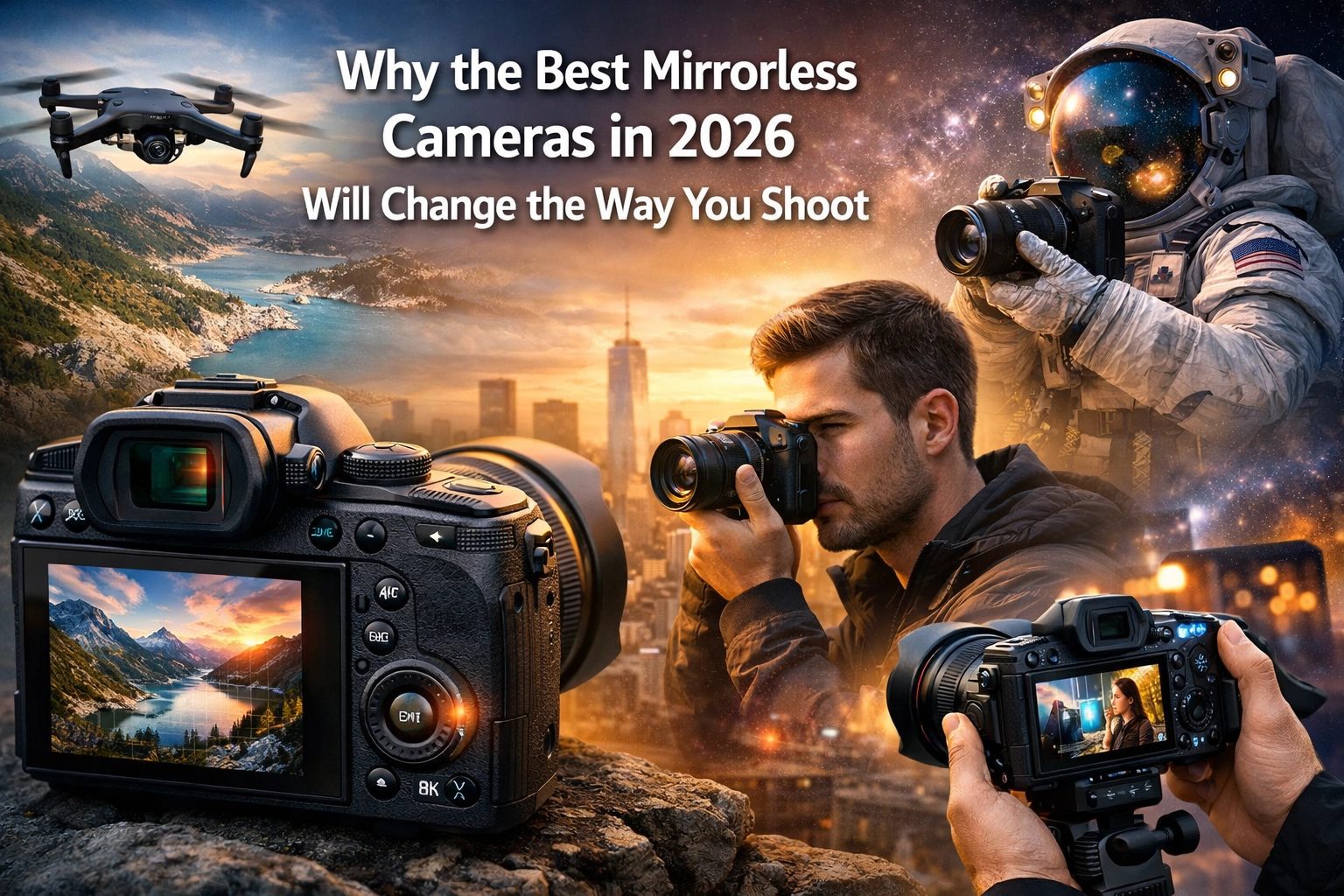
It is officially April 2026, and if you haven’t looked at the camera market in the last eighteen months, you are in for a massive shock. We aren’t just talking about a few more megapixels or a slightly faster burst rate. We are talking about a fundamental shift in how we capture light. The best mirrorless cameras of today have finally crossed the bridge from being "smart tools" to becoming "intelligent partners."

At Shut Your Aperture, we’ve seen gear come and go, but the tech inside the latest bodies from Sony, Canon, and Nikon is doing something we didn't think was possible so soon. It’s making the technical side of photography disappear so you can focus entirely on the art. Whether you are looking for photography for beginners or you’re a seasoned pro shooting for Edin Fine Art, the game has changed.

The Death of the "Missed Shot"

Remember the days when you’d spend an hour dialing in your focus points, only for the subject to move an inch and ruin the shot? Those days are dead. In 2026, the AI-powered autofocus systems in cameras like the Sony Alpha 7R V and the Nikon Z9 have reached a level of sentience that feels like magic.

These cameras don’t just "see" a face; they understand the skeletal structure of a human being. They know where the eye is even if the person is looking away or standing behind a thin veil of leaves. For anyone interested in portrait photography techniques, this means you no longer have to worry about your focus landing on the eyelashes instead of the pupil. The camera handles the "hit rate," and you handle the soul of the image.

![AI autofocus tracking on a modern mirrorless camera screen showing subject recognition during action. A high-tech mirrorless camera focusing on a fast-moving subject with AI tracking overlays on the screen. Alt text: AI autofocus tracking on a modern mirrorless camera in 2026 showing subject recognition.]

If you’re just starting out, this is the best time in history to learn. You can find plenty of photography tutorials over at PhotoGuides.org that explain the basics, but the modern camera is a much more forgiving teacher than the DSLRs of a decade ago.

The Hybrid Powerhouse: More Than Just Stills

In 2026, the line between a photographer and a videographer has completely evaporated. We are seeing cameras like the Canon EOS R1 and the Nikon Z8 offering 6K RAW video internal recording as a standard feature. This isn't just "video for the sake of video." This is cinema-grade quality in the palm of your hand.

This shift is huge for anyone doing commercial work. If you’re browsing ProShoot.io for inspiration on real estate or commercial gigs, you’ll notice that clients now expect both high-end stills and cinematic motion. The latest mirrorless bodies allow you to switch between 45MP stills and 4K 120fps slow-motion with the flick of a switch.

This hybrid nature has also birthed new street photography ideas. Imagine capturing a high-speed chase through a rainy city street not just as a single frame, but as a short, high-resolution burst that can be exported as individual 33MP images or kept as a cinematic clip. The flexibility is mind-blowing.

Landscape Photography in the New Era

For those who live for the golden hour, the best mirrorless cameras in 2026 offer dynamic range that rivals the human eye. We’ve moved past the need for heavy graduated filters in most situations. When you apply landscape photography tips from greats like Peter Lik, you’ll find that the sensors today can pull detail out of the deepest shadows without introducing a speck of noise.

If you’ve ever looked at the Luminosity in Real Estate Photography, you know how important light management is. Modern sensors handle the highlights so gracefully that post-processing feels more like painting and less like "fixing."

Speaking of post-processing, the integration between your camera and software like Luminar has become seamless. With the AI-driven tools in Luminar, you can enhance the raw data from these 2026 sensors to create images that look like they were shot on large format film.

Why Beginners Should Start Now

If you are looking for photography for beginners, the barrier to entry has never been lower, yet the ceiling for what you can achieve has never been higher. Most new mirrorless bodies feature "intelligent" manual modes.

Wait, what is an intelligent manual mode?

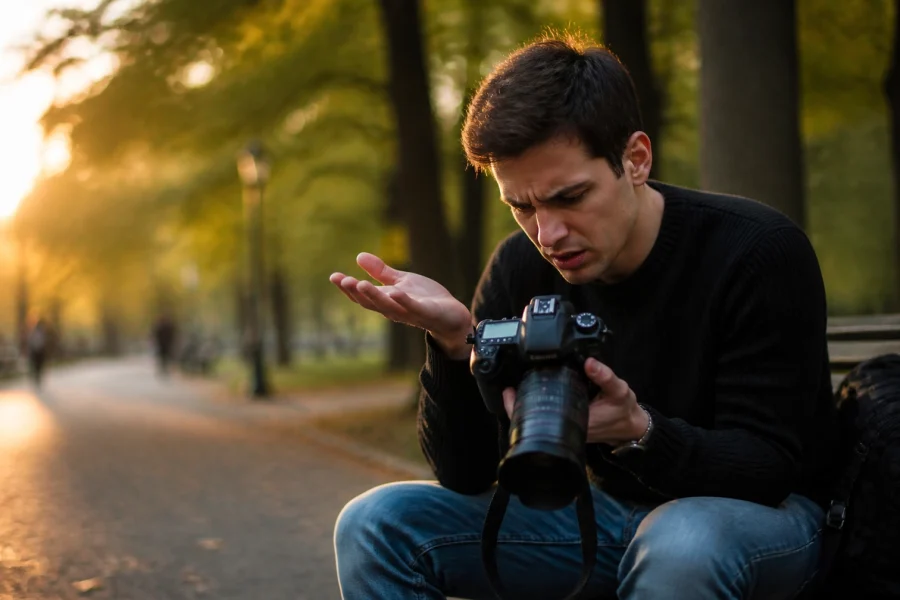
It’s a system that helps you understand how to use manual mode camera settings by giving you real-time feedback on your EVF (Electronic Viewfinder). It’s not just a light meter; it’s a visual representation of how your ISO, Shutter Speed, and Aperture are affecting the final mood of the image. It’s like having a tutor built into your hardware.

Check out our ultimate guide to photography tutorials for a deep dive into how to master these tools.

![Beginner photographer using a mirrorless camera electronic viewfinder for manual mode practice outdoors. A beginner photographer looking through the electronic viewfinder of a mirrorless camera in a scenic outdoor location. Alt text: Beginner photographer using a mirrorless camera with an electronic viewfinder for real-time exposure feedback.]

Speed That Defies Logic

Let’s talk about the Nikon Z9 and its successors. We are now seeing burst rates of 20 to 40 frames per second with "practically unlimited" buffers. This means you can hold down the shutter button for a full minute, and the camera won’t choke.

Why does this matter? Because in sports, wildlife, or even candid street photography, the "decisive moment" often happens between the frames. In 2026, there are no "between the frames." You capture the entire sequence and pick the exact millisecond where the light hits the subject perfectly. This is a recurring theme in the latest photography news; the hardware is finally catching up to our fastest reflexes.

Portraiture and the Human Element

While the tech is impressive, the impact on portrait photography techniques is perhaps the most profound. Because the camera is so good at staying locked onto a subject’s eye, the photographer is free to step out from behind the tripod or the viewfinder.

With high-resolution articulating screens and reliable remote triggers, portrait sessions have become more conversational. You can interact with your subject, guide their posing, and build a connection while the camera handles the technicalities. This shift from "operator" to "director" is what separates a good photo from a masterpiece. You can see examples of this high-level direction at Edin Studios.

Street Photography Ideas for 2026

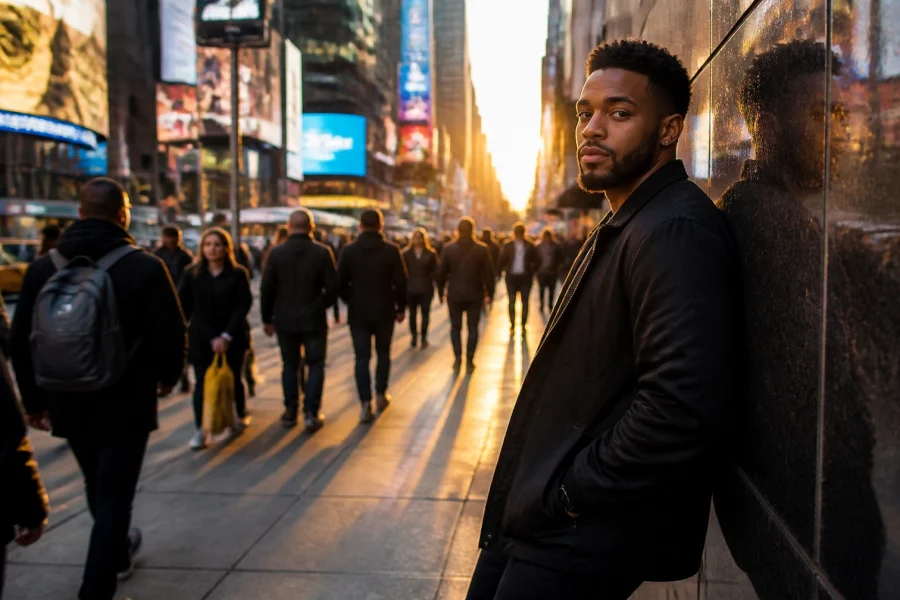
Street photography has always been about being a "fly on the wall." In 2026, the best mirrorless cameras are smaller, quieter, and faster than ever. Silent electronic shutters mean you can take a photo in a quiet library or a busy market without anyone hearing a click.

New computational features also allow for "Live ND" effects. You can now do long-exposure shots of a crowded square to turn the people into a ghostly blur: all without using a physical glass filter. This opens up a world of creativity for those looking for fresh street photography ideas.

![Street photographer using a compact mirrorless camera for night street photography ideas in the city. A street photographer using a compact mirrorless camera to capture a busy city intersection at night. Alt text: Street photographer using a compact mirrorless camera for low-light urban photography.]

The Importance of Camera Gear Reviews

With so many options, how do you choose? Our camera gear reviews often point out that the "best" camera isn't the one with the most specs, but the one that feels right in your hand.

In 2026, the ergonomics have shifted. We are seeing more modular designs where you can strip the camera down for a light street session or bulk it up with grips and external monitors for a pro video shoot. If you're feeling overwhelmed, we have a great breakdown on how to choose the best mirrorless cameras in 2026.

Editing: The Final Frontier

No matter how good the camera is, the work isn't done until it's edited. Photo editing tutorials in 2026 are focused heavily on AI integration. Using Luminar allows you to take the massive amount of data from these new sensors and sculpt it.

The beauty of 2026 sensors is the "latitude." You can underexpose a shot by three stops to save your highlights, and then bring the shadows back in Luminar with zero penalty. This "shoot for the highlights" workflow has become the standard for landscape and architectural photographers.

Learning the Craft

Even with all this technology, you still need to know the "why" behind the "how." Learning how to use manual mode camera settings is still the best way to understand light. The camera can guess what you want, but it doesn't have your vision.

If you want to stay updated on the latest techniques, check out Edin Chavez’s blog for personal insights into the professional world. He often talks about how even the most advanced gear is just a tool in the hands of an artist.

The Future of the Industry

As we look at the photography news coming out this year, it’s clear that the focus is shifting toward connectivity. Your camera in 2026 is likely connected to the cloud via 6G or high-speed Wi-Fi. Your photos are backed up as you shoot. If you’re working with a team at Edin Studios, your editor can be looking at the RAW files in another city while you are still on set.

This real-time workflow is a game-changer for news and event photography. But even for the hobbyist, it means your memories are safer than ever.

![Professional photography editing workspace with a flagship mirrorless camera and high-resolution monitor. A photographer's workspace with a high-end mirrorless camera, a laptop running editing software, and a large monitor. Alt text: Professional photography editing workspace with modern mirrorless camera and software.]

Wrapping It Up

The best mirrorless cameras of 2026 haven't replaced the photographer; they’ve liberated them. By removing the technical hurdles of autofocus, dynamic range, and buffer limits, these cameras allow us to return to the purest form of the medium: seeing.

Whether you are looking for landscape photography tips, hunting for street photography ideas, or diving into photo editing tutorials, remember that the gear is there to serve your vision.

If you want to keep up with everything happening in the world of photography, from software updates to the latest hardware, make sure to visit our Photography Tutorials and News section.

The world looks different through a 2026 lens. It’s sharper, faster, and more colorful. It’s time to get out there and shoot.

For more inspiration on how art and photography collide, don't miss the work over at Edin Fine Art or read about how Peter Lik’s photographs continue to inspire art lovers globally.

Stay creative, stay curious, and keep that shutter moving.