Let’s be real for a second. In the old days, you know, like five years ago, learning photography felt a bit like learning to fly a 747. You had to memorize every dial, every switch, and every weird little slider in Lightroom that made your sky look like nuclear waste if you moved it two millimeters to the right. Tutorials were long, dry, and usually involved a guy in a dark room explaining "dynamic range" for forty minutes.
Fast forward to April 2026. The landscape hasn’t just changed; it’s been terraformed by AI. If you aren’t keeping up with AI-driven photography news, your tutorial game is probably stuck in the stone age. We aren't just talking about "auto-enhance" buttons anymore. We’re talking about generative intelligence that understands light, texture, and composition better than most humans.
At Shut Your Aperture, we’ve been watching this shift closely. It’s not just about the tech; it’s about how we learn to use the tech. Here is why the constant stream of AI news is going to completely flip the script on how you use tutorials to get better shots.
The Death of the "Slider" Tutorial
Remember those tutorials where you’d follow along, step-by-step, to achieve a "cinematic look"? You’d move the shadows to +12, the highlights to -40, and tweak the HSL panel until your eyes bled.
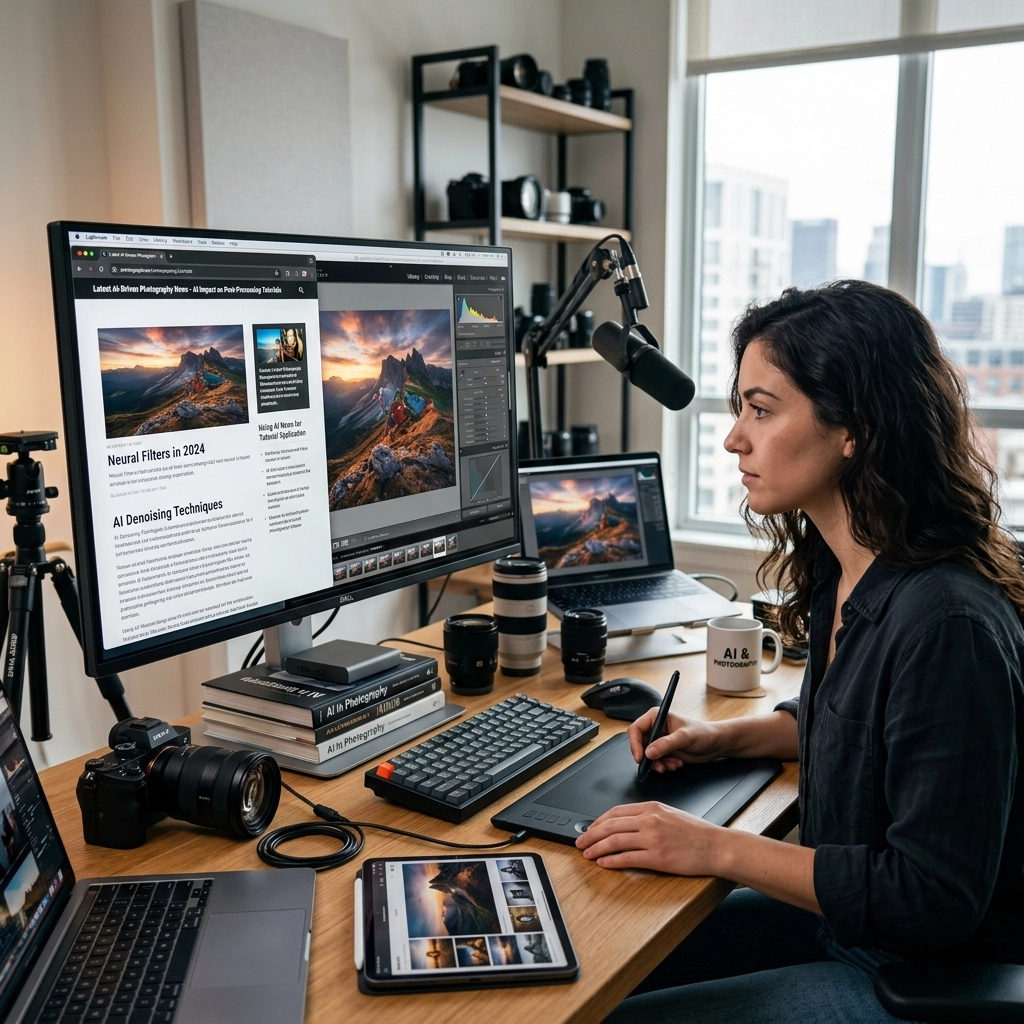
AI-driven news tells us that these tutorials are becoming obsolete. Modern software like Luminar uses AI to analyze the specific context of your photo. A tutorial for Luminar isn't about telling you which numbers to input; it’s about teaching you how to guide the AI’s "vision."
Instead of learning how to manually mask a sky (which used to take ten minutes of clicking), the news cycle now focuses on how AI masking tools can identify hair, water, and mountains instantly. Your tutorial usage shifts from "how do I do this technical task?" to "how do I use this tool to express my creativity faster?"
Why Real-Time News Is the New Curriculum
In the past, you could buy a photography course and it would be relevant for three years. Today, if a major AI update drops for Photoshop or Luminar on a Tuesday, the tutorials you watched on Monday are half-useless.
This is why staying plugged into AI-driven news is vital. When we see news about "Neural Networks in Mirrorless Autofocus," it immediately changes the type of tutorials we need. We stop looking for "how to focus on a bird's eye" and start looking for "how to configure AI subject tracking for erratic movement."
I’ve been chatting with Sonny, our Social Media Manager, about this. We’re aligning our social content to these rapid news cycles because we know that when a new AI feature breaks, you don’t want a 20-hour masterclass. You want a quick, smart tutorial that shows you how to use that specific news item to win.
From Technical Mastery to Prompt Engineering
Believe it or not, "prompting" is becoming a photography skill. As AI-driven news covers the integration of generative fill and text-to-image tech into our workflows, the tutorials are following suit.
Think about it. If you’re trying to add a subtle mist to a landscape, you might have previously looked for a tutorial on "using rare textures for tangible aesthetic photography." While those techniques are still awesome, especially for a tangible aesthetic, the new-age tutorial might show you how to prompt an AI to generate that mist based on the existing lighting in your frame.
The "how-to" is changing from mouse clicks to language. Tutorials are teaching us how to talk to our software. It sounds sci-fi, but it’s the reality of 2026.
AI News and Gear: Why the Manual Is Dead
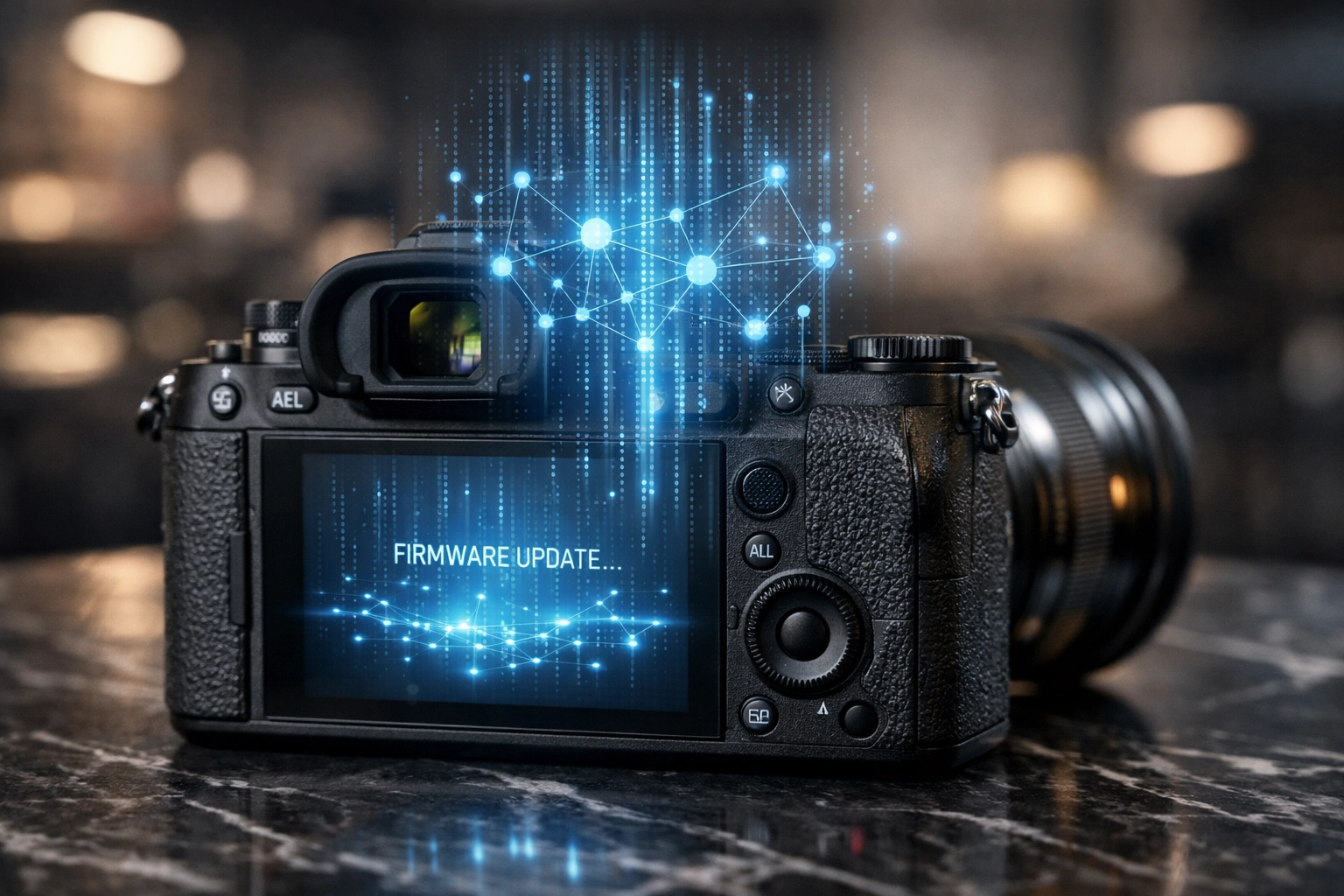
Every time Sony, Canon, or Nikon releases a firmware update with new AI capabilities, a thousand old tutorials die.
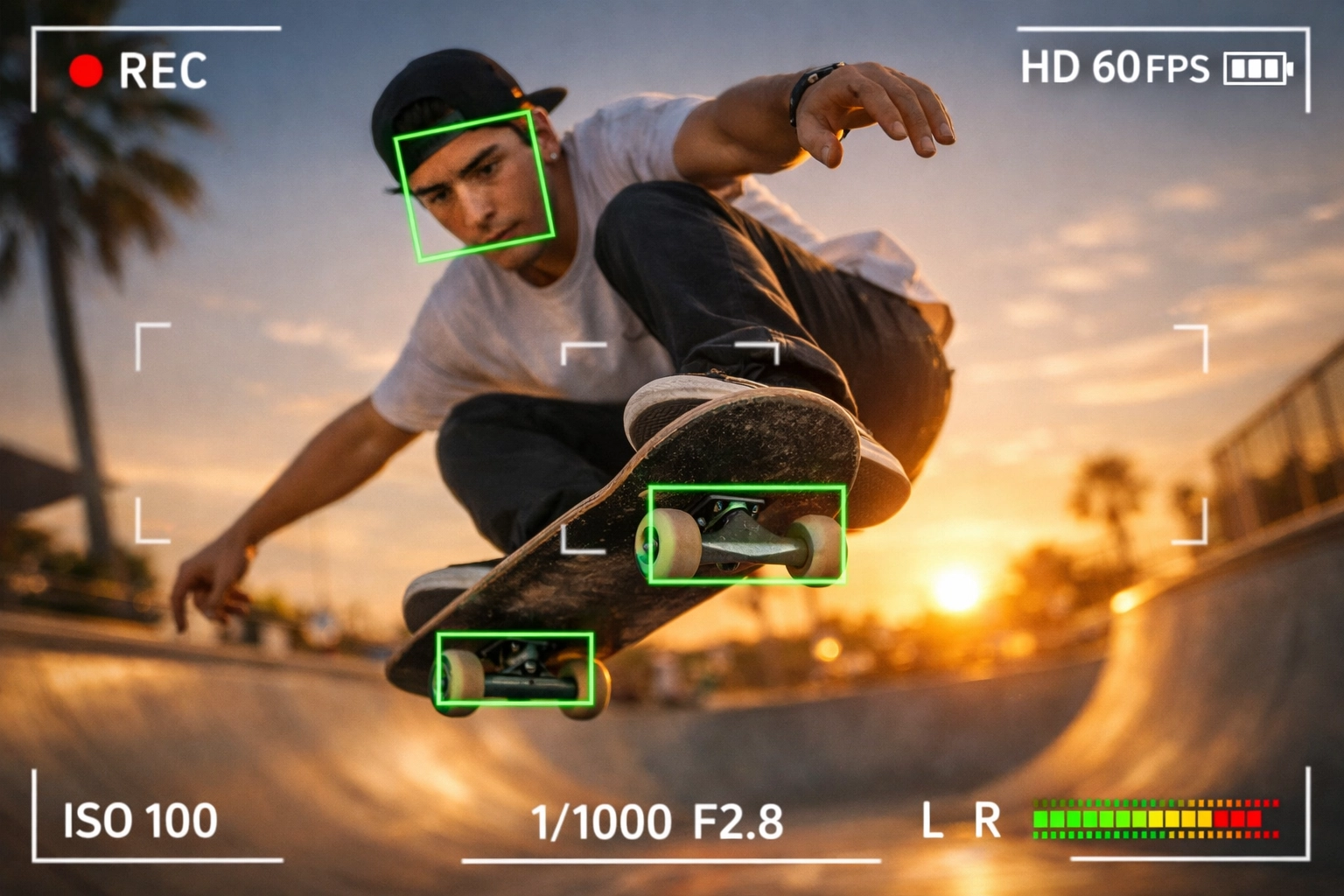
The news tells us that the camera is getting smarter. It can now predict where a skateboarder is going to be before they even jump. This means the old tutorials on "manual zone focusing" are becoming niche skills for enthusiasts rather than requirements for pros.
If you’re looking to stay ahead, you need to look at The Ultimate Guide to Photography Tutorials to see how to balance these new AI shortcuts with foundational skills. The news drives the gear, and the gear drives what we need to learn.
The Shift Toward "Creative Strategy"
Because AI handles the "boring" stuff, noise reduction, sharpening, basic color balancing, tutorials are finally moving toward the "fun" stuff.
We’re seeing a massive trend in tutorials that focus on creative strategy. Instead of "How to use the pen tool," we’re seeing "How to conceptualize a series of ethereal landscapes." If you’re looking for inspiration on what to actually shoot once the AI handles the processing, check out these ethereal landscapes for captivating shots.
AI news frees us from the mechanical, and tutorials are evolving to fill that void with art theory, composition, and storytelling. It’s a great time to be a photographer because you get to spend more time being an artist and less time being a software technician.
How AI Changes Location Scouting Tutorials
Even the way we find places to shoot is being hit by the AI news wave. AI-driven data analysis is now being used to predict the best times for "secret" lighting at famous spots, or to find hidden gem locations for travel photography.
Tutorials in this space are no longer just "go to this GPS coordinate." They are teaching photographers how to use AI weather modeling and light prediction software to ensure they get the shot on the first try. If you want to dive deeper into finding those off-the-beaten-path spots, our guides on lesser-known vistas are a perfect starting point.
Is AI Replacing the Photographer?
This is the big question that dominates the news. Short answer: No. Long answer: It’s replacing the "button-pusher."
Tutorials are now emphasizing the human element: the "soul" of the photo. You can find a million AI tools to make a photo look "perfect," but "perfect" is often boring. The tutorials that will matter in 2026 and beyond are the ones that teach you how to use AI to remove the obstacles between your vision and the final image.
For a deeper look into the philosophy of where photography is heading, PhotoGuides.org has some incredible resources on the intersection of tech and art. Also, keep an eye on blog.edinchavez.com for more personal insights on how I'm using these tools in my professional work.
Speeding Up the Workflow (The "Pro" Advantage)
If you’re a pro, time is money. AI news regarding batch processing and AI-driven culling (like what you see at www.proshoot.io) is a godsend.
Tutorials are pivoting to show photographers how to cull 3,000 wedding photos in 15 minutes using AI. If you’re still using tutorials that teach you how to star-rate images manually one by one, you’re losing money. The news is screaming at us to automate the workflow, and the tutorials are providing the roadmap.
Custom AI Models: The Future of Your "Style"
The most exciting news lately is about photographers training their own AI models. Imagine a tutorial that doesn't teach you how to edit like me, but teaches you how to train an AI to edit like you.
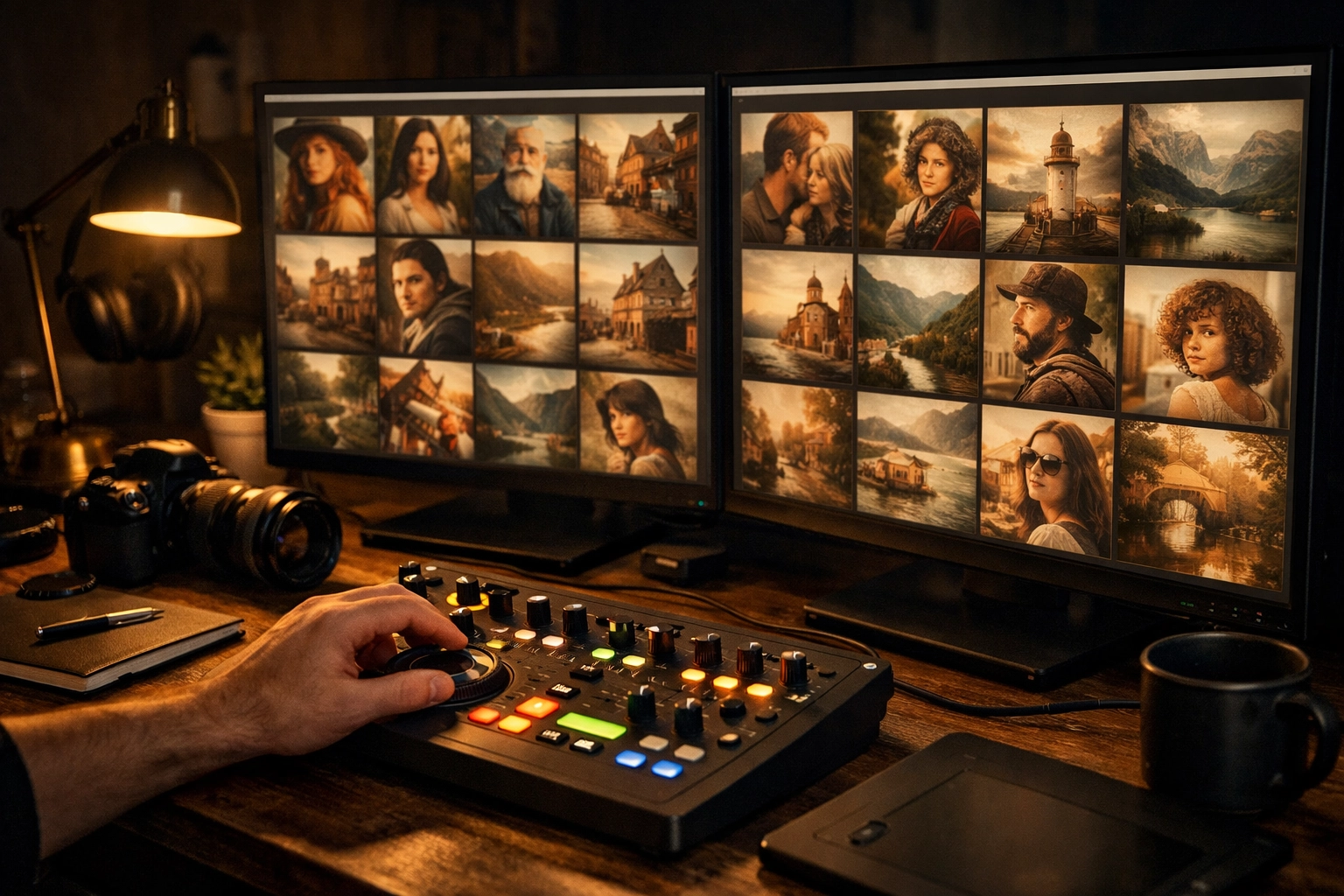
By feeding your best work into a private model, you can create a personalized AI assistant. This is the ultimate "style" tutorial. It’s not about presets anymore; it’s about algorithmic identity. This allows you to spend more time on high-end projects, like the ones showcased at www.edinfineart.com, while the AI handles the heavy lifting of maintaining your aesthetic across a large volume of work.
Staying Ahead of the Curve
So, how do you actually use this information?
- Filter the Noise: Not every AI update is a game-changer. Follow reputable news sources that filter for actual utility.
- Learn the "Why," Not the "How": Focus on tutorials that explain the logic of a tool, not just which button to press.
- Experiment with Hybrid Workflows: Combine manual techniques: like unlocking secrets to enchanting urban photography: with AI enhancements.
- Stay Curious: The moment you think you’ve mastered photography is the moment the AI news cycle will prove you wrong.
The way we use tutorials has shifted from "instruction manuals" to "strategic briefings." We aren't just learning how to operate a camera; we’re learning how to direct a sophisticated digital partner.
Whether you’re shooting picturesque coastal escapes or gritty urban streets, AI is there to help. But it only helps if you know what to ask for.
Why This Matters for You Right Now
If you feel overwhelmed by all the AI talk, don’t be. It’s actually making photography more accessible. It’s lowering the barrier to entry for technical "perfection," which means the only thing left to compete on is your unique perspective.
Keep an eye on the news, keep your tutorials fresh, and don't be afraid to let the AI do some of the heavy lifting. If you’re looking for more advanced production insights, check out www.edinstudios.com to see how high-end productions are integrating these shifts.
Photography isn't dying; it’s evolving. And honestly? It’s about time. Less time at the computer means more time behind the lens, and that’s a win for everyone.
Don't forget to check out the latest updates in Luminar to see these AI features in action. It’s one thing to read about the news; it’s another to actually see the "magic" happen on your own screen. Stay sharp, stay creative, and keep shutting that aperture (manually or with AI, we don't judge).