Let’s face it: getting your headshot taken can feel a bit like going to the dentist. You know you need to do it, you know it’s good for you, but you’re probably dreading the bright lights and the pressure to look "perfect."
In 2026, your professional headshot is basically your digital handshake. Whether it’s for your LinkedIn profile, your company’s "About Us" page, or a speaker bio, that one image does a lot of heavy lifting. It tells people if you’re approachable, competent, and professional before you even say a word.
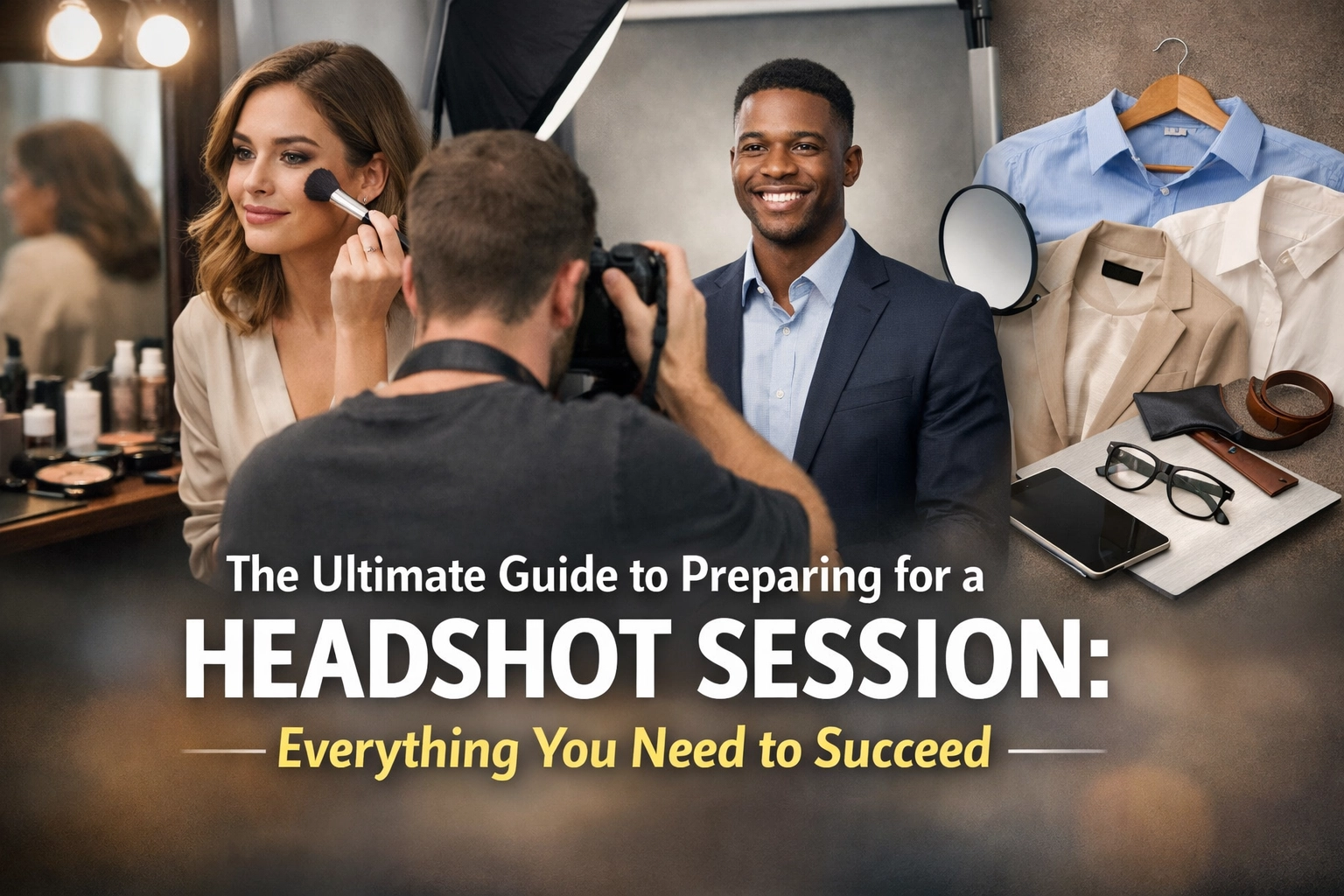
At Shut Your Aperture, we want you to walk into that studio feeling like a rockstar, not a deer in the headlights. That’s why we’ve put together this massive guide on how to prepare for a headshot session. We’re going to cover everything from what to wear to how much water you should be drinking.
If you’re looking for the absolute best in the business to handle the actual shooting part, you really need to check out Perfect Corporate Headshots. They know exactly how to make you look like the best version of yourself.
1. Defining Your Visual Brand
Before you even pick out a shirt, you need to ask yourself: what is this photo for?
A CEO at a tech startup needs a very different vibe than a high-end litigator or a creative director. Professional corporate headshot tips always start with branding. Are you trying to look authoritative? Friendly? Innovative?
Talk to your photographer about the background. Do you want a classic studio grey, a bright white, or an environmental shot in an office? If you’m interested in how different gear affects the final look, you might want to read our deep dive on the Nikon Z6 III vs Sony A7 IV to see what kind of tech is capturing your best angles this year.
2. Wardrobe: What to Wear (and What to Burn)
This is the number one question we get. "Edin, what do I wear?"
The rule of thumb is simple: wear something that makes you feel like a boss. If you feel uncomfortable, it will show on your face.
Colors and Patterns
- Solid colors are king. Rich jewel tones (emerald green, navy blue, royal purple) look fantastic on almost everyone.
- Avoid "clashing" patterns. Stay away from tiny pinstripes or complex patterns. They can cause a "moiré" effect on digital screens, which looks like a weird vibrating zig-zag pattern.
- Neutral is safe. Black, grey, and navy are staples for a reason. They don’t distract from your face.
Fit and Texture
- Fit is everything. A baggy suit jacket will make you look twice your size. A shirt that’s too tight will show every tension line. Get your clothes tailored if you can.
- Think about textures. Using rare textures for tangible aesthetic photography isn't just for still life; the weave of a high-quality wool blazer or a silk blouse adds depth to your portrait.
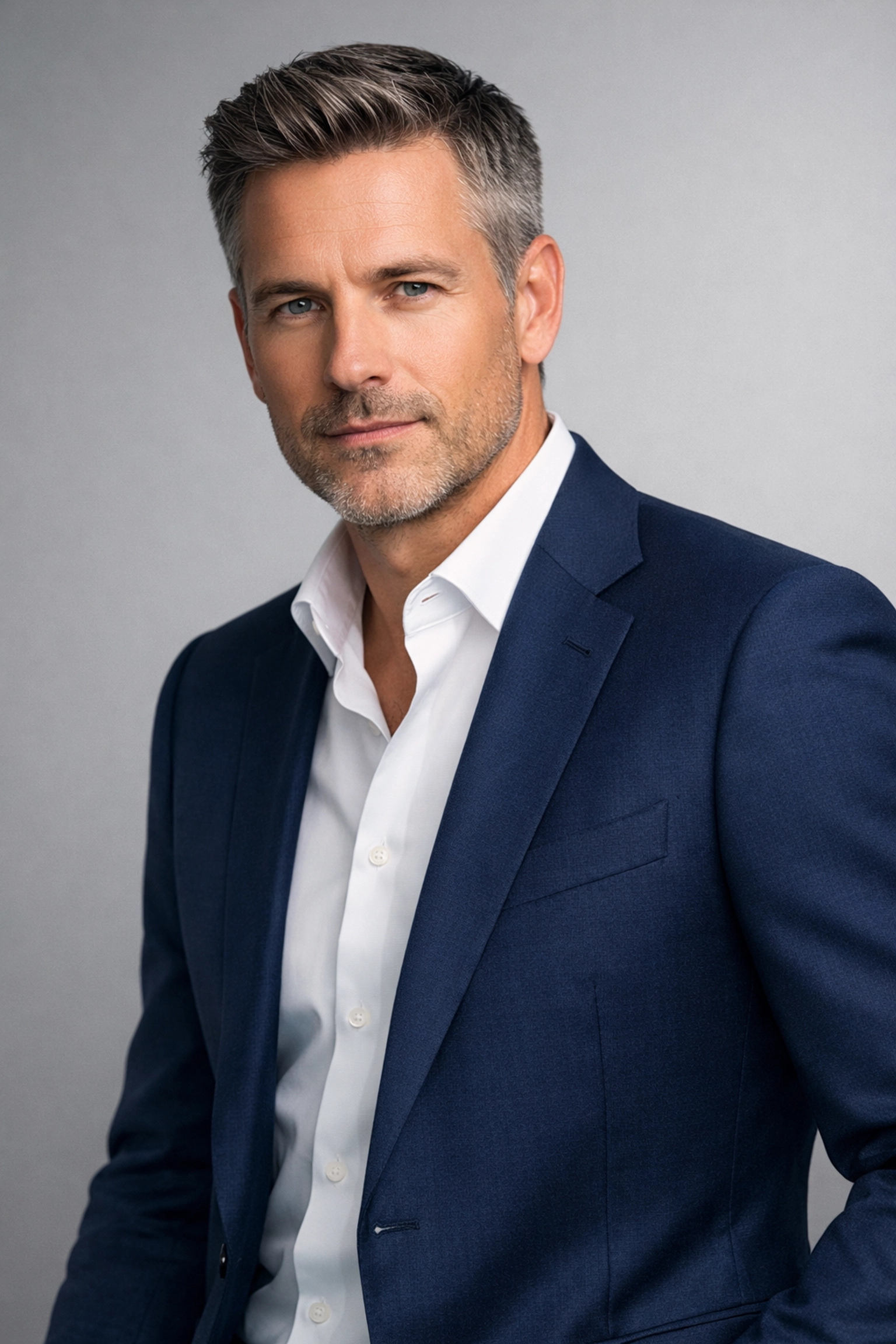 A professional executive wearing a well-tailored navy blue blazer, demonstrating the ideal executive headshot wardrobe guide. Alt text: Professional corporate headshot tips for wardrobe selection and fit.]
3. The 72-Hour Rule: Pre-Shoot Wellness
You can’t fix a week of bad habits in five minutes of Photoshop. Well, you can, especially if you’re using Luminar, but it’s much better to start with a great canvas.
Hydration
Drink water. Then drink some more. Proper hydration makes your skin look plump and healthy. It fills out fine lines and gives you a natural glow that no highlighter can replicate. Start drinking at least 2 liters a day three days before your shoot.
Sleep
They call it beauty sleep for a reason. Lack of sleep leads to red eyes and dark circles. Aim for 7-8 hours for at least two nights leading up to the session.
Diet
Avoid super salty foods the night before. Salt leads to water retention, which leads to a puffy face. Also, maybe skip the extra glass of wine. Alcohol dehydrates the skin and can make your eyes look glassy.
4. Grooming and Hair
Don't do anything drastic right before your shoot. This is not the time to try a "bold new look."
- Haircuts: Get your hair cut about 5-7 days before the session. This gives it time to "settle" and look natural.
- Facial Hair: Men, if you’re going for the clean-shaven look, shave the morning of the shoot. If you have a beard, make sure it’s trimmed and neat. Use a little beard oil to keep it from looking frizzy.
- Skin: Don't try a new facial or chemical peel the week of the shoot. If you have a breakout, don't panic. A professional photographer (or a quick session in Luminar) can easily remove a blemish, but it’s harder to fix flaky, irritated skin from a bad reaction to a product.
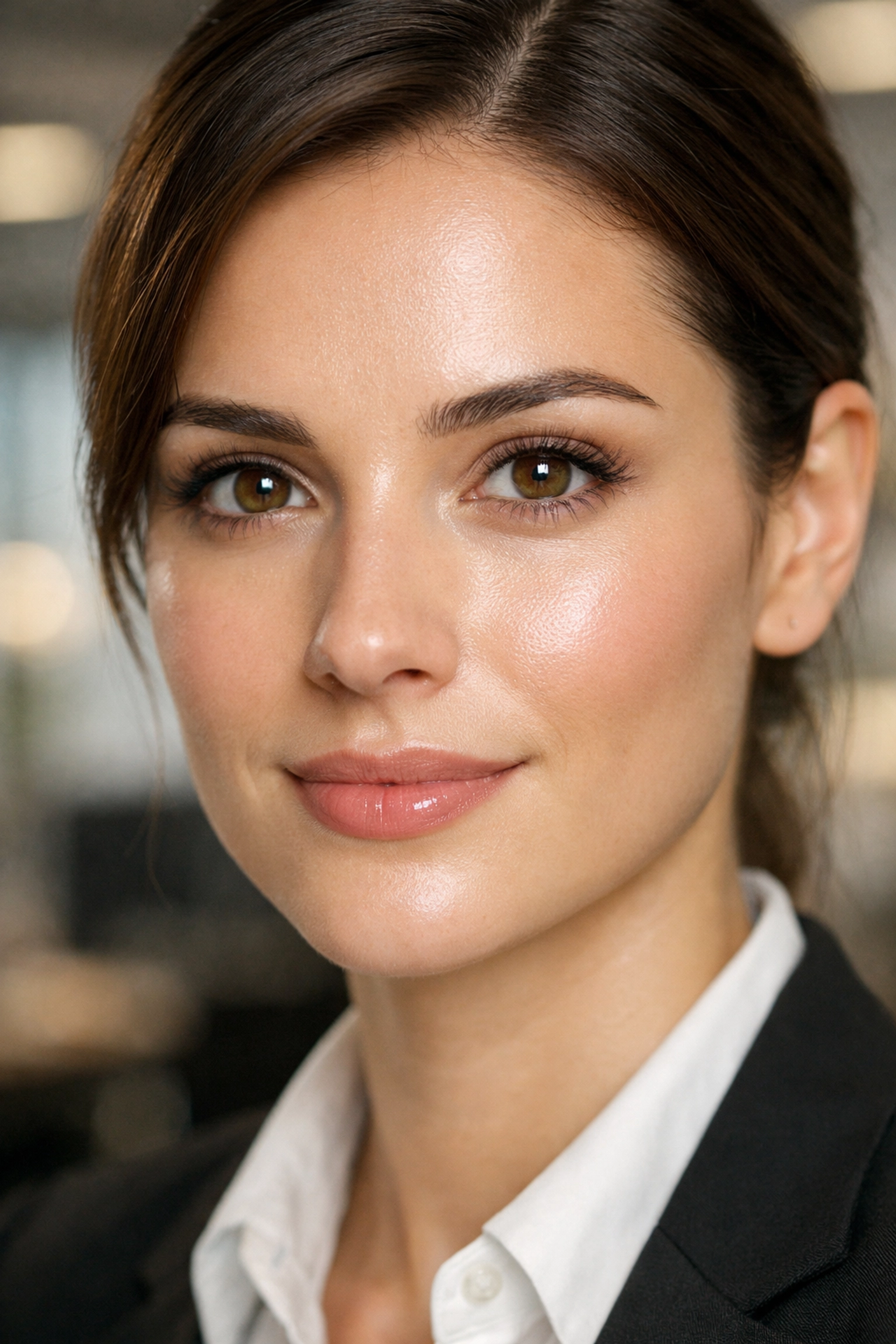 Close up of a person's face showing healthy skin and professional grooming for a headshot. Alt text: How to prepare for a headshot session through proper grooming and skincare.]
5. Makeup and Shine Control
The camera sees things differently than the naked eye. Lighting for headshots is often very bright, which can wash you out or highlight shine.
- Keep it natural. Your headshot should look like you on your best day. Avoid heavy "night out" makeup.
- Matte is your friend. Avoid heavy shimmers or glitters. They catch the light in weird ways and can look like sweat.
- Powder is essential. Even if you don't usually wear makeup, bring some translucent powder or oil-blotting sheets. Under best lighting for executive portraits, everyone gets a little shiny.
6. Mastering Your Expressions
Most people hate their photo because they feel like their expression is "fake." Practice makes perfect.
Stand in front of a mirror and try a few things:
- The "Squinch": Gently lift your lower eyelids just a tiny bit. It makes you look confident and focused rather than wide-eyed and scared.
- The Laugh: Think of something actually funny. A real smile reaches your eyes (the "Duchenne smile").
- The Angle: Almost no one looks their best straight-on. Turn your body slightly to the side and bring your chin forward and down a bit to define the jawline.
If you're worried about the technical side of the gear being used, check out our essential gear guide for photographers to understand the importance of lenses and lighting setups.
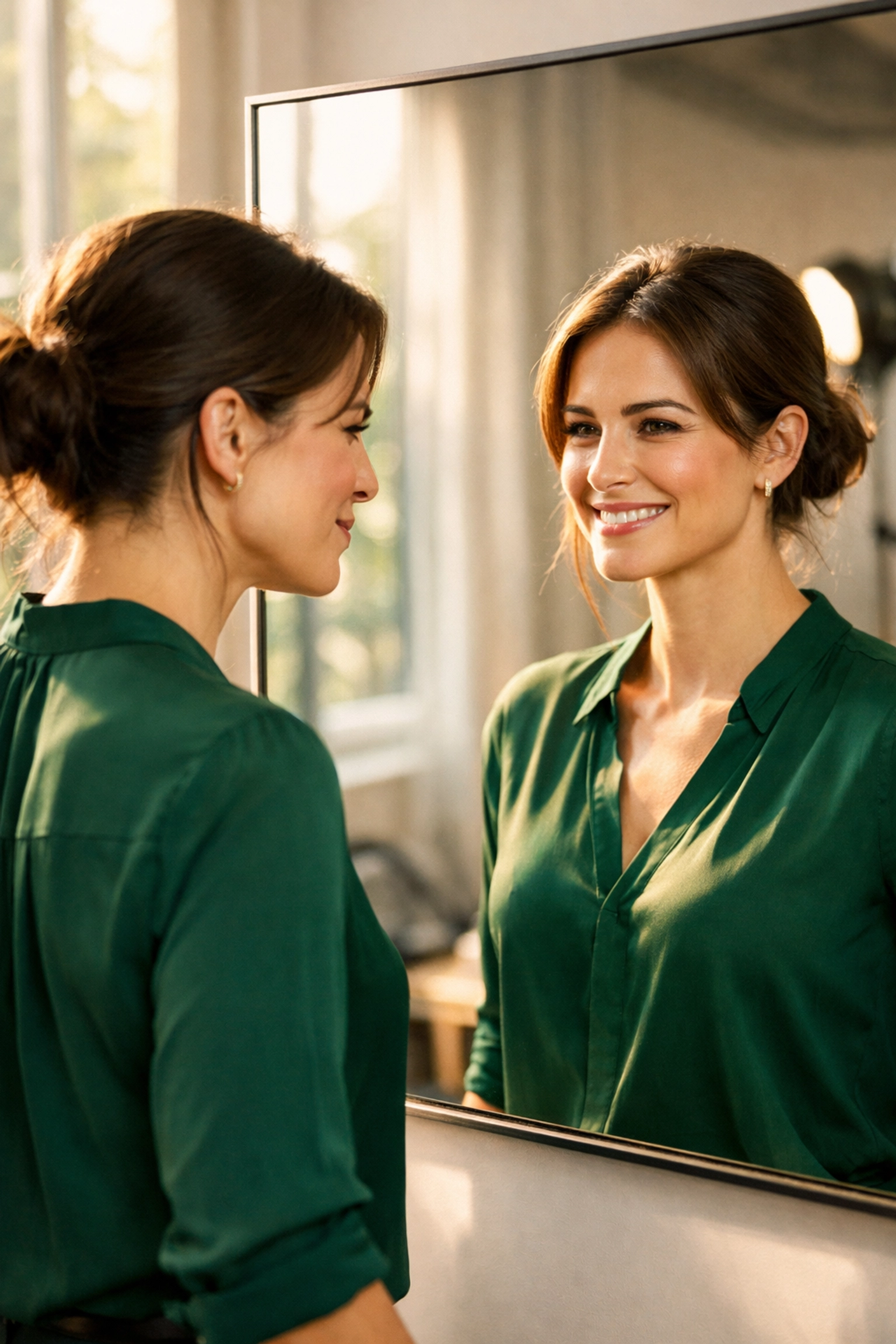 A professional woman practicing different facial expressions in a mirror for her corporate portrait. Alt text: Practicing expressions and posing for professional corporate headshot tips.]
7. The Importance of Professional Lighting
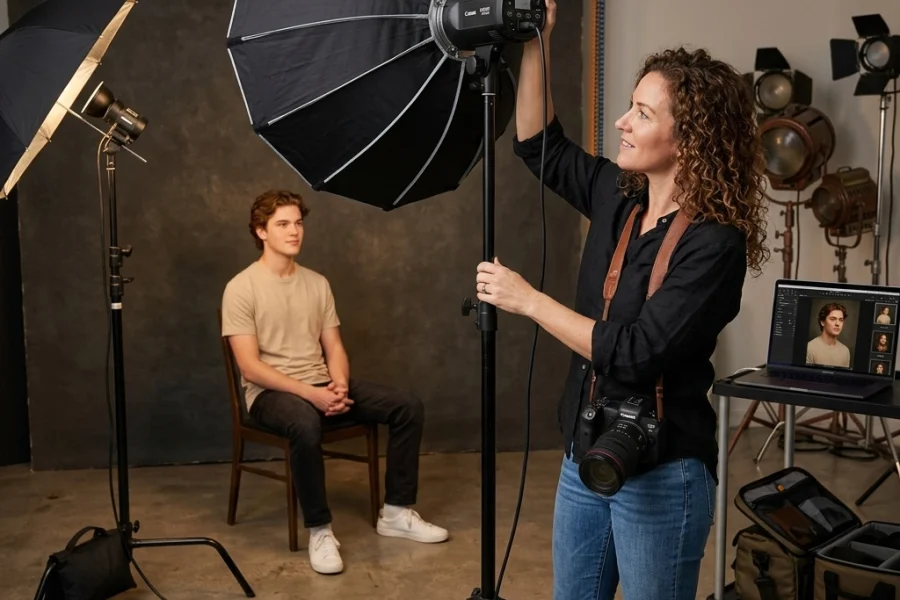
You can have the best suit and the best hair, but if the lighting is bad, the photo is trash. Best lighting for executive portraits usually involves a large light source to create soft shadows.
We often talk about lighting in different contexts, like water photography, but for headshots, it’s all about the "catchlights" in the eyes. Those little white reflections make you look alive and engaged.
If you're shooting outdoors, your photographer will likely look for "open shade" or shoot during the golden hour. If you want to see how lighting affects outdoor environments, our post on majestic sunset photography has some great examples of natural light play.
8. What to Bring to Your Session
Don't just show up with your keys and a phone. Bring a "Headshot Survival Kit":
- A lint roller (essential!).
- A small mirror.
- Hairbrush/comb and hairspray.
- Lip balm (dry lips look terrible in high-res).
- Your various outfit options on hangers (don't fold them in a bag!).
- A bottle of water.
9. The Post-Processing Phase
Once the shutter clicks, the work isn't done. Professional headshots always require a bit of polish. We’re not talking about making you look like a different person, but rather removing a stray hair or a temporary blemish.
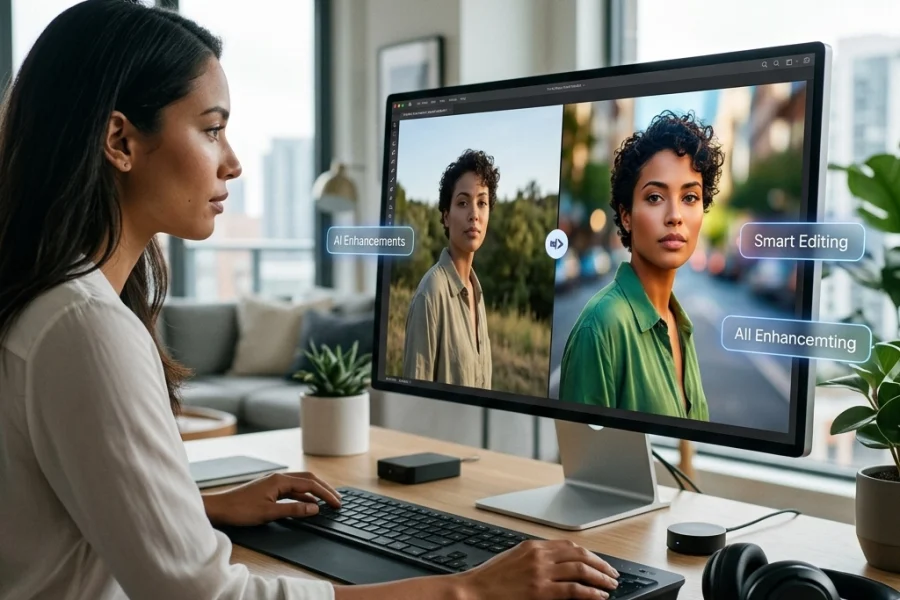
Many pros use Luminar for its AI-assisted portrait tools. It’s incredible for subtly enhancing eyes or smoothing skin while keeping the texture realistic. If you’re a photographer reading this, Luminar is a total game-changer for your workflow.
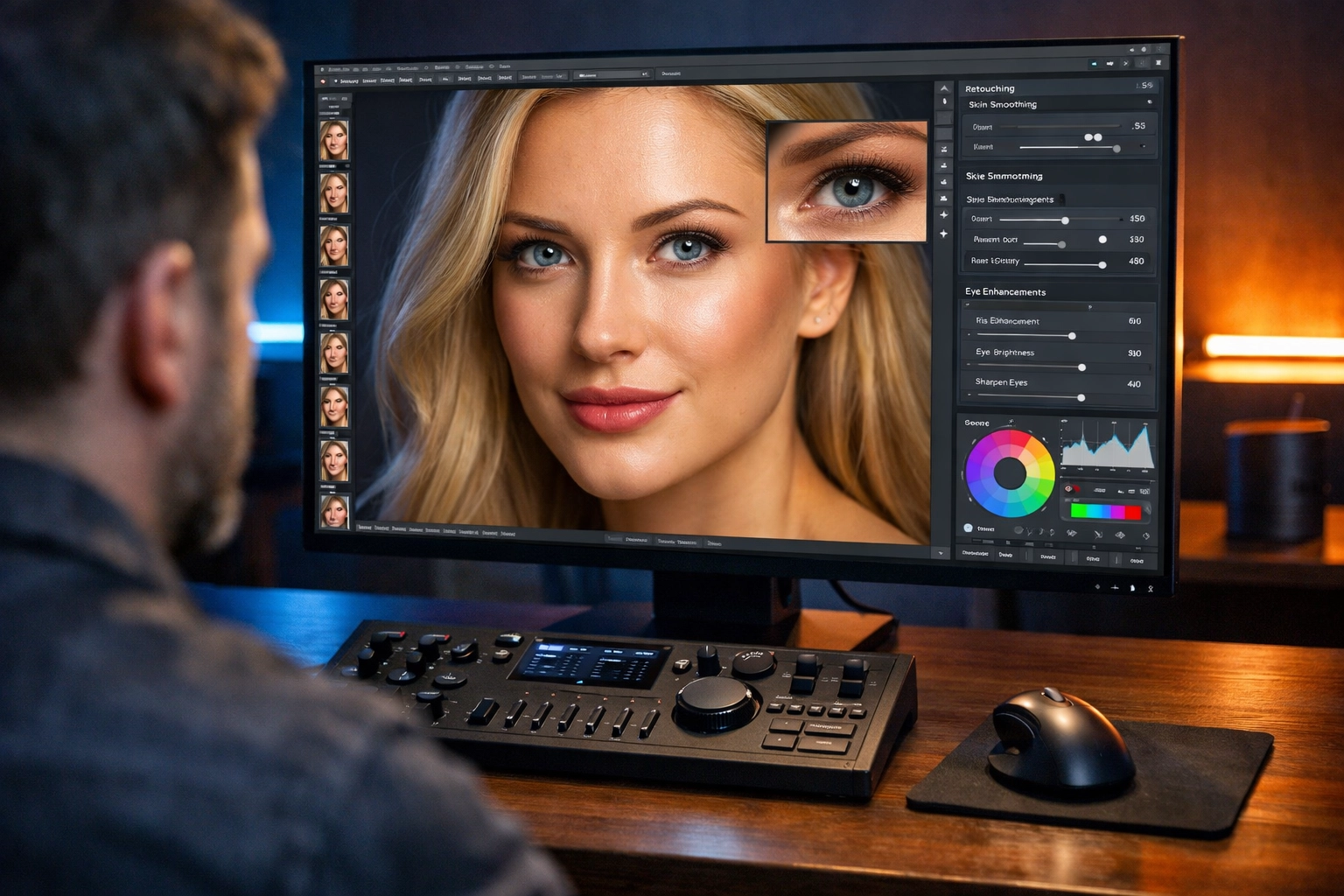 A photographer's workspace showing a computer screen with a headshot being edited in professional software. Alt text: Post-processing and editing professional headshots with AI tools.]
10. Why You Shouldn't DIY Your Headshot
I know, iPhones have "Portrait Mode" now. It’s tempting to just have your spouse take a photo of you in the backyard. Please, don't do that.
A professional photographer understands focal length. A wide-angle lens on a phone can actually distort your face, making your nose look larger and your ears look smaller. A pro will use a telephoto lens (usually 85mm or 105mm) that flattens the features and makes you look much more attractive.
For the real deal, head over to Perfect Corporate Headshots. They specialize in this and nothing else. They know how to position the lights, how to coach your expression, and how to make sure you look like a leader.
Final Thoughts
Preparing for a headshot session doesn't have to be stressful. It’s just about planning. If you take care of the details: the wardrobe, the hydration, the grooming: the actual session will be a breeze.
Remember, your headshot is an investment in your career. It’s often the very first impression you make on a potential employer, client, or partner. Make it count.
Whether you’re exploring hidden gem locations for travel photography or just trying to survive a corporate photoshoot, the key is always in the preparation.
Now, go drink some water, pick out your favorite blazer, and get ready to shine!