Look, it’s 2026. If you’re still carrying around a bulky DSLR and waiting for that mirror to clack every time you take a shot, we need to have a serious talk. The photography world has moved on, and mirrorless technology isn't just "the future" anymore: it’s the present. Whether you’re just starting out and looking for photography for beginners advice or you’re a seasoned pro hunting for the latest camera gear reviews, finding the right body is the most important decision you'll make this year.
Choosing a camera used to be simple: Canon or Nikon? Today, the market is flooded with incredible options from Sony, Fujifilm, Panasonic, and Leica. It’s enough to make your head spin. In this guide, I’m going to break down the best mirrorless cameras of 2026, compare their strengths, and help you figure out which one belongs in your bag.
Why Mirrorless is Winning in 2026
The transition from DSLRs to mirrorless wasn't just about making cameras smaller. It was about the tech inside. By removing the mirror box, manufacturers opened the door to faster burst rates, silent shooting, and autofocus systems that can track a bird's eye through a forest or a skateboarder's face during a kickflip.
If you’re keeping up with photography news, you know that the focus has shifted entirely toward computational photography and AI-driven autofocus. In 2026, your camera isn't just a light box; it’s a high-powered computer with a lens attached. This makes learning how to use manual mode camera even more rewarding because the feedback loop is instant: what you see in the electronic viewfinder (EVF) is exactly what your final image will look like.
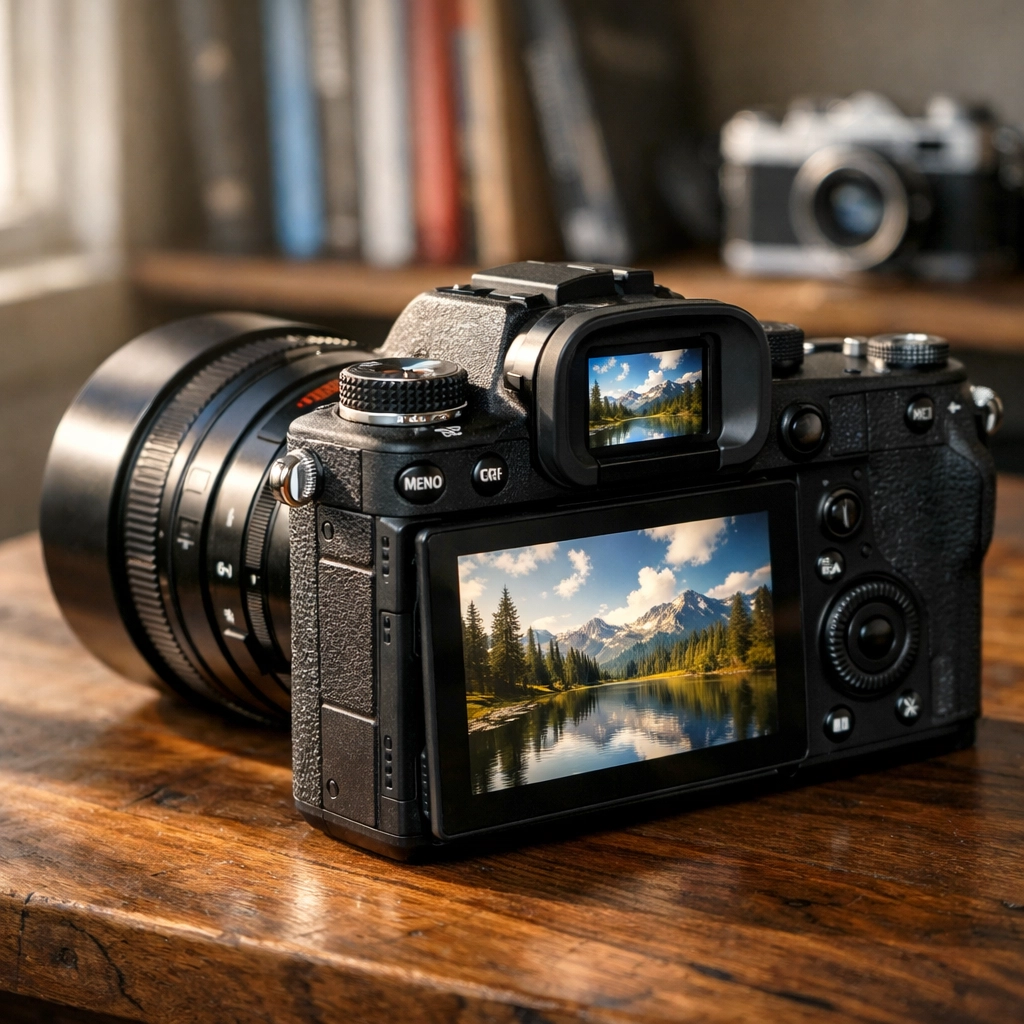
Alt text: A sleek modern mirrorless camera with a large lens sitting on a rustic wooden table, showing a bright electronic viewfinder display.
Best All-Rounder: Nikon Z6 III
The Nikon Z6 III has taken the throne as the ultimate hybrid camera for enthusiasts. It hits that "Goldilocks" zone: not too expensive, but packed with professional-grade features. One of its standout specs is the electronic viewfinder, which is bright enough (4000 nits) to make you forget you aren't looking through a traditional optical piece.
For those interested in portrait photography techniques, the Z6 III’s skin-tone rendering and eye-autofocus are top-tier. It handles low light like a champ, making it a favorite for wedding photographers who don't want to carry the weight of a flagship Z9. If you want to see how these cameras perform in the real world, check out some pictures from Ireland to see the kind of dynamic range we're dealing with today.
The High-Resolution King: Sony A7R V
If your heart lies in the details, the Sony A7R V is still the beast to beat in 2026. With 61 megapixels, it’s designed for those who want to crop in without losing a shred of quality. This is the go-to for anyone focused on landscape photography tips because it captures every leaf, every rock, and every subtle gradient in the sky.
When I’m out shooting for Edin Fine Art, resolution matters. You want those large-scale prints to look tack-sharp. The A7R V also features a dedicated AI processing unit that helps with "Real-time Recognition" for subjects like insects, planes, and cars. It's almost like cheating.
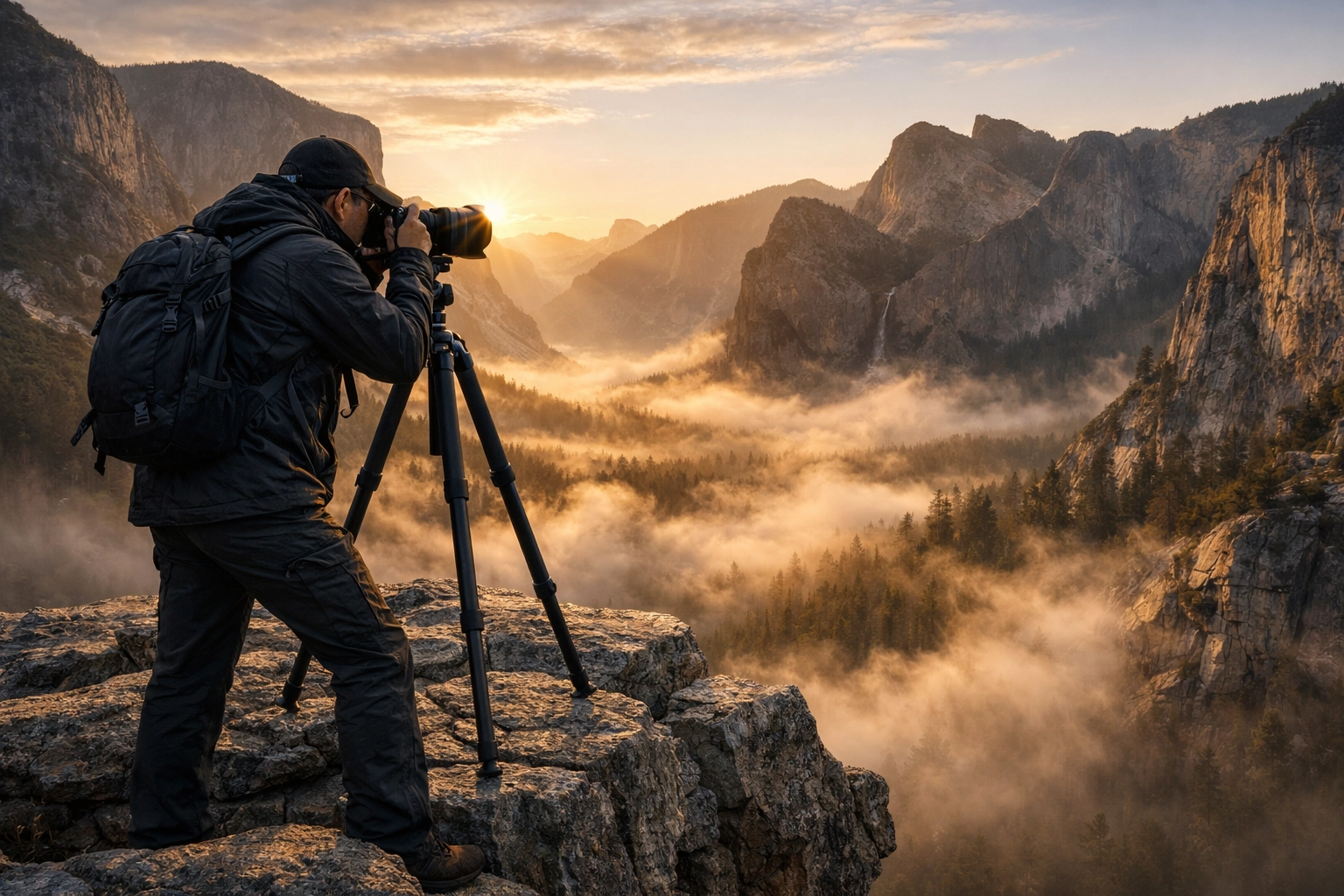
Alt text: A landscape photographer standing on a cliffside at sunrise, using a Sony mirrorless camera on a sturdy tripod.
Best for Action and Wildlife: Nikon Z9
If money is no object and you need a camera that can survive a sandstorm while shooting 20 frames per second, the Nikon Z9 is the professional’s choice. It’s bulky compared to other mirrorless options, but that’s because it’s built like a tank. It doesn't even have a mechanical shutter: Nikon is so confident in their sensor speed that they just got rid of it entirely.
For sports and wildlife, this is the peak. When you're trying to nail a shot for a love letter to action sports photography, you need gear that won't lag. The Z9’s buffer is essentially bottomless, meaning you can hold that shutter button down until your memory card is screaming for mercy.
Best for Travel and Street Photography: Fujifilm X-T5
Sometimes, you just want to look cool while taking great photos. The Fujifilm X-T5 is the sweetheart of the street photography ideas crowd. It has dedicated dials for ISO, shutter speed, and exposure compensation, giving it a tactile, retro feel that reminds us of the film days.
Fujifilm’s film simulations are legendary. You can make your digital shots look like classic Kodak or Fujifilm stocks straight out of the camera. This is great for those who want to spend less time on photo editing tutorials and more time out on the street. If you are into the street aesthetic, you might enjoy reading about Zac Turgeon’s travels in Asia for some inspiration.
Best for Beginners: Fujifilm X-S20 or Sony A6700
If you are just dipping your toes into the world of photography for beginners, you don't need to spend $5,000. The Fujifilm X-S20 is an incredible entry point. It has a "Vlog" mode that makes it super easy for creators, and its AI-based autofocus makes it hard to take a blurry photo.
Alternatively, the Sony A6700 offers access to the massive Sony E-mount lens ecosystem. This is important because, as we say at PhotoGuides.org, the glass is often more important than the body. Starting with a solid APS-C sensor allows you to learn the ropes without the massive weight of full-frame gear.
How to Choose: Key Factors
Choosing a camera isn't just about reading a spec sheet. You need to think about how you’re going to use it. Here are the big three factors:
- Sensor Size: Full-frame (Sony A7 IV, Nikon Z6 III) is great for low light and depth of field. APS-C (Fujifilm X-T5, Sony A6700) is smaller, lighter, and more affordable.
- Ergonomics: Go to a store and hold them. If your hands are big, a tiny Sony A7C II might feel like a toy. If you’re hiking 10 miles, a Nikon Z9 will feel like a brick.
- Lens Selection: Canon and Nikon have great glass, but Sony and Fujifilm have more third-party options (like Sigma and Tamron) which can save you a ton of cash.
For more deep dives into specific hardware, you can always check out blog.edinchavez.com or ProShoot.io for professional opinions on the latest releases.
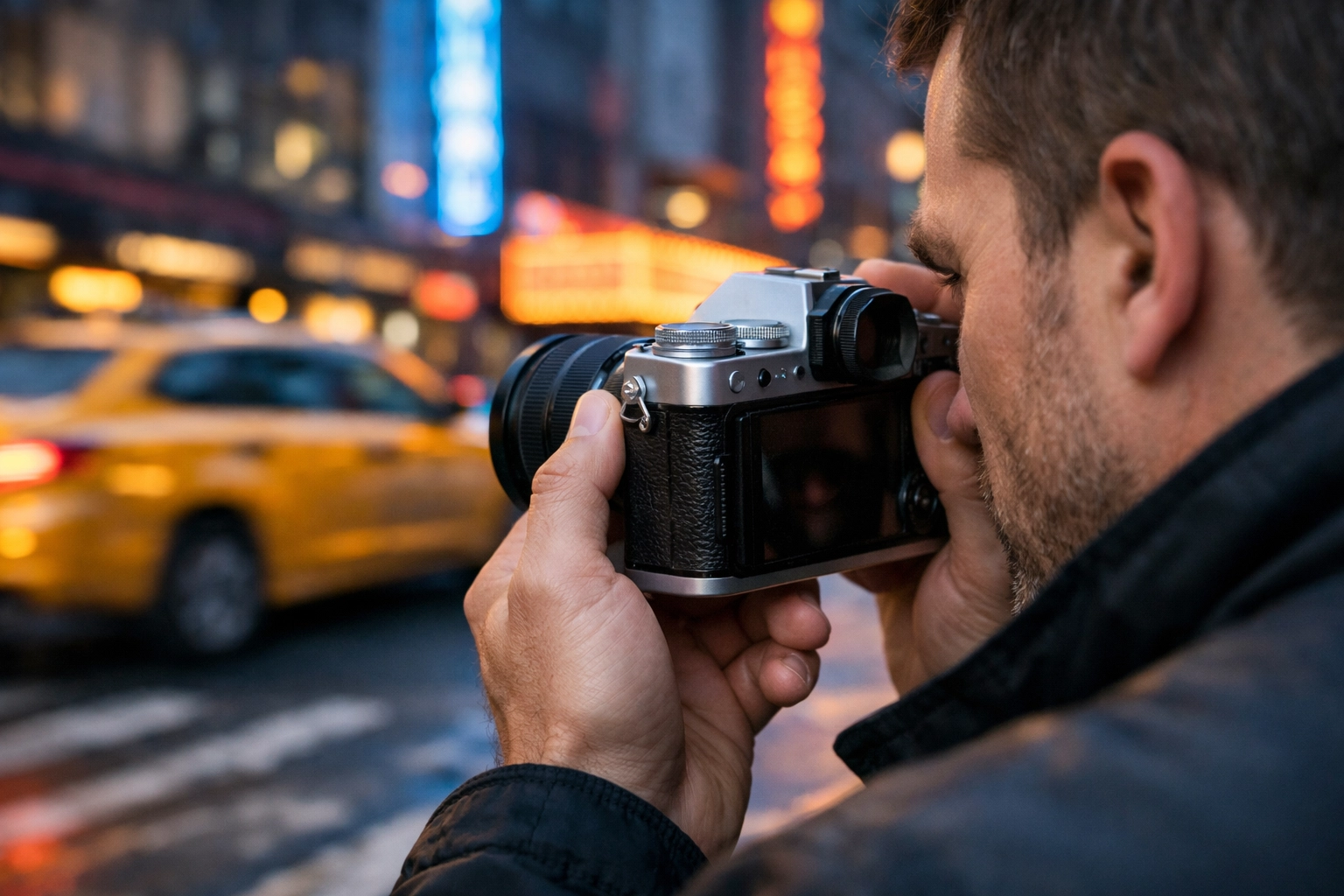
Alt text: A street photographer in a busy metropolitan area, holding a compact Fujifilm mirrorless camera, capturing the movement of the city.
Mastering Your New Gear
Once you’ve picked out your dream camera, the real work begins. You can’t just stay in "Auto" mode forever. Learning how to use manual mode camera is the difference between taking a "snap" and making a "photograph." You need to understand the exposure triangle: Aperture, Shutter Speed, and ISO.
If you’re feeling overwhelmed, look for photography tutorials that focus on one thing at a time. Start with aperture: learn how to get that blurry background for portraits. Then move to shutter speed: learn how to freeze action or create silky smooth waterfalls. For a bit of artistic inspiration on how to treat your images, check out our guide on how to make a photo look like an Ansel Adams masterpiece.
The Importance of Post-Processing
In 2026, the photo you take in-camera is only half the story. The "digital negative" (RAW file) needs to be developed. Whether you’re using Adobe Lightroom shortcuts to speed up your workflow or diving into more advanced photo editing tutorials, software is a crucial part of the kit.
One of the most powerful tools available right now is Luminar. It uses AI to handle things like sky replacement, skin retouching, and even relighting a scene. It’s perfect for those who want professional results without spending four hours masking a single tree branch.
The Future: Photography vs. Art
As gear gets better, it’s easy to get caught up in the "gear acquisition syndrome" (GAS). But remember, the camera is just a tool. You can have a $10,000 Nikon Z9 and still take boring photos. We often ask our readers: You may be a photographer, but are you an artist?
Technology should serve your vision, not define it. Whether you’re shooting a hyperlapse in Vienna or capturing a solar eclipse from an airplane, the best gear is the gear that stays out of your way and lets you create.
Alt text: A close-up shot of a high-quality camera lens showing the intricate glass elements and light reflecting off the surface.
Final Comparisons: Which One Should You Buy?
To wrap things up, let's look at the quick comparison for 2026:
- The Best Value: Canon EOS R6 Mark II. It does everything well and doesn't break the bank.
- The Best for Vlogging: Sony ZV-E1 or Fujifilm X-S20. Built-in stabilization and great mics.
- The Best for Pros: Nikon Z9 or Sony Alpha 1 II. Unmatched speed and reliability.
- The Best for Art: Leica M11-P (if you have the budget) or Fujifilm X-Pro series for that rangefinder feel.
If you’re looking to build your professional portfolio or need a studio space to test out your new gear, Edin Studios is always available for creators who want to take their work to the next level.
Photography is a journey. Don't get too bogged down in the specs. Find a camera that feels good in your hands, learn how to use manual mode camera, and start shooting. Whether you are following landscape photography tips or exploring new street photography ideas, the best camera is always the one you have with you.
For more inspiration, check out our collection of the best photography quotes to get your creative juices flowing. Now get out there and shut your aperture!