Let’s be honest: macro photography is a bit of a gear trap. You start with a decent lens, then you realize you need a tripod, then a focusing rail, and suddenly you’re looking at lighting kits that cost more than your actual camera body. It’s a rabbit hole. But in the world of photography news, there’s occasionally a release that makes us rethink the "pay to play" model.
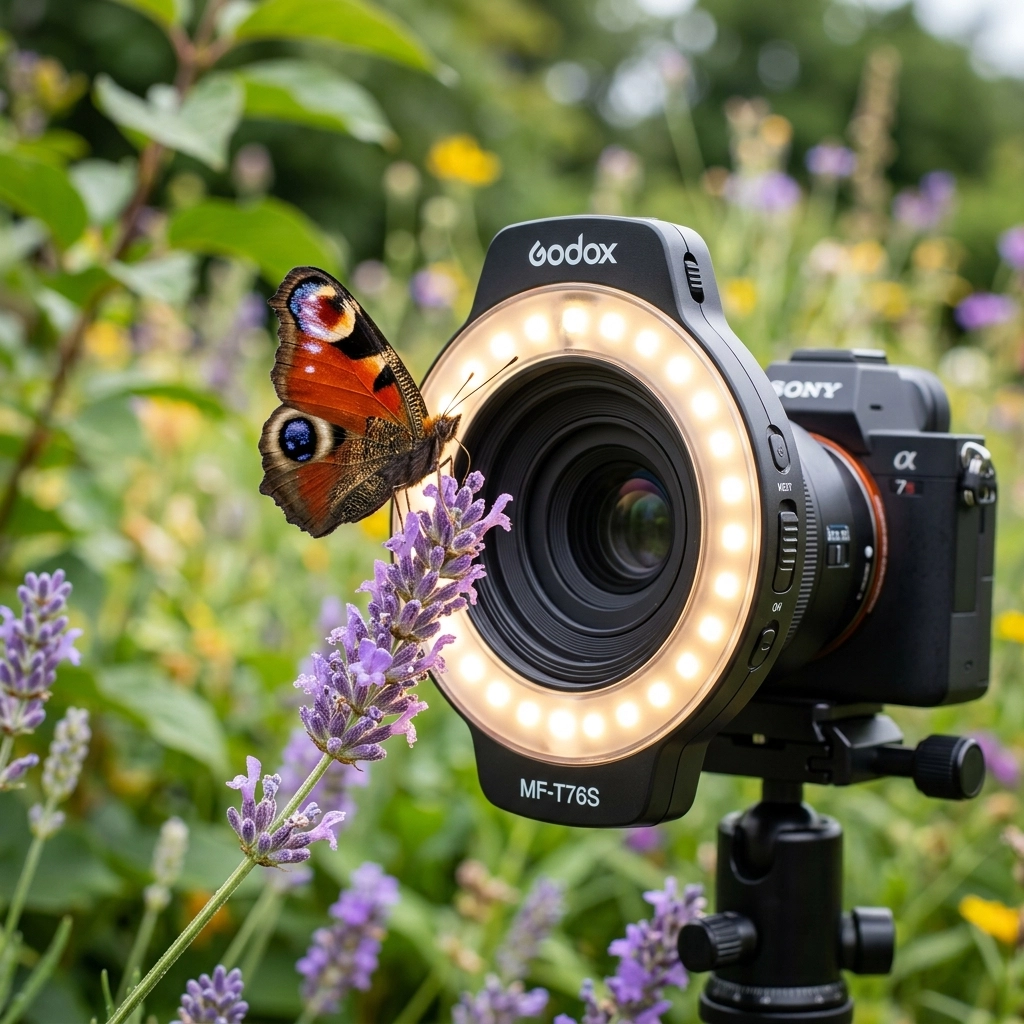
The Godox MF-T76S is getting attention for a pretty simple reason: it gives macro shooters a lot of control without the usual painful price tag. At around $249, it lands in that sweet spot where it feels serious, but not “I need to explain this purchase to my bank account” serious. And that’s kind of the dream with macro gear, because close-up photography has a sneaky way of emptying your wallet one tiny accessory at a time.
If you’re trying to get better at this stuff without learning everything the hard way, the Shut Your Aperture Learning Portal is worth a look. It’s full of practical lessons that go beyond gear talk. But for now, let’s keep things grounded and figure out whether this Godox flash is actually useful in the field, or just another gadget pretending to be essential.
The Struggle for the Perfect Macro Light
Macro photography is basically a never-ending argument with light. The second you get close enough to fill the frame with a bug, a petal, or a piece of jewelry, your lens decides to cast a shadow right where you need detail the most. Very helpful.
Then there’s the aperture problem. Most of us stop down to something like f/11 or f/16 because depth of field in macro is hilariously thin. Like, “one eyelash is sharp and the rest of the insect is gone” thin. Smaller aperture means less light, so now you’re balancing sharpness, brightness, motion, and patience all at once.
That’s why regular flashes can feel awkward here. A standard speedlight usually isn’t built for subjects that are practically touching the front element. Ring flashes solve part of the problem, but they can make images look a bit too flat and clinical. The twin-flash setup on the MF-T76S lands in a much nicer spot. You can shape the light instead of just dumping it on the subject, which is exactly what makes macro photos feel more textured, more dimensional, and honestly just more interesting.


Godox MF-T76S: The Technical Breakdown
On paper, the MF-T76S looks surprisingly loaded for the price. But the better news is that the specs aren’t there just to make a product page look busy. Most of them are actually useful for the way real macro photographers shoot. So instead of doing the usual lifeless spec parade, let’s talk about what this stuff actually means when the camera is in your hands.
1. Dual Independently Adjustable Heads
This is the whole reason this flash is interesting. You get two flash heads mounted on a ring at the front of the lens, and each one tilts from 0 to 150 degrees. In normal person terms: you’re not forced into that flat, deer-in-headlights look that some close-up lighting gives you.
You can point one head to bring out texture and let the other head fill in the darker side a little more gently. In macro, that matters a lot. Tiny changes in angle can completely change the mood of the shot. One little tweak and your subject goes from “yep, that’s a bug” to “why does this beetle look like it pays rent and has a villain backstory?”
2. Power and Precision
The guide number is 73.4 feet at ISO 100, which sounds like the kind of thing brands put in bold to impress you. But for macro work, the real point is simple: there’s more than enough power here for subjects that are only inches away.
What matters more is the control, and thankfully that part is good. You can dial the flash from full power down to 1/256 in 1/3 stop steps. That’s exactly the kind of fine adjustment macro shooters need. When you’re lighting reflective surfaces, tiny details, or fragile little color shifts, big jumps in flash power are annoying. Small, precise changes are what save you from blown highlights and unnecessary reshoots. If you’re into technical shooting, you might find this as useful as the OM System OM-1 Mark II settings for product photography.
3. TTL and High-Speed Sync (HSS)
The MF-T76S supports TTL, which stands for Through The Lens metering. Sounds technical, but the idea is straightforward: the camera helps sort out flash exposure for you. If you’re shooting fast, moving around, or trying to photograph bugs that clearly didn’t agree to be part of your creative process, TTL can save a lot of time.
It also has High-Speed Sync, which lets you shoot faster shutter speeds than your camera normally allows with flash. In everyday terms, that means you can hold back a bright background while still keeping your subject nicely lit. It’s especially useful when you want the subject to pop without the whole frame looking washed out and chaotic.
4. Modeling Lamps
This is one of those features that sounds minor until you actually use it. Each flash head has a built-in LED modeling lamp with 10 brightness levels, and once you get used to having that little preview, it’s hard to go back.
It helps you see where the light will land before you take the shot, which is great when you’re working close and trying not to guess your way through every frame. It also helps autofocus in dimmer scenes, and that matters because macro autofocus has a habit of acting like it’s going through something.
5. Battery and Recycle Time
It uses a rechargeable lithium battery rated for around 550 full-power flashes, with a recycle time of about 1.2 seconds at full power. In other words, it’s quick enough to keep up and you won’t spend half your shoot worrying about batteries.
That matters more in macro than people realize. Bugs move, flowers sway, and your hands suddenly remember they are, in fact, attached to a human being. If the flash lags, the moment is gone. So a fast recycle time isn’t just a spec-sheet bonus. It’s the difference between getting the shot and staring at an empty leaf.

Handling and Build Quality
For something in this price range, the MF-T76S feels better than expected. Not luxury, not tank-like, but definitely not cheap junk either. The controller slides into the hot shoe and has a bright backlit LCD that’s easy to read without squinting. The buttons also feel decent, which sounds like a small thing until you’ve used gear with mushy buttons that make every setting change weirdly annoying.
It ships with a nice spread of adapter rings too: 49mm, 52mm, 55mm, 58mm, 62mm, 67mm, 72mm, and 77mm. So unless your lens has some oddball filter size, you’re probably good to go. Whether you’re shooting with the best mirrorless cameras of 2026 or an older DSLR, setup should be pretty painless.
The main thing you’ll notice in use is the balance. Once you add the ring and two heads to the front of your lens, the setup gets a little nose-heavy. It’s not a dealbreaker, but if you shoot handheld for long stretches, you’ll definitely feel it. Especially on smaller bodies.
Real-World Performance: Into the Micro-Verse
This is where the MF-T76S stops sounding good on paper and starts feeling useful in real life. Separate control over each head makes a bigger difference than you might expect. You can run one side brighter and the other lower to create a mini key-and-fill setup, which is just a less annoying way of saying your subject starts looking shaped by light instead of simply attacked by it.
The light is solid right out of the box, but the heads are still small sources, so shiny subjects can pick up some harder highlights. That’s not really a dealbreaker. It just means a little diffusion goes a long way. A small DIY diffuser can smooth things out fast and make the setup look far more expensive than it is. This is the kind of stuff we talk about over at PhotoGuides.org when we're trying to squeeze every bit of quality out of our gear.
And honestly, that may be the biggest compliment here: the MF-T76S feels like part of a very welcome trend where budget gear is no longer automatically bad gear. If you want the bigger picture on where the market is heading, our post on why photography news matters gets into that a bit more.

Editing Your Macro Masterpieces
Even if your lighting is solid, macro images usually need a little cleanup in post. Not because the image failed, but because macro is brutally honest. It sees the dust you missed, the weird reflection you didn’t notice, and the random speck that suddenly looks like a boulder when you zoom in.
I’ve been using Luminar for a lot of macro edits lately, and it’s been genuinely useful for this kind of work. It can pull out texture nicely without making everything look overcooked, which is always the danger with close-up shots. You want detail, not drama. Tools that enhance leaf veins, surface texture, or tiny hairs are great, but macro editing works best when you stay a little restrained. If you start cranking every slider, your insect starts looking like it was rendered for a video game. And if you’re working with focus stacking from modern cameras, like you'll find in many of the latest camera gear reviews, pairing that with Luminar’s sharpening tools can be a really nice combo.
For more inspiration on what’s possible with high-end macro and fine art photography, check out Edin Fine Art. Seeing what’s possible when you push the boundaries of detail can really help you visualize your own goals.
Is the MF-T76S the "Ultimate" Tool?
“Ultimate” is doing a lot of heavy lifting here, so let’s keep our feet on the ground. But if we’re talking value for money, this flash makes a very solid case for itself.
Pros:
- Price: It undercuts the bigger-name options by a lot.
- Flexibility: Two movable heads give you much more control than a simple ring flash.
- Feature set: TTL, HSS, and modeling lamps make it feel more serious than the price suggests.
- Compatibility: The included adapter rings cover a wide range of lenses.
- Battery: Rechargeable lithium is a lot nicer than playing hide-and-seek with AA batteries in your camera bag.
Cons:
- Front-heavy feel: The setup does add weight to the end of your lens.
- Small light source: Without diffusion, highlights can still get a little harsh.
- Niche tool: If you only shoot macro once in a blue moon, you may not need something this specialized.
So is it the ultimate tool? For every photographer? Probably not. For someone who actually enjoys macro photography and wants better lighting without spending a small fortune? It’s one of the easiest yeses in this category.

How to Get the Most Out of Your Macro Gear
If you pick up the MF-T76S, don’t just slap it on the camera, trust TTL with your life, and hope greatness happens. Macro rarely works like that. The good stuff usually comes from experimenting a little and paying attention to the small changes.
- Experiment with ratios: Don’t keep both heads at the same power every time. One side brighter than the other usually adds way more shape.
- Use the modeling lights: They’re great for catching glare before you fire off a whole series of almost-good shots.
- Move the light around: Tiny changes in angle can completely change texture, depth, and overall mood.
- Watch the background: High-Speed Sync can help keep bright backgrounds under control so your subject gets the attention.
If you want to build your close-up skills beyond just buying gear, the Shut Your Aperture Learning Portal is a solid place to keep learning. And for those of you looking to deep dive into the technical side of things, I also recommend spending some time over at blog.edinchavez.com. There’s a wealth of knowledge there that applies directly to the kind of precision needed for high-end macro work.
Final Thoughts
The Godox MF-T76S is a good reminder that camera gear has gotten a lot more interesting lately. Not just because there’s more of it, but because affordable gear is finally starting to feel genuinely capable. A twin flash with TTL and HSS at this price used to sound like one of those “too good to be true” listings you scroll past carefully. This one actually looks legit.
If you already enjoy macro, there’s a lot here to like. If you’re brand new to close-up photography, it’s also the kind of tool that can make the process less frustrating and a lot more fun. And that matters, because macro has enough built-in chaos already.
If you want help building the skills to go with the gear, the Shut Your Aperture Learning Portal is a natural next stop. We’re always adding tutorials and practical tips to help photographers get better without all the fluff.

What do you think? Is the MF-T76S on your wishlist, or are you sticking with your current setup? Gear comes and goes, hype comes and goes even faster, but tools that actually make shooting easier are always worth paying attention to. And in macro, the small stuff is literally the whole show.
For more insights into the latest gear and techniques, check out our other reviews and tutorials: