

Most people don’t realize the profound impact that photography has had on culture, communication, and art. As you explore the history of this captivating medium, you’ll uncover significant milestones that propelled photography from its rudimentary beginnings to a sophisticated form of artistic expression. From the invention of the daguerreotype to the rise of digital technology, each advancement has transformed how you capture and perceive the world around you. Join us as we journey through the key moments that have defined photography, enriching your appreciation for this powerful visual language.

Early Photographic Innovations
While the journey of photography began with simple experiments in light and shadow, these early innovations laid the groundwork for the art form we cherish today. Explorations of optical devices and the quest for permanent imagery ignited a creative spark that evolved into the more complex processes we now utilize. As you research into this fascinating period, you’ll uncover how ingenuity and technology blended to create a new medium for artistic expression.
Camera Obscura and First Permanent Images
Across the ages, the camera obscura served as a vital precursor to photography, providing a simple yet profound way to capture the world. By projecting light through a small aperture onto a surface, early creators began to document their surroundings, paving the way for the first permanent images in the 19th century. This evolution ignited your imagination and set the stage for the photography we know and love today.
Daguerreotype and Calotype Processes
Behind the scenes of early photography, the daguerreotype and calotype processes emerged as revolutionary techniques that transformed artistic expression. These inventions allowed you to capture images on metal and paper, respectively, which vastly expanded the possibilities for representation and reproduction in the medium.
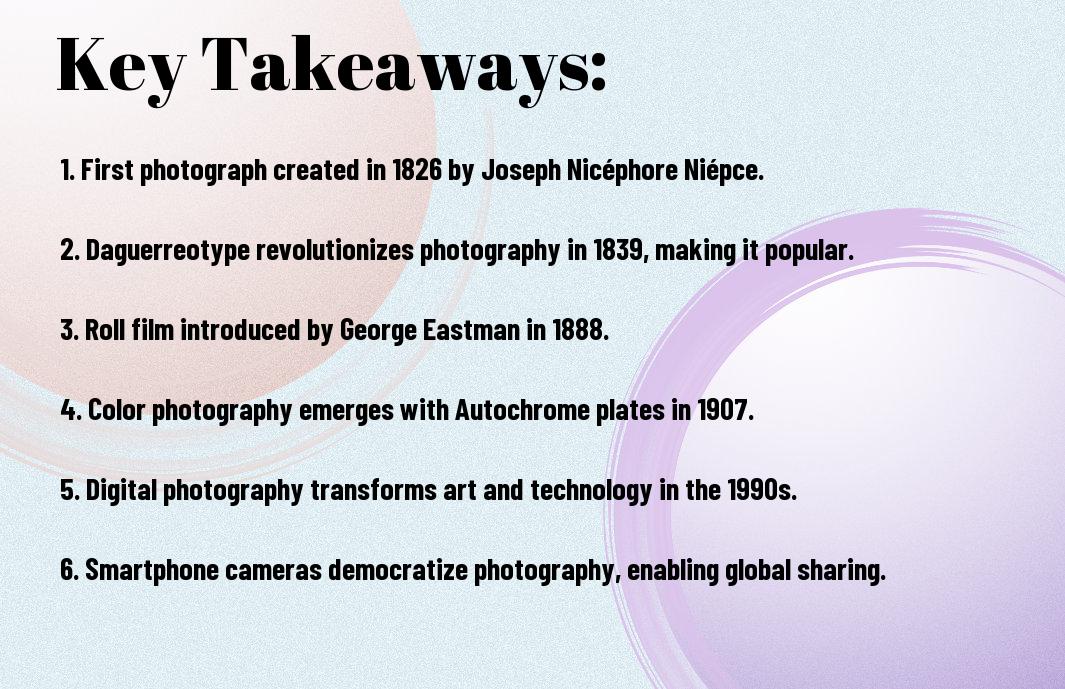
Further exploring the daguerreotype and calotype processes reveals their unique characteristics and impacts on photography. The daguerreotype, developed by Louis Daguerre, involved exposing a polished silver plate to light, creating a highly detailed image. Meanwhile, the calotype, introduced by William Henry Fox Talbot, utilized paper coated with light-sensitive chemicals, allowing for multiple prints from a single exposure. These innovations not only captured reality but also encouraged experimentation, reflecting your desire for creative expression and the evolution of photography.
The Rise of Film Photography
Clearly, the advent of film photography transformed the landscape of capturing images. The introduction of flexible roll film made photography more accessible and practical, paving the way for wider popularity and innovation. This shift not only allowed photographers to experiment and express their creativity but also led to the burgeoning of amateur photography, creating a community of passionate individuals behind the lens.
Introduction of Flexible Roll Film
One significant advancement in the 1880s was the introduction of flexible roll film. This innovation allowed photographers to capture a greater number of images without the bulkiness of glass plates. The convenience of roll film dramatically simplified the photography process, ultimately encouraging more people to engage in the art form.
The Birth of Kodak and Amateur Photography
After the introduction of flexible roll film, the rise of Kodak revolutionized amateur photography. Kodak’s slogan, “You press the button, we do the rest,” made photography accessible to the masses, enabling anyone to document their lives with ease.
Considering the impact of Kodak, it became synonymous with the democratization of photography. By offering ready-to-use cameras and developing services, Kodak eliminated the technical barriers that previously limited photography to professionals. This not only sparked a hobbyist culture but also contributed to the historical documentation of everyday life, allowing you to capture your memories and share them widely. As a result, photography transitioned from a specialized skill to a beloved pastime, fundamentally changing how you see the world through a camera lens.
Technical Advancements in the 20th Century
Once again, the 20th century marked monumental shifts in photography, driven by advancements in technology. As cameras became more accessible, portable, and user-friendly, you experienced a newfound freedom to capture images. The introduction of film formats, automatic exposure systems, and electronic flash also facilitated a more expressive and dynamic approach to photography, allowing your creativity to flourish like never before.
Color Photography Development
For many, the transition from black-and-white to color photography unlocked a whole new dimension in visual storytelling. Early color processes, though expensive and complicated, eventually evolved into more reliable and affordable options, enabling you to capture the world in vivid hues and lifelike representation. The introduction of Kodachrome film in the 1930s revolutionized how you documented moments, infusing personal and cultural histories with a rich palette that breathed life into your images.
SLR and Instant Photography Revolution
Century after century, photography techniques have continued to innovate, and the introduction of Single-Lens Reflex (SLR) cameras paired with instant photography in the 20th century significantly transformed your shooting experience. SLR cameras provided unparalleled clarity and control over composition and focus, allowing you to visualize your shot directly through the lens. Meanwhile, instant cameras like the Polaroid made capturing and sharing moments immediate, elevating the social aspect of photography. Both advancements empowered you to express yourself more freely and connect with others through quick, tangible images.
With the emergence of SLR and instant photography, you witnessed the democratization of capturing moments. SLR cameras, which allowed for interchangeable lenses and precise adjustments, catered to enthusiasts eager to experiment with depth, focus, and exposure. Simultaneously, instant photography paved the way for spontaneity, enabling you to take a picture and hold a physical print in your hands within moments. These technologies not only enhanced your photographic capabilities but also shaped the way you experienced and shared your memories, fostering a culture built around immediate visual storytelling.
The Digital Revolution
Now, the digital revolution transformed photography, taking it from film-based to a realm where pixels reign supreme. This shift not only altered how you capture images but also reshaped the entire photographic landscape, making it more accessible and versatile. Gone were the days of waiting for film to develop; with instant feedback and editing capabilities, your creative process became significantly streamlined.
First Digital Cameras and CCD Technology
By the late 20th century, the introduction of the first digital cameras marked a significant milestone. These devices utilized Charge-Coupled Device (CCD) technology, enabling you to capture images in digital format. This innovation eliminated many limitations of film photography, allowing for higher image quality and greater convenience in both capturing and sharing your work.
The Democratization of Photography
To further augment this evolution, the democratization of photography emerged, making it accessible to everyone. With affordable digital cameras and smartphones featuring high-quality cameras, you no longer need specialized skills or expensive equipment to create stunning images. This newfound accessibility encouraged you to experiment with photography, leading to a wider array of voices and perspectives being shared globally.
Even as technology continued to evolve, the democratization of photography remained a hallmark of the digital age. Now, anyone with a smartphone can capture and share their unique view of the world, reshaping how you interact with visual storytelling. Social media platforms have amplified this effect, allowing your photos to reach a broader audience than ever before, fostering creativity and innovation within the photographic community.

Mobile Photography Era
Unlike previous generations of photography, the mobile photography era has democratized the art form, enabling anyone with a smartphone to capture moments instantly. This shift has transformed how you perceive and create images, allowing you to share your perspectives with a global audience through a few taps on your device. The accessibility of powerful cameras built into smartphones has not only enhanced your ability to document everyday life but has also encouraged artistic expression on an unprecedented scale.
Smartphone Cameras and Social Media Impact
One of the most significant developments in mobile photography is the integration of high-quality cameras into smartphones, combined with the explosion of social media platforms. These advancements allow you to share your photos instantly, connecting with others and receiving immediate feedback. The social aspect has motivated you to enhance your photography skills, leading to creative trends and the rise of influencers who shape the visual culture.
Computational Photography Advances
The evolution of computational photography has further revolutionized the way you capture images, offering a suite of innovative features that significantly enhance your photography experience. By utilizing algorithms and artificial intelligence, your smartphone can now optimize image quality, adjust lighting, and even produce stunning portraits and landscapes that were previously only achievable with advanced camera equipment.
Media advancements such as HDR (High Dynamic Range), AI-driven editing tools, and portrait mode have transformed your photographic capabilities. These technologies allow for enhanced detail in both shadows and highlights, ensuring that every aspect of your image is captured beautifully. As you explore these features, you’ll discover that you can produce images that rival professional photography, all from the convenience of your smartphone. The resulting creativity showcases how computational photography not only changes the way you take pictures but also elevates your artistic vision.

Modern Photography Trends
Despite the long history of photography, modern trends continue to push the boundaries of this art form. You now have access to an array of tools and techniques that can enhance your creativity and storytelling. From social media platforms to the rise of mobile photography, today’s trends are about inclusivity and accessibility, allowing you and countless others to showcase your unique perspectives in exciting new ways.
Artificial Intelligence in Photography
With the advent of artificial intelligence, you can now streamline your workflow and elevate your photography. AI tools can assist in editing, enhancing images, and even generating creative ideas. These advancements allow you to focus more on your artistic vision while leveraging technology to achieve stunning results that resonate with your audience.
Mirrorless Systems and Future Technologies
Photography today is increasingly shaped by mirrorless systems, which offer lightweight designs and superior image quality. As you explore these cutting-edge technologies, you’ll find more efficient autofocus systems and improved low-light performance that enhance your photographic experience.
A shift towards mirrorless systems is revolutionizing photography by making high-quality imaging more accessible. These cameras, often more compact than traditional DSLRs, offer advanced features like electronic viewfinders that provide real-time exposure previews. As developments in AI and computational photography continue, you can expect even more innovative features that will further simplify your shooting experience, allowing you to focus on your unique artistic voice.
Final Words
From above, you can appreciate how the evolution of photography has transformed not only the art form itself but also the way you perceive the world. Each milestone, whether it be the invention of the camera obscura or the rise of digital imaging, has added layers to your understanding and appreciation of visual storytelling. As you explore photography, you tap into a rich history that continues to inspire innovation and creativity, allowing you to capture the essence of your experiences in ever more compelling ways.




