If you’ve ever shot medium format film, you know the struggle. You load a roll of 120 into your Hasselblad and you are committed to the square life for the next 12 shots. Or maybe you’ve hauled a massive Fuji GX617 into the mountains, only to realize that the scene you’re looking at actually looks better as a 6×6 or a 6×9, but you’re stuck shooting massive panoramas because that’s what the camera does.
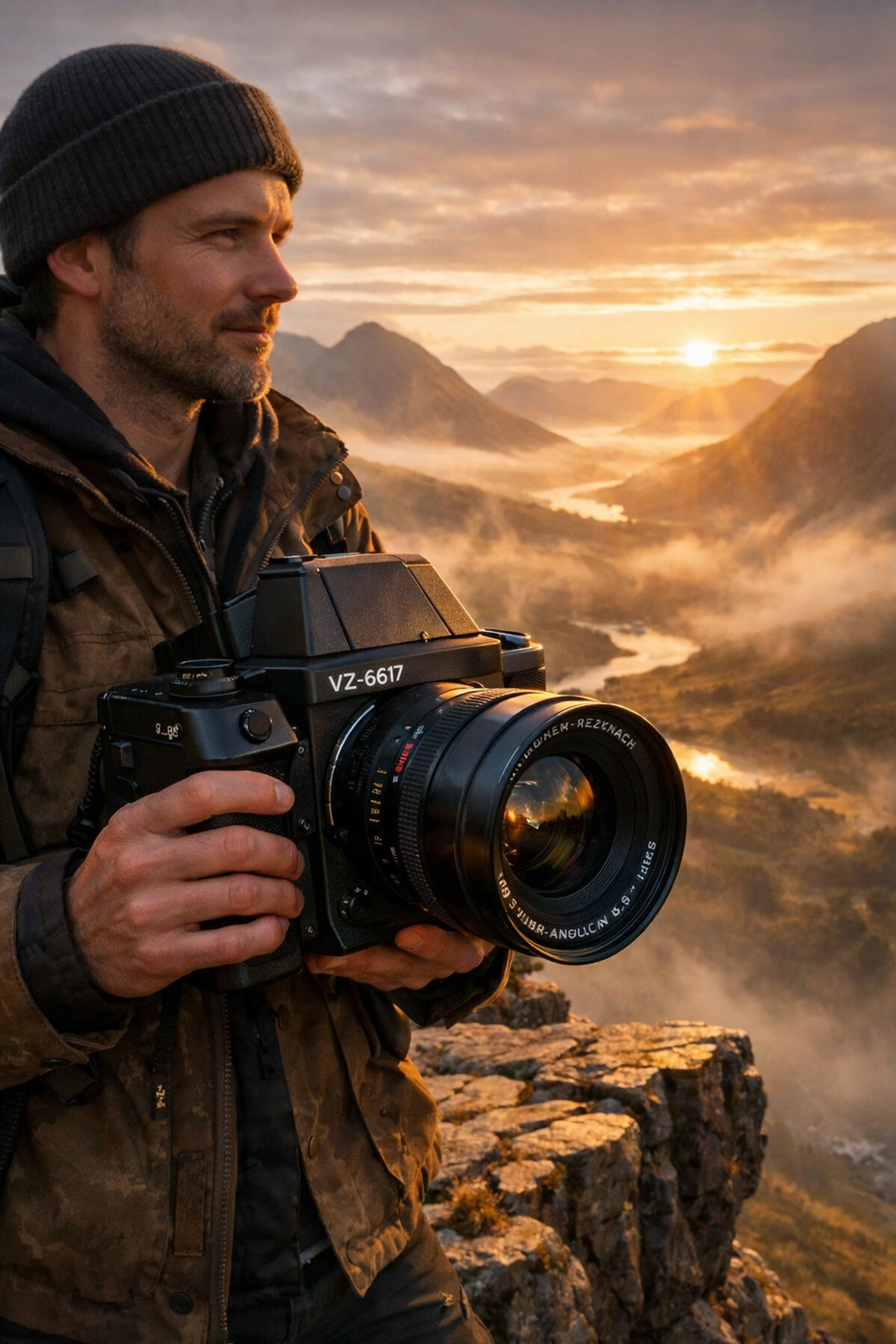
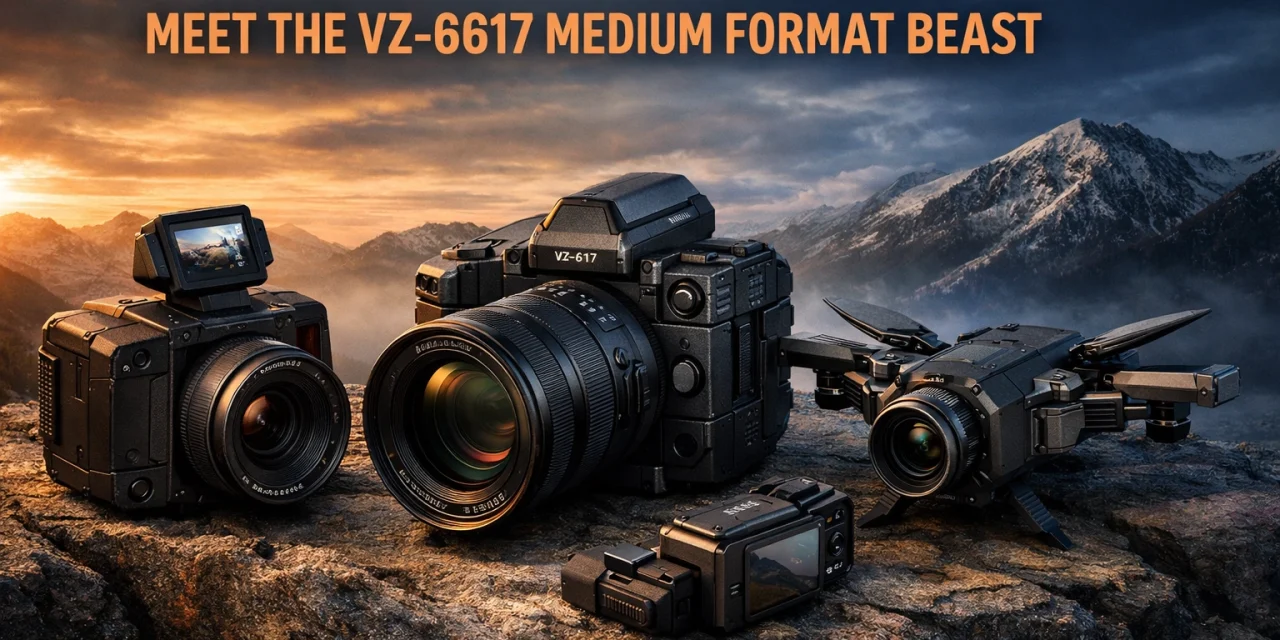
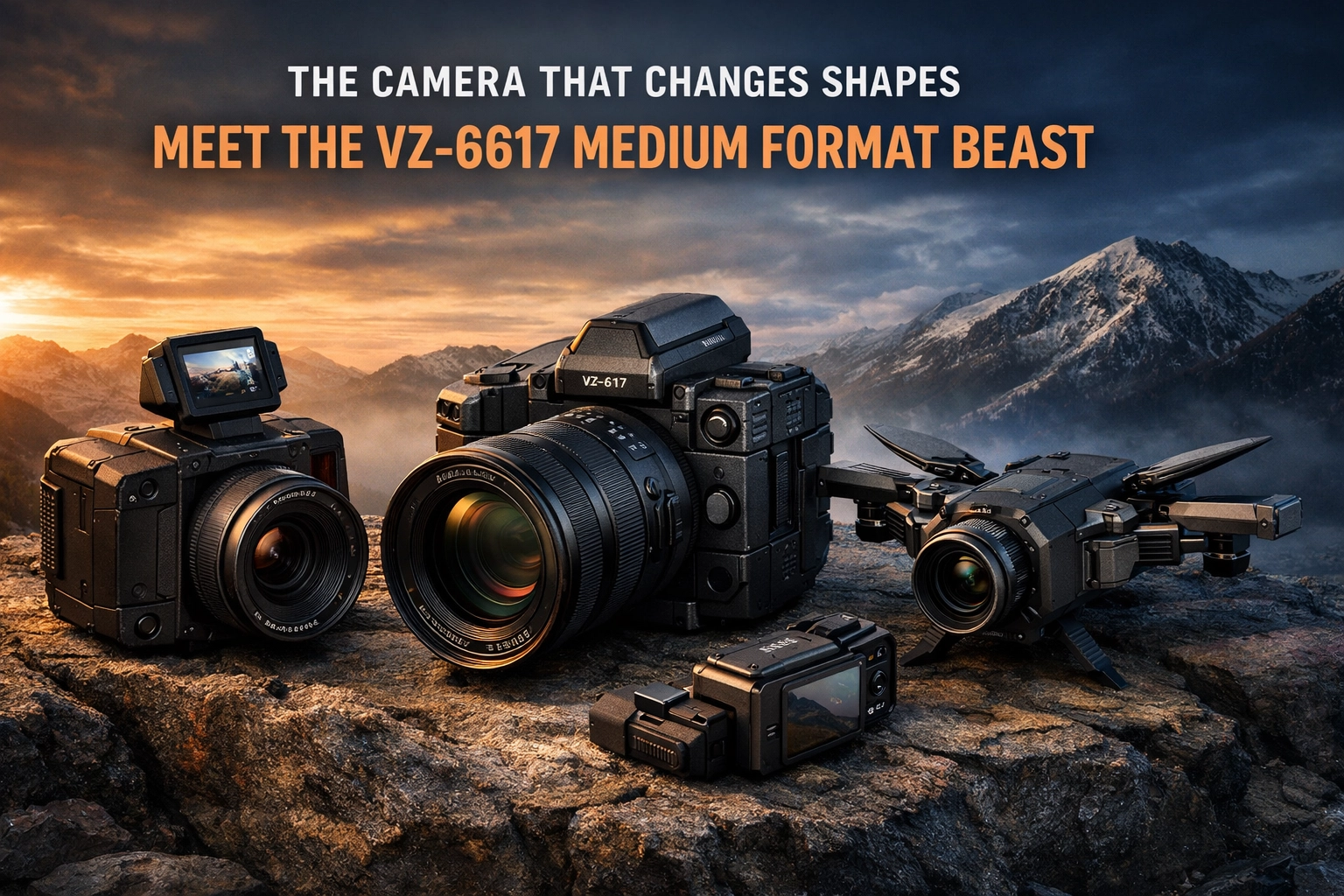
Enter the VZ-6617 by Exposing Engineering. This isn't just another 3D-printed camera project; it’s a "beast" that literally changes shapes. We’re talking about a medium format camera that lets you switch your aspect ratio mid-roll. Yes, you read that right. You can shoot a 6×6 square, then immediately dial it over to a 6×17 cinematic panorama for the next frame.
It’s weird, it’s clever, and it might just be the most versatile film camera we've seen in years.
The Variable Zone Magic
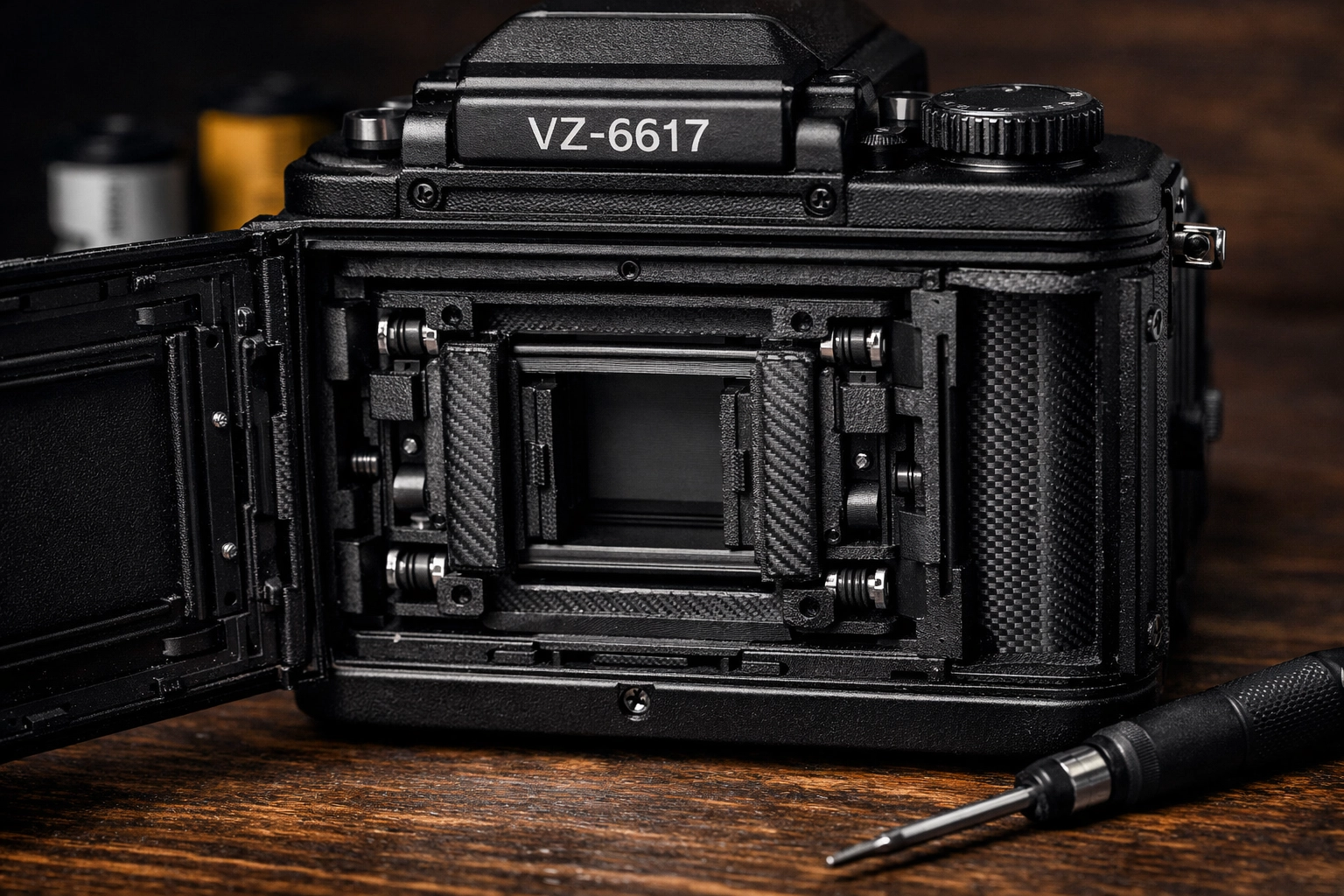
The heart of the VZ-6617 is something Exposing Engineering calls the "Variable Zone Film Gate." In most cameras, the film gate: the hole the light travels through to hit the film: is a fixed piece of metal or plastic. If you want a different size, you usually need a different camera or a different film back.
The VZ-6617 uses a series of 3D-printed sliding panels that move in sync. By simply turning a knob on the body, you can expand or contract the gate. It’s stepless, meaning you aren't just stuck with 6×6 or 6×17; you could theoretically stop anywhere in between if you’re feeling experimental. It’s like having a zoom lens, but for your film plane.
This solves the biggest headache in medium format photography: commitment issues. Usually, if you want to master your camera’s settings, you have to learn to see in the specific crop your camera provides. You can check out our guide on how to master your camera's manual mode to get the basics down, but even then, the physical limits of the film gate usually dictate your composition. Not anymore.
Why 6×17 Matters
For those who haven't experienced the joy (and pain) of 6×17, let me paint a picture. A standard 35mm frame is tiny. A 6×6 medium format frame is a big, beautiful square. But 6×17? That is a massive strip of film. It’s three times as wide as it is tall. On a standard roll of 120 film, you only get four shots per roll.
It is the gold standard for landscape photography. When you see those huge, sweeping gallery prints of the desert or the ocean, they were likely shot on a 6×17 system. The problem is that 6×17 cameras are usually the size of a toaster oven and cost as much as a used car. The VZ-6617 brings that panoramic power into a lightweight, 3D-printed body that doesn't require a Sherpa to carry.
If you are planning to take this beast out into the wild, you might want to brush up on the art of landscape photography to make sure those four shots per roll actually count.
Large Format Glass on a Medium Format Body
One of the coolest things about the VZ-6617 isn't just the body: it's the eyes. Because the 6×17 frame is so wide, standard medium format lenses (like those from a Mamiya or Pentax) won't work because their "image circle" isn't big enough. The light wouldn't reach the edges of the film.
To solve this, Exposing Engineering designed the camera to use large format view camera lenses. These are lenses designed for 4×5 or 5×7 cameras, meaning they have massive image circles that easily cover the 6×17 area.
The beta units have been tested with some legendary glass:
- Fujinon-SW 90mm f/8: A classic wide-angle choice.
- Schneider Kreuznach Super Angulon: Known for incredible sharpness.
- Nikon Nikkor-SW 65mm f/4: For when you want things really, really wide.
Since these lenses have built-in shutters, the camera body itself is essentially a light-tight box with a film transport system. This keeps things simple and reliable. If you're coming from a digital background and this sounds complicated, don't worry: shooting film is all about slowing down and enjoying the process.
Built for the Modern Film Photographer
Let’s talk about the "3D-printed" elephant in the room. Some people hear "3D-printed" and think "fragile toy." But the VZ-6617 is designed as a tool. It features:
- Quick-release film spool holders: Because fumbling with film in the wind is the worst.
- Magnetically detachable cable releases: Keeps things steady without the clutter.
- Body-mounted bubble levels: Essential for panoramas (nothing ruins a 6×17 shot faster than a crooked horizon).
- Triple cold shoe mounts: For rangefinders, light meters, or even your phone.
Speaking of your phone, they’ve even developed an app that acts as a viewfinder. Since the aspect ratio changes, a traditional glass viewfinder would be useless. The app lets you see exactly what the 6×6 or 6×17 crop will look like before you click the shutter.
Post-Processing the Beast
Once you get your film back from the lab and scan those massive negatives, you’re going to have a lot of data to work with. Editing a 6×17 scan is a different beast than editing a smartphone photo. You want to maintain that "tangible" film look while bringing out the dynamic range.
We often use Luminar for our digital workflows because it handles large files gracefully and has some great tools for enhancing landscape details without making them look fake. If you're looking to speed up your workflow for film scans, checking out some specialized Lightroom presets can also help give your shots that final gallery-ready polish.
The Engineering Behind the "Exposing" Name
Exposing Engineering isn't just making a camera; they’re trying to solve a hardware problem that has existed for decades. The mechanical complexity of a variable film gate is why we haven't seen this from the big manufacturers like Leica or Hasselblad. It’s too "niche" for them. But for the community of film shooters who frequent sites like PhotoGuides.org, this is exactly the kind of innovation that keeps the medium alive.
The VZ-6617 is currently in its beta phase, being put through the ringer by a group of testers. This is the right way to do it. 3D-printed gear needs to be tested in the heat, the cold, and the rain to ensure it doesn't warp or light-leak when things get tough.
How to Get Your Hands on One
If you’re already reaching for your wallet, you’ll have to wait just a bit longer. Exposing Engineering is planning to launch the VZ-6617 on Kickstarter starting April 14, 2026.
While "affordable" is a relative term in the world of medium format, the use of 3D printing and large-format lenses (which can often be found used for decent prices) means this will likely be the most accessible entry point into the world of 6×17 photography.
In the meantime, if you're looking to improve your overall photography game while you wait for the Kickstarter, take a look at our latest photography news to see what else is shaking up the industry.
Final Thoughts
The VZ-6617 represents a shift in how we think about camera gear. It’s no longer about what the manufacturer thinks you should shoot; it’s about giving you the tools to decide for yourself, frame by frame. Whether you're shooting a tight portrait in 6×6 or a sprawling mountain range in 6×17, this "beast" has you covered.
It’s simple, it’s clever, and it’s a reminder that even in a digital world, film still has a few tricks up its sleeve. Keep an eye on this one: it’s going to change the shape of your portfolio, literally.