

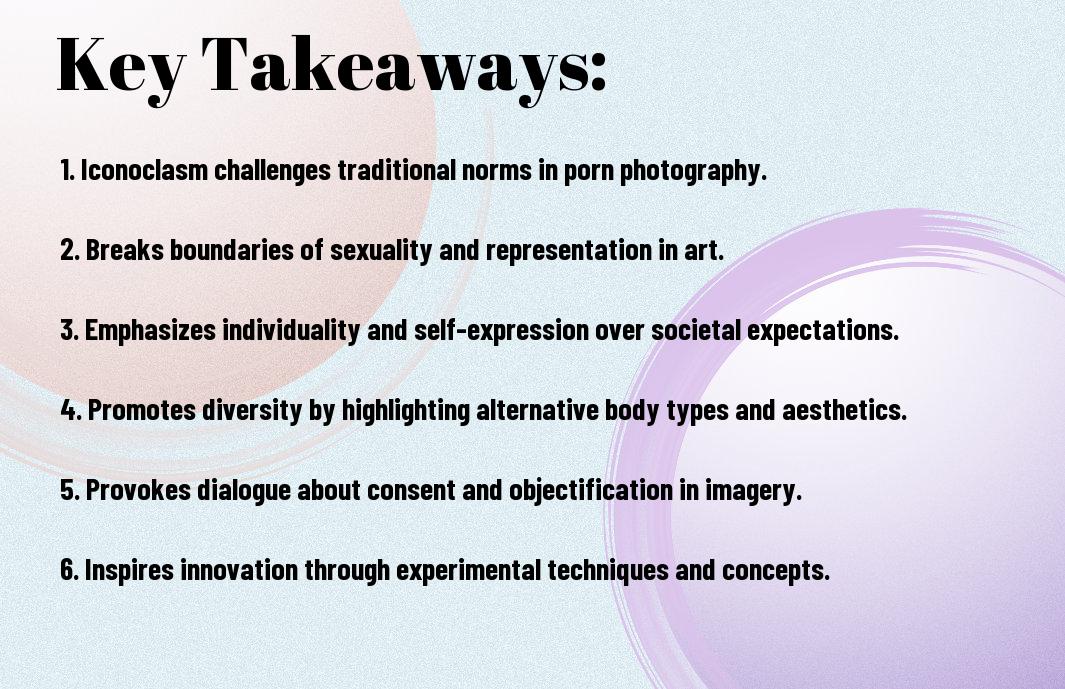
Photography has always been a reflection of societal norms, desires, and taboos. In porn photography, iconoclasm—the rejection of traditional beliefs and conventions—plays a significant role in shaping contemporary trends. By challenging established aesthetics and cultural expectations, you begin to see how innovative approaches redefine erotic imagery. In this post, you will explore how iconoclasm influences visual narratives, pushes boundaries, and ultimately transforms your understanding of modern porn photography.
Historical Context of Iconoclasm
Your understanding of iconoclasm will deepen as you explore its historical significance, particularly how it challenges established norms and traditions. Emerging in various forms across cultures, iconoclasm is more than mere destruction; it reflects a movement against rigid structures, often in art and religion. By examining its foundations, you can see how iconoclasm has influenced modern photography trends, including pornography, as new interpretations of identity and sexuality arise.
Definition and Origins
Between the 8th and 9th centuries, iconoclasm emerged primarily within Byzantine society, where images and icons were intensely debated. It refers to the rejection or destruction of religious images often viewed as idolatrous. This concept has since evolved beyond religious contexts, embodying a broader cultural desire for change and innovation across various mediums.
Iconoclasm in Art History
Definition of iconoclasm in art history centers around the intentional dismantling or repudiation of visual works that uphold established ideals. This rejection not only challenges what is considered beautiful or acceptable but also invites new perspectives and artistic expressions, promoting an environment where creativity can flourish.
But the impact of iconoclasm in art history is not limited to destruction; it often leads to the creation of alternative artistic movements. By breaking away from traditional forms, artists have opened the door for new styles that redefine societal and cultural norms. In modern contexts, such iconoclastic trends can be seen in photography, where boundaries are pushed, and provocative imagery invites viewers to reconsider their perceptions of sexuality and the human form.
Evolution of Pornography
One of the most significant aspects of modern culture is the evolution of pornography. It has transformed from antiquated depictions in ancient art to dynamic and diverse representations in today’s digital media. This change has sparked discussions around representation, consent, and the artistic merits of sexual imagery, thereby highlighting the shifts in societal norms surrounding sexuality and erotic expression.
Traditional Views on Sexual Imagery
Any exploration of sexual imagery throughout history often reveals a tension between artistic expression and societal taboos. Historically, many cultures have viewed pornography as shameful or immoral, leading to censorship and repression of sexual content. As you explore these traditional views, you may notice how they shaped perceptions of sexuality and influenced attitudes towards erotic art.
The Shift Towards Acceptance
For many, the shift towards greater acceptance of sexual imagery marks a significant cultural progression. This transformation has arisen from changing attitudes around sexuality, greater dialogue around sexual health, and a growing understanding of diverse identities. As you consider this shift, you’ll see how it has allowed for more nuanced portrayals of intimacy and desire.
Even though challenges and stigmas remain, this evolving acceptance has opened doors to a broader spectrum of expression in pornography. You may observe that increased visibility of various sexual orientations and body types fosters appreciation and recognition of diversity in sexual representation. This acceptance encourages dialogues about consent and empowerment, ultimately challenging the historical lens of sexual imagery as a purely taboo subject.
The Impact of Iconoclasm on Modern Photography
Once again, the influence of iconoclasm can be observed in modern photography, where traditional norms are challenged and redefined. This shift encourages artists like you to explore new perspectives and break free from established conventions, allowing for a more authentic expression of individual experiences. As the boundaries of photography expand, the impact of iconoclasm continues to shape the visual language that resonates with contemporary audiences, enabling a dialogue around the complexity of identity, sexuality, and human emotion.
Breaking Taboos
Iconoclasm plays a pivotal role in dismantling societal taboos that have long constrained artistic expression. By questioning established norms, you can explore themes that challenge conventional views on sexuality and intimacy, ultimately fostering a more inclusive landscape in photography.
Redefining Aesthetics
By embracing iconoclastic principles, you can actively participate in the reimagining of visual aesthetics within photography. This transformation allows you to create works that resonate with diverse audiences, breaking free from traditional ideals of beauty and representation.
And as you explore this redefined aesthetic, you discover the beauty in imperfections and the complexities of human experiences. This new visual vernacular invites you to push the boundaries of conventional beauty, encouraging a broader acceptance of different body types, identities, and expressions. In this landscape, your artistic voice can flourish, fostering a deeper connection with viewers who seek authenticity in the imagery they encounter.

Contemporary Trends in Porn Photography
Not only has porn photography evolved in explicitness, but it also embraces diverse subjects, aesthetics, and narratives. The digital landscape has democratized the industry, allowing niche markets to flourish and challenging traditional norms. This shift invites you to consider how contemporary trends reflect broader cultural conversations about sexuality, consent, and representation.
Diversity and Representation
For many viewers, the increased emphasis on diversity and representation in porn photography has become a significant trend. You’re likely to notice a wider array of body types, ethnic backgrounds, and gender identities being showcased, breaking away from the narrow norms that previously dominated the genre. This evolution encourages a more inclusive understanding of beauty and desire.
The Role of Social Media
Beside driving innovation in aesthetics and styles, social media platforms have revolutionized how porn is produced and consumed. You may find that these channels allow for direct engagement between creators and audiences, shifting power dynamics within the industry. This accessibility fosters an environment where you can freely explore various themes and ideas, often leading to a more personalized viewing experience.
Contemporary porn photography has adapted to the reality of social media’s influence by leveraging its immediacy and vast reach. You can find creators using platforms like Instagram and TikTok to showcase their work and promote new imagery, while also engaging with fans and fellow producers. This newfound accessibility not only democratizes content creation but also challenges established commercial norms, empowering you to engage with a wide array of voices and styles in the adult industry.

Case Studies of Iconoclastic Porn Photographers
For those interested in the evolution of porn photography, examining key case studies can illuminate the significant impact of iconoclastic approaches. You’ll find notable examples demonstrating how these photographers challenged norms:
- 1. Nan Goldin – Known for her raw, intimate portraits blending personal experiences with sexuality.
- 2. Ryan McGinley – Celebrated for his naturalistic outdoor settings that celebrate the human form freely.
- 3. Ellen von Unwerth – Blends fashion with eroticism, creating playful, empowered images that disrupt typical depictions of women.
- 4. Richard Kern – Pioneered underground, DIY aesthetics that challenged commercialization in adult photography.
- 5. Petra Collins – Integrates body positivity and femininity, advocating for a diverse portrayal of sexuality.
Notable Figures and Their Work
Work produced by these photographers signifies a departure from mainstream pornographic conventions. Each iconoclastic figure brings a unique perspective to their craft—whether through intimate storytelling or bold expressions of freedom. By embracing personal narratives and varied aesthetics, they create a new realm of eroticism that resonates with contemporary audiences.
Analyzing Influential Projects
Between experimentation and artistry, these projects aim to redefine the visual language surrounding pornography. They invite you to reflect on your perceptions of sexuality while confronting societal norms. By breaking taboos, these iconoclastic photographers encourage a broader conversation about the meanings of desire, intimacy, and identity.
Figures like Goldin and Kern push boundaries by intertwining personal narratives with their artistry, inviting you to question traditional standards. Projects such as Kern’s “Action” series or Goldin’s “The Ballad of Sexual Dependency” aren’t just visual spectacles; they articulate profound commentary on relationships and self-exploration. This analysis encourages you to explore how such projects influence your understanding of sexuality and autonomy in the modern age.

The Debate Surrounding Iconoclasm and Ethics
Keep in mind that the debate surrounding iconoclasm and ethics in porn photography often raises significant questions about morality, consent, and representation. You may find that this tension invites critical discussions about the impact of image-making on societal norms and individual identities. As iconoclasm seeks to dismantle traditional aesthetics and values, it also prompts introspection on the implications these shifts have on ethical consumption and production in the adult industry.
Challenges and Criticisms
After delving into the nuances of iconoclasm, you will encounter various challenges and criticisms that arise from different perspectives. Critics argue that iconoclastic approaches can lead to the objectification of individuals and a disregard for ethical standards, particularly when images are stripped of context. These concerns highlight the ongoing struggle to balance artistic freedom with accountability in an industry often criticized for its treatment of performers.
The Balance Between Art and Exploitation
Between artistic expression and exploitation lies a complex relationship that challenges your understanding of porn photography. Iconoclasm can liberate artists from conventional norms, yet it may simultaneously foster an environment where exploitation thrives. You need to consider the ways in which these tensions manifest in imagery and how the portrayal of subjects influences viewer perceptions.
With the rise of iconoclastic trends in porn photography, it is important to explore the delicate line between artistic expression and the potential for exploitation. You should recognize that artists and creators often strive to reclaim narratives, focusing on individuality and empowerment, yet the commercial nature of the industry can sometimes compromise their intentions. It’s important to engage critically with content, discerning how creative expressions can both challenge and reinforce social issues, thereby impacting your understanding of ethics in modern adult imagery.
Summing up
The role of iconoclasm in shaping modern porn photography trends cannot be overstated. By challenging traditional representations of sexuality and rejecting established norms, you find that these revolutionary perspectives foster new forms of expression and creativity. You see how this shift allows for greater diversity and representation in erotic imagery, pushing boundaries to create a more inclusive and authentic visual culture. As you engage with this evolving landscape, it’s imperative to recognize how these changes reflect broader societal attitudes towards sexuality and art.




