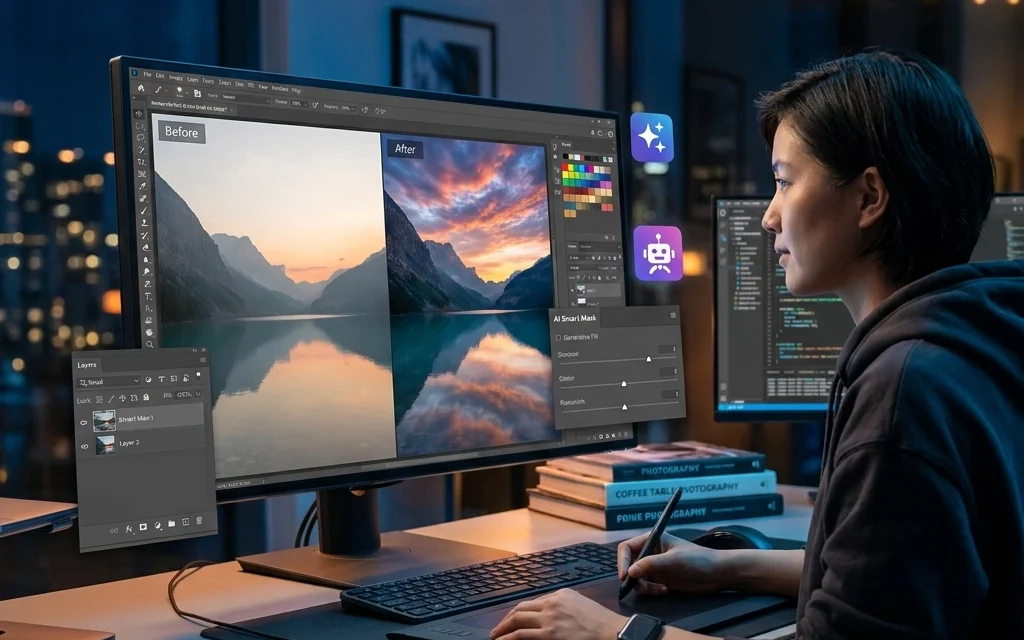
It is Sunday, April 12, 2026, and the world of photography is looking a lot different than it did just a couple of years ago. If you’ve spent any time on social media or in a photography forum lately, you know there is one topic dominating every conversation: AI.
We aren't just talking about basic filters or "Auto-Enhance" buttons anymore. We are talking about deep, generative intelligence that can rebuild a sky, add light where there was none, and fix a blurry shot like it’s magic. At Shut Your Aperture, we’ve seen trends come and go, but AI photo editing is the real deal. It’s changing how we work, how we learn, and how we tell stories.
If you’re still on the fence, or worse, if you’re scared of it, take a breath. We’re going to dive into why everyone is talking about AI, why it’s a massive win for photography for beginners, and how you can use it to make your shots look like they belong in a gallery at Edin Fine Art.
The AI Explosion: More Than Just a Fad
The numbers don't lie. The AI photo editing market is absolutely exploding. By 2033, it’s projected to be worth over $2.2 billion. People aren't just using these tools because they’re "cool"; they’re using them because they save hours of tedious work.
In the old days (meaning 2023), if you wanted to remove a distracting telephone pole from a beautiful landscape, you’d spend twenty minutes with the clone stamp tool. Now? You click a button, and the AI fills in the background perfectly. This shift is why photography news is currently 90% AI-related updates. From Google’s Nano Banana AI tool that went viral last year to the latest updates in Luminar, the tech is moving faster than a shutter at 1/8000s.
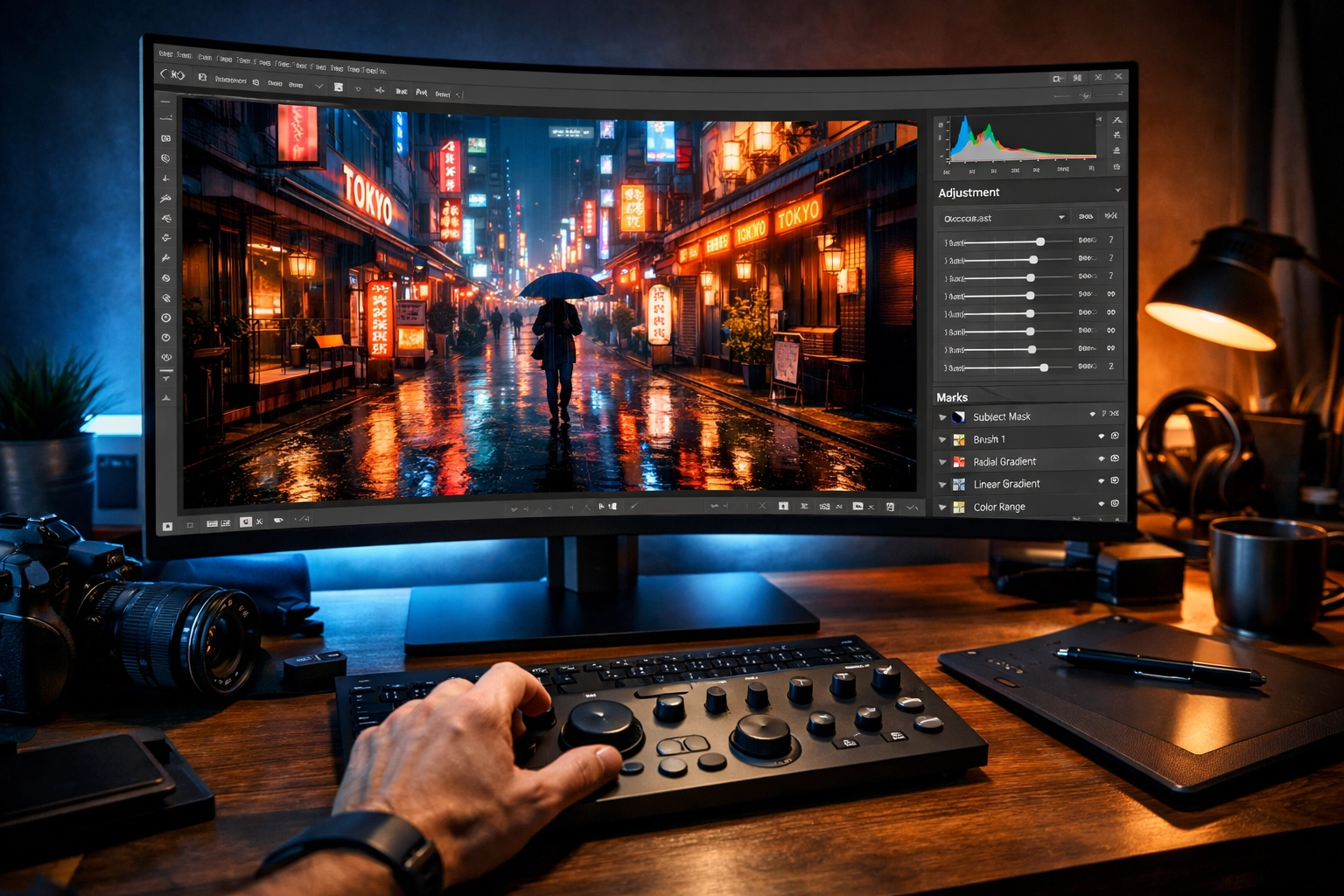
SEO Alt Text: A high-tech digital workspace showing a professional photographer using AI software to enhance a vibrant city street scene with futuristic overlays.
Why Beginners Should Jump In Now
If you are just starting out and looking for photography for beginners advice, AI is your best friend. It acts like a personal tutor. When you use AI tools to adjust exposure or color, you’re seeing what a professional result looks like in real-time.
However, don't let the AI do all the work. You still need to understand the basics. You should still learn how to use manual mode camera settings to get the best raw data possible. AI can fix a lot, but a well-exposed shot is always the best starting point. Think of AI as the ultimate "finishing move" for your images.
Speeding Up the Learning Curve
One of the hardest parts of starting photography is the frustration of the "Edit." You take a great photo, but it looks flat on your computer. AI editing tools analyze the content of your photo, the subject, the lighting, the depth, and suggest improvements. This is a huge part of modern photo editing tutorials. It helps you understand why a certain contrast level or color temperature works for a specific scene.
The Power of Context-Aware Tools
What makes AI different from traditional editing? Context.
Traditional software treats pixels like numbers. AI treats them like objects. If you’re into portrait photography techniques, AI knows where the skin is, where the eyes are, and how to soften one without blurring the other. If you're looking for portrait photography inspiration, AI can help you experiment with different lighting styles that would have required a whole studio setup in the past.
For the landscape junkies, AI has been a literal lifesaver. We’ve all been there: you hike four miles to a "hidden gem" location, only to have a grey, boring sky. With AI sky replacement, you can bring that scene to life. If you want to find those spots to begin with, check out these hidden gem locations for travel photography. Once you have the shot, tools like Luminar allow you to swap that boring sky for a dramatic sunset that matches the lighting of your foreground perfectly.
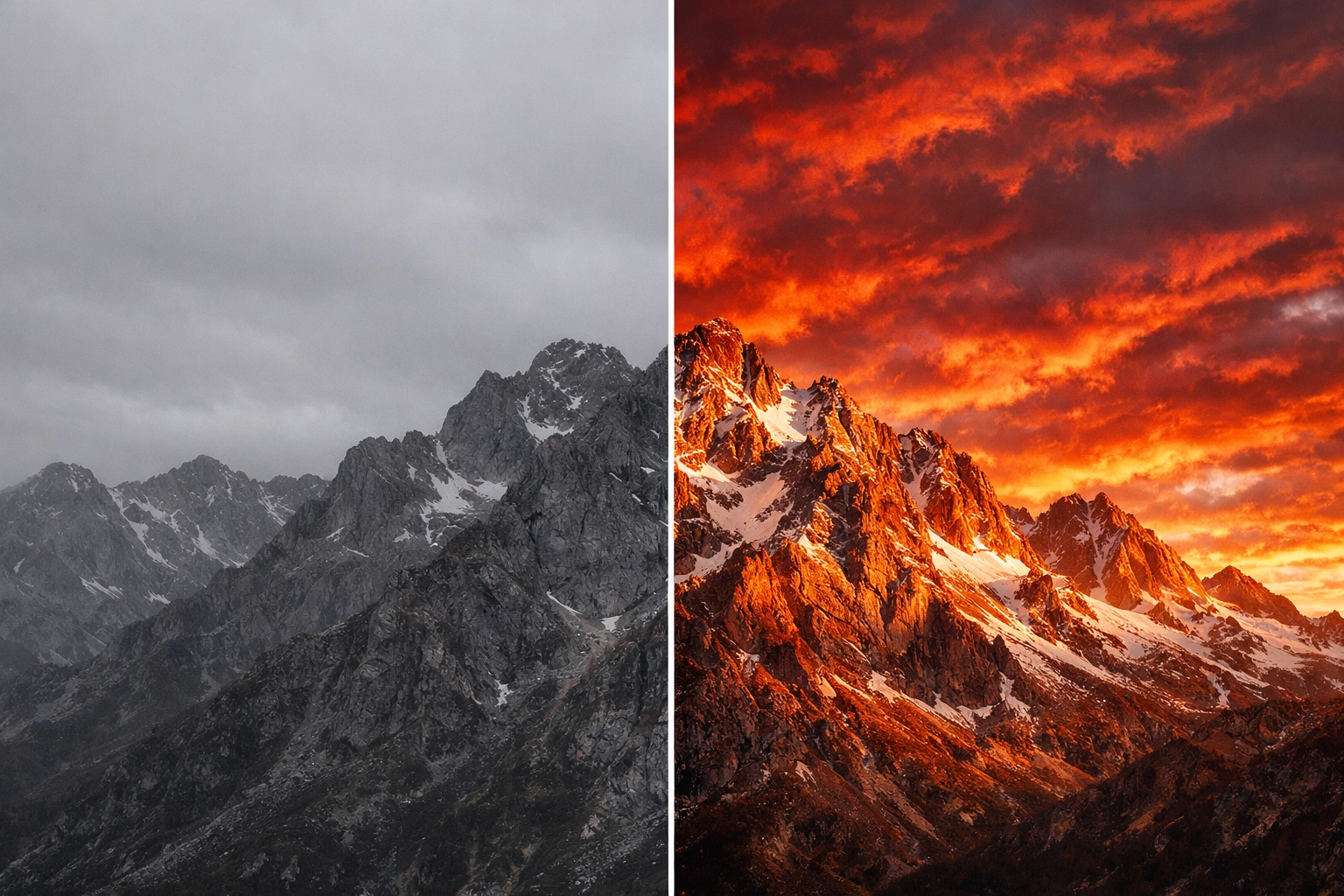
SEO Alt Text: An ultra-realistic landscape comparison showing a dull mountain scene transformed into a dramatic sunset vista using AI sky replacement technology.
AI and Landscape Photography: A Perfect Match
If you’ve read our ultimate guide to landscape photography, you know that light is everything. But light is also unpredictable.
AI allows us to fix lighting issues that used to ruin a shot. We’re seeing more people using "Relight" AI features to add a glow to their landscape photography tips toolkit. It’s not about faking a photo; it’s about making the photo match the way your eyes actually saw the scene. Our eyes have a much higher dynamic range than even the best mirrorless cameras, and AI helps bridge that gap.
For more deep dives into landscape gear and techniques, PhotoGuides.org is a fantastic resource to pair with your AI workflow.
Street Photography in the AI Era
Street photography is usually about the "decisive moment." It’s raw, it’s fast, and it’s often gritty. You might think AI doesn't have a place here, but it actually opens up some 25 creative street photography ideas you probably haven't considered.
Imagine you capture a perfect moment on a busy New York street, but there’s a giant, bright yellow trash can right behind your subject. In the past, that shot was a "maybe." Now, AI generative fill can remove that distraction in seconds, keeping the focus on the human emotion. This allows you to focus more on your street photography ideas and less on whether the environment is perfectly clean.
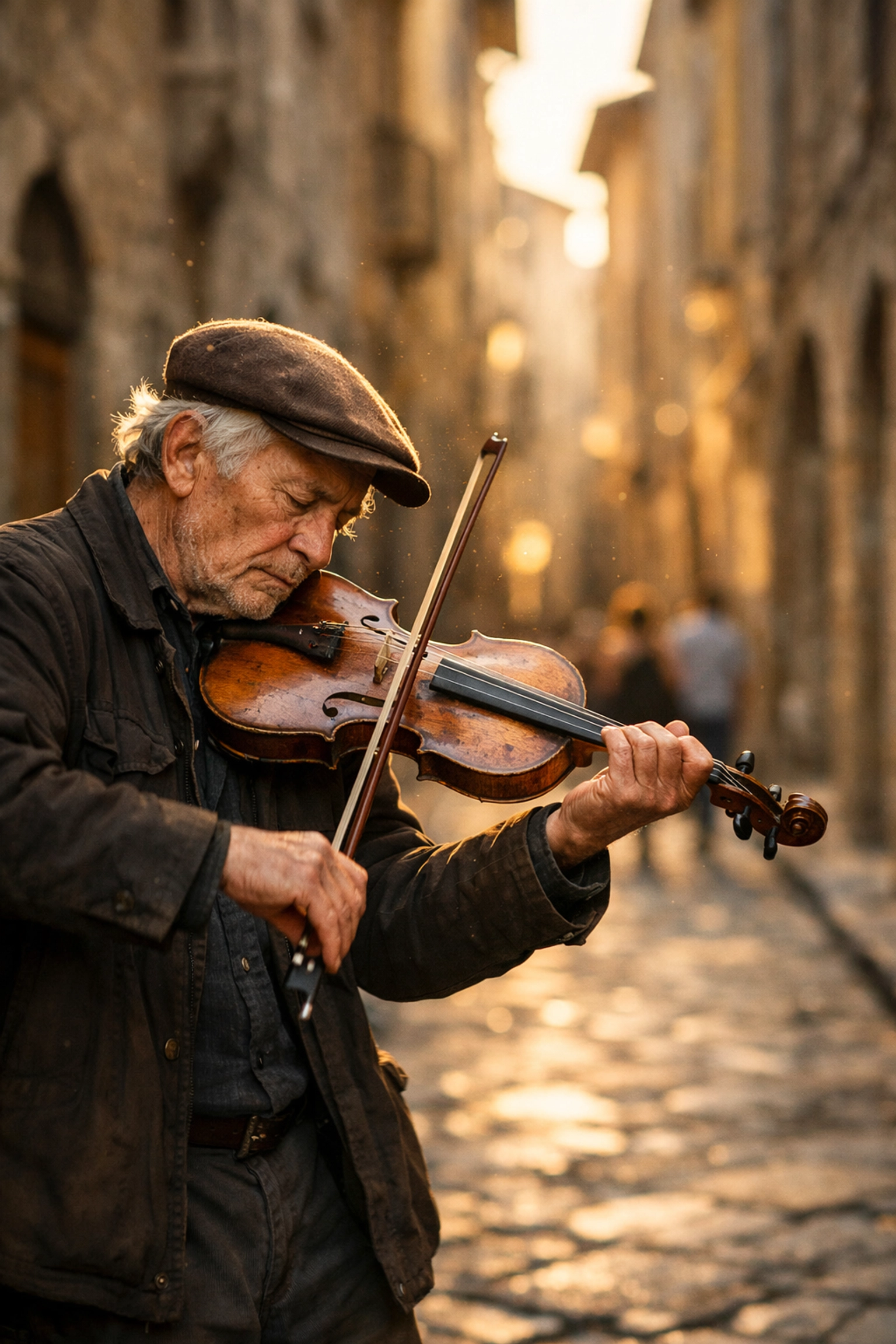
SEO Alt Text: A candid street photography shot of a musician in a busy alleyway, with distractions subtly removed using generative AI to focus on the subject.
The Viral Trends You Can't Ignore
We can't talk about AI without mentioning the viral trends of 2025 and early 2026. Have you seen those "hugging people" polaroids? Or the 3D retro nostalgic styles? Most of those were born from mobile-first AI tools.
While some of these are just fun social media trends, they show how powerful the tech has become. You can now take a flat 2D image and turn it into a 3D environment. This kind of tech is being integrated into professional workflows at Edin Studios, where the line between photography and digital art is blurring in the coolest way possible.
Is It "Cheating"? The Big Debate
This is the question that fires up every photography group on the internet. Is AI cheating?
The same thing was said when photographers moved from film to digital. It was said when Photoshop introduced layers. It was said when autofocus was invented. At the end of the day, a camera is a tool. Whether you are using a 1970s film camera or one of the best mirrorless cameras of 2026, the goal is to create an image that makes people feel something.
If you are a purist, that’s great. There is a huge market for "straight out of camera" work, and you can see plenty of that at blog.edinchavez.com. But for many of us, AI is just another brush in the kit. It’s a way to remove the technical barriers between our vision and the final image.
How to Build an AI-Ready Workflow
If you’re ready to stop talking and start doing, here is a simple way to integrate AI into your current routine:
- Get the Right Gear: AI software requires a bit of processing power. Check out our latest camera gear reviews to see which laptops and cameras are keeping up with these demands.
- Start with the Basics: Don't skip the photography tutorials. You need to know how light works before you can tell an AI to fix it.
- Choose Your Software: Luminar is currently leading the pack for user-friendly AI editing. It’s intuitive and doesn’t require a degree in computer science to use.
- Experiment with Textures: Sometimes AI can make things look too perfect. Adding rare textures for tangible aesthetic photography can bring back that organic, "real" feel to an AI-enhanced shot.
- Stay Updated: Follow ProShoot.io for the latest professional tips on keeping your workflow efficient.
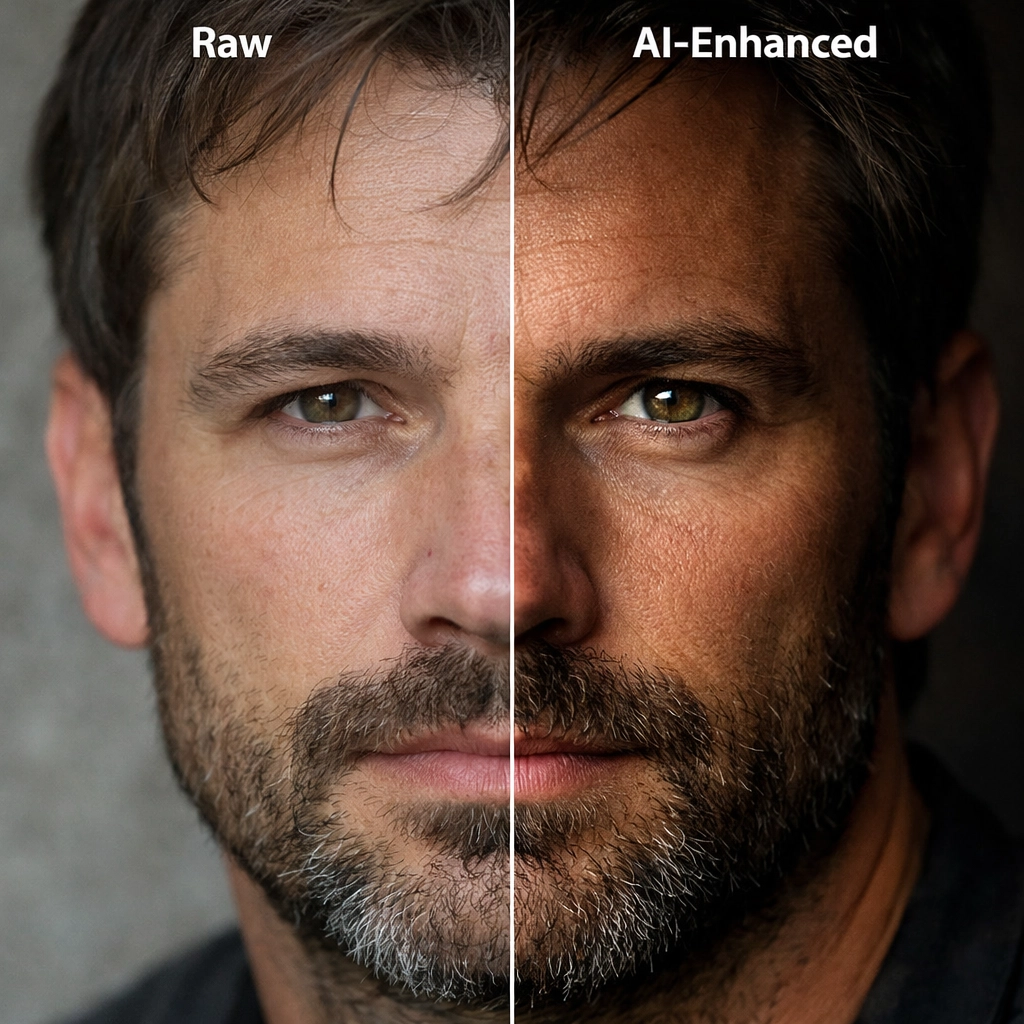
SEO Alt Text: A split-screen image showing a raw portrait on the left and a professionally AI-retouched version on the right, highlighting natural skin texture and enhanced lighting.
The Future: AI In-Camera
As we look toward the rest of 2026 and into 2027, the next big step is real-time AI inside the camera. We are already seeing prototypes where the camera can recognize a "distraction" in the frame before you even press the shutter and suggest a slightly different angle.
Imagine a camera that gives you landscape photography tips through the viewfinder. "Hey, if you move two feet to the left, you’ll get a better leading line." That’s where we are headed. It’s an exciting time to be a creator.
Final Thoughts on the AI Revolution
AI photo editing isn't here to replace photographers. It’s here to replace the "boring" parts of being a photographer. It’s here to help us spend less time staring at a loading bar and more time out in the world, capturing ethereal landscapes and lesser-known vistas.
Whether you’re looking for street photography ideas or trying to master portrait photography techniques, AI is a tool that can help you get there faster. Embrace it, learn it, and most importantly, use it to tell your story.
If you’re feeling overwhelmed, just remember: every expert was once a beginner. Start with some basic photo editing tutorials and go from there. The community at Shut Your Aperture is here to help you navigate this new world.
The tech is changing, but the soul of a great photo remains the same. It’s about that one moment, captured forever. Now, go grab your camera: and maybe a little bit of AI: and go create something awesome.