For the underlying mechanics behind every choice below, our aperture photography guide is the fastest way to get fluent.
Most people walk down a city street and see concrete, gum-stained sidewalks, and a sea of distracted commuters. They see "boring." But as a photographer, your job is to see the invisible. Street photography isn't about finding the perfect subject in a perfect location; it’s about finding the extraordinary hidden within the ordinary.
You don't need a plane ticket to Paris or Tokyo to capture world-class street shots. You just need to change how you look at the 10 blocks surrounding your house. Whether you’re shooting with the latest AI-powered mirrorless tech or an old film camera you found at a thrift store, these 15 hacks will help you turn those "boring" sidewalks into actual art.
1. The "Fishing" Technique (Patience is a Power)
Most beginners make the mistake of "hunting." They walk miles, chasing subjects, and usually end up with blurry, poorly composed snapshots. Instead, try "fishing."
Find a background that is already a piece of art: maybe a colorful mural, a doorway with interesting light, or a geometric shadow pattern. Once you’ve found your "stage," stand still and wait for the "actor" to walk into the frame. By pre-composing your shot, you can focus entirely on the timing of the person entering the light. This is how you get those perfectly balanced images that look like they were staged, even though they were 100% candid. If you're just starting out, check out our Photography 101 guide to get your settings right before you start fishing.
2. Use Puddles as Portals
Rain is the best thing that can happen to a street photographer. When the clouds open up, most people run for cover. You should be running for the nearest puddle.
By getting your camera as low to the ground as possible, literally millimeters above the water: you turn a dirty puddle into a perfect mirror. This creates a "parallel world" effect. It’s an easy way to add symmetry and a sense of wonder to an otherwise dull street. If you’re worried about getting your gear wet, don’t be. Most modern mirrorless cameras for your 2026 kit have weather sealing that can handle a few splashes.
3. Chase the "God Rays" (Light and Shadows)
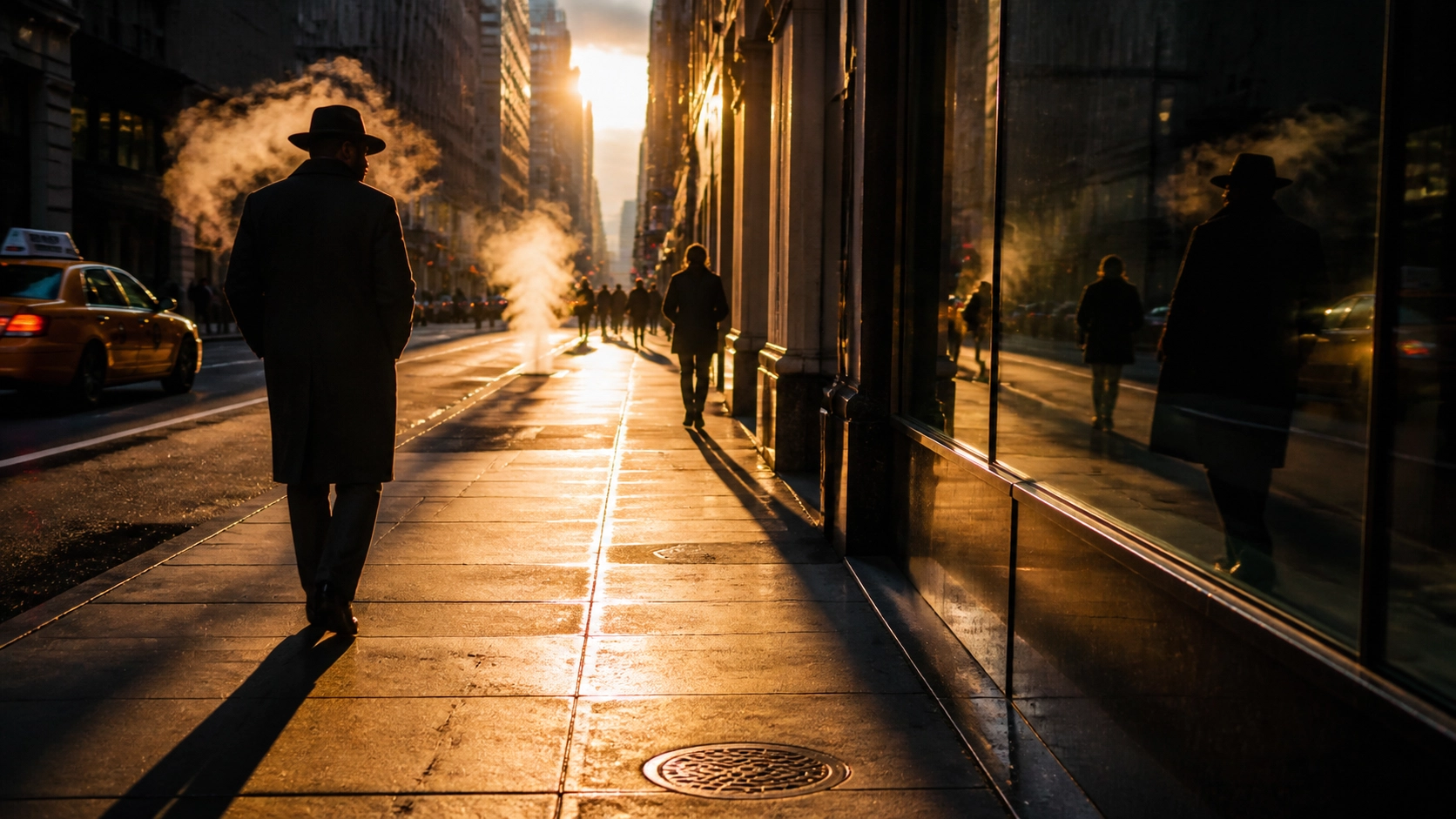
Contrast is the soul of street photography. Find where the sun is hitting a tall building and creating a narrow beam of light on the sidewalk. Expose for the highlights so the shadows go completely black.
When a person walks through that beam of light, they will pop out of the darkness like a spotlight on a stage. This is a classic street photography look that never gets old. If you're struggling with getting the exposure right, you might need to master manual mode to ensure your camera doesn't try to "fix" the shadows and blow out the highlights.
4. Shoot Through Glass and Layers
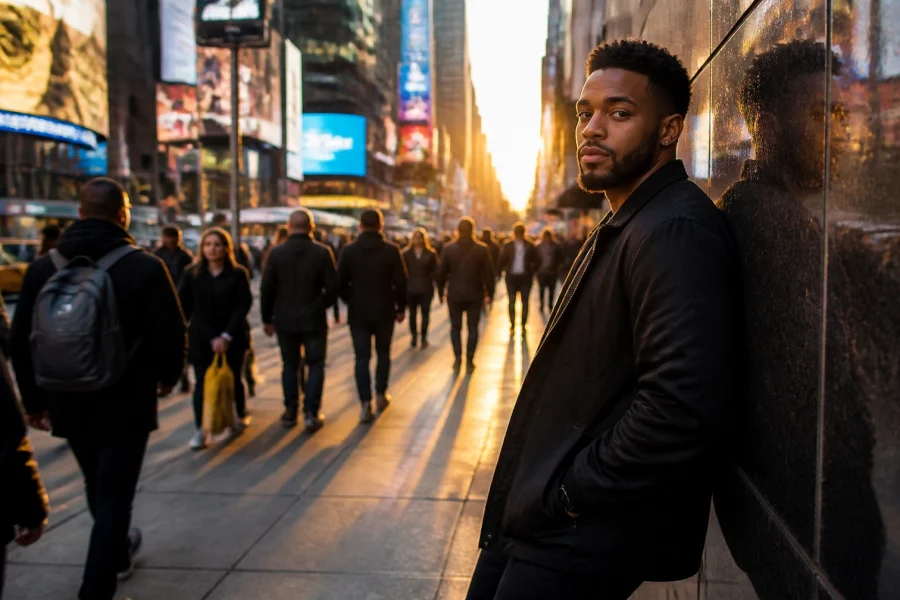
Shop windows, bus stops, and cafe glass are your best friends. They provide three things: reflections, distortion, and a literal frame.
Try focusing on the reflection in the glass rather than the person behind it. You’ll get a dreamlike, layered image that mixes the interior of a shop with the exterior of the street. It adds a level of complexity that makes the viewer stop and look twice. For more inspiration on how to layer your shots, take a look at these 30 creative street photography ideas.
5. Embrace Motion Blur
Not everything needs to be sharp. In fact, a perfectly sharp photo of a busy street can sometimes feel static and lifeless. To capture the "hustle" of the city, slow down your shutter speed.
Try shooting at 1/15th or 1/8th of a second. If you keep the camera still (or pan with a moving subject), the background will stay sharp while the people become ghostly blurs of motion. This technique communicates energy and the passage of time. If you find your photos are coming out too bright when you slow down the shutter, remember to close your aperture or lower your ISO. If you're making mistakes here, don't worry: check out these common manual mode mistakes to fix them fast.
6. The Low-Angle "Hero" Shot
Most people see the world from five to six feet off the ground. That’s the perspective we see every day, and it’s: you guessed it: boring.
Flip your screen out, crouch down, and shoot from the hip or the ground. This makes your subjects look more imposing and "heroic." It also allows you to use the leading lines of the sidewalk or the curb to point directly toward your subject. It’s a simple change that makes a massive difference in the professional feel of your work.
7. Leverage AI Subject Tracking
We live in 2026, and the tech in our hands is insane. One of the best hacks for street photography is trusting your camera’s AI subject tracking.
In the old days, you’d miss half your shots because the focus couldn't keep up with a fast-moving cyclist or a running child. Now, with AI-powered tech, you can set your camera to "Eye-AF" and let the computer handle the precision. This frees your brain to focus on the composition and the "moment" rather than the technicalities of focus points. To stay updated on the latest tech, keep an eye on our morning photography news.
8. Find Patterns and Break Them
The urban environment is full of patterns: rows of windows, stacks of crates, or a line of yellow taxis. Human brains love patterns, but they love it even more when a pattern is broken.
Look for a repetitive visual element and wait for something to disrupt it. A person wearing a red coat in a sea of gray suits, or one open window in a wall of closed ones. This "disruption" becomes the focal point of your art.
9. Use Leading Lines (Even the Subtle Ones)
Sidewalk cracks, shadows from streetlights, or even the power lines overhead can be used as leading lines. These are visual "roads" that tell the viewer's eye exactly where to look.
When you’re walking, look for lines that converge in the distance. Position yourself so those lines lead directly to your subject. It creates a sense of depth that makes a 2D photo feel like a 3D world. You can find more tips on composition at PhotoGuides.org.
10. Focus on the Details (The "Non-Portrait")
Street photography doesn't always have to be about faces. Sometimes, a person’s hands, their shoes, or the way they hold an umbrella tells a better story.
Focus on the textures: the weathered skin of a street performer’s hands or the shiny polish of a businessman's shoes. These "macro" street shots add variety to your portfolio and help build a narrative of the city. If you're interested in how to transition these skills into more formal work, check out our corporate headshot tips.
11. Color Theory: Look for the Pop
A boring gray sidewalk can become a masterpiece if you find a single pop of color. Look for primary colors: red, blue, and yellow.
A red fire hydrant next to a person in a blue shirt creates a color harmony that is naturally pleasing to the eye. You can also look for "complementary" colors on the street, like a blue wall behind someone wearing orange. If the colors in your raw files look a bit dull, you can always bring them to life using Luminar, which uses AI to enhance colors without making them look fake.
12. Shooting at Night: The Neon Glow
When the sun goes down, the street changes completely. The "boring" sidewalk is now lit by neon signs, car headlights, and streetlamps.
Night street photography is all about finding artificial light sources. Use the glow from a wet-night storefront to light your subject’s face. It creates a cinematic, "Blade Runner" vibe that you just can't get during the day. For more on handling difficult lighting, our guide on natural light portraits offers principles that apply even to artificial street lights.
13. The "Decisive Moment"
Henri Cartier-Bresson famously coined the term "The Decisive Moment." It’s that split second where everything aligns: the light, the subject, and the emotion.
To catch this, you need to anticipate. If you see someone walking toward a puddle, don’t wait for them to splash; start shooting a second before they reach it. Use your camera's "burst mode" to capture the entire sequence. One of those frames will be the art; the others are just practice. If you want to dive deeper into these concepts, I highly recommend joining the community at learn.shutyouraperture.com.
14. Scale: Tiny Humans, Big City
Sometimes the best way to make a sidewalk interesting is to show how small we are compared to the urban jungle.
Back up. Use a wide-angle lens and include the massive skyscrapers or the long, empty stretch of the road. Putting a tiny human subject in a vast architectural space creates a sense of isolation and scale. It turns a "street photo" into "architectural art." You can see examples of this high-level composition over at Edin Fine Art.
15. Post-Processing: The Final Polish
The raw file is just the starting point. To turn a boring sidewalk into art, you need to guide the viewer’s eye in post-processing.
Use vignettes to darken the corners and keep the focus on the subject. Adjust the contrast to make those shadows pop. I personally use Luminar for my street work because its AI tools can quickly mask out a sky or enhance the "structure" of a gritty sidewalk in seconds. Just be careful not to overdo it: avoid these common AI editing mistakes to keep your photos looking authentic.
Why Street Photography Matters
Street photography is the most honest form of the craft. It’s a historical record of how we live, dress, and interact in 2026. Every time you step out onto a "boring" sidewalk, you have the chance to capture a moment that will never happen again.
Don't worry about having the perfect gear or the perfect city. Just grab your camera, head outside, and start looking for the light. If you’re feeling stuck, keep up with the latest industry shifts with our nightly photography news or browse through more tips on the Edin Chavez blog.
The art is already out there. It’s just waiting for you to shut your aperture and click the shutter. For a complete deep dive into mastering your gear so you never miss a shot again, head over to learn.shutyouraperture.com and join our community of creators.