Look, I get it. We’ve all been there. You’re sitting on your couch, scrolling through some mind-blowing street photography on your phone, feeling a mix of inspiration and pure laziness. You tell yourself you’ll go out "when the light is better" or "when I get that new lens." But here’s a reality check: the light is fine, and your current gear is probably better than what the legends of the 1950s used to change the world.
Street photography is the ultimate "no excuses" genre. You don’t need a studio, you don’t need a model, and in 2026, you don’t even need a bulky DSLR. Whether you’re shooting on the latest flagship mirrorless or just your phone, the streets are always open. If you’re feeling a bit stuck or just need a reason to put on your shoes, I’ve put together 25 creative street photography ideas that will help you see your city in a completely different way.
I was actually chatting with Sonny, our Social Media Manager, about this earlier. He’s seeing these types of "street challenges" go viral every other day, so once you’ve nailed these shots, make sure you’re tagging us so he can feature your work on our socials.
The Magic of Light and Color
Street photography is essentially just hunting for light in a concrete jungle. Sometimes the colors are the story; other times, they’re just a distraction.
1. The Timeless Black and White Shot
Strip away the neon signs and the bright yellow taxis. When you shoot in black and white, you’re forced to focus on the geometry, the contrast, and the raw emotion of the subject. It’s the fastest way to make a chaotic street scene feel organized and intentional. If your RAW files look a bit flat, you can easily bring out that grit and texture using Luminar with some of their dedicated street presets.
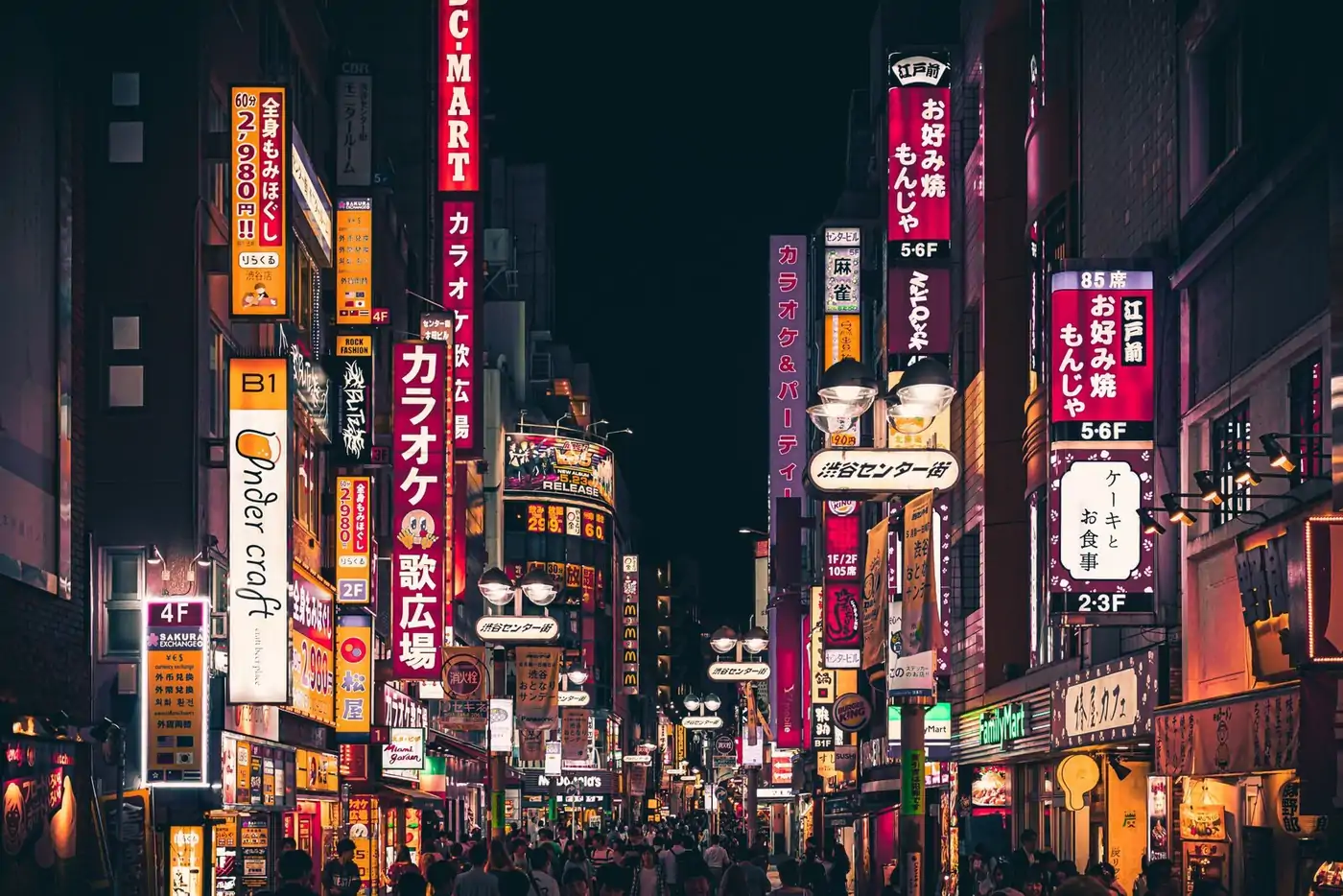
2. Neon Night Street Photography
In 2026, cities are brighter than ever. Grab your fastest lens and head out after the sun goes down. Look for the glow of LED billboards, street art lit by lanterns, or the red streaks of car headlights. The goal here isn't just to see the light, but to see how the light hits the people passing by.
3. High Key Photography
Most street photographers lean into the shadows, but try the opposite. Find a scene that is flooded with light, maybe a white-walled plaza at noon, and overexpose slightly. This creates a dreamy, minimalist, and almost ethereal vibe that feels very modern. For more on handling these tricky lighting situations, check out how to master your camera's manual mode in 5 minutes.
4. Use a Flash in Broad Daylight
This is a bit bold, but it’s a classic street technique. Using a flash during the day freezes motion with surgical precision and adds a hard, edgy contrast to your subjects. It separates them from the background in a way that looks like a high-end fashion shoot happened by accident on a sidewalk.
Master the Art of Motion
The street is never still. If you try to fight the movement, you’ll end up with boring shots. Instead, embrace it.
5. Motion Blur of Cars
Set your shutter speed low (start around 1/15th or 1/30th of a second) and let the traffic turn into ribbons of color. This works best at night, but if you have an ND filter, you can do it during the day too. It’s a great way to show the "pulse" of a city.
6. Motion Blur Through Crowds
Go to a busy subway station or a crowded intersection. Keep your camera perfectly still (or use a small tripod/railing) and let the people blur past. If you can find one person standing perfectly still while everyone else is a blur, you’ve got a masterpiece. This is a staple of mastering the art of travel photography.
7. Following the Cyclist
Panning is a skill every street photographer should practice. Follow a cyclist with your camera at a slow shutter speed as they zoom past. If you time it right, the cyclist will be sharp while the entire background turns into a beautiful smear of speed.
8. The Energy of Street Performers
Musicians, breakdancers, and magicians are gold mines for street photography. Instead of a static shot, try to capture the movement of a drummer’s sticks or the spin of a dancer. It adds a layer of "sound" to a silent image.
9. Shoot from the Hip
Sometimes the act of bringing the camera to your eye ruins the moment. Lower your camera to your waist, set a wide-angle lens, and click away as you walk. It’s spontaneous, it’s raw, and it captures perspectives you’d never see through a viewfinder. If you’re worried about gear size, take a look at our guide on how to choose the best mirrorless camera for 2026.
Creative Compositional Tricks
If your photos feel a bit "flat," it’s probably because you’re standing at eye level and shooting straight ahead. Let's change that.
10. Shooting Through Objects
Don't just look at your subject; look through things to get to them. Use a chain-link fence, a shop window, or even some leaves in a park to partially obscure the frame. This adds depth and a sense of "voyeurism" that makes street photography so compelling. For more ideas on this, see our article on unleashing creativity through framing techniques.
11. Embrace Negative Space
You don't need to fill the frame with "stuff." Find a lone person walking past a massive, blank concrete wall. By leaving 80% of the photo empty, you emphasize the scale of the city and the isolation of the individual. It’s a minimalist approach that works every time.
12. Juxtaposition (The "Coincidence" Shot)
This is the holy grail of street photography. Look for contrasts: a businessman standing next to a colorful piece of graffiti, or an elderly person sitting under a billboard for "New Youth" cream. It’s about finding those little ironies that exist in everyday life. Check out Shut Your Aperture for some classic examples of legendary juxtaposition.
13. Extreme Angles
Get low. Like, "stomach on the pavement" low. Or get high: find a parking garage or a bridge. Changing your elevation immediately makes a mundane street look like a movie set.
14. Reflections
Puddles after a rainstorm are a street photographer’s best friend. They act as natural mirrors, creating a parallel world. But don't stop at puddles; use polished marble, glass buildings, and car windows.
15. Frame Within a Frame
Use the environment to create a "box" for your subject. A doorway, an alleyway, or the space between two parked trucks can act as a natural frame. This draws the viewer’s eye exactly where you want it to go. This is a core part of essential photography composition tips.
16. Layering for Depth
Try to have something in the foreground, something in the middle ground (your subject), and something in the background. This 3D effect makes the viewer feel like they could step right into the photo.
17. The Rule of Triangles
Triangles are much more dynamic than squares. Look for three people standing in a way that forms a triangle, or use the lines of buildings to lead the eye. It creates a sense of balance that feels "right" to the human brain.
The Human Element (Without the Faces)
Street photography doesn't always have to be about a person's face. Sometimes, what you don't show is more interesting.
18. "Decapitate" Your Subjects
No, not literally. Frame your shot so the person’s head is out of the frame. Focus on their hands, their shoes, or the way they’re holding a briefcase. It adds an air of mystery and allows the viewer to project their own story onto the character.
19. Hair in Motion
Whether it’s someone walking against the wind or a person playing with their hair while waiting for a bus, hair adds texture and a sense of "candidness" that is hard to fake.
20. The Over-the-Shoulder Glance
Capture the moment someone looks back. It suggests there’s something happening outside the frame, making the viewer wonder what they’re looking at. This is great for capturing authentic emotions.
21. The Cut-Off Technique
Walk toward someone and snap the photo as they pass, cutting off half their body or focusing on a specific detail of their outfit. It creates a frantic, high-energy feel that mimics the pace of city life.
Scouting the Best Urban Backdrops
Sometimes you find the stage first, then you wait for the actors to walk onto it.
22. Street Art and Graffiti
Use the art of others to enhance yours. A vibrant mural can provide the perfect color palette for your subject. Just make sure you’re adding something new to the scene rather than just taking a photo of someone else’s work. You can find some incredible street art inspiration over at blog.edinchavez.com.
23. Street Tunnels
Tunnels are natural light modifiers. They create "tunnel vision" and often have incredible leading lines. The light at the end of the tunnel acts as a natural spotlight for anyone walking through.
24. Nightlife Scenes
The entrance to a bar or a nightclub is a theater of human emotion. People are arriving with excitement or leaving with exhaustion. The mixed lighting from neon signs and interior lamps creates a gritty, cinematic atmosphere.
25. The Clean White Backdrop
Find a simple, brightly lit wall and wait. This is "fishing." You’ve found the perfect spot; now you just need the perfect subject to walk through it. It turns street photography into a studio-like experience.
Why You Need to Start Today
The biggest mistake people make is thinking they need to travel to Paris or New York to do street photography. Honestly, some of the best shots I’ve seen lately were taken in small suburban towns or quiet industrial zones. It’s not about where you are; it’s about how you see.
If you’re still worried that your gear isn’t "pro" enough, read our breakdown on whether new camera gear really matters in 2026. Spoiler: It doesn't as much as you think. What matters is your eye, your timing, and your willingness to get off that couch.
Once you’ve captured your shots, the real work starts in post-processing. I highly recommend playing around with the AI-driven tools in Luminar. It’s incredible for street work because it can help you fix lighting issues in seconds, allowing you to focus more on the creative side of things.
If you want to take your skills to a professional level, check out proshoot.io for more advanced workshops and community feedback. And for those of you who want to see how street photography can transition into high-end fine art, take a look at edinfineart.com.
So, what are you waiting for? Grab your camera, head out the door, and start hunting for those moments. The street is waiting.