Let’s be real for a second: street photography can sometimes feel like you’re just walking around waiting for someone to do something "interesting." We’ve all been there. You walk five miles, take 300 photos of random strangers walking past brick walls, and come home with… well, 300 photos of strangers walking past brick walls.
If your street shots are starting to feel a bit "samey," it’s time to shake the jar. Street photography isn't just about pointing a camera at a person on a sidewalk; it’s about finding the extraordinary in the mundane. It’s about layers, light, and looking at the world through a slightly cracked lens.
Whether you’re using a high-end Leica or just your phone, these 25 creative street photography ideas will help you break out of your creative rut and start seeing the city in a whole new way.
1. Shoot Through Obstructions
Don’t just stand in the middle of the sidewalk and snap away. Find a window, a metal grate, or even some low-hanging leaves. Shooting through something adds immediate depth and a sense of "voyeurism" (the good kind) to your shots. It creates a frame within a frame and makes the viewer feel like they are peeking into a private moment.
2. Embrace Negative Space
Most beginners try to fill the frame with as much "stuff" as possible. Try the opposite. Find a giant, blank wall or a vast expanse of pavement and place your subject tiny in the corner. This minimalist approach emphasizes the scale of the city and creates a powerful, quiet mood. If you find the colors are a bit dull in these wide shots, you can always pop them into Luminar to bring out the contrast and texture.
3. The Puddle Reflection (Done Differently)
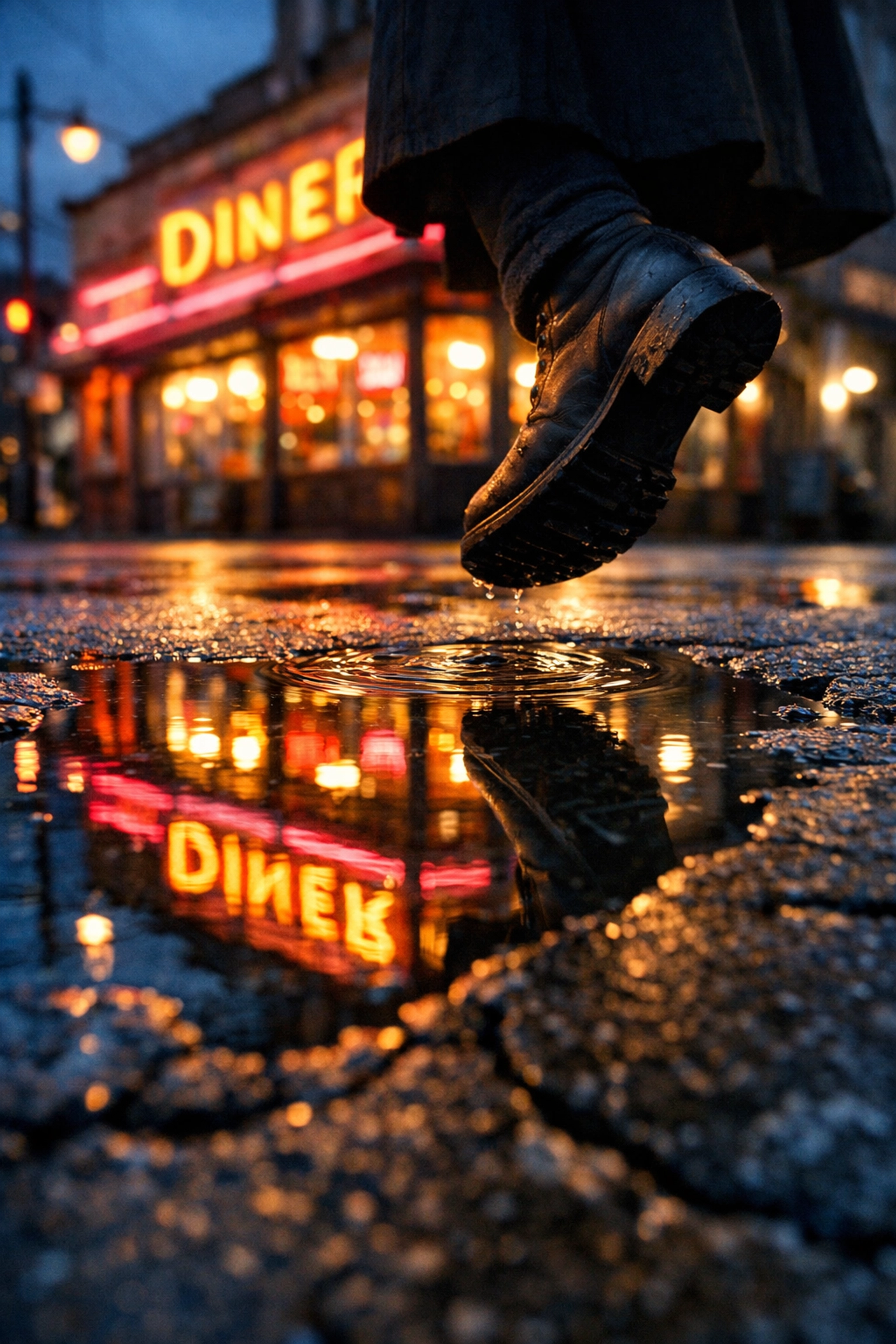
We’ve all seen the "upside-down puddle" shot. To make it creative, don’t just capture the reflection; capture the interaction. Wait for someone to step into the puddle or for a cyclist to spray the water. Get your camera as low as possible, literally touching the ground: to make the reflection feel like a parallel universe.
4. Extreme Low Angles
Speaking of getting low, try shooting from the "worm’s eye view." Put your camera on the ground and tilt it up. This makes pedestrians look like giants and city skyscrapers look like they’re closing in. It’s a perspective we rarely see in our daily lives, which is exactly why it makes for a compelling photo.
5. High Vantage Points
Find a bridge, a parking garage, or a rooftop. Looking down on the world simplifies the chaos of the street into geometric patterns. People become dots, and crosswalks become graphic lines. Much like the lessons in landscape photography from Peter Lik, street photography at high angles relies heavily on composition and light.
6. Create a "Wait-and-See" Spot
Find a background that is visually stunning: maybe a mural, a doorway with great light, or a colorful storefront. Now, don't move. Stay there for an hour. This "fishing" technique allows you to focus purely on the timing. You’ve already got the composition; you’re just waiting for the perfect "character" to walk into your frame.
7. Focus on People "In the Zone"
Candid shots of people looking at the camera are fine, but shots of people absorbed in something else are better. Look for people reading physical books (a rare sight these days!), chefs working in window-front kitchens, or even someone intensely studying a subway map. Their concentration adds a layer of narrative that a simple walking shot lacks.
8. Master the Motion Blur
Street photography doesn't always have to be tack-sharp. In fact, some of the most "street" photos are the ones that feel fast. Use a slower shutter speed (around 1/15th or 1/30th of a second) and pan your camera with a passing cyclist or bus. The subject stays relatively sharp while the background turns into a streak of color. It’s a great way to show the energy of a city.
9. The "Skate Park" Chronicles
Skate parks are gold mines for movement. Capture the grit, the falls, and the high-flying tricks. Make sure to ask for permission if you’re getting close, but most skaters are happy to show off for the lens. Use a fast shutter speed to freeze them mid-air.
10. Document the "Invisible" Workers
The people who keep the city running: street sweepers, construction workers, delivery drivers: are often ignored. Documenting their day-to-day grind provides a gritty, realistic look at urban life. For more tips on documenting professional settings, check out how cinematic techniques can transform showcases.
11. Construction Zone Aesthetics
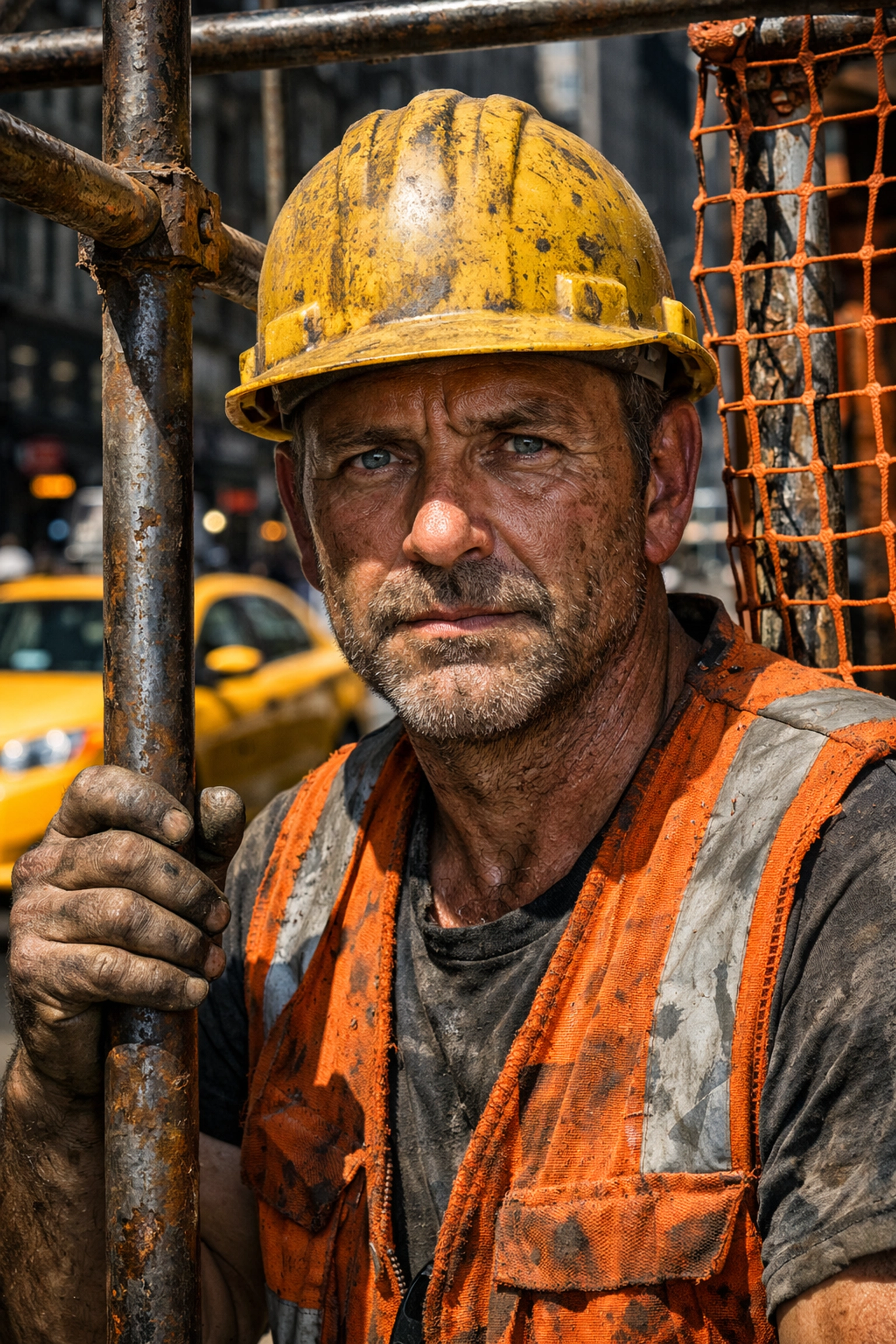
Construction zones are full of textures, bright oranges, and "danger" signs. Use the fences and scaffolding to create leading lines or to frame your subjects. The contrast between a person in a sharp suit walking past a messy construction site is a classic street photography trope for a reason: it works.
12. Focus on Fashion Details
You don’t always need a face to tell a story. Sometimes a pair of bright red heels on a rainy sidewalk or a heavily tattooed hand holding a coffee cup says more than a portrait ever could. Spend a whole walk just looking for textures and accessories.
13. Flash in the Daytime
Using a flash in broad daylight might feel weird, but it’s a staple for many pro street photographers. It fills in harsh shadows and makes your subject "pop" against the background. It gives the photo a high-fashion, edgy look that feels very deliberate.
14. Blue Hour Fill-Flash
When the sun goes down and the city lights turn blue, use a subtle fill-flash. This allows you to capture the beautiful ambient light of the city while keeping your subject from becoming a total silhouette. If you need more gear advice for low light, PhotoGuides.org is a killer resource for technical deep dives.
15. Shaded Streets and Pockets of Light
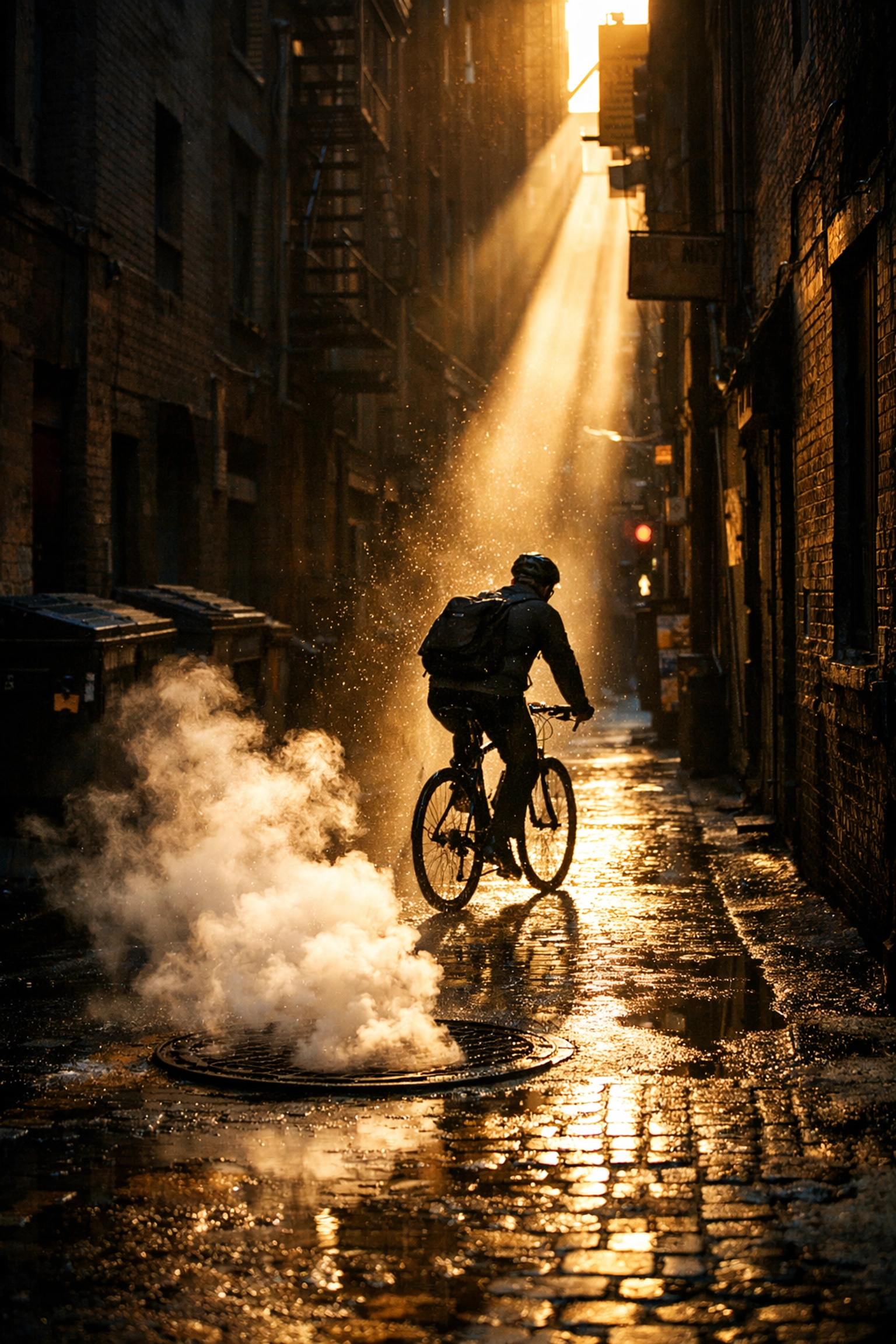
Look for "God rays" between tall buildings. In the middle of the day, certain alleys will have tiny slivers of intense light. Wait for someone to walk through that sliver. It creates a natural spotlight effect that looks incredibly dramatic, especially when converted to black and white in Luminar.
16. In-Camera Double Exposures
Many modern mirrorless cameras have a double exposure mode. Try layering a texture: like a brick wall or some city lights: over a portrait of a stranger. It’s an abstract way to represent the "feeling" of a city rather than just the "look" of it.
17. The Black and White Reset
If you’re feeling uninspired, switch your camera to Black and White mode (or "Monochrome"). Removing color forces you to look at shapes, shadows, and contrast. It’s like taking your eyes to the gym. You can always check out more of Edin’s work at blog.edinchavez.com to see how he uses contrast to tell a story.
18. Long Exposure Silhouettes
Use a tripod (or a very steady hand/ledge) and take a long exposure of a busy street corner. The moving people will become ghostly blurs, but if someone stands still for a moment, they will remain as a sharp silhouette. It’s a haunting, beautiful look.
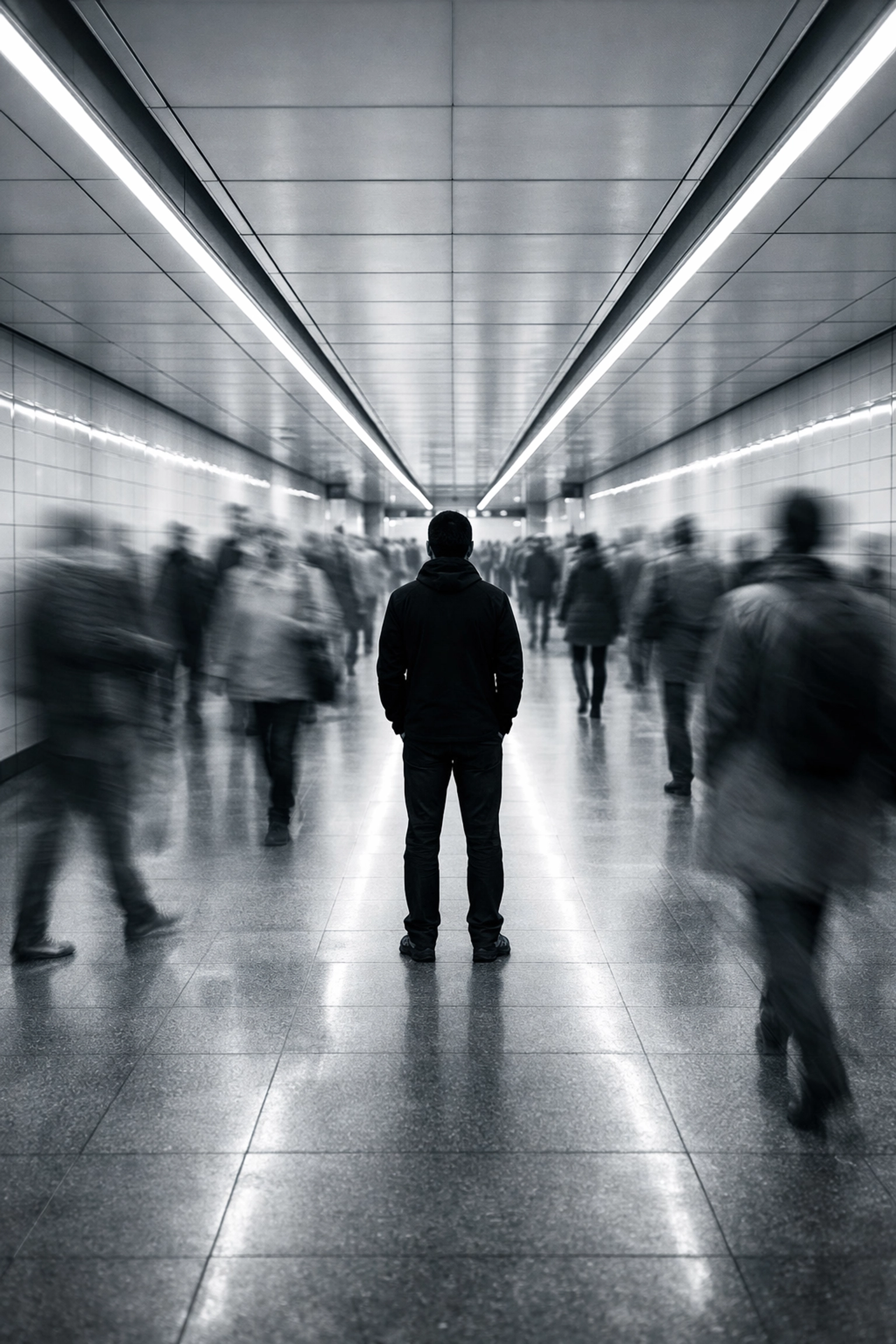
19. Architecture vs. Humanity
Find a massive piece of modern architecture and wait for a single person to walk by. The contrast between the cold, static lines of a building and the organic, moving form of a human creates a sense of scale and isolation.
20. Neon Night Photography
Neon signs are the heartbeat of the city at night. Focus on the reflections of neon lights in windows or on the wet pavement. Use a wide aperture (like f/1.8 or f/2.8) to get that creamy bokeh effect with the city lights in the background. If you’re looking to sell your urban night shots, platforms like ProShoot.io are great for showcasing high-quality work.
21. Street Art Integration
Don't just take a photo of a mural: that's someone else's art. Instead, find a way to incorporate a person into the mural’s story. Maybe a person walks by a mural of a giant bird and it looks like they’re being chased. It’s about the interaction between the street art and the street life.
22. Texture Hunting
The city is a buffet of textures. Peeling paint, rusted metal, broken glass, and steam rising from manhole covers. These shots work great as "filler" for a photo series or a gallery. They set the scene and provide a "feel" for the location.
23. Water Interactions
Beyond puddles, look for fountains, rain dripping off awnings, or people carrying umbrellas. Water adds a layer of distortion and reflection that is endlessly creative. High-speed shutter shots of splashing water can look like liquid diamonds in the right light.
24. Fashion Interactions
Photograph how people interact with fashion. This could be someone checking their reflection in a store window or a group of people all wearing the same "trend" without realizing it. It’s a subtle commentary on urban culture.
25. Use a "Creativity Jar"
If you’re truly stuck, write down 10 subjects (dogs, hats, red cars), 10 techniques (slow shutter, wide angle, high angle), and 10 locations (park, subway, alley). Pick one from each and you have your mission for the day. For example: "Photograph hats using a slow shutter in the subway." It forces you to think outside your comfort zone.
Leveling Up Your Workflow
Once you’ve captured these creative shots, the work isn't done. The "digital darkroom" is where you really refine your voice. I’m a huge fan of using Luminar for street photography because its AI tools can quickly fix lighting issues or enhance the grit of a sidewalk scene without making it look "fake."
Street photography is a marathon, not a sprint. You might go out for four hours and get nothing, then get the "shot of the year" in the thirty seconds before you get back to your car. The key is to keep your eyes open and your aperture ready.
If you’re looking for more inspiration, keep an eye on our sitemap for new tutorials, or check out the fine art side of things over at Edin Fine Art.
Now, quit reading this and go hit the pavement. The city isn't going to photograph itself!