Before going further, make sure your aperture fundamentals are locked in: our aperture photography guide walks through it shot by shot.
Street photography is the ultimate adrenaline rush for photographers. There are no do-overs. No "can you stand over there?" and definitely no "let's wait for the light to hit your face just right." It’s raw, it’s fast, and if you blink, you miss the shot of a lifetime. But let’s be real: sometimes you walk the pavement for six hours and come home with nothing but sore feet and a memory card full of "meh."
Whether you are a seasoned pro or just starting out, hitting a creative wall is part of the gig. Your portfolio needs more than just "people walking past a wall." It needs soul, variety, and a bit of that "how did they see that?" magic. If you’ve been feeling like your street shots are getting a bit stale, don't worry. We've compiled 30 catchy street photography ideas to help you see the world through a fresh lens and build a portfolio that actually stops the scroll.
Before you head out, make sure your gear is dialed in. If you’re rocking the latest tech, check out our guide on Nikon Z8 settings for street photography to make sure you aren't fumbling with buttons when the moment happens.
1. The Direct Glance
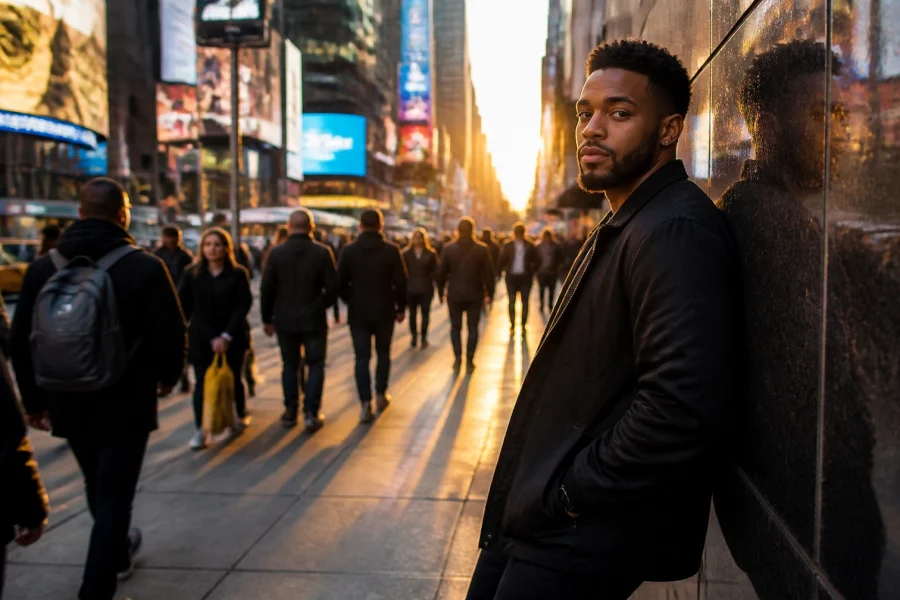
Most street photography is candid, you're a ghost. But there is something incredibly powerful about a subject looking directly into your lens. It creates an instant connection with the viewer. It doesn't have to be a confrontation; a fleeting second of eye contact can tell a thousand stories.
2. Play with Silhouettes
When the sun is low, look for backlighting. Position yourself so the subject is between you and the light source. This strips away the details and focuses on the shape and form of the person. It adds a layer of mystery to your portfolio.
3. Reflections in Puddles
Rainy days are the best days. Instead of staying inside, find a puddle and look for the world upside down. Capture the reflection of commuters, neon signs, or city architecture. It’s a classic street photography trope for a reason, it looks amazing.
4. Neon Nights
Street photography doesn't end when the sun goes down. In fact, it just gets more interesting. Use the glow of neon signs to light your subjects. The high contrast between the bright lights and deep shadows creates a cinematic, "Blade Runner" vibe that pops in any portfolio.
5. Shoot from the Hip
Sometimes, bringing the camera to your eye ruins the moment. Try "shooting from the hip." It’s a technique where you click the shutter without looking through the viewfinder. It leads to more natural, unposed shots, though it takes some practice to get the framing right. If you want to master these kinds of techniques, check out the ultimate guide to photography tutorials over at our online school.
6. The "Back of the Head" Mystery
You don't always need a face to tell a story. Photographing people from behind can evoke a sense of journey or loneliness. It allows the viewer to project themselves into the frame.
7. Urban Geometry
The city is full of lines, triangles, and squares. Look for leading lines in the architecture, stairs, shadows, or rows of pillars, and wait for a human element to enter the frame. The contrast between the rigid city and the fluid human form is a winner.
8. Motion Blur
The city is always moving. Why freeze it? Use a slower shutter speed to capture the blur of a passing train, a bicycle, or a crowd of people while keeping the background sharp. It conveys the "hustle and bustle" energy of urban life perfectly.
9. Hands and Feet
Sometimes the most expressive parts of a person aren't their faces. A weathered hand holding a cigarette or a pair of colorful shoes waiting at a crosswalk can be much more evocative than a standard portrait.
10. Frame Within a Frame
Use windows, doorways, or even the gaps between buildings to frame your subject. This technique draws the viewer’s eye exactly where you want it to go and adds depth to your composition.
11. Street Animals
It’s not just about humans. Stray cats in Istanbul, dogs sticking their heads out of car windows in NYC, or pigeons fighting over a bagel, animals bring a sense of life and humor to street photography.
12. Juxtaposition
This is the holy grail of street photography. Look for two things that don't belong together. A businessman standing under a "No Stress" sign, or an old person walking past a mural of a young child. It creates irony and makes the viewer think.
13. Color Blocking
Find a wall with a solid, vibrant color. Wait for someone wearing a contrasting color to walk past. For example, a yellow coat against a blue wall. It’s simple, clean, and visually striking. If you’re struggling with the colors in post, I highly recommend using Luminar to help those tones pop without looking artificial.
14. Public Transport Scenes
Subways, buses, and trains are compressed stages for human drama. People are in their own worlds, lost in thought or on their phones. The lighting is often gritty and interesting, making it perfect for a documentary-style series.
15. The Low Angle
Get down on the ground. Seriously. Shooting from a worm’s-eye view makes buildings look more imposing and gives your human subjects a larger-than-life presence. It’s a perspective people rarely see in their daily lives.
16. Minimalism
Less is more. Find a scene with a lot of negative space, maybe a lone person in a massive, empty plaza. It emphasizes the scale of the city and can feel quite poetic.
17. Shadow Play
On a bright, sunny day, the shadows can become subjects themselves. Look for long, dramatic shadows stretching across the pavement. Sometimes the shadow of a person is more interesting than the person themselves.
18. Interaction Between Strangers
Capture the "in-between" moments. Two people bumping into each other, a street performer getting a tip, or a couple arguing on a corner. These raw human interactions are the heart of street photography.
19. Weather Extremes
Don't hide from the rain, snow, or heatwaves. Umbrellas create amazing patterns in the rain, and steam rising from a subway grate in the winter adds instant atmosphere. Professional photographers know that bad weather usually means good photos. You can find more inspiration on this at PhotoGuides.org.
20. Window Shopping
People looking into shop windows are often completely oblivious to your presence. The glass creates interesting layers of reflections and transparency that can make a shot look much more complex than it actually is.
21. Abstract Street
You don't always need a clear subject. Sometimes the play of light on a metallic building or the texture of peeling paint on a door is enough. Abstract street photography focuses on color, texture, and light rather than a narrative.
22. Street Portraits (With Permission)
Wait, isn't street photography supposed to be candid? Mostly, yes. But stopping someone with a unique look and asking, "Hey, can I take your portrait?" is a great way to add high-quality character studies to your portfolio. For more on how the gear scene is changing for this type of work, read our thoughts on whether prime lenses are dead.
23. Layering
This is an advanced technique. Try to have something interesting in the foreground, middle ground, and background. It makes the photo feel like a three-dimensional world that the viewer can step into.
24. The Commute
Capture the collective exhaustion or focus of the morning commute. Coffee cups, tired eyes, and the synchronization of people walking to work. It’s a relatable theme that resonates with almost everyone.
25. Looking Up
We spend so much time looking at eye level that we forget the incredible architecture above us. Point your camera straight up between skyscrapers for a "canyon" effect. It’s a great way to showcase the scale of urban environments.
26. Busy Intersections
Find a high vantage point, like a bridge or a balcony, and look down at a busy intersection. The patterns of people crossing the street can look like a choreographed dance from above.
27. Black and White Timelessness
Some scenes just scream for monochrome. Strip away the distraction of color to focus on the light, the contrast, and the emotion. If you want to see some world-class examples of this, check out Edin Chavez’s fine art gallery.
28. Street Performers and Buskers
They are there to be seen! While it can feel a bit "easy," capturing the passion and movement of a street musician or a breakdancer is a great way to add energy to your portfolio. Just remember to tip them if you take their photo!
29. Storefronts and Signs
Signage tells you a lot about a neighborhood’s character. Old neon signs, hand-painted storefronts, or even funny graffiti can serve as great subjects or backgrounds that provide context to your street scenes.
30. High-Speed Synchronicity
Look for moments where people’s actions align perfectly. Three people walking in the same stride, or two people wearing the same hat walking in opposite directions. It’s the "decisive moment" that Henri Cartier-Bresson made famous.
Essential Tips for Executing These Ideas
Having a list of ideas is great, but getting out there and executing them is where the real work begins. Street photography can be intimidating. Here are a few "pro tips" to keep in mind while you're hunting for these 30 shots.
Wear Comfortable Shoes
This isn't a joke. You will likely walk 5 to 10 miles in a single session. If your feet hurt, your creativity will take a backseat. Dress for the weather and wear sneakers that won't give you blisters.
Carry One Camera, One Lens
Don't bring a massive bag of gear. It makes you look like a tourist or a professional "intruder." A small camera and a single prime lens (35mm or 50mm) will help you blend in and force you to move your body to get the shot.
Respect Your Subjects
There’s a fine line between being a documentary photographer and being a jerk. If someone clearly doesn't want their photo taken, or if they ask you to delete it, just do it. There are plenty of other moments to capture. If you’re looking to sharpen your technical skills and learn the ethics of the craft, check out our courses at Shut Your Aperture Academy.
Post-Processing Matters
Even the best street photos usually need a little love in post. You don't want to over-process them: the goal is to keep them looking real. Using a tool like Luminar is fantastic for street photography because its AI-assisted tools can help you bring out details in shadows and enhance urban textures in seconds.
Building Your Portfolio Strategy
Don't try to capture all 30 of these in one day. Pick three or four and make them your "mission" for the afternoon. For example, today might be "Reflections and Silhouettes" day. By focusing your mind, you’ll start seeing those specific patterns everywhere.
As your collection grows, look for themes. Maybe you realize you have a knack for nighttime shots, or perhaps your street portraits are particularly strong. Use those strengths to anchor your portfolio. A great portfolio isn't just a collection of random good photos; it’s a curated selection that shows your unique perspective on the world.
If you’re wondering how to keep up with the latest trends in the industry while you build your body of work, take a look at our article on integrating industry news into your practice. Staying informed helps you understand where the medium is heading.
Final Thoughts
Street photography is a marathon, not a sprint. You’ll have days where you feel like a genius and days where you feel like you’ve never held a camera before. That’s okay. The beauty of the street is that it’s always changing. No two days are the same, and the "perfect shot" is always just one block away.
So, grab your camera, head out the door, and start checking off these ideas. Whether you're shooting on a high-end mirrorless or a film camera from the 70s, the goal is the same: capture the human condition in all its messy, beautiful, and chaotic glory. For more daily inspiration and behind-the-scenes content, you can always visit Edin's personal blog.
Now, quit reading this and go shoot! Your portfolio isn't going to build itself.