Let’s be real for a second. Your corporate headshot is often the first "handshake" you have with a potential client, employer, or business partner. In a world where we spend half our lives on LinkedIn, Zoom, and company "About Us" pages, that tiny square image is doing a lot of heavy lifting for your personal brand.
But here is the problem: most people treat their headshot as an afterthought. They use a cropped photo from a wedding three years ago, or worse, a grainy selfie taken in a car. If you want to stand out, you need to stop making these common mistakes.
Whether you are looking for professional corporate headshot tips or trying to figure out how to prepare for a headshot session, this guide will walk you through the pitfalls and give you the fixes you need to look like the expert you actually are.
1. Using an Outdated Photo (The "Who Is This?" Trap)
We’ve all been there. You walk into a meeting expecting to see the person from their LinkedIn profile, only to be greeted by someone who looks ten years older and has a completely different hairstyle. It’s awkward, and it instantly creates a small rift of distrust.
If your photo is more than two or three years old, it’s probably time for an update. Trends change, and more importantly, you change. If you have grown a beard, lost weight, dyed your hair, or started wearing glasses, your photo needs to reflect that.
How to Fix It:
Set a reminder to refresh your headshot every two years. If you’ve had a major lifestyle change, do it sooner. You want people to recognize you the moment you walk into the room. It’s about authenticity. If you are keeping up with looking for the latest photography trends, you know that "real" is the new "perfect."
2. Poor Lighting (The "Office Ghoul" Look)
Lighting is the difference between looking like a CEO and looking like you’re being interrogated in a dark basement. Harsh overhead fluorescent lights: the kind found in 99% of office buildings: are the enemy of a good portrait. They create deep shadows under your eyes (the "raccoon" look) and wash out your skin tone.
On the flip side, direct midday sun is just as bad. It makes you squint and creates "hot spots" on your forehead and nose. Finding the best lighting for executive portraits is about softness and direction.
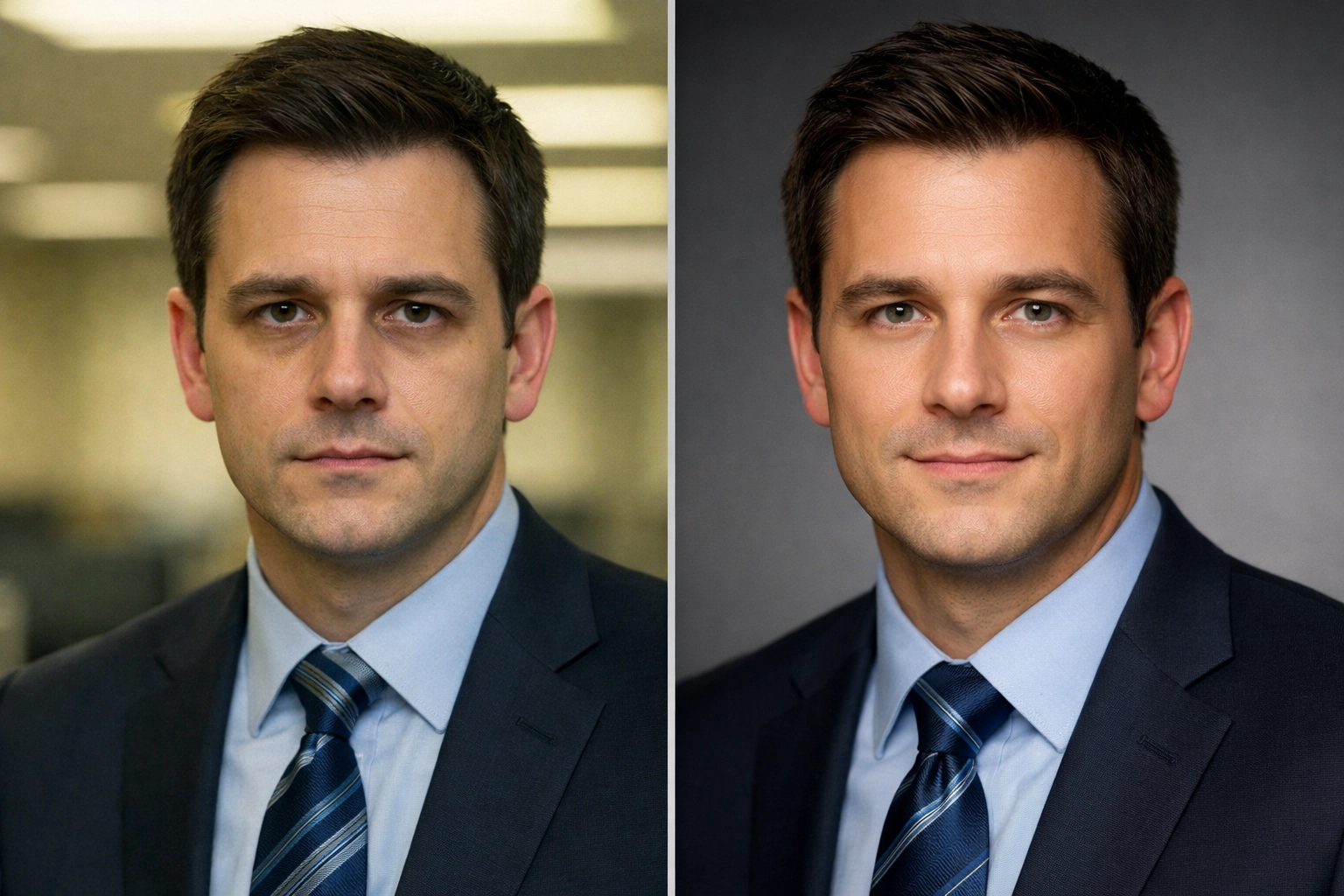
Alt Text: A comparison of poor office lighting vs. soft professional studio lighting for a corporate headshot.
How to Fix It:
If you’re doing it yourself, find a large window with indirect light. If you’re hiring a pro, ensure they use high-quality modifiers to soften the light. Understanding light is the first step in manual mode 101. For a truly professional look, you want a "catchlight" in the eyes: that little sparkle that makes you look alive and engaged. Check out Perfect Corporate Headshots to see how the pros handle lighting across entire teams.
3. Distracting or Inconsistent Backgrounds
A common mistake is choosing a background that is too busy. You might think that cool brick wall or the lush trees in the park look great, but if they are in sharp focus, they are competing with your face for attention. Even worse is the "floating head" look caused by a background that is the exact same color as your skin or hair.
For companies, inconsistency is the biggest killer. If one person has a white background, another is in a forest, and a third is in a dark hallway, your "Team" page looks like a disorganized mess.
How to Fix It:
Keep it simple. A neutral grey or soft white background is classic for a reason: it doesn't distract. If you want an environmental shot (like an office setting), use a wide aperture to blur the background into a soft "bokeh" effect. This keeps the focus entirely on you. For teams, consistency is key to branding. You can find more branding tips at Edin Studios.
4. Wardrobe Disasters (The Neon Nightmare)
What you wear tells a story. If you show up in a neon green shirt with a busy paisley pattern, the only thing people will remember is your shirt, not your face. Ill-fitting clothes are another major issue; a suit jacket that is two sizes too big makes you look like you’re playing dress-up in your dad’s closet.
Executive portrait wardrobe advice usually boils down to this: stay classic.

Alt Text: A professional man and woman wearing well-fitted, solid-colored professional attire for a headshot.
How to Fix It:
- Solid Colors: Jewel tones like navy, emerald, or deep plum look great on almost everyone. Avoid "flesh" tones like beige or peach, which can make you look washed out.
- Fit is King: Ensure your clothes are tailored. Wrinkles are hard to edit out, so bring your clothes on a hanger and change at the studio.
- Keep it Simple: Avoid loud patterns or giant jewelry. You want the viewer’s eyes to go straight to yours.
- Industry Appropriate: If you’re a creative, you can be a bit more casual. If you’re in law or finance, stick to the power suit. For more on what's working in the industry today, check out PhotoGuides.org.
5. Low Resolution and Poor Cropping
In the age of 4K monitors and Retina displays, a blurry, pixelated photo is unacceptable. Many people make the mistake of taking a group photo and cropping themselves out of it. Not only is the resolution terrible, but you often end up with a random hand on your shoulder from the person who was cropped out.
How to Fix It:
Always use the original, high-resolution file. If you are uploading to LinkedIn, the site will compress the image anyway, so you want to start with the highest quality possible. If you need help with technical specs, The Ultimate Guide to Photography Tutorials has everything you need to know about file formats and resolution.
6. Overly Stiff or Unnatural Posing (The "Cardboard CEO")
Most people hate having their picture taken. This discomfort shows up in the form of "The Claw" (hands stiffly placed on knees), "The Turtle" (shoulders hunched up to the ears), or the "Fake Smile" (where the eyes don't move).
If you look uncomfortable in your photo, you look unapproachable. People want to do business with people they like and trust.

Alt Text: A woman posing naturally with a slight tilt of the head and a genuine smile for a professional portrait.
How to Fix It:
- Breathe: It sounds simple, but holding your breath makes you look stiff. Exhale right before the shutter clicks.
- Angle Yourself: Don't stand flat toward the camera. Turn your body about 45 degrees away and then turn your head back toward the lens. This is much more flattering for every body type.
- The "Squinch": A trick used by pro photographers: slightly narrow your eyes to look confident. Wide eyes often look like fear.
- Hire a Pro: A good photographer isn't just someone with a camera; they are a director. They should be talking to you, making you laugh, and guiding your movements. Check out ProShoot.io for experts who know how to pull out a natural expression.
7. Over-Retouching (The "Plastic Filter" Effect)
We have all seen those headshots where the person looks like a Sims character. Their skin is perfectly smooth, their teeth are glowing white, and their eyes look like they belong to a cyborg. This is a massive mistake. When you meet someone in person after seeing an over-edited photo, the disconnect is jarring.
How to Fix It:
Retouching should be like salt in a dish: it should enhance, not overpower. You want to remove temporary things like a blemish or a stray hair. You don't want to remove the character lines that make you look like an experienced professional.
If you are editing your own shots, use software like Luminar. It has AI-driven tools that allow you to enhance skin texture and brighten eyes without making them look fake. The goal is to look like you on your very best day, not like a different human altogether. For more editing inspiration, take a look at Edin Fine Art.
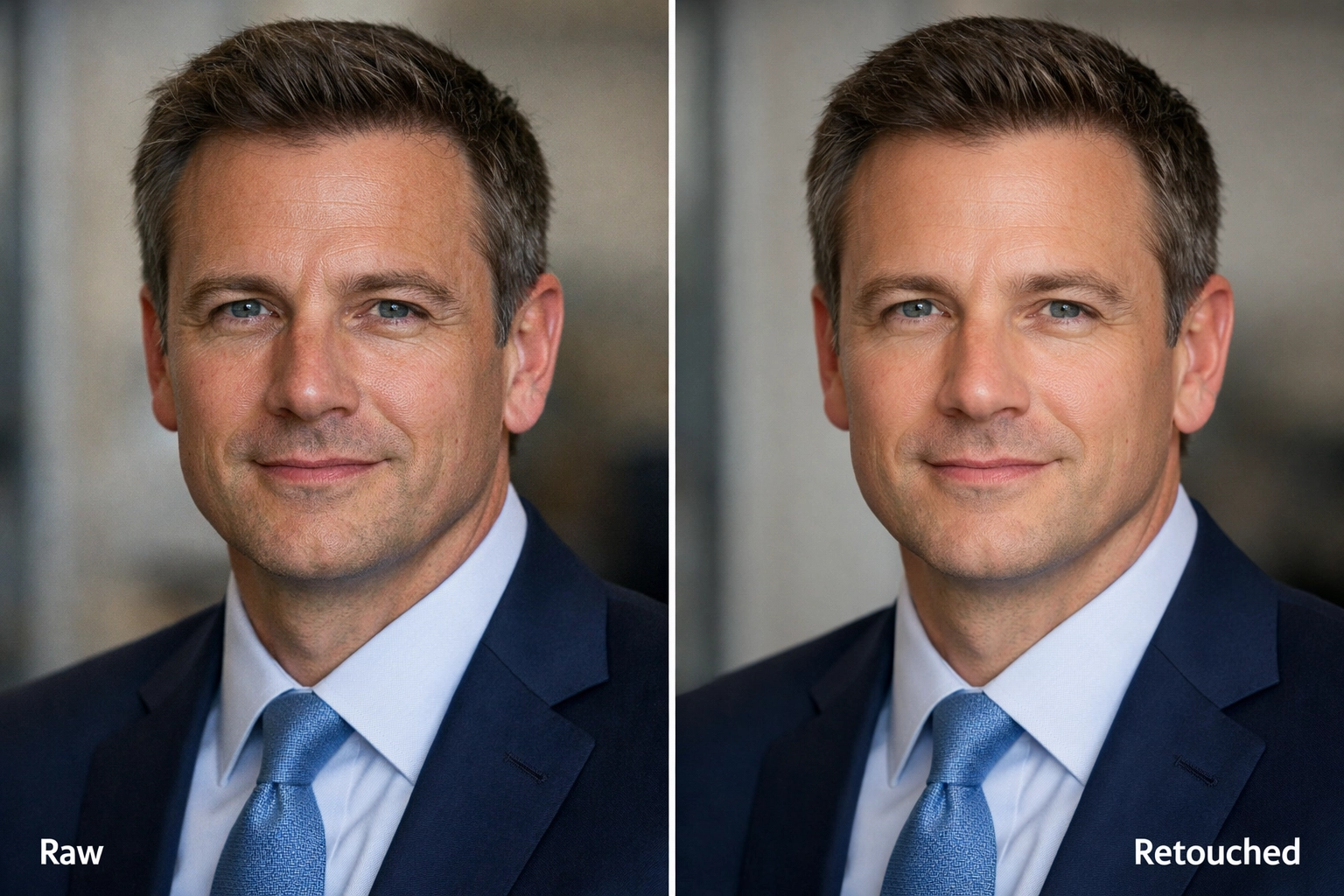
Alt Text: A side-by-side comparison of a raw headshot and a professionally retouched headshot showing subtle improvements.
How to Prepare for a Headshot Session
Now that you know what not to do, let's talk about how to prepare for a headshot session so you get the best results possible. Success happens in the preparation.
1. Hydrate and Sleep
This isn't just beauty advice; it’s practical. Dehydration makes your skin look dull and emphasizes fine lines. Aim for 8 glasses of water a day for three days leading up to your shoot, and try to get a solid 8 hours of sleep the night before to avoid bags under your eyes.
2. Practice Your "Look"
Spend five minutes in front of a mirror. Figure out which side of your face you prefer (everyone has a "good side"). Practice a "soft" smile (no teeth) and a "full" smile. Knowing what your face feels like when it’s making certain expressions will help you take direction from the photographer.
3. Hair and Makeup
Don't try a brand-new hairstyle the day of your shoot. Stick to what you know works. For makeup, keep it slightly more matte than usual, as camera flashes can make "dewy" skin look "sweaty." If you’re worried about shine, keep some blotting papers or translucent powder on hand.
4. Professional Advice
If you’re unsure about your look, talk to your photographer beforehand. They have seen thousands of faces and know what translates well to the sensor. You can find more deep-dive tips on the Edin Chavez Blog.
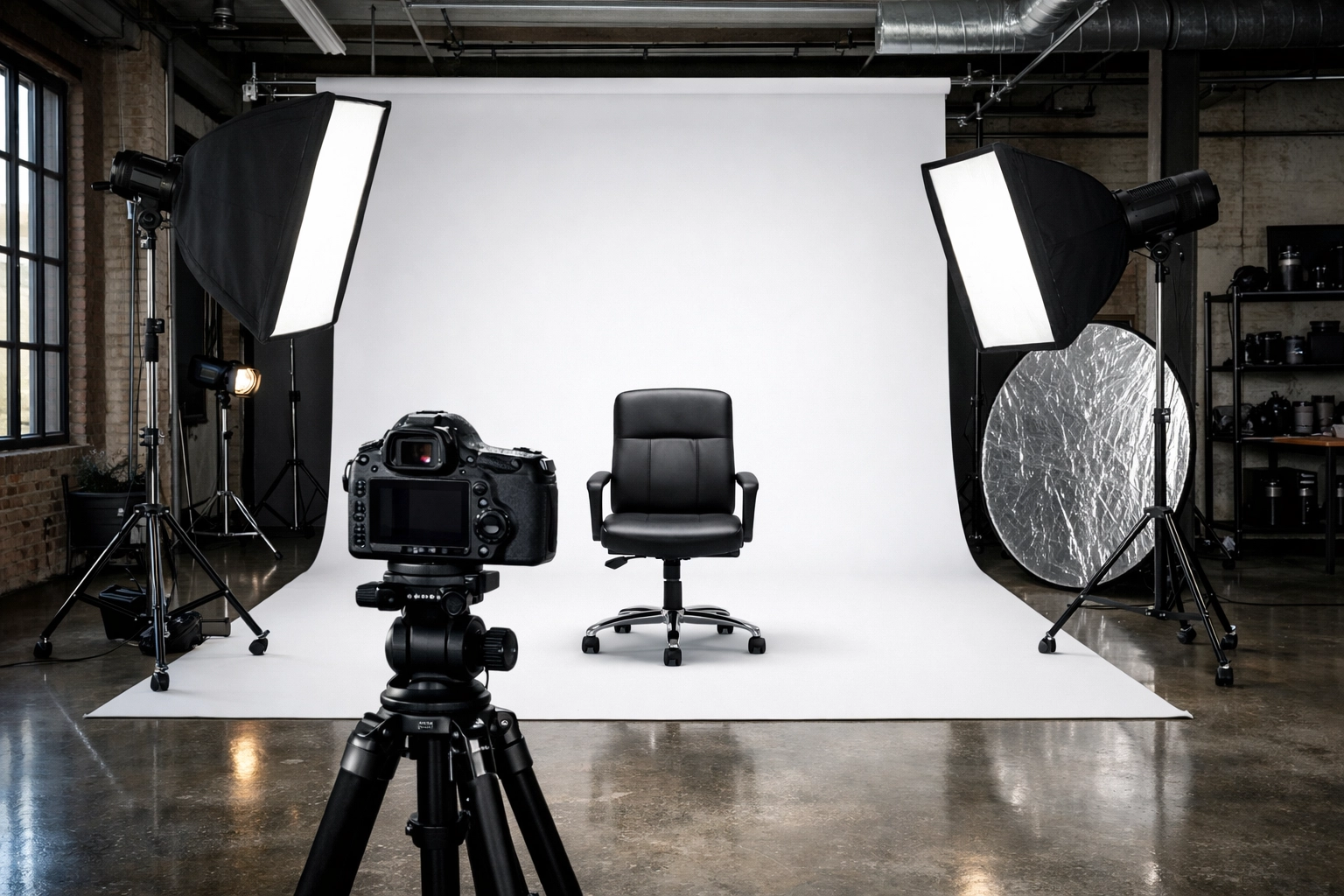
Alt Text: A professional photography setup in a studio with lights and a backdrop prepared for a corporate session.
Why It Matters: The ROI of a Good Headshot
You might be thinking, "Is it really worth the effort?" The answer is a resounding yes. In the digital economy, your image is part of your currency. A high-quality, professional headshot conveys:
- Competence: You care about the details.
- Confidence: You are comfortable in your role.
- Investment: You are willing to invest in your own career, which suggests you’ll invest in your clients too.
If you are a business owner, providing professional headshots for your entire team is one of the fastest ways to level up your brand's perceived value. It creates a unified, polished look that "DIY" photos just can't match. To get started with a professional team session, visit Perfect Corporate Headshots.
Final Thoughts
Avoiding these 7 mistakes will put you ahead of 90% of your competition. Most people will continue to use subpar photos because they think "it’s good enough." But you know better. By focusing on great lighting, classic wardrobe choices, and natural posing, you create a visual identity that commands respect.
Don't let a bad photo hold back a great career. Take the time to do it right, and you’ll see the difference in how people perceive you: and how you perceive yourself.

Alt Text: A modern, high-end corporate headshot showing a confident professional in a clean environment.
If you're ready to dive deeper into the technical side of things, make sure to check out our camera maintenance guide to keep your gear in top shape, or look into the best vlogging cameras if you're planning on adding video to your personal brand strategy. Your journey to a better professional image starts with a single click, literally.