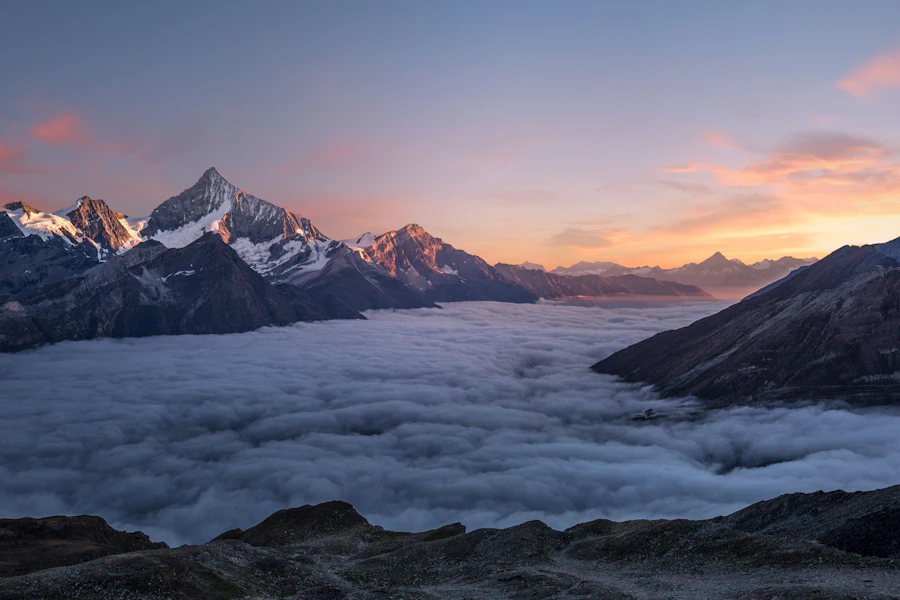

We’ve all been there. You wake up at 4:00 AM, stumble into your boots, brew a thermos of coffee that’s mostly just hot caffeine water, and hike three miles in the dark. You reach the summit just as the sun starts to kiss the horizon. You’re sweating, you’re tired, but you’re pumped because you just know you’re about to capture the next National Geographic cover.
Then you get home, load the files onto your computer, and… meh.
The sky is washed out, the mountains look like tiny bumps in the distance, and the whole image feels flatter than a pancake that’s been run over by a steamroller. It’s frustrating. It makes you want to chuck your expensive camera into the nearest lake and take up knitting instead.
But hold on. Before you buy a pair of knitting needles, let’s talk. Landscape photography is deceptively hard. It’s not just about pointing a lens at something pretty and clicking a button. It’s about light, perspective, patience, and avoiding the sneaky little errors that trip up even the pros.
Today, we’re diving deep into the 7 most common mistakes you’re making with landscape photography and, more importantly, exactly how to fix them so your photos actually match the epicness of the scenes you're standing in.
1. The "Everything is Important" Trap
The biggest mistake beginners make is trying to cram the entire world into a single frame. You see a mountain, a lake, a forest, and a cool-looking rock, and you think, "I want it all!"
When you try to photograph everything, you end up with a photo of nothing. There’s no focal point. The viewer’s eye wanders around the frame like a lost tourist in a subway station, eventually giving up because it doesn't know where to land.
The Fix: Simplify and Find Your Hero
Before you even touch your tripod, ask yourself: What is the hero of this shot? Is it the way the light hits that specific peak? Is it the reflection in the water? Once you identify your subject, build the rest of the composition around it. Use your zoom lens to isolate elements. Sometimes, a telephoto lens (like a 70-200mm) is a better landscape tool than a wide-angle lens because it forces you to pick a subject and compress the scene.
If you're just starting out, check out this photography 101 guide to get your bearings on the basics before you head back out into the wild.
2. The Eye-Level Habit
Most people walk up to a viewpoint, stand at their full height, and take the photo from exactly 5.5 to 6 feet off the ground. It’s comfortable. It’s easy. It’s also incredibly boring.
When you shoot from eye level, you’re showing the world exactly how everyone else sees it. There’s no surprise, no drama, and often, you lose the sense of scale that makes a landscape feel grand.
The Fix: Get Low or Get High
Change your altitude. If you have a tripod with legs that go flat, use them. Getting the camera six inches off the ground can turn a tiny patch of wildflowers into a majestic foreground or make a small stream look like a rushing river. Conversely, if you can safely climb a rock or use a drone, a higher perspective can reveal patterns in the landscape that are invisible from the ground.
Move your body. Move your camera. Don't be afraid to get a little dirt on your knees: that’s usually where the best shots are hiding.

3. Lighting Laziness (The Midday Blues)
I get it. Sunsets are late and sunrises are early. It is much more convenient to go out for a hike at 1:00 PM when the sun is shining and you’ve had a full breakfast. But here’s the cold, hard truth: harsh midday sun is the enemy of great landscape photography.
When the sun is high, the light is "hard." It creates dark, ink-black shadows and blown-out highlights. It washes out the natural colors of the earth and makes everything look flat and uninspiring.
The Fix: Chase the Golden and Blue Hours
The hour after sunrise and the hour before sunset (Golden Hour) provide soft, directional light that creates long shadows and brings out the texture in the landscape. This is when the magic happens.
But don't pack up as soon as the sun dips below the horizon! The "Blue Hour" (the period of twilight) offers a cool, moody light that is incredible for long exposures and water scenes. If you’re struggling to get your colors right in these conditions, using a powerful tool like Luminar can help you bring back the natural vibrance and contrast that your sensor might have missed.
If you really want to master how light interacts with your sensor, I highly recommend diving into the resources over at PhotoGuides.org. They have some killer insights on technical execution in the field.
4. Technical Tunnels: The "Manual Mode Only" Myth
There’s this weird badge of honor in the photography world about shooting in full Manual mode 100% of the time. While knowing how to shoot manual is essential, sticking to it dogmatically can actually cause you to miss shots.
In a fast-changing landscape: say, when clouds are moving quickly and the light is flickering: fiddling with your dials to get the "perfect" exposure can mean you miss the three seconds of epic light.
The Fix: Use Aperture Priority (and Watch Your Histogram)
For 90% of landscape shots, Aperture Priority (A or Av) is your best friend. You set the aperture (usually between f/8 and f/11 for maximum sharpness) and your ISO, and let the camera handle the shutter speed. This lets you focus on composition and timing.
However, don't just trust the camera blindly. Check your histogram! If the graph is smashed against the right side, you’re losing detail in the highlights. If it’s smashed against the left, your shadows are becoming "mud." Adjust your exposure compensation accordingly. For a deeper look at getting this right, check out our post on 7 mistakes you’re making with manual mode.
5. The Foreground Obsession (Forcing It)
You’ve probably heard the rule: "Every landscape needs a foreground, a midground, and a background." It’s good advice, but it leads to a common mistake: forcing a foreground element that doesn't belong there.
We’ve all seen the photo where there’s a random, ugly rock shoved into the bottom of the frame just to satisfy the "foreground rule." If the foreground element doesn't lead the eye toward the subject or add meaningful context, it’s just a distraction.
The Fix: Leading Lines and Purposeful Placement
Only include a foreground if it serves a purpose. Does it provide scale? Does it act as a "leading line" that points the viewer toward the mountains? Use things like riverbanks, fallen trees, or paths to guide the eye through the image.
If the foreground is messy or boring, zoom in. Don't be afraid to let the midground or background be the star of the show. If you want to see how the pros handle complex compositions, take a look at the gallery at Edin Fine Art: it’s a masterclass in purposeful framing.

6. Ignoring the Edges of the Frame
You’re so focused on the majestic peak in the center of your viewfinder that you don't notice the stray tree branch poking in from the left or the trash can sitting in the bottom right corner. These "edge distractions" are like a loud cough during a piano recital: they pull the viewer’s attention away from the beauty of the scene.
The Fix: The "Four Corner Scan"
Before you click the shutter, make it a habit to run your eye around the four corners and the four edges of your frame. Look for anything that doesn't belong. If you see a distraction, you have three choices:
- Recompose (move the camera).
- Zoom in slightly to crop it out in-camera.
- Physically move the distraction (pick up the trash or move the branch if possible).
It takes three seconds, but it saves you thirty minutes of frustrating cloning and healing in post-production. Trust me, your future self will thank you.
7. Over-Editing & The "HDR" Nightmare
Post-processing is a vital part of the modern workflow. Every RAW file needs a bit of love to look its best. However, it is incredibly easy to go too far. We’ve all seen those "crusty" photos: the ones where the shadows are pushed so hard they’re grainy, the sky is a radioactive shade of orange, and every leaf looks like it was sharpened with a hacksaw.
Over-editing kills the soul of a landscape. It makes the viewer feel like they’re looking at a video game rather than a real place.
The Fix: Subtle Adjustments and Selective Editing
Start with a light touch. Instead of cranking the "Saturation" slider, try using "Vibrance," which is more selective. Instead of applying a massive amount of contrast to the whole image, use masks to add contrast only where you want the eye to go.
If you find yourself struggling with the "digital" look of your edits, head over to learn.shutyouraperture.com for some deep dives into natural-looking post-processing techniques. Using software like Luminar can also simplify this process with AI tools that help balance light and color more naturally than old-school manual sliders.
Remember, the goal of editing should be to recreate the feeling of being there, not to create a neon-soaked fantasy world (unless that’s specifically your art style, in which case, go wild, but be intentional about it!).

Final Thoughts: It’s a Journey, Not a Destination
Landscape photography is a game of patience. You can do everything right: have the best gear, the best composition, and the best technique: and still get skunked by the weather. That’s okay. That’s part of the fun.
The real secret to fixing your landscape photography isn't a new camera or a fancy filter; it’s just showing up. The more you get out there, the more you’ll start to see these mistakes before you make them. You'll start to feel the light changing before it happens. You'll start to anticipate the way a certain lens will compress a valley.
If you’re looking for more inspiration or want to see some behind-the-scenes stories of how these shots come together, check out the Edin Chavez Blog. There’s a wealth of knowledge there from years of shooting in some of the most beautiful places on Earth.
Stop worrying about being perfect and start focusing on being present. The great shots will come. In the meantime, keep your sensor clean, your tripod steady, and your coffee hot.
Now, grab your gear and get out there. That mountain isn't going to photograph itself.