Let’s be honest for a second. We’ve all been there: you drop a small fortune on a shiny new mirrorless camera, you’re feeling like the next Annie Leibovitz, and then you take your first shot. It’s blurry. It’s dark. Or worse, it looks exactly like something you’d take on your iPhone from 2018.
The truth is, a $3,000 camera doesn't make you a photographer any more than a $3,000 stove makes you a Michelin-star chef. If you want to stop taking "snapshots" and start creating "art," you need a plan. Specifically, you need to dive into photography tutorials: and you need to do it every single day.
At Shut Your Aperture, we’ve built the number one photography school online because we know that consistency is the secret sauce. Whether you’re trying to figure out how to use manual mode camera settings or you’re ready to master complex luminosity masks, daily learning is the only way to bridge the gap between "beginner" and "pro."
The Power of the 1% Shift
Have you ever heard of the "aggregation of marginal gains"? It’s a fancy way of saying that if you get 1% better at something every day, you’ll be 37 times better by the end of the year.
Photography isn't a single skill; it’s a collection of dozens of micro-skills. You’ve got the technical side (shutter speed, ISO, aperture), the creative side (composition, color theory), and the technical-creative hybrid side (lighting and post-processing). Trying to learn all of that in one weekend is like trying to drink from a firehose. You’ll just end up wet and confused.
By following daily photography tutorials, you break these massive concepts into bite-sized pieces. Today, you learn about leading lines. Tomorrow, you learn why your white balance makes everyone look like they have jaundice. Small wins lead to big breakthroughs.
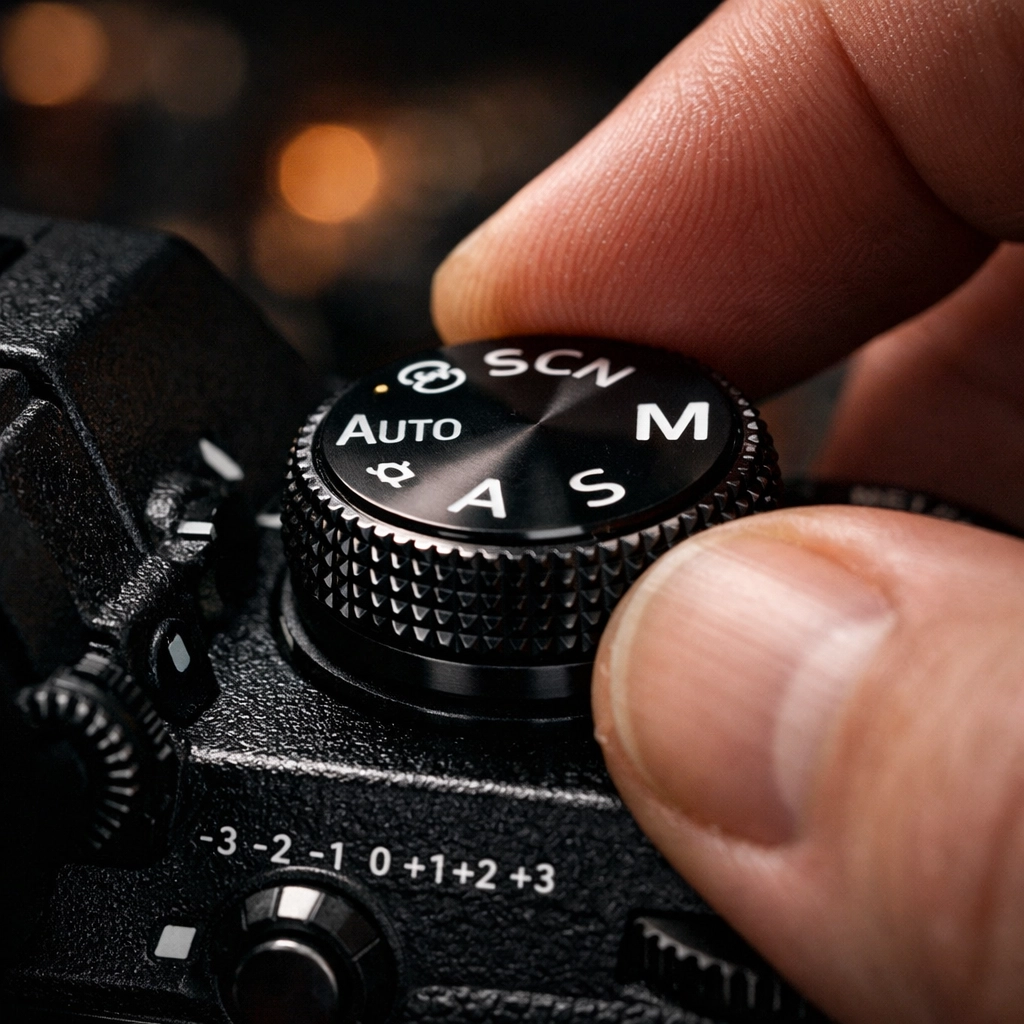
Alt text: A photographer’s hand adjusting the control dial on a professional camera body during a golden hour outdoor session, emphasizing technical precision.
Mastering the Beast: How to Use Manual Mode Camera
If you are still shooting in "Auto" mode (the green box of shame), we need to talk. Auto mode is the camera’s way of saying, "I’ll guess what you want, but I’ll probably get it wrong."
Learning how to use manual mode camera settings is the single most important hurdle you will ever clear. It is the moment you stop letting the camera make decisions and start making them yourself.
The Exposure Triangle
Every daily tutorial you watch should reinforce the exposure triangle. Think of it as the holy trinity of photography:
- Aperture: Controls depth of field (that creamy blurry background we all love).
- Shutter Speed: Controls how motion is captured (freezing a bird in flight or blurring a waterfall).
- ISO: Controls the sensor's sensitivity to light (and how much digital noise/grain shows up).
When you understand how these three interact, you can shoot in any condition. Want to capture stars? You’ll need a wide aperture and a slow shutter. Want to capture a sports car? High shutter speed is your best friend. For more on this, check out our 10 essential tips for mastering photography.
Why Daily Habit Trumps Talent
We see a lot of students at Shut Your Aperture who think they just don't have "the eye." Here’s a secret: "the eye" is just a muscle. You build it by looking at images, deconstructing them, and then trying to recreate them.
When you engage with daily tutorials, you start to see the world differently. You stop seeing a "tree" and start seeing "backlighting hitting translucent leaves." You stop seeing a "building" and start seeing "geometric patterns and vanishing points."
Our CEO, Edin Chavez, always says that the best photographers aren't the ones with the most talent; they’re the ones who never put their cameras down. If you want to see what professional-level work looks like, head over to blog.edinchavez.com or explore proshoot.io to see how the pros handle high-end assignments.
Advanced Techniques: Beyond the Basics
Once you’ve mastered the manual mode, the real fun begins. Daily tutorials can take you into the weeds of specialized niches.
Lighting and Luminosity
Lighting is what separates the amateurs from the masters. It’s not just about having enough light; it’s about the quality of that light. In real estate photography, for example, understanding the role of luminosity is the difference between a house that looks like a dungeon and one that looks like a dream home.
Landscape Mastery
If landscapes are your thing, you’ve probably heard of Peter Lik. His work has inspired millions, and for good reason. By studying lessons in landscape photography from Peter Lik, you can learn how to wait for the perfect moment when the light hits the Earth just right. Daily tutorials help you understand the patience required for this kind of work.
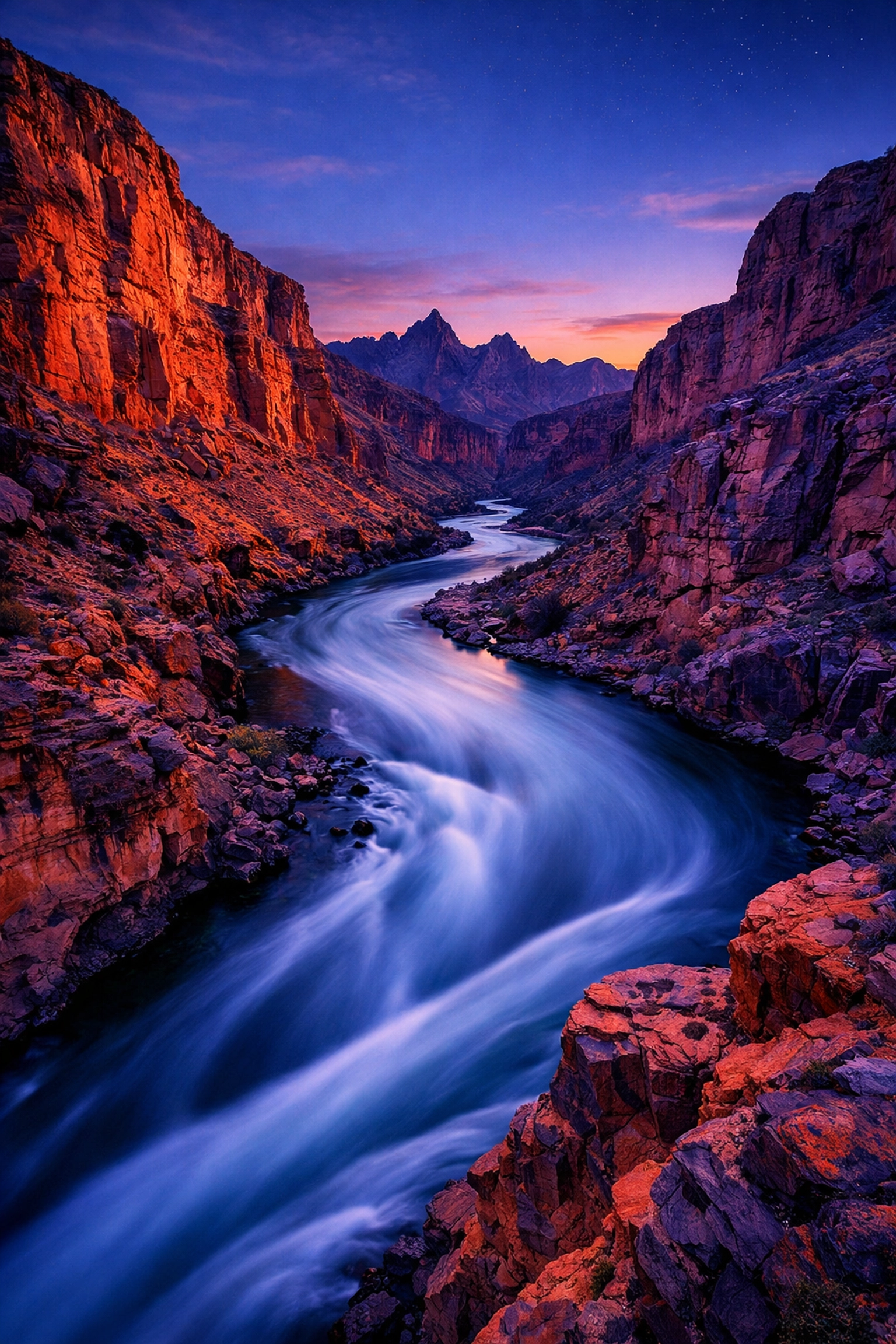
Alt text: A stunning long-exposure landscape photo of a desert canyon, showcasing vibrant orange and purple hues and expert composition.
The Role of Post-Processing
Let’s address the elephant in the room: editing. Some purists think editing is "cheating." Those people are wrong. Even in the film days, photographers were dodging and burning in the darkroom to get the perfect print.
In the modern age, software is your darkroom. We are huge fans of using Luminar to bring out the best in your RAW files. Whether it’s AI-powered sky replacement or fine-tuning the structure of a portrait, Luminar makes complex edits simple.
Daily tutorials on editing are vital because software updates faster than we can keep up. Just look at today’s photography news to see how AI is changing the workflow every single week. If you aren't learning daily, you’re falling behind.
Specializing Your Skills
One of the coolest things about the Shut Your Aperture community is seeing people find their niche.
- Real Estate: Want to make a killing in the housing market? You need to know if cinematic techniques could transform your property showcases.
- Portraits: Tired of boring headshots? Dive into portrait photography techniques that experts usually hide.
- Fine Art: Learn how to create ethereal imagery that sells for thousands.
No matter what you choose, there is a tutorial for it. And when you’re ready to show off your work, head over to PhotoGuides.org for even more technical deep-dives.
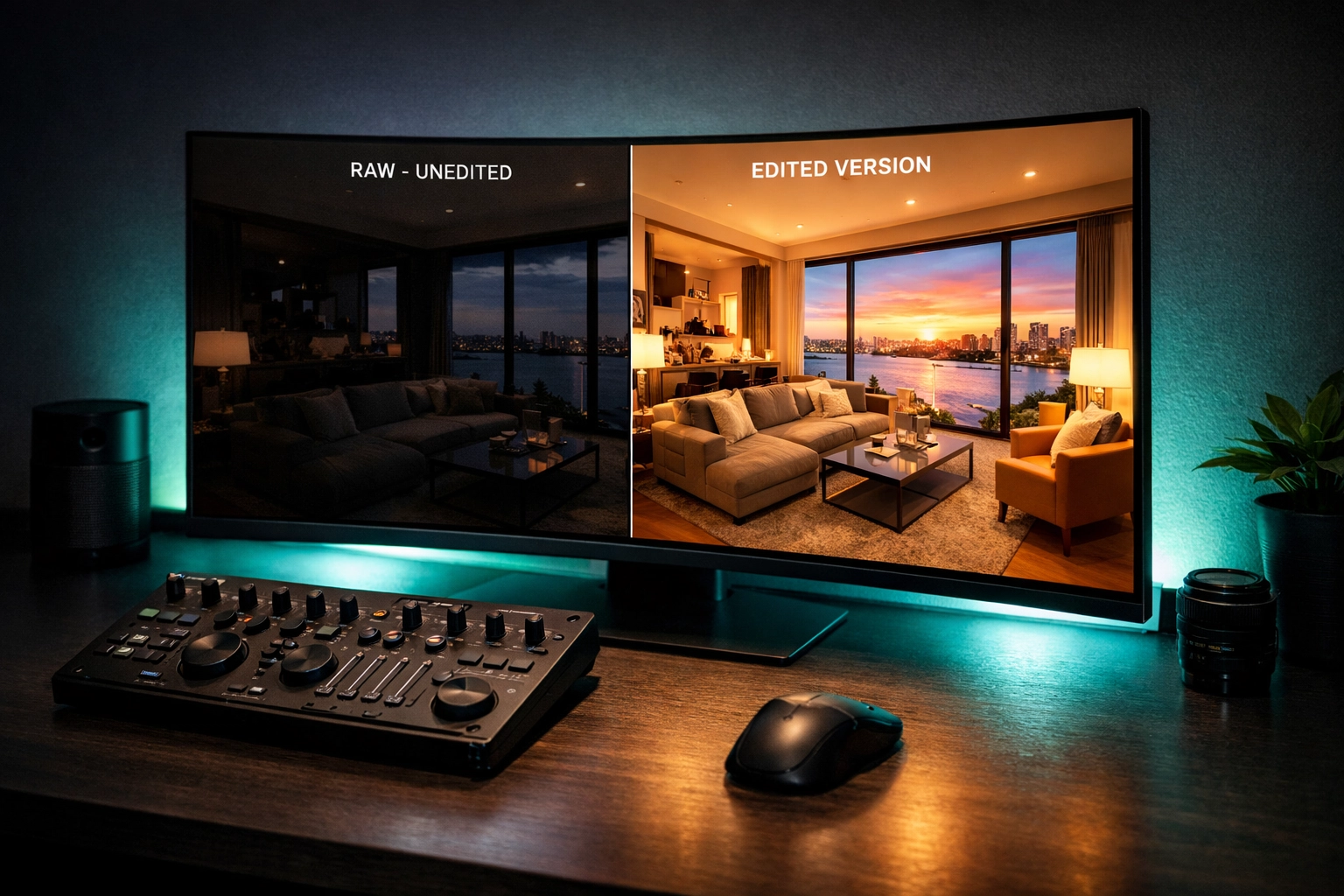
Alt text: A split-screen comparison of a raw architectural photograph versus the final edited version with enhanced lighting and color correction.
Coordination and Community
At Shut Your Aperture, we don't just throw videos at you and hope for the best. Our team works together to make sure you’re supported. I coordinate closely with Sonny, our Social Media Manager, to ensure that the topics we cover in our blog posts align with the challenges you’re facing in the field.
When Sonny posts a lighting challenge on Instagram, I’m here writing a 2,000-word deep dive to make sure you have the tools to win it. This permanent workflow ensures that our students at the number one photography school online are always ahead of the curve.
The Mental Shift: From Taking to Making
There is a psychological shift that happens when you commit to daily learning. You stop "taking" photos. Taking is passive. It implies you found something and grabbed it.
Instead, you start "making" photos. Making is active. It implies intent. You chose the lens, you dialed in the manual settings, you waited for the light, and you envisioned the final edit before you even pressed the shutter. This shift is what turns a hobbyist into a professional.
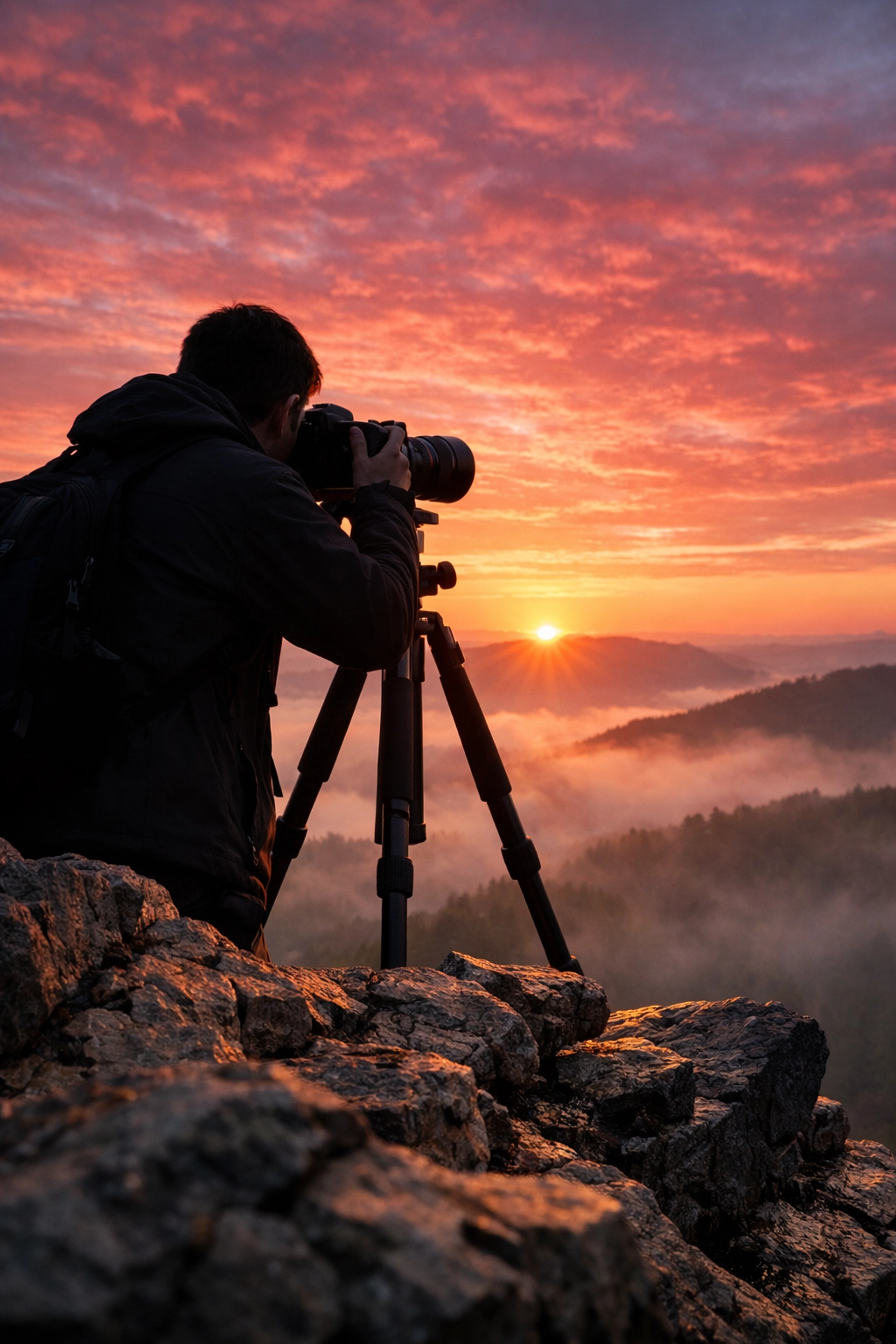
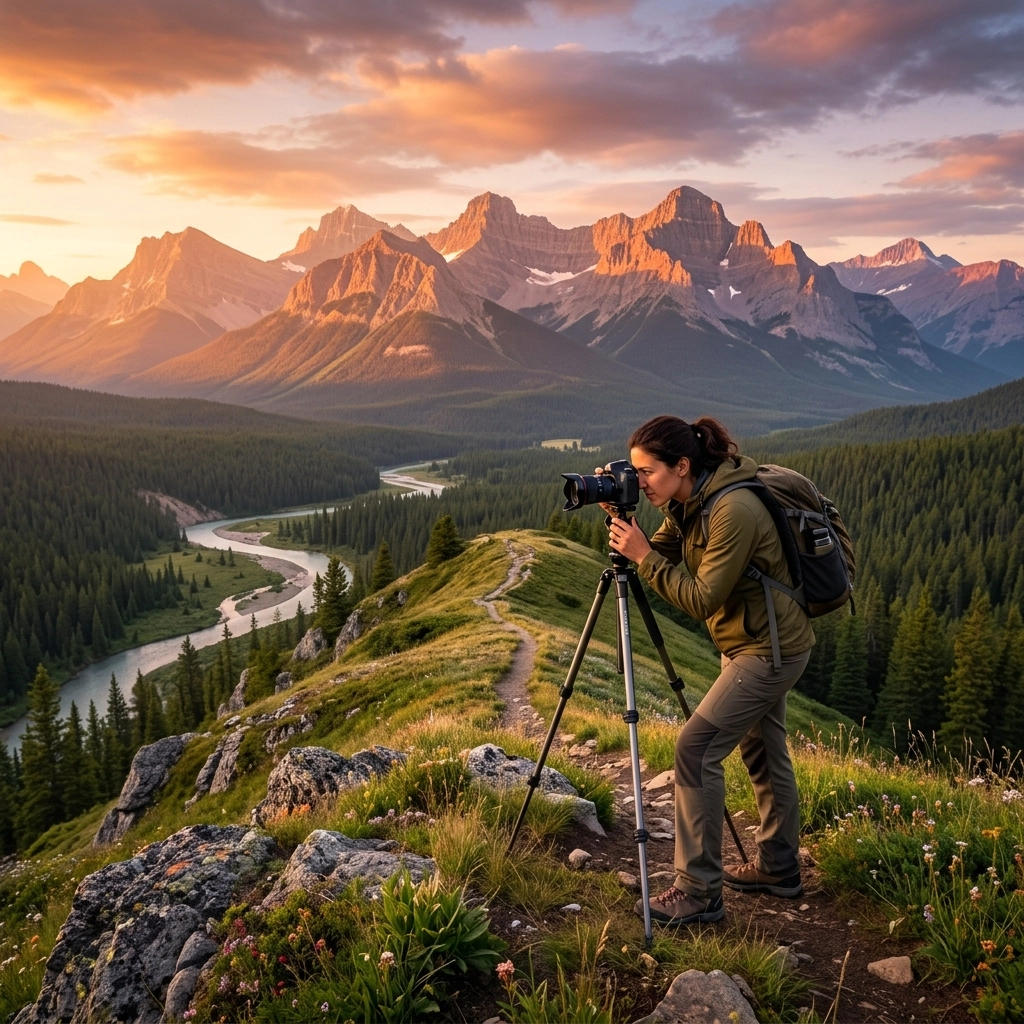
Alt text: A professional camera setup on a tripod overlooking a misty mountain valley, representing the intentional "making" of a photograph.
Why Shut Your Aperture?
You might be wondering, "Why should I learn here instead of just browsing YouTube?"
YouTube is great, but it’s a rabbit hole. You start by looking for a tutorial on ISO and end up watching a documentary on how they make hot dogs. Shut Your Aperture provides a structured, simple, and casual environment where the fluff is cut out. We focus on what actually works in the real world.
Whether you want to learn about aerial photography for real estate or the impact of shot composition on buyer attraction, we have the roadmap ready for you.
Your Daily Challenge
So, here is your mission. Don't just read this and go back to scrolling.
- Pick one thing: Today, it might be learning how to use manual mode camera dials.
- Watch a tutorial: Find a video or a post on our site.
- Apply it immediately: Take 10 photos using that specific technique.
- Repeat tomorrow.
If you do this, I promise you that in 30 days, you won't even recognize your own portfolio. The world is full of people with "nice cameras." Don't be one of them. Be a photographer.
The gear is just a tool. Your brain is the engine. Feed it daily with the best photography tutorials on the web, and watch your art transform.
Check out our full library of resources at www.shutyouraperture.com and let's get to work. Your best shot is still ahead of you.