Updated October 2026. A portrait lens should solve a problem you actually have: an awkward shooting distance, a distracting background, unreliable focus, or a kit zoom that becomes too slow indoors. Buying the fastest lens in the catalog does not automatically solve any of those. A comfortable subject, a useful background, and clear light still matter more than the number printed on the barrel.
My practical shortlist starts with your camera mount. For full-frame Canon RF, consider the RF 85mm f/2 Macro IS STM. For Nikon Z, consider the NIKKOR Z 85mm f/1.8 S. For Sony full frame, consider the FE 85mm f/1.8. For Sony APS-C, the Sigma 56mm f/1.4 DC DN Contemporary is the compact portrait option. These are editorial choices based on fit, specifications, and published reviews, not a claim that I personally tested all four side by side.
US B&H prices checked October 5, 2026: Canon $589, Nikon $796.95, Sony $648, and the Sony E version of the Sigma $454. All four were listed in stock. Prices, promotions, and availability can change; taxes and other accessories are extra. The Sigma price here applies only to the exact Sony E listing, not every mount version.
Choose the mount before choosing the lens
The three 85mm lenses cover full frame in their own mirrorless systems. They are not interchangeable across Canon RF, Nikon Z, and Sony E bodies. The Sigma 56mm is an APS-C lens, and the version linked here is Sony E. A familiar focal length or similar lens name is not enough to establish compatibility. Check the camera mount and the exact product variant before ordering.
On Sony APS-C, 56mm gives the angle of view of roughly an 84mm lens on full frame. That is why it fills a similar portrait role without needing an 85mm lens. An 85mm on a 1.5x crop body frames more tightly, roughly like 127.5mm on full frame; on Canon’s 1.6x APS-C bodies it frames roughly like 136mm. The physical focal length does not change. Your framing and required working distance do.
If you own a DSLR, this shortlist is not a shopping list for that camera. RF, Z, and E are mirrorless mounts. Investigate lenses made for your actual DSLR mount or a fully verified adaptation route. Avoid buying a lens first and assuming there must be an adapter that preserves every feature.
Canon RF 85mm f/2: portraits plus useful close focus
The RF 85mm f/2 Macro IS STM is the flexible Canon RF pick at the checked $589 price. Its unusual advantage is close focus: B&H lists a 0.35m minimum focusing distance and 0.5x maximum magnification. That is half-life-size reproduction, not a true 1:1 macro lens. It gives you room to photograph hands, jewelry, fabric, and small details without immediately changing lenses.
Optical image stabilization is another useful difference. Canon’s lens listing describes up to five stops of shake compensation under its stated conditions, plus Hybrid IS for close work. That does not mean you can use a slow shutter with a moving person and expect sharp eyes. Stabilization helps with camera movement; it does not stop the subject from moving.
At about 500g, this is not a tiny lens, but it is a practical alternative to chasing a much larger maximum aperture. Its f/2 opening lets you separate a subject from the background while leaving some depth to work with. For a single-person session, that balance can be more useful than shooting every frame at the thinnest possible focus plane.
Choose it if you use Canon RF and want one lens for portraits and detail photographs. Skip it if 85mm already feels too tight in your normal room, or if the primary problem is photographing large groups. A stabilized telephoto cannot make a small studio bigger. Before buying, try framing at 85mm with an existing zoom and see how far back you need to stand.
Nikon Z 85mm f/1.8 S: a focused full-frame portrait choice
The NIKKOR Z 85mm f/1.8 S is the Nikon Z pick at $796.95 in the checked listing. It weighs about 470g, focuses to 0.8m according to B&H, and has no optical stabilization. If your Nikon body has in-body stabilization, that may help with camera shake, but do not assume every Z body does. Check your exact camera rather than treating the lens and body as one universal package.
The independent Cameralabs review praised contrast, resolution, bokeh, and focus reliability. It also noted softer extreme corners at infinity and modest close-up magnification. Those are the reviewer’s findings on its test setup, not a fresh test performed for this guide. For a portrait buyer, the practical lesson is to match strengths to the job rather than expect a portrait prime to excel at every kind of picture.
The lens makes sense when you want to commit to a short-telephoto portrait workflow. It can keep a clean frame around a face or upper body without pushing the camera close to the subject. You still need distance behind the person if you want a gentle background. Opening to f/1.8 cannot erase a bright sign directly beside their head.
Choose the Nikon when you already work in Z and want a dedicated portrait prime with a useful published optical record. Keep a different lens for close details and tight interiors. If you already own a capable adapted portrait lens, compare the actual handling and focus improvement you need before replacing it simply because this lens is native.
 Save
SaveSony FE 85mm f/1.8: a straightforward full-frame option
The Sony FE 85mm f/1.8 is the Sony full-frame choice at the checked $648 price. Its approximately 371g weight makes it easier to carry than many very fast portrait lenses. B&H lists an E-mount full-frame design, a double linear autofocus motor, and an f/1.8 maximum aperture. It does not have optical stabilization; any sensor-shift stabilization comes from a compatible body.
The Cameralabs review found useful performance and noted that stopping down reduced longitudinal color aberrations and improved sharpness. Its older review also described visible focus breathing. Treat that as a reason for video buyers to investigate their own camera and workflow, not as a universal claim about every current Sony body or firmware combination.
For still portraits, the appeal is a familiar focal length in a relatively light package. You can use f/1.8 when you need isolation, then stop down when expression, pose, or subject movement calls for more tolerance. The useful aperture is the one that keeps the intended parts of the picture clear, not necessarily the widest aperture the lens offers.
Choose it if you use Sony full frame and want a manageable portrait prime without making size the center of the session. For an APS-C Sony body, compare the Sigma 56mm below before defaulting to 85mm. A longer crop-camera field of view can be useful outdoors, but it may leave you backing into a wall indoors.
Sigma 56mm f/1.4: the Sony APS-C pick
The Sigma 56mm f/1.4 DC DN Contemporary in Sony E mount is listed at $454 in the checked B&H page. It is designed for APS-C, not full-frame coverage. The listing’s roughly 84mm equivalent field of view explains its place here: it provides a classic short-telephoto framing option on a smaller-sensor camera without needing an 85mm full-frame lens.
The f/1.4 opening is useful for available light and background control, but it does not turn an APS-C camera into a full-frame camera. At comparable framing and viewing size, depth of field also depends on sensor format and shooting distance. Do not read the aperture number as a promise that two different systems produce identical blur.
The Sigma has autofocus but no optical stabilization. Check whether your body has stabilization if that feature matters. More important for portraits, use enough shutter speed for the person in front of you. A quiet seated adult and a child running toward the camera are different focus and motion problems.
Choose the Sony E version when you own Sony APS-C and want a compact portrait prime. The product family is sold in multiple mounts, so confirm the mount selector and model on the listing. A Nikon Z, Fujifilm X, or Canon RF version is not the same item as the Sony E lens priced here. Do not assume the price or included accessories transfer between variants.
 Save
SaveWhy 85mm is useful, and when it is the wrong answer
On full frame, 85mm often lets you frame a face or upper body from a comfortable distance. The distance is the important part of perspective: moving the camera changes the relative size of near and far features. Focal length helps you select the framing from that position. A lens does not magically flatten a face independently of where the camera sits.
For a tight headshot, begin far enough away that the face looks natural, then frame the shot. For a full-length portrait, check whether you have enough room to move backward. For an environmental portrait, a wider lens may preserve the setting more comfortably. Keep faces away from the edges when using a wide angle and avoid moving unnecessarily close.
A 35mm or 50mm can be the better tool in a home or small office. A 70-200mm zoom can help when you need to change framing quickly from one position outdoors. Those are working-distance choices, not reasons to buy every focal length. Borrow or rent when possible, and map the problem before spending.
Background blur starts with the scene
Put distance between the subject and the background. Watch for bright gaps, poles, signs, and high-contrast edges. A smooth background is often created by where you place the person and where you stand, not by paying for another fraction of a stop. Move a little left or right before reaching for a different lens.
Use a wider aperture deliberately. With two people, keep their eyes near the same plane if possible and stop down when needed. For a single person turned away from the camera, decide whether both eyes must be sharp. A photograph with one sharp eyelash and a soft expression is not automatically successful because the blur looks expensive.
Our background blur and depth-of-field guide is a useful next step. Pair the lens purchase with practice rather than treating the purchase as the whole solution. Make the same portrait at several apertures and compare the finished image at a realistic viewing size.
 Save
SaveAutofocus, shutter speed, and a sensible practice plan
Start with the camera’s subject-detection or eye-focus options if they fit the session, but verify what the camera actually selects. A focus box is feedback, not a guarantee. Check representative images at useful magnification, especially when the subject moves, turns, or wears glasses. Learn how to override the selection quickly.
Separate missed focus from motion blur. If a subject’s expression changes while the shutter is open, stabilization cannot repair it. If the eyes are consistently sharp but hands are blurred, you have a movement decision to make. If the background is sharper than the face, investigate focus selection before blaming the lens.
Practice with the light you use most. Photograph a cooperative subject near a window or outdoors in open shade, changing only one variable at a time. Compare f/1.8 or f/2 with f/2.8 and f/4. Build an aperture range you trust instead of relying on one favorite setting for every pose.
Leave money for light, comfort, and the session
When a kit zoom already frames the portrait well, better light may be the more important upgrade. A reflector, a simple light setup, or a workable location can change the picture more than a different lens. Price the whole session kit rather than spending every dollar on a prime and improvising the rest.
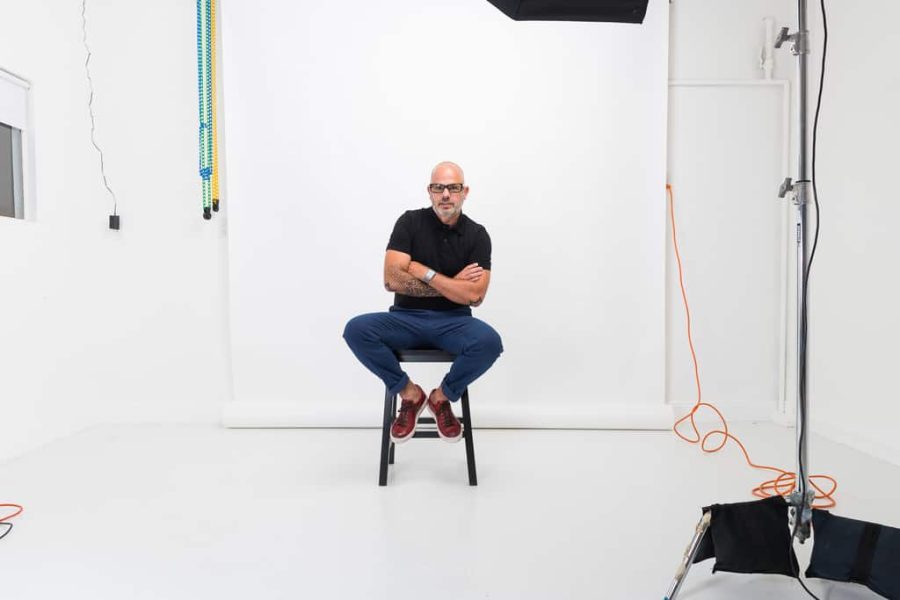
For studio work, make room for a stable support system, a clean backdrop, and safe cable placement. For location work, consider the bag you will carry and whether you can keep talking to the person while handling the equipment. A lens you enjoy using can help you stay engaged; a complicated setup can pull attention away from the subject.
For pose and session ideas, use our portrait photography techniques guide. The Shut Your Aperture Academy is the next step for a practice plan. Start with a lens that fits your camera and room, then put the remaining effort into the person, the light, and the frame.
 Save
SaveFrequently asked questions
What is the best lens for portrait photography?
Choose by mount and space: Canon RF 85mm f/2 for close-focus versatility, Nikon Z 85mm f/1.8 S for a dedicated Z portrait prime, Sony FE 85mm f/1.8 for Sony full frame, or Sigma 56mm f/1.4 in Sony E for APS-C.
Is 85mm better than 50mm for portraits?
Not always. An 85mm lens is useful for tighter framing from farther away; 50mm can be easier in a small room or for a portrait that includes the setting.
Will an f/1.4 lens fix a distracting background?
No. Background distance, brightness, color, and camera position still matter. Move the subject and camera before relying on a wider aperture.
Can the Sigma 56mm f/1.4 replace an 85mm on full frame?
The version discussed here is an APS-C Sony E lens. On Sony APS-C it has roughly an 84mm equivalent field of view; it is not a full-frame 85mm lens.
Do portrait lenses need image stabilization?
Stabilization can reduce camera shake, but it does not freeze subject movement. The Canon RF 85mm f/2 has optical IS; the other three lenses listed here do not. Check body stabilization separately.
Sources and price notes
Specifications and October 5, 2026 US price snapshots come from the four exact B&H listings linked above. Independent optical findings are attributed to the linked Cameralabs Nikon and Sony reviews, not personal testing. These picks do not rank every portrait lens on the market. Prices and availability can change; mount versions can differ.
Compare the exact lens and mount
Affiliate disclosure: eligible purchases may earn a commission at no extra cost to you. Verify mount, sensor coverage, condition, warranty, and final price before buying.