Street photography is the most democratic genre in photography — it requires only a camera and public space. It is also one of the hardest disciplines to master, because unlike studio or landscape work, you cannot control your subjects, your light, or your background. Everything happens once and then it is gone. The photographers who succeed at street work do so by internalizing a set of techniques until they become unconscious habits. Here is where to start.
Before going further, make sure your aperture fundamentals are locked in: our aperture photography guide walks through it shot by shot.
The Core Mindset Before Technique
Street photography is observation practice as much as camera practice. The best street photographers — Cartier-Bresson, Vivian Maier, Garry Winogrand — were fundamentally curious about people and the world. Before working on camera technique, practice observing: sit in a café and watch people for an hour without a camera. Notice gestures, expressions, the way light falls across a street, the patterns in how people move through a market. This observational awareness is what makes a great street photographer; the camera technique is secondary.
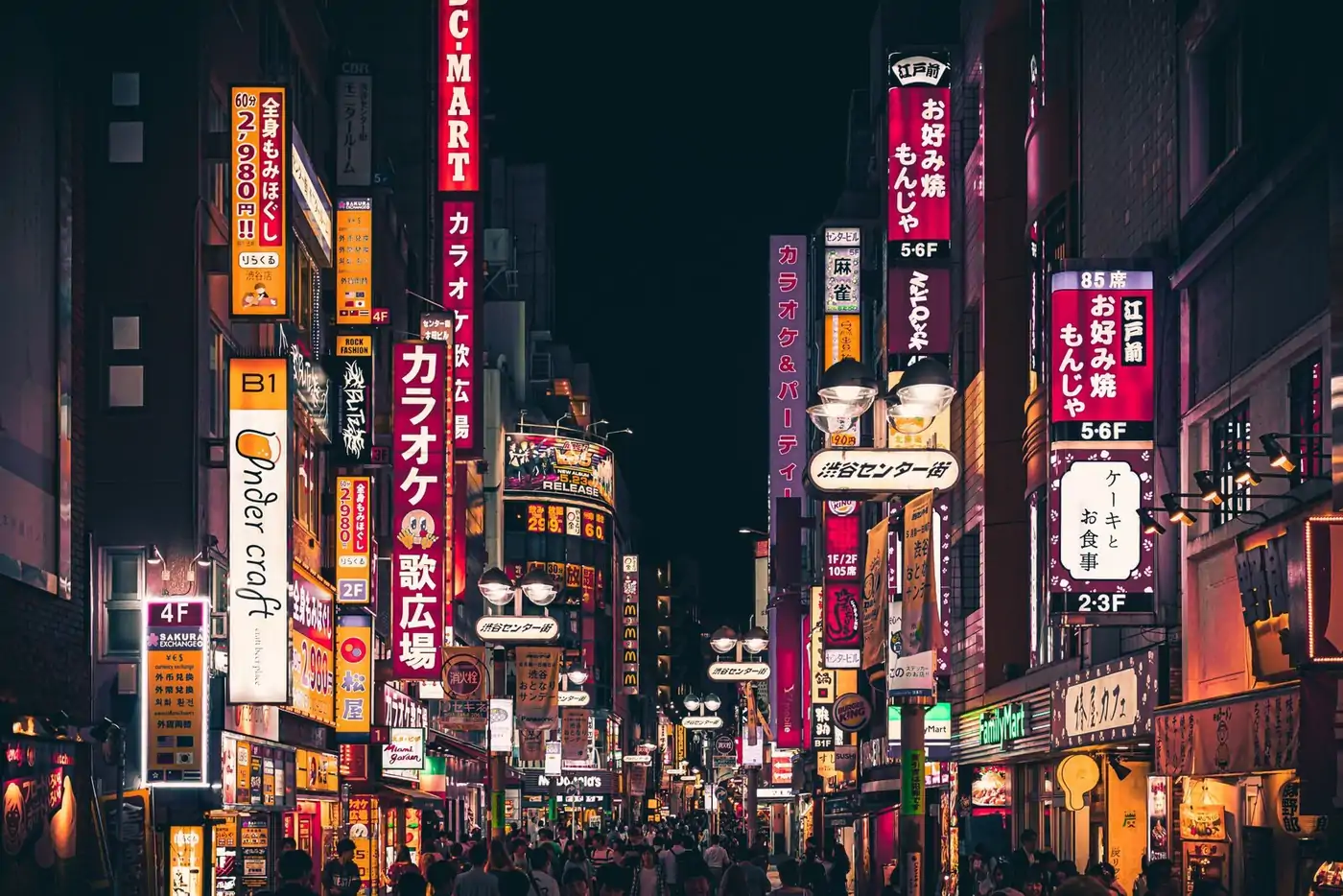 Save
SaveCamera Settings for Street Photography
For the complete camera settings breakdown, see our street photography settings guide. The quick version:
- Aperture: f/8 (zone focusing), f/5.6 (lower light)
- Shutter speed: 1/250s minimum, 1/500s for fast situations
- ISO: Auto, maximum 6400 on full-frame
- Focus: Zone focus (manual, pre-set at 3 meters)
Zone Focusing: The Technical Foundation
Zone focusing is the practice of pre-setting your lens focus to a specific distance so that subjects within a calculated depth of field range will be sharp without autofocusing. This technique was used by every major street photographer before autofocus existed and remains faster than any AF system for surprise encounters.
How to Set Zone Focus
- Set your lens to manual focus
- Focus at 3 meters (10 feet) — the typical conversation distance on a busy street
- At f/8 on a 35mm lens, your depth of field extends from approximately 1.8 to 8 meters — anything in this range is acceptably sharp
- Mark this position (most modern lenses lack distance scales — use a small piece of tape or a marker on the focus ring)
- Leave the focus ring untouched for the entire shoot
With zone focus: you approach, compose, shoot. No waiting for AF to acquire, no AF hunt in difficult lighting, no missed moment while the camera decides what to focus on. Approach to your calculated zone, press the button.
Adjusting Zone Focus for Distance
If you find yourself frequently shooting at distances other than 3 meters, pre-set your zone accordingly:
- Very close work (markets, tight crowds): focus at 1.5–2 meters, use f/8–f/11 to maintain depth of field
- Moderate distance (general street): 3–4 meters at f/8
- Environmental/wider shots: 5–6 meters at f/8, or switch to hyperfocal focusing for your focal length
Hip Shooting Technique
Hip shooting means holding the camera at hip or chest level and shooting without looking through the viewfinder. This reduces the visual signal that a camera is pointed at someone — people are much less aware of a camera held at chest level than one raised to an eye.
Practical Hip Shooting
- With zone focus pre-set, physical accuracy of aim matters more than optical confirmation. Practice the aim — hold the camera at chest level and estimate the framing for each shot, then shoot, review, adjust your aim estimate, and shoot again.
- Enable your camera’s grid display on the tilt LCD (if equipped) — you can glance down at the screen at a lower angle than raising the camera to your eye
- Use a wide enough focal length that small framing errors are correctable in crop — 28mm or 35mm is forgiving; 50mm is less so
- Shoot in burst mode (3–5fps) — the motion of raising and framing produces the best image at a specific frame, which you select in post
Best Focal Lengths for Street Photography
28mm: The Immersive Focal Length
28mm requires you to be very close to your subject — within 1.5 to 2.5 meters for a frame-filling shot. This proximity creates images that feel physically immersive. The viewer feels present in the scene rather than observing from outside. Garry Winogrand used 28mm extensively.
The tradeoff: 28mm perspective slightly exaggerates the size of near elements relative to far elements — a person’s foreground hand appears larger than their face in the background. This distortion is a creative tool in some images and a problem in others. You need to be comfortable with physical proximity to strangers. Many photographers find 28mm initially challenging precisely because it forces close contact.
35mm: The Classic and Most Versatile
35mm is considered the most natural focal length for street photography — it matches the approximate field of view of human peripheral vision while keeping focus on the central scene. The working distance at 35mm for a frame-filling portrait is 2–3 meters, which feels natural for both photographer and subject.
Henri Cartier-Bresson primarily used 50mm, Vivian Maier used 6×6 medium format equivalent to roughly 50mm; but the 35mm has become the dominant street focal length in the contemporary era because it balances the intimacy of 28mm with the natural perspective of 50mm.
50mm: The Natural Lens
50mm produces images that look closest to what the human eye sees — no barrel distortion, no compression, just the scene as it appears. For street photography, 50mm feels slightly “long” compared to 35mm — you need to be at 2.5–4 meters for typical street framing. This distance can be an advantage: subjects are less aware of the camera, and the slight compression makes the scene look more coherent.
Ethics and Approach
Street photography ethics are not abstract — they are practical decisions that affect your images and your experience shooting.
Legal Framework
In the United States, photographing people in public spaces — streets, parks, markets, festivals — is protected under the First Amendment for personal, editorial, and journalistic use. No consent is required. Posting images publicly (social media, portfolio) is generally permissible for non-commercial purposes. Commercial use (advertising, stock photography for commercial licensing) requires model releases.
In EU countries, GDPR and local portrait rights laws are more restrictive. Germany’s right to one’s image (Recht am eigenen Bild) is particularly strong — photographing individuals (not large crowd scenes) for publication may require consent. Research the laws in your specific country before publishing work commercially.
Practical Ethics
- When someone asks you not to photograph them, honor it. The image is not worth the conflict or the violation of their stated wish.
- When someone asks you to delete an image you have taken, you are not legally required to (in most US public-space contexts) but consider the ethics of the situation.
- Street photography is observation, not extraction. The best street photography comes from genuine curiosity about people, not from treating humans as props for your portfolio.
- If you photograph someone in a way that reveals vulnerability or difficulty, consider carefully whether publication is in their interest as well as your own creative interest.
Developing Your Eye
Technical proficiency in street photography comes quickly — a day of practice with zone focus and the right settings and you will be getting sharp images. The harder and longer development is your eye: the ability to recognize a photograph before pressing the shutter, to read a scene for its potential, to position yourself where something interesting will happen.
Three practices that accelerate eye development:
- Study the work of the masters daily. Look at Cartier-Bresson’s decisive moment images and ask: where was the photographer standing? What attracted them to this scene? What would have been in the frame one second earlier or later? This analytical viewing teaches you to read scenes the way photographers do.
- Review your misses. The images you almost got — where the timing was wrong, the framing was slightly off, the light changed — teach more than your successes. Understand specifically what you would need to do differently to make the image work.
- Shoot the same location repeatedly. Return to the same market, street corner, or park on multiple occasions. Familiarity with a place allows you to predict where interesting things will happen and position yourself in advance, rather than reacting after the moment is already passing.
Frequently Asked Questions
What is the best camera for street photography for beginners?
A compact mirrorless with a small prime lens: Sony A6700 with 24mm f/2.8, Fujifilm X100VI (fixed 35mm equivalent), or Ricoh GR IIIx (40mm equivalent). Smaller cameras are less obtrusive. A smartphone with a manual camera app is a legitimate starting point.
Is it rude to photograph strangers on the street?
Street photography has a long tradition in visual journalism and fine art. The ethics depend on context and intent. Photographing someone at a vulnerable moment without empathy is questionable. Photographing the human condition with genuine curiosity and respect is one of photography’s most important traditions.
How close should I get to subjects in street photography?
At 28mm: 1.5–2.5 meters for a frame-filling shot. At 35mm: 2–3 meters. At 50mm: 2.5–4 meters. Start at 50mm distance and work closer as confidence grows.
What is the decisive moment in street photography?
Henri Cartier-Bresson’s concept: the fraction of a second when visual elements — human gesture, light, geometry — align into a perfect composition. It cannot be staged; it can only be recognized and captured. Burst shooting at 10–20fps increases your probability, but the recognition still comes from the photographer’s eye.
How do I get better at street photography?
Shoot consistently, study the masters analytically, review your misses, and return to the same locations repeatedly. Technical improvement comes quickly; eye development takes years of deliberate practice.