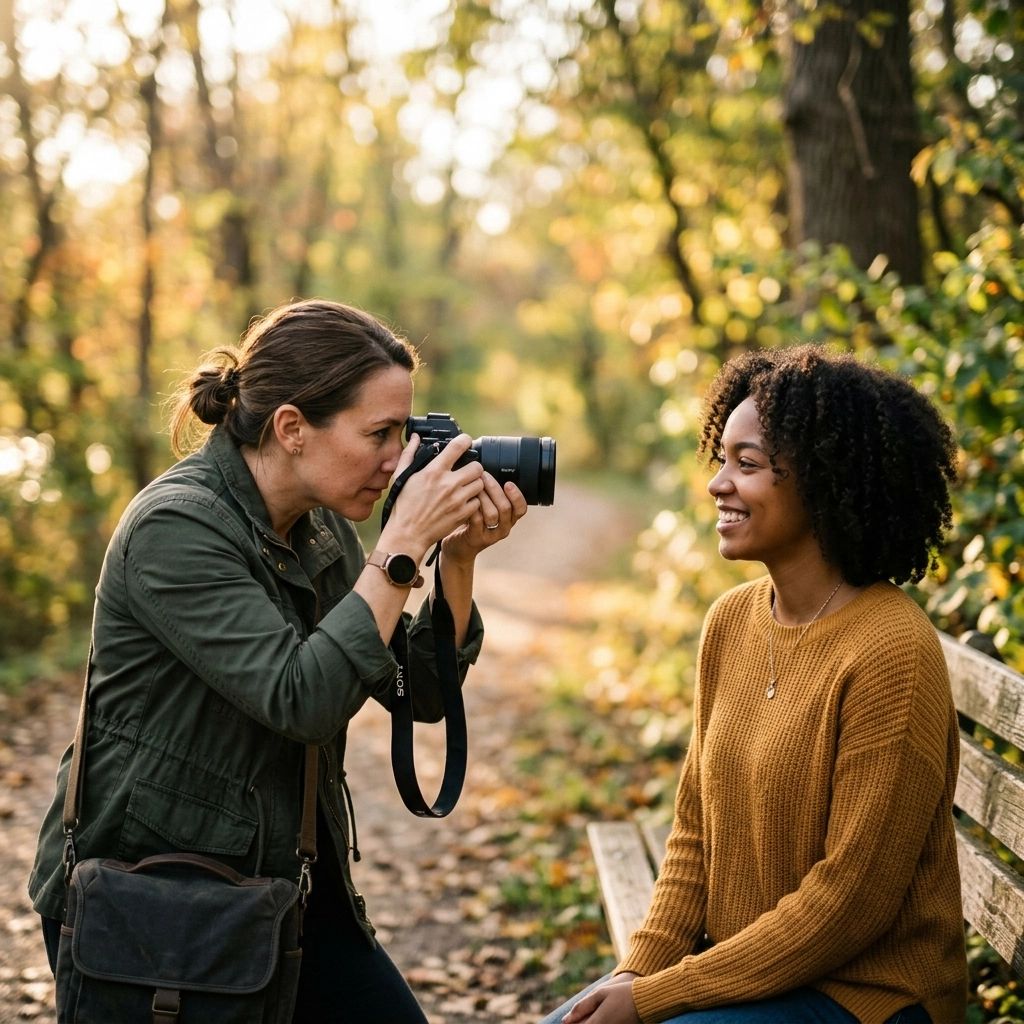
Let’s be honest: taking a photo of a person is easy. Taking a portrait that actually says something? That’s where the real work begins. We’ve all been there: you have a beautiful model, a high-end camera, and a killer location, but the final result looks like a bad DMV photo.
Portrait photography is a delicate dance between technical mastery and human connection. It’s about more than just "shutting your aperture" (though we’re big fans of that here). It’s about light, mood, and that split second when the subject stops "posing" and starts being themselves.
Whether you are just starting or looking to level up your portfolio, these 20 pro portrait photography techniques will help you move from snapshots to works of art.
1. Focus on the Eyes: Always
If the eyes aren't sharp, the photo belongs in the digital trash bin. The eyes are the first thing a viewer looks at. They carry the emotion, the story, and the "soul" of the image. When you're shooting with a shallow depth of field, even a tiny shift in focus can land on the eyelashes instead of the iris.
Modern mirrorless cameras have made this easier with Eye-AF (Auto Focus). If you're debating which gear to get, check out our comparison on the Nikon Z6 III vs Sony A7 IV to see how these systems handle focus tracking. If you’re shooting manually or with older gear, always pick the eye closest to the camera as your focal point.
2. Master the "Sweet Spot" Aperture
Everyone loves bokeh: that creamy, blurred-out background that makes a subject pop. To get it, you’ll want to shoot wide open (f/1.8 or f/2.8). However, shooting at f/1.2 or f/1.4 can be risky; if the subject moves an inch, their nose might be sharp but their eyes will be a blur.
A pro tip is to find the "sweet spot." Many portrait photographers find that f/3.5 on an 85mm lens offers the perfect balance of background separation and enough depth of field to keep the entire face in focus. If you want to see some stunning examples of focal isolation, check out Photo of the Day: Dalia by Yali Streber.
3. Use a Longer Focal Length
While you can take a portrait with a 35mm lens, wide-angle lenses tend to distort facial features if you get too close. It can make noses look larger and ears look smaller. For flattering portraits, stick to the 85mm to 200mm range. Longer focal lengths compress the features and create a more natural, pleasing look. This is why the 70-200mm f/2.8 is a staple in almost every pro’s bag.
4. Find the Golden Hour
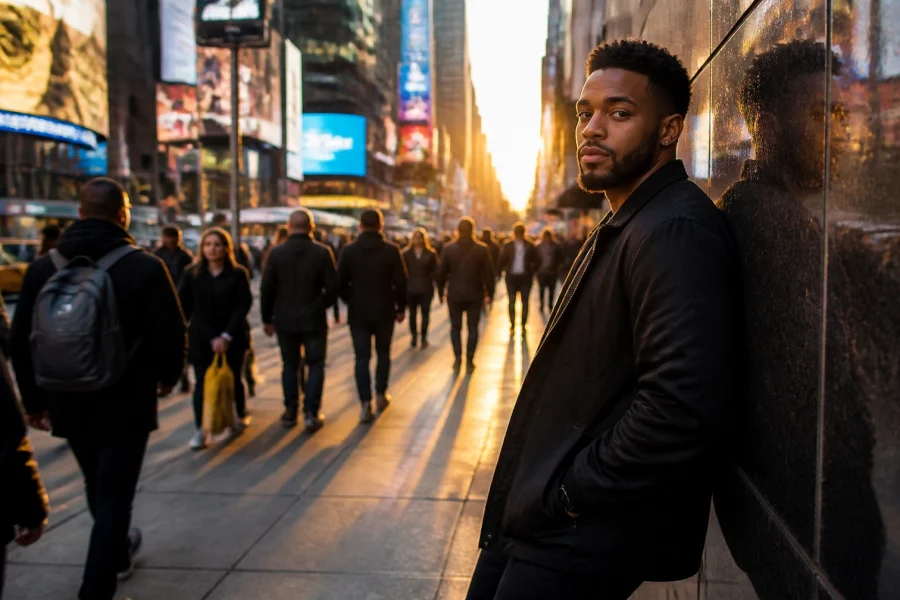
There’s a reason photographers obsess over the hour before sunset. The light is soft, warm, and directional. It eliminates the harsh shadows under the eyes (the dreaded "raccoon eyes") that you get at high noon. If you’re shooting outdoors, plan your session around the daybreak or the final glow of evening. It’s the easiest way to make your photos look high-end without spending a dime on lighting equipment.
5. Simplify the Background
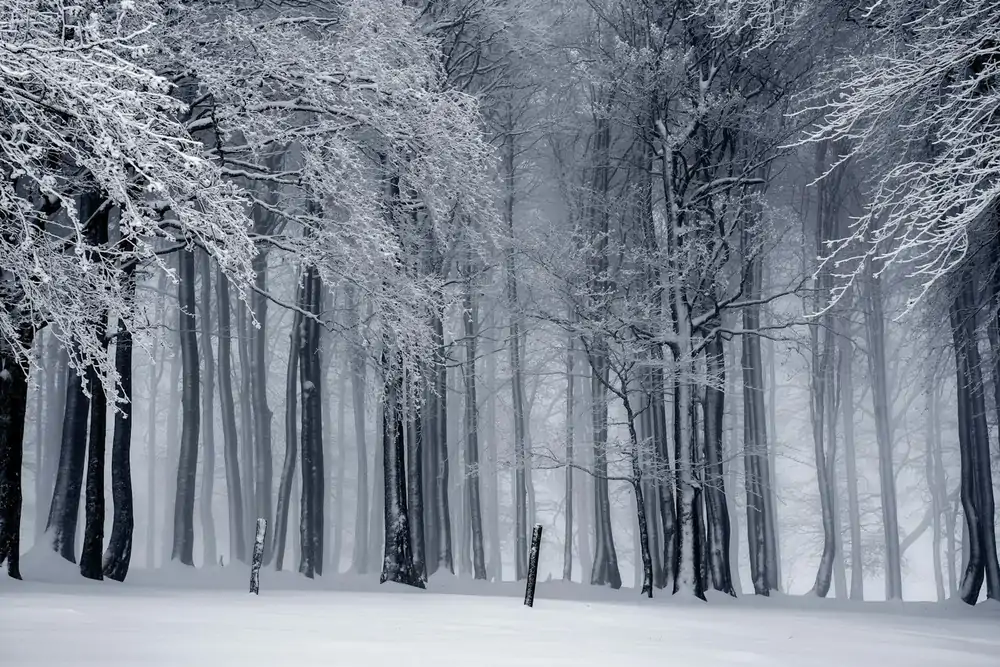
The background should support the subject, not compete with it. If there’s a bright red trash can or a tree branch "growing" out of your subject’s head, it’s going to distract the viewer. Look for neutral colors, simple textures, or patterns that don't pull focus. Sometimes, just taking a step to the left or right can completely change the backdrop and save you hours of cloning in Photoshop. You can find more inspiration for clean compositions at Shut Your Aperture.
6. The "Shoulder Turn" Technique
Shooting someone square-on (shoulders parallel to the lens) can make them look wider and more "static," like a mugshot. Instead, ask your subject to turn their shoulders slightly away from the camera while keeping their face toward you. This creates a slimmer profile and adds dynamic leading lines to the composition. It’s a simple trick that makes a world of difference in how the body is perceived.
7. Use Negative Space
Don’t feel like you have to fill the entire frame with the subject’s face. Leaving "negative space": empty areas like a clear sky or a plain wall: can create a sense of scale and atmosphere. It gives the viewer's eyes a place to rest and draws more attention to the subject’s expression. This technique is often used in high-fashion and editorial work to create a "moody" vibe.
8. Break the Rule of Thirds
The Rule of Thirds is great for beginners, but rules are meant to be broken. For powerful, intimate portraits, try centering your subject. A symmetrical composition can be incredibly striking, especially if the subject has a strong gaze. For more advanced composition tips, you might want to look at how photographers play with perspective, like in this piece about tilting the streets of San Francisco.
9. Catchlights Are Key
A catchlight is that tiny spark of light reflected in a subject’s eyes. Without it, the eyes can look flat and "dead." You can get catchlights from the sun, a softbox, or even a simple reflector held below the subject's face. It adds a "pop" of life and helps define the shape of the eye. If you find your portraits look a bit dull, check if you’ve captured that glint in the eye.
10. Master Loop Lighting
If you're just starting with artificial light or even window light, start with Loop Lighting. This involves placing the light source slightly above eye level and about 30–45 degrees to the side of the subject. It creates a small shadow of the nose on the cheek, which adds depth without being too dramatic. It’s the most universally flattering lighting setup.
11. Get Dramatic with Rembrandt Lighting
Named after the Dutch painter, this technique is characterized by a small triangle of light on the shadowed side of the face. It’s moody, artistic, and classic. You achieve this by moving your light further to the side of the subject until the nose shadow meets the cheek shadow, leaving just that little triangle of light under the eye. For examples of classic, high-contrast portraiture, see Portraits from a Kingdom.
12. Use a Reflector to Fill Shadows
If you’re shooting in bright sunlight, the shadows on the face can be very dark. A simple 5-in-1 reflector is one of the cheapest and most effective tools you can own. Use the silver or white side to bounce light back into the shadows, softening the contrast and brightening the face. It’s a game-changer for outdoor sessions.
13. Shoot from Different Angles
Most people take portraits from eye level. It’s safe, but it can be boring. Try shooting from a slightly lower angle to give the subject a sense of power and presence. Conversely, shooting from a slightly higher angle can make the subject look more vulnerable or highlight their eyes. Don't be afraid to get on a ladder or lay on the ground to find a fresh perspective.
14. Capture the "In-Between" Moments
Sometimes the best shot isn't the one where the model is perfectly posed. It’s the laugh after the pose, or the moment they look away to fix their hair. These unguarded moments feel more authentic and "real." Keep your camera to your eye even when you aren't "officially" shooting; you might just catch the shot of the day.
15. Give Your Subject Something to Do
If your subject isn't a professional model, they probably feel awkward. Giving them a prop or an action can help them relax. Ask them to walk toward you, play with their jewelry, or lean against a wall. When their hands are busy, their face usually follows suit and relaxes.
16. Use Leading Lines
Leading lines aren't just for landscapes. You can use fences, walls, or even the subject’s own arms to lead the viewer’s eye toward their face. This creates a sense of depth and makes the image feel more three-dimensional. For a deeper dive into how lines can change a photo, check out the work of Pavel Gospodinov.
17. Watch the Crop
One of the most common mistakes in portrait photography is "chopping off" limbs at the joints. Never crop an image at the wrists, elbows, knees, or ankles. It makes the subject look like an amputee. Instead, crop mid-thigh, mid-waist, or mid-bicep. This feels much more natural to the human eye.
18. Communicate Constantly
The biggest difference between a pro and an amateur is communication. Don't just stand there silently clicking the shutter. Talk to your subject. Tell them they’re doing a great job, crack a joke, or give them specific directions. If they feel comfortable with you, it will show in their expression. For more tips on the business and interpersonal side of photography, check out blog.edinchavez.com.
19. Post-Processing: Less is More
When it comes to editing portraits, it’s easy to go overboard. You want your subject to look like a better version of themselves, not a plastic mannequin. Focus on removing temporary blemishes (pimples, stray hairs) but leave the "permanent" features (moles, character lines) alone.
For quick and effective retouching, we highly recommend using Luminar. Its AI-powered tools like Skin AI and Face AI allow you to enhance features subtly without spending hours in manual masking. It’s a lifesaver for busy photographers who want professional results fast.
20. Print Your Work
In the digital age, we tend to leave our photos on hard drives. But seeing a portrait printed on high-quality paper changes how you view your work. It forces you to notice the details: the texture of the skin, the depth of the shadows, and the accuracy of the color. If you're looking for museum-quality printing services, visit www.edinfineart.com or www.edinstudios.com to see how pros handle the final physical product.
Putting It All Together
Portrait photography is a journey. You won't master all 20 of these techniques in one afternoon, and that’s okay. The key is to pick one or two to focus on during your next shoot. Maybe this weekend you just focus on catchlights and communication. Next weekend, try Rembrandt lighting.
If you're feeling stuck for inspiration, take a look at our Photographer of the Week features or browse through the Sigma 24mm f/1.4 Art lens review to see what different glass can do for your style.
Remember, the goal is to tell a story. Whether you’re shooting with a high-end mirrorless setup or an old Fujifilm X-T10, the most important piece of gear is the person behind the lens. Keep practicing, keep connecting with your subjects, and most importantly, keep shutting your aperture.
For more technical guides and gear reviews, head over to www.proshoot.io and join a community of photographers dedicated to the craft. Whether you're capturing the first 21 days of a bee's life or a high-fashion model in a studio, the principles of light and composition remain the same. Go out there and create something amazing.
Skylum’s Aperty is purpose-built for portrait retouching with AI skin, eye and detail enhancement. Luminar Neo’s Portrait AI complements it for full-body and editorial work. Tagged as affiliate per FTC.