For the timing side of the exposure triangle that underpins everything here, our shutter speed guide is the reference to bookmark.
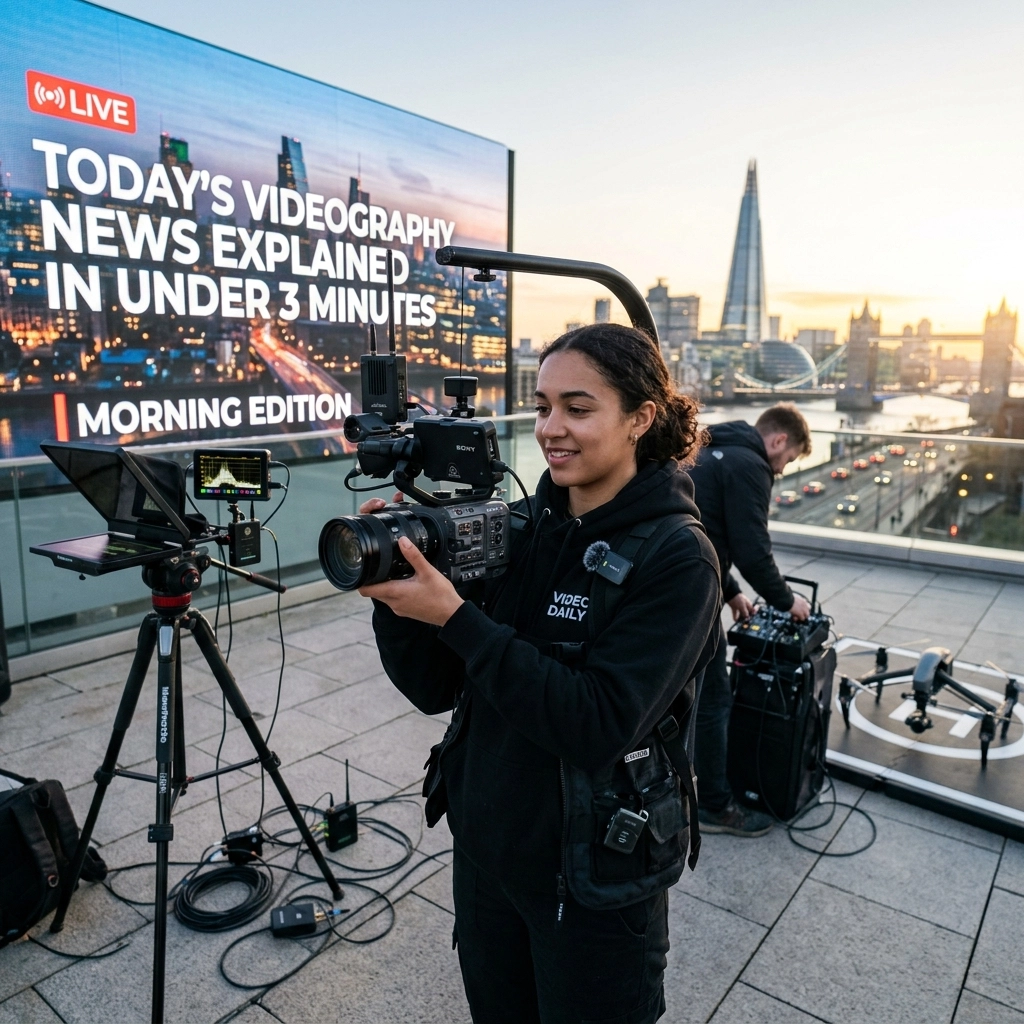
Grab your coffee. I know you’re probably staring at a timeline or packing a gear bag for a mid-morning shoot, so I’m going to keep this fast. It’s Monday, May 4, 2026, and the industry isn’t slowing down just because it’s the start of the week. Between some heavy-hitting sensor rumors and a software update that might actually save you three hours of editing tonight, we’ve got a lot to cover.
The world of videography is moving at light speed. If you aren't keeping up with the Sony, Canon, Nikon, and DJI news, you’re basically working with a hand-cranked camera. Let’s dive into what’s happening right now.
The Sony Sensor Secret: Is the Global Shutter Finally Going "Budget"?
The big whisper in the halls of the industry this morning is all about Sony. We all remember when the A9 III dropped and changed the game with the global shutter. Well, the rumors for the Q3 release cycle are suggesting that Sony is working on a mid-range "Alpha" body, think of an A7S IV successor, that features a hybrid global shutter optimized specifically for video dynamic range.
Why does this matter to you? No more rolling shutter artifacts when you’re panning fast during an action sequence. For those of us doing high-end commercial work or fast-paced sports, this is the holy grail. If you’re currently looking at how to choose the best mirrorless cameras for your 2026 kit, you might want to hold onto your wallet for just a few more weeks.
We’re seeing a shift where "entry-level" professional gear is now outperforming the cinema rigs of five years ago. It’s a wild time to be a creator, but it also means the competition is getting stiffer. You can’t just have a good camera; you have to know how to use it.

Alt text: A professional videographer filming a fast-moving mountain biker with a modern mirrorless camera, showcasing zero rolling shutter distortion.
Luminar’s Big Leap into Video AI
If you’ve been following my stuff for a while, you know I’m a fan of how Luminar changed the photography game with AI. Well, the morning headlines are buzzing with their latest beta leak: Luminar Video.
This isn't just another plugin. They are looking to bring that same "one-click" magic to color grading and object removal in moving images. Imagine being able to relight a scene or swap a dull sky in a 4K 60p clip without having to spend hours in DaVinci Resolve’s fusion tab.
We’ve talked about how to integrate AI into your photography workflow, and it was only a matter of time before video caught up. If this tool is even half as good as the photo version, it’s going to be a lifesaver for wedding videographers and quick-turnaround content creators. The goal is to spend less time behind the computer and more time behind the lens.
Canon’s "Cinema for All" Firmware Update
Canon just pushed a massive firmware update for the R5 and R6 series. It’s not just bug fixes. They’ve unlocked a new internal compressed RAW format that significantly reduces file sizes without sacrificing the 14-bit color depth.
This is huge because storage is getting expensive. Even with SSD prices dropping, shooting 8K is a data nightmare. Canon is clearly trying to keep people in their ecosystem by making the post-production process less of a headache. If you’re still struggling with the technical side of things, check out Photography 101: A Beginner’s Guide to Mastering Your First Camera to get the basics down before you dive into these heavy cinema settings.
Alt text: A sleek Canon mirrorless camera displaying the new 2026 firmware menu with advanced video compression options.
Why Everyone is Talking About AI-Powered Mirrorless Tech
It’s not just a buzzword anymore. The news today is dominated by how cameras are actually thinking. We are seeing autofocus systems that don't just track eyes, but predict where a subject will move based on the sport they are playing.
Why everyone is talking about AI-powered mirrorless tech isn't because we’re lazy; it’s because it allows us to focus on the composition and the story. If the camera handles the focus perfectly 100% of the time, that’s one less thing for you to worry about when you’re in the heat of a shoot.
For those of you doing real estate, this is especially relevant. Using something like the Nikon Zf settings for real estate photography but applying those AI tracking principles to your video walk-throughs can make your gimbal work look like a million bucks.
DJI’s New Nano-Drone: The "Pocket Cinema"
The morning edition wouldn't be complete without a drone update. DJI has reportedly filed patents for a new "Nano" series that weighs less than 150g but features a 1-inch sensor.
In 2026, regulations are tighter than ever. Having a drone that flies under the radar (literally and legally) while still providing 5.1K footage is the dream. This is going to be a game-changer for landscape photography and travel shots. Imagine being able to get epic aerials in a city center without needing a permit that takes three weeks to clear.
Alt text: A tiny, ultra-lightweight DJI drone hovering over a scenic coastline at sunrise, capturing high-resolution cinematic video.
Industry Trends: The Return of the "Lo-Fi" Look
While everyone is chasing 12K resolution and perfect sharpness, there’s a massive trend hitting the news cycle today regarding the "Analog Digital" look. More and more commercial clients are asking for videographers who can replicate the feel of 16mm film but with the reliability of digital.
This isn't just about slapping a LUT on your footage. It's about lighting and lens choice. If you've been stuck in a rut, maybe it’s time to try some creative street photography ideas and apply them to your video work. Get messy. Use some vintage glass. Stop fearing the noise.
Actually, speaking of noise, a lot of people are still terrified of manual mode. If that’s you, don’t worry: I’ve got you covered. Check out 5 steps on how to master manual mode so you can actually control how your "lo-fi" look turns out rather than letting the camera decide for you.
The Gear You Need to Watch
Beyond cameras, the accessory market is exploding. SmallRig just announced a "Smart Cage" that has a built-in SSD and battery plate with a status OLED screen. It’s basically turning your mirrorless camera into a full-blown cinema rig without the bulk.
If you’re doing corporate work, you know how much gear can be a literal pain in the neck. Staying lean is the name of the game in 2026. Whether you are following professional corporate headshot tips or filming a CEO interview, your gear should help you, not slow you down.
Alt text: A compact mirrorless camera rig with a SmallRig "Smart Cage," showing integrated battery and SSD status on a small OLED display.
Avoiding the Common Traps
With all this new tech, it’s easy to make mistakes. I see it every day: people getting the latest gear and then failing on the basics. Whether it's mistakes with manual mode or mistakes with AI editing, the tech is only as good as the person using it.
Don't be the person who has a $10,000 setup but can't nail the white balance. Take the time to learn the fundamentals. If you're looking for more in-depth training on how to handle all this, I always recommend checking out the resources over at PhotoGuides.org or diving into my own tutorials at learn.shutyouraperture.com.
What’s Next for the Rest of the Week?
We’re expecting a few more announcements as we get closer to the weekend. There are rumors of a major partnership between Adobe and a leading lens manufacturer to integrate lens metadata directly into "Generative Fill" for video. That could mean being able to extend your frame or fix a poorly framed shot in post-production with 100% accuracy.
It's a brave new world, guys. Keep your sensors clean and your batteries charged. If you want to keep up with the daily grind and make sure you’re using your gear to its full potential, keep an eye on www.proshoot.io for more professional-level deep dives.
Alt text: A videographer at a desk with multiple monitors, color grading a scene while checking the latest industry news on a tablet.
Stay Sharp Out There
The "Morning Edition" is meant to give you that quick hit of info so you can get back to what you do best: creating. Don’t get bogged down in the gear wars. Whether you shoot Sony, Canon, or you’re still rocking a vintage Nikon, the best camera is the one you have with you (and the one you actually know how to use).
If you’re looking for more tips on how to improve your eye for light, especially for those B-roll shots, take a look at our portrait photography techniques guide. The way light hits a face is the same whether you're taking a photo or filming a 4K interview.
See you in the afternoon update. Now go shoot something epic.