
Let’s be real for a second. You probably have a camera that’s smarter than the computer that landed humans on the moon, yet you’re still shooting on "Auto." Don’t worry; we’ve all been there. But if you want to go from taking "nice snapshots" to creating professional-grade art that people actually want to buy, you need to move past the green button.
Welcome to the ultimate resource for photography tutorials. At Shut Your Aperture, we aren't just here to give you a few tips; we’re here to help you dominate the craft. Whether you're trying to figure out how to use manual mode camera settings or you're looking for photography tutorials that dive into the nitty-gritty of high-end lighting, you're in the right place.
If you're serious about your growth, you should check out the deep-dive courses over at Shut Your Aperture Academy. It's where we turn hobbyists into legends.
Mastery of the Machine: How to Use Manual Mode Camera Settings
The biggest hurdle for most beginners is the "M" on the dial. Manual mode feels intimidating because it puts the responsibility of the final image entirely on your shoulders. But that responsibility is exactly where your creativity lives.
To master manual mode, you have to understand the Exposure Triangle. This is the foundation of every professional photography tutorial out there.
1. Aperture (The F-Stop)
Think of aperture as the pupil of your eye. It controls how much light enters the lens. A low number (like f/1.8) means the lens is wide open, letting in a ton of light and creating that creamy, blurred background everyone loves. A high number (like f/16) keeps everything from the foreground to the mountains in the back sharp.
2. Shutter Speed
This is how long your sensor is exposed to light. Fast shutter speeds (1/1000s) freeze action: perfect for sports or birds. Slow shutter speeds (1/10s or longer) create motion blur, which is how you get those silky-smooth waterfalls. If you want to see how this looks in the field, check out our piece on Yosemite for some landscape inspiration.
3. ISO
ISO is your camera’s sensitivity to light. In bright daylight, keep it low (ISO 100). As it gets darker, you’ll need to bump it up. Just be careful: higher ISOs introduce "noise" or graininess into your shots.

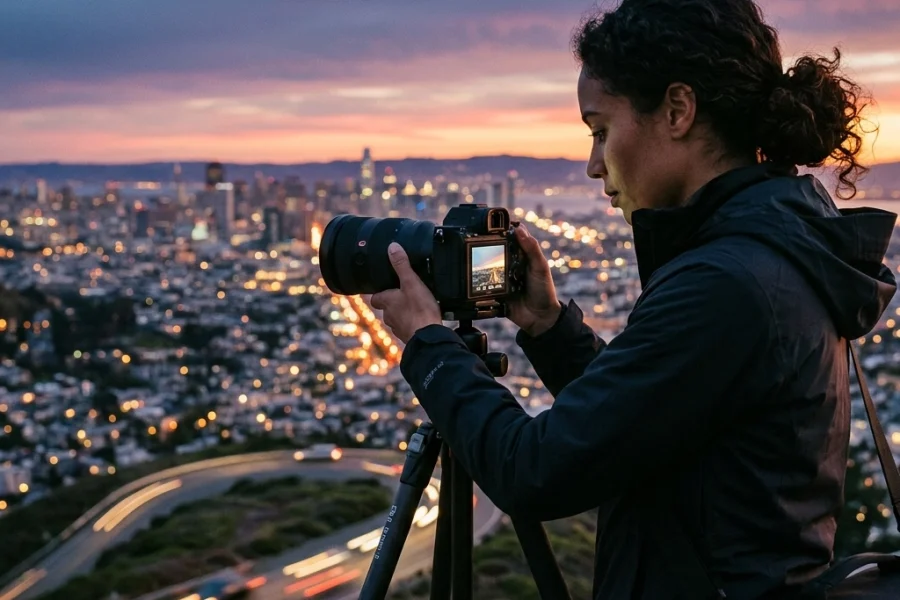
Alt text: A professional photographer adjusting the manual settings on a mirrorless camera during a golden hour landscape shoot.
Composition: Moving Beyond the Rule of Thirds
Once you know how to get a clean exposure, you need to know how to frame it. Most photography tutorials stop at the Rule of Thirds, but pros know that's just the tip of the iceberg.
If you’re walking through a city, you need to look for leading lines, natural frames, and reflections. For those looking to spice up their city walks, our guide on 30 creative street photography ideas is a must-read.
Advanced Composition Techniques:
- Leading Lines: Use roads, fences, or even shadows to pull the viewer's eye toward your subject.
- Negative Space: Sometimes what you leave out of the frame is just as important as what you put in.
- Symmetry and Patterns: Humans love order. Finding symmetry in a chaotic environment makes for a powerful image.
Lighting: The Secret Sauce of Pro Photography
You can have the best camera in the world, but if your lighting is garbage, your photo will be garbage. Professional photography tutorials emphasize lighting above all else.
Natural Light vs. Artificial Light
Natural light is beautiful, but it's unpredictable. Learning to manipulate it with reflectors and scrims is key. On the flip side, studio lighting gives you total control. If you're interested in seeing how pros handle complex lighting for products, look at our tutorial on hi-end product shoots made easy.
For more advanced lighting setups and gear reviews, I often head over to PhotoGuides.org to see what the community is buzzing about.

Alt text: A studio lighting setup with softboxes and a strobe light illuminating a professional model for a high-fashion portrait.
The Tech Debate: Gear and Resolution
In 2026, we’re seeing tech leap forward faster than ever. Do you actually need a 100-megapixel sensor? We recently tackled the question: Does ultra-high resolution really matter?.
The truth is, gear matters, but only if you know how to use it. Whether you're shooting with a flagship mirrorless or exploring the skies of tomorrow with drones, the principles of light and composition remain the same.
Post-Processing: Making Your Images Pop
The RAW file out of your camera is just the beginning. It’s like a slab of marble; you still have to carve the statue. Professional editing is where you define your "look."
I’ve spent years refining my workflow, and I often share behind-the-scenes insights over at blog.edinchavez.com. One tool that has consistently made it into my kit is Luminar. Its AI-driven tools allow you to perform complex edits: like sky replacements or skin retouching: in a fraction of the time it takes in traditional software.
When you use Luminar, you aren't just "fixing" a photo; you're enhancing the mood you felt when you clicked the shutter.

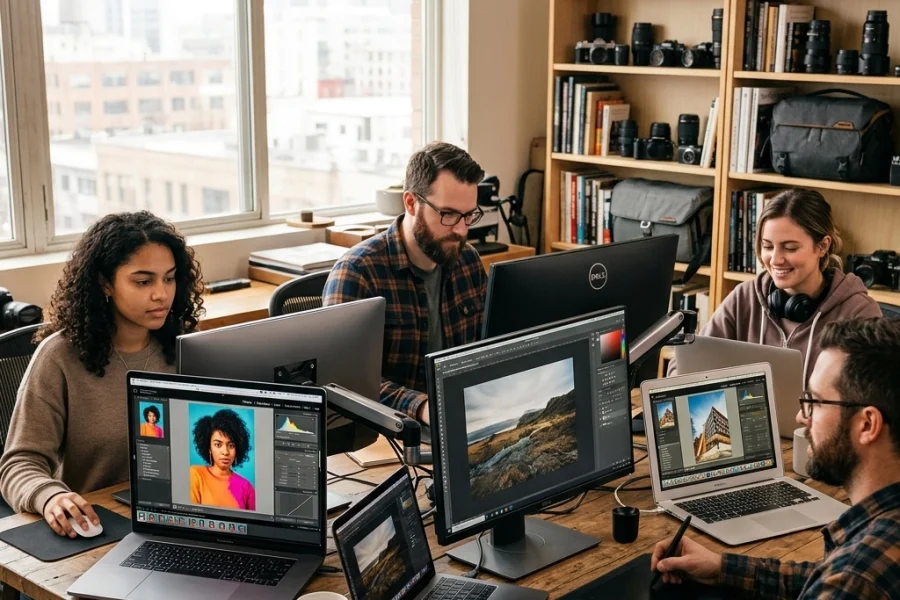
Alt text: A split-screen comparison showing a RAW landscape photo before and after professional editing in post-processing software.
Finding Your Niche
To succeed as a pro, you can't just be a "photographer." You need a specialty. Are you a travel photographer? A portrait artist? A microscopic time-lapse specialist?
If you want to see something truly unique, check out this microscopic time-lapse of snowflake formation. It’s a perfect example of how specialized photography can create something mesmerizing.
Maybe your heart lies in documentary work. Capturing the heart of Africa or the spiritual intensity of Varanasi, India requires a different set of skills: patience, empathy, and a quick eye for "the decisive moment."
The Business of Photography: Going Pro
Becoming a professional is 20% taking photos and 80% running a business. You need to understand marketing, client relations, and how to price your work.
If you’re looking for a platform to showcase and grow your professional presence, proshoot.io is a fantastic resource to help bridge the gap between amateur and professional.
Quick Tips for Your Photography Business:
- Portfolio is King: Only show your best work. Ten amazing photos are better than fifty "okay" ones.
- Consistency: Clients hire you for your style. If your portfolio is all over the place, they won't know what to expect.
- Network: Most of my biggest gigs came from people I met in the industry, not from a Google search.
Why Shut Your Aperture is the Top Online School
There are a million photography tutorials on YouTube, but most of them are just noise. They give you the "what" but rarely the "why."
At Shut Your Aperture, we focus on the "why." We want you to understand the soul of the image. We believe that photography is a language, and we’re here to teach you how to speak it fluently. From our morning photography news updates to our deep-dive tutorials, we provide a holistic education that you can't find anywhere else.

Alt text: A diverse group of students at a photography workshop learning how to use manual mode on their cameras from a professional instructor.
Level Up Your Skills
If you've been waiting for a sign to take your photography seriously, this is it. Stop hovering over the "Auto" mode and start taking control of your creative vision.
The path from beginner to pro isn't a straight line. It's full of blurry shots, missed focus, and frustrating lighting. But every mistake is a tutorial in itself. The more you shoot, the more you learn.
Ready to dive deeper? Head over to Shut Your Aperture Academy and let’s start building your career together. Whether you want to master the camera settings for a night shoot or learn the business side of the industry, we've got you covered.
Don't forget to keep up with the latest industry shifts by checking out our nightly news explainers. Stay sharp, keep shooting, and remember: the best camera is the one you know how to use.