For the underlying mechanics behind every choice below, our aperture photography guide is the fastest way to get fluent.
Street photography is the ultimate test of a photographer's reflexes, eye, and nerves. It’s raw, it’s unpredictable, and it’s arguably the hardest genre to master because you have zero control over your subjects, the lighting, or the environment. You are a silent observer trying to find order in the chaos of urban life.
But here’s the thing: most people hitting the pavement with their cameras are making the same handful of composition mistakes. These errors turn potentially iconic shots into "just another photo of a person on a sidewalk." If you’ve ever looked at your street shots and felt like they lacked that certain oomph, you aren't alone.
Composition in the street isn't just about the Rule of Thirds. It’s about storytelling, geometry, and timing. Today, we’re diving into the seven most common composition mistakes you’re likely making and, more importantly, how you can fix them right now to start capturing images that actually stop the scroll.
1. The "Fear" Distance: Not Getting Close Enough
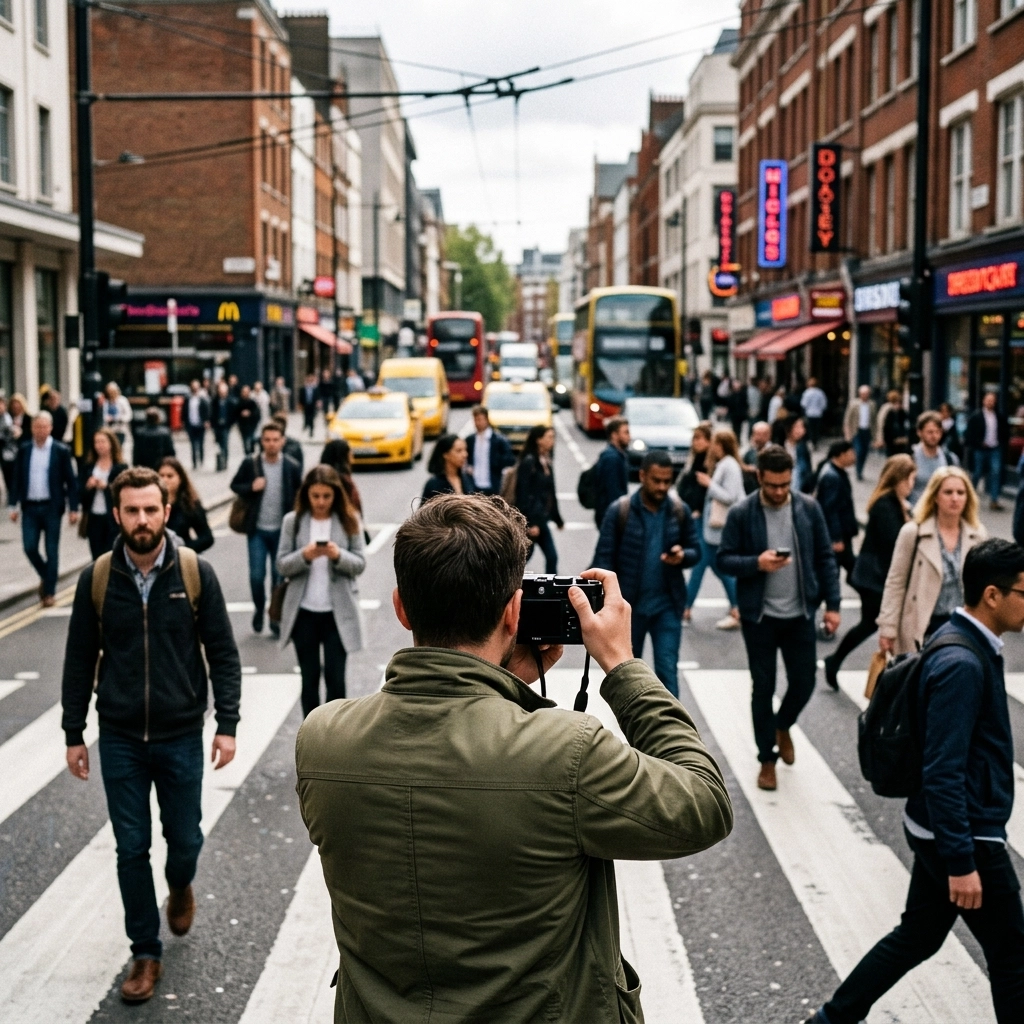
This is the number one mistake in street photography, hands down. Legendary war photographer Robert Capa famously said, "If your pictures aren't good enough, you're not close enough." While he was talking about the front lines of battle, the principle applies perfectly to the corner of 5th and Main.
Most beginners are understandably nervous about photographing strangers. This "social anxiety" leads them to stand 20 feet away and use a zoom lens. The result? A flat, disconnected image that feels like a surveillance photo rather than a piece of art. When you shoot from a distance, you lose the intimacy and the "soul" of the scene.
How to Fix It:
You need to get physically closer. Instead of reaching for a 70-200mm lens, try a 35mm or even a 28mm prime. These wider focal lengths force you to step into the action. When you are three to five feet away from a subject, the viewer feels like they are standing right there with you.
If you're nervous, start by finding a busy spot and letting the people walk into your space. You aren't "intruding" if they are the ones entering your frame. For more on getting over the initial hurdle of camera settings while you focus on your proximity, check out our Photography 101 guide.
2. The "Cardboard" Effect: Lack of Depth and Layering
A lot of street photos look like cardboard cutouts pasted onto a background. They lack "depth": the feeling that the world continues beyond the frame. If you only have one subject and a flat wall behind them, your image is two-dimensional.
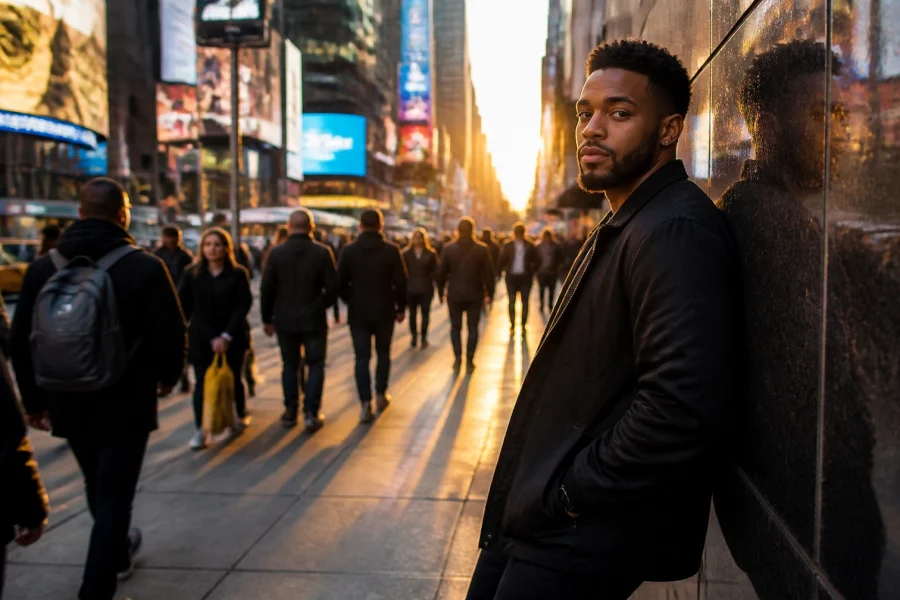
Great street photography often involves "layering." This means having elements in the foreground, middle ground, and background that all contribute to the story. Without layers, your composition feels empty and stagnant.
How to Fix It:
Look for "foreground interest." This could be the blurred shoulder of a passerby, a street sign, or even a reflection in a window. By including something very close to the lens, you instantly create a sense of three-dimensional space.
Next time you see a subject, don't just snap the photo. Look for a way to "frame" them using the environment. If you want to learn more about how layers work in different lighting conditions, our guide to natural light portraits offers some great parallels.
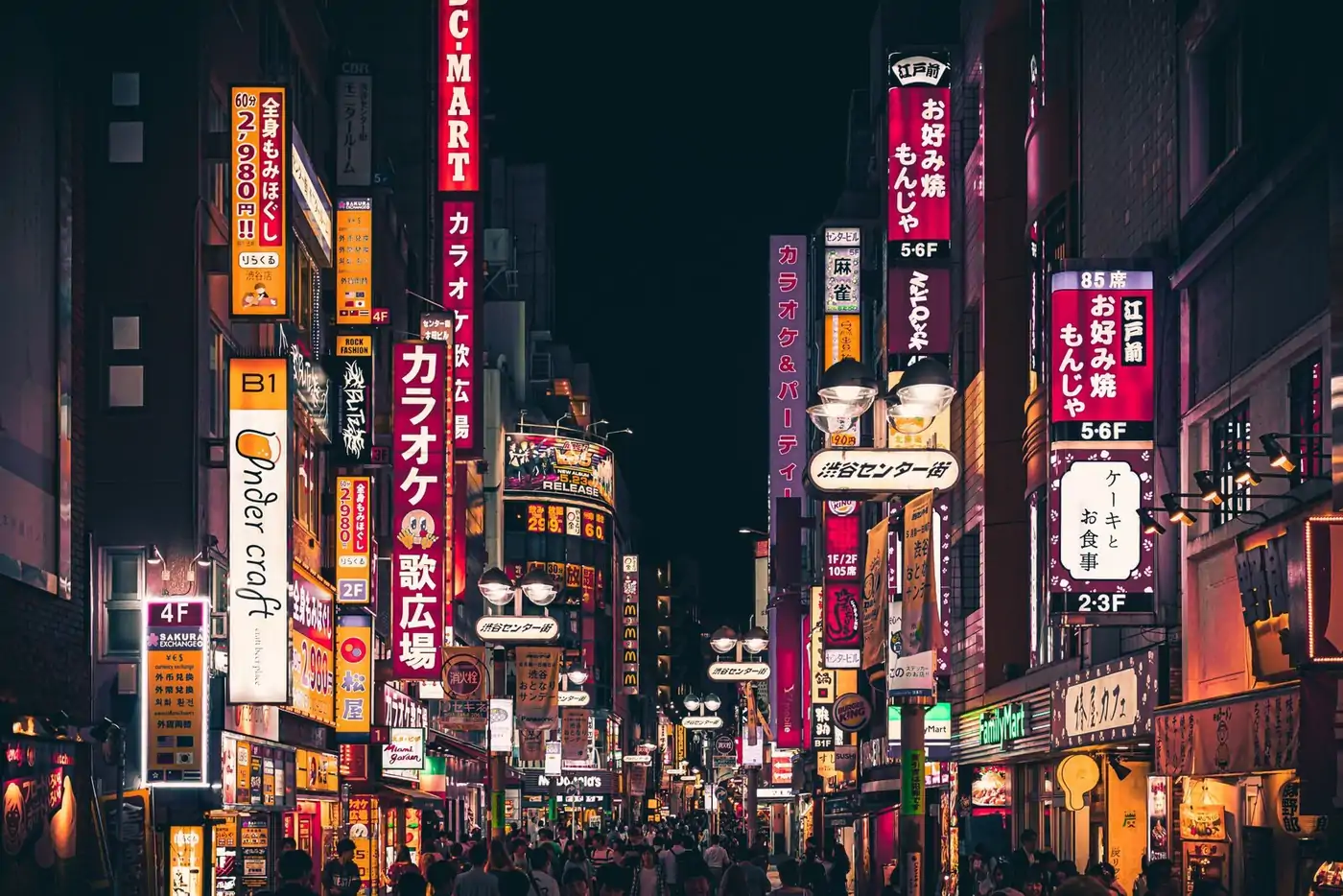
3. The "Pole-Out-Of-The-Head" Syndrome: Distracting Backgrounds
In the heat of the moment, it’s easy to focus so hard on your subject that you completely ignore what’s happening behind them. You might capture a perfect expression, but if there’s a trash can growing out of the person’s shoulder or a neon sign "cutting" through their head, the photo is ruined.
A cluttered background competes with your subject for the viewer's attention. In street photography, simplicity is often the key to a powerful composition.
How to Fix It:
"Work the scene." If you find an interesting background first: a colorful wall, a dramatic shadow, or a clean architectural line: wait there for the right person to walk into the frame. This is often called the "fishing" technique.
If you've already taken the shot and realized there's a small distracting element, you can sometimes save it in post-processing. Tools like Luminar have incredible AI-powered erase tools that can clean up those minor background distractions without making the photo look fake. However, always aim to get it right in the camera first. For more technical tips on keeping things sharp, visit PhotoGuides.org.
4. The Bokeh Addiction: Using Too Shallow Depth of Field
We all love bokeh. That creamy, blurred-out background is the hallmark of professional-looking portraits. But in street photography, shooting at f/1.4 or f/1.8 all the time is actually a mistake.
Street photography is about context. If you blur the background into a mush of unrecognizable colors, you lose the "street" part of the photo. You lose the location, the atmosphere, and the story. An isolated face is a portrait; a face in a bustling, recognizable market is a street photograph.
How to Fix It:
Stop fearing smaller apertures. Try shooting at f/5.6 or f/8. This gives you a deeper "depth of field," meaning more of the scene is in focus. This allows the viewer to explore the environment and understand the relationship between the subject and their surroundings.
Additionally, shooting at f/8 makes it much easier to nail your focus, especially if you are using "zone focusing": a classic street photography technique. If you’re using a modern camera like the Fujifilm X100VI, you can leverage its incredible sensor to keep details sharp even across a busy frame.
5. Hyper-Focusing on a Single Subject
Many photographers look for one "weird" or "interesting" person and call it a day. While a character study is great, the most iconic street photos often involve multiple elements interacting with each other.
The mistake is focusing so much on one person that you miss the "juxtaposition": two things that shouldn't be together, or two things that mirror each other perfectly. This is what creates visual irony and wit in a photograph.
How to Fix It:
Look for "intersections." Wait for two people walking in opposite directions to cross paths. Look for a person wearing a shirt that matches a billboard behind them. Look for a child looking up while an adult looks down.
Composition is about relationships. When you start looking for how different elements in the frame talk to each other, your photography will take a massive leap forward. For a deeper dive into these advanced concepts, check out our Street Photography Secrets Revealed.
6. Laziness at Eye-Level: Shooting Straight-On
Most people experience the world from a height of five to six feet. If you take all your photos from eye level, you are showing people exactly what they see every single day. It’s predictable. It’s "snapshot" territory.
Shooting straight-on also tends to feel very confrontational or flat. By failing to change your perspective, you're missing out on dynamic lines and unique angles that can make a mundane scene look extraordinary.
How to Fix It:
Change your altitude. Get low: crouch down and shoot slightly upward. This makes your subjects look more heroic and dominant in the frame. Conversely, find a high vantage point: a staircase or a balcony: and shoot down to emphasize patterns on the pavement or the scale of the city.
Using a camera with a flip-out screen, like the Sony ZV-E10 II, makes it much easier to shoot from the hip or from ground level without looking like a gymnast. If you want to see some examples of dramatic perspective shifts, take a look at the galleries over at Edin Fine Art.
7. Over-Processing: The "Crunchy" HDR Look
This is more of a post-composition mistake, but it affects how the composition is perceived. Many street photographers try to "fix" a boring composition by cranking up the clarity, contrast, and saturation in post-production. This results in the "crunchy" look where everything has a weird glow and the skin tones look like orange peel.
Street photography is rooted in a documentary tradition. When you over-process, you strip away the authenticity of the moment. The viewer stops looking at the subject and starts looking at your bad editing.
How to Fix It:
Keep it simple. Street photography usually looks best with a light touch. Focus on your blacks, whites, and shadows. Many of the world’s best street shots are in black and white because it strips away the distraction of color and forces the viewer to look at the geometry and the light.
If you are going to use AI tools, use them subtly. We’ve covered 7 mistakes you’re making with AI photo editing that you should definitely read to avoid the common pitfalls of modern tech. Remember, the goal of editing is to enhance what’s already there, not to create a reality that didn't exist. You can find more subtle editing inspiration at blog.edinchavez.com.
Mastering the "Decisive Moment"
Henri Cartier-Bresson, the father of modern street photography, coined the term "The Decisive Moment." This is that split second where the elements of a scene: the light, the people, the geometry: all align to tell a story.
You can't force the decisive moment, but you can be prepared for it. This means mastering your camera so you don't have to think about it. If you’re still struggling with your settings, check out our guide on how to master manual mode. Once the camera becomes an extension of your hand, you can focus entirely on the composition.
Why AI is Changing the Game
We’re living in 2026, and the tech in our pockets and bags is wild. AI-powered subject tracking and "pre-burst" modes are making it harder to miss the technical side of the shot. But AI can't choose your composition for you. It can't feel the emotion of a scene.
Embrace the tech: like the latest AI-powered mirrorless cameras: but don't let it become a crutch. Use it to ensure your focus is tack sharp so you can spend your mental energy on framing and timing.
Summary Checklist for Your Next Photo Walk:
Before you head out into the concrete jungle, keep these "fixes" in mind:
- Get Closer: Take two more steps than you think you need.
- Layer Up: Find a foreground, middle ground, and background.
- Check the Background: Is there a pole coming out of their head? Move your feet.
- Stop Down: Try f/8. Give your subjects some context.
- Look for Intersections: Find the relationship between multiple subjects.
- Change Your Angle: Don't just shoot at eye level. Get high or low.
- Edit with Restraint: Let the story speak louder than the sliders.
Street photography is a marathon, not a sprint. You’re going to take a lot of bad photos. That’s okay. Even the masters only got a few "keepers" a year. The key is to keep shooting and keep analyzing why certain shots work and others don't.
If you’re looking to truly level up your skills with structured lessons and pro feedback, head over to Shut Your Aperture Academy. We’ve got deep dives into everything from urban shooting to professional corporate headshots.
Composition is the language of photography. Stop mumbling and start telling stories that matter. Now, grab your camera, get out there, and remember: the best shot is usually just one more block away.