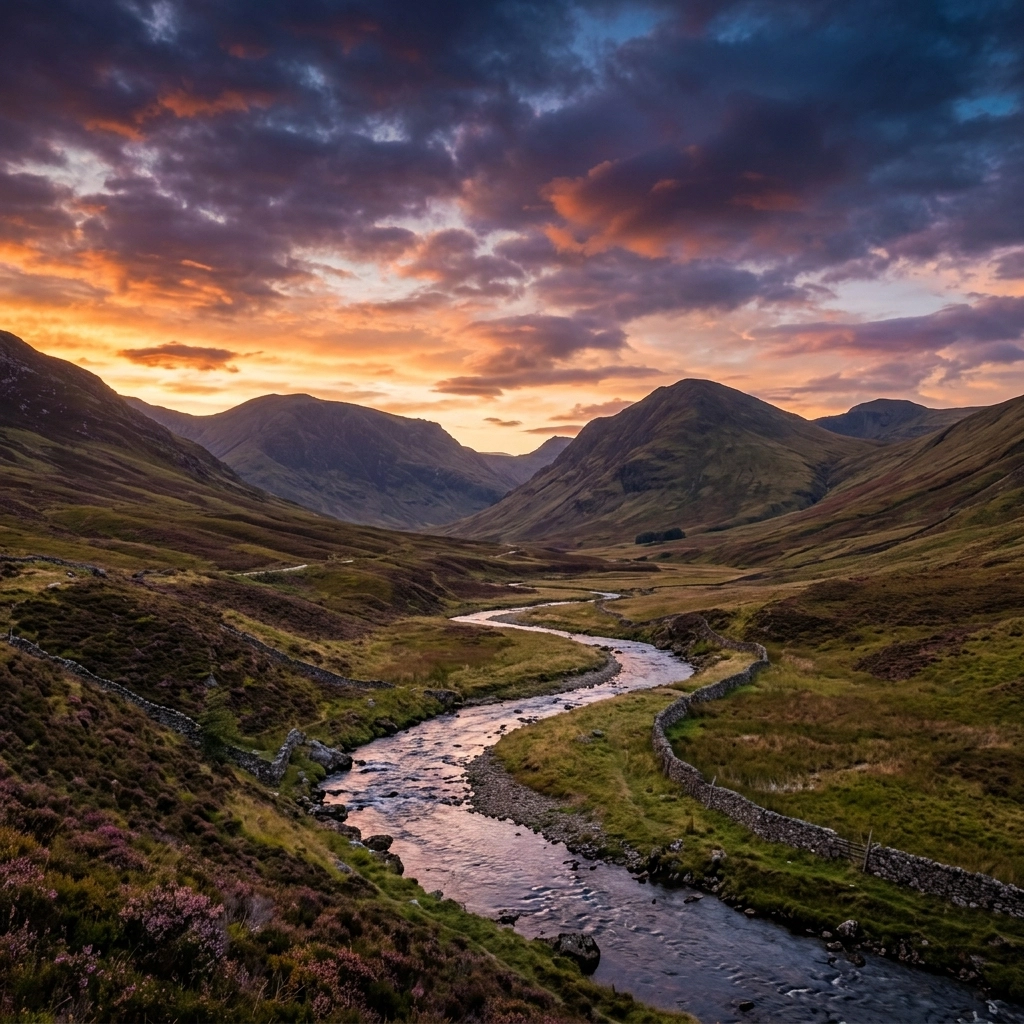
You’ve seen the shot. You’re standing on the edge of a cliff, the sun is dipping below the horizon, painting the sky in shades of neon orange and deep purple. You pull out your camera, frame it up, and, click, you’ve got it. Or so you think.
Then you get home, load the files onto your computer, and reality hits. The photo looks flat. It looks messy. It looks like… well, a snapshot. It doesn't look like the epic fine art pieces you see on Edin Fine Art.
What went wrong? Chances are, it isn't your gear. You could be shooting with a Sony a7R V or a simple smartphone; if the composition is off, the photo is dead on arrival. Composition is the language of photography. It’s how you tell the viewer where to look and why they should care.
If your landscape photos feel "off," here are 10 common reasons your composition isn't working and exactly how you can fix them today.
1. The "Leaning Tower" Horizon
This is the most common mistake in landscape photography, and honestly, it’s the most unforgivable. A crooked horizon makes the viewer feel like the water is about to slide right out of the frame. It’s jarring, and it immediately signals "amateur."
How to fix it:
Stop eyeing it. Use the built-in level (electronic level) on your camera's LCD. Most modern mirrorsless cameras, like the OM System OM-1 Mark II, have a leveling gauge that turns green when you’re straight. If you’re using a tripod, make sure the legs are stable, but don't trust the bubble level on the tripod head alone, trust the sensor. If you still mess up, you can fix it in post-processing using Luminar, but you’ll lose a bit of the edges of your frame when you crop to straighten it. Get it right in the field.
2. You’re Stuck at Eye Level
Most people walk up to a scene, stand still, and hold the camera to their eye. This results in the same perspective everyone else has. It’s boring. It’s the "tourist" view. Landscapes aren't meant to be shot from 5'10" up every single time.
How to fix it:
Change your altitude. Get low, like, "dirty knees" low. Putting your camera six inches off the ground can make a small rock look like a mountain and add incredible drama to your foreground. Conversely, find a higher vantage point to look down into a valley. Experimenting with camera height is the fastest way to change the "feel" of a landscape. If you're using a compact setup like the Fujifilm X100VI, it’s easy to maneuver into tight, low spots.

3. The "Empty Middle" Syndrome
A lot of landscape photographers find a great mountain (background) and some cool clouds (sky) but forget everything in between. If you have a great background but a massive, empty expanse of grass or water in the middle, the viewer’s eye gets "lost" on the way to the subject.
How to fix it:
Think in layers. A world-class landscape usually has three distinct planes: the foreground, the midground, and the background. If your middle is empty, move your feet. Find a stream, a patch of wildflowers, or a rock formation to bridge the gap. You want to lead the viewer’s eye on a journey from the bottom of the frame all the way to the horizon. Check out some pro tips on PhotoGuides.org for more on layering.
4. Too Much Sky (Without a Reason)
We all love a good sunset, but "sky" does not equal "composition." If the sky is a flat, cloudless blue or a dull, featureless grey, giving it two-thirds of the frame is a waste of space. It drains the energy from the actual landscape.
How to fix it:
Follow the Rule of Thirds, but do it with intent. If the sky is boring, move your horizon line to the upper third of the frame. Focus on the textures of the land. If the sky is exploding with dramatic storm clouds, then: and only then: give it the majority of the frame. Don't just default to a 50/50 split.
5. There’s No "Anchor"
A landscape without a focal point is just a "texture." Your viewer needs a place to land. Without a clear subject: a lonely tree, a jagged peak, a lighthouse: the eye just wanders aimlessly around the frame until the viewer gets bored and scrolls past.
How to fix it:
Ask yourself: "What is this photo of?" If the answer is "the mountains," pick one specific peak to be the hero. Use "visual weight" to guide the eye. A darker object or a splash of color can act as an anchor. If you're struggling to find focus, check out our The Ultimate Guide to Mastering Light to see how light can create a focal point for you.

6. Wide-Angle Laziness
People think landscape photography requires a 12mm or 16mm lens at all times. They want to "fit it all in." The problem? Ultra-wide lenses push everything away. That massive mountain range now looks like a tiny pimple on the horizon, and you’ve got 40 feet of boring dirt in the foreground.
How to fix it:
Don't be afraid to zoom in. Using a telephoto lens (70-200mm) for landscapes is a pro secret. It compresses the scene, making distant mountains look huge and stacking layers of hills on top of each other. If you are going to use a wide-angle lens, you must have something interesting within two feet of your lens to justify it. For those shooting on the Sony ZV-E10 II, try using a mid-range focal length to see how it changes the compression of your scene.
7. Ignoring the Edges (Border Patrol)
You’re so focused on the mountain in the middle that you don't notice the half-cut-off tree branch on the left or the stray trash can on the right. These "edge distractions" pull the viewer's eye away from your subject and break the immersion.
How to fix it:
Do a "border patrol" before you click the shutter. Run your eye along all four edges of the viewfinder. Is there a rock being cut in half? Is there a distracting bright spot right at the edge? Shift your camera slightly or change your focal length to clean up the edges. A clean frame is a professional frame. You can learn more about refining your eye over at blog.edinchavez.com.
8. "Visual Walls" in the Foreground
Foreground is great, but a "visual wall" is a disaster. This happens when a large, dark, or uninteresting object (like a big bush or a giant boulder) blocks the viewer’s path into the rest of the image. It acts as a dead end for the eyes.
How to fix it:
Use leading lines instead of walls. Instead of shooting at a rock, shoot along the side of it. Find lines in the sand, paths in the woods, or the curve of a shoreline to pull the viewer into the depths of the photo. You want your foreground to be an invitation, not a barrier. If you're into street photography, you already know how important leading lines are: apply that same logic to the wild.

9. Lack of Scale
Is that a 100-foot waterfall or a 2-foot trickle? Without a sense of scale, the viewer can't appreciate the grandeur of a landscape. Landscapes can often look "miniature" if there’s nothing familiar for the eye to compare sizes with.
How to fix it:
Include a "scale reference." This could be a person (the "tiny person in a big landscape" trope works for a reason), a bird, a house, or even a recognizable tree. Seeing a human standing next to a glacier instantly tells the viewer's brain, "Holy crap, that's huge!" It adds a sense of awe that a landscape alone sometimes lacks.
10. Shooting in Boring Light
You can have the best composition in the world, but if the light is flat and midday, the photo will suck. Composition and light are two sides of the same coin. Flat light kills depth, and without depth, your composition falls apart.
How to fix it:
Wait for the light. Golden hour (sunrise/sunset) provides long shadows that define the shape and texture of the land. This "side-lighting" creates the 3D effect that makes landscapes pop. If you're stuck in bad light, use tools like Luminar to enhance the contrast and "re-light" the scene. But whenever possible, be there when the light is doing the heavy lifting for you. Also, check out our guide on natural light mistakes for more tips on handling tricky lighting situations.

The Secret Sauce: Intentionality
The biggest reason your composition isn't working is probably that you're rushing. We live in a world of instant gratification, but great landscapes take patience. You have to wait for the wind to stop, the clouds to break, or the light to hit that one specific peak.
Stop "taking" photos and start "making" them.
Every time you set up your tripod, ask yourself:
- Where is the viewer's eye supposed to go?
- What is distracting from the main subject?
- Am I standing here because it’s easy, or because it’s the best angle?
If you want to dive deeper into the technical side of things, our Photography Tutorials cover everything from advanced exposure blending to the psychology of color in landscapes.
Why Daily Practice Matters
You don't become a master of composition by reading a blog post once a year. You do it by getting out there and failing until you stop failing. Even if you're just shooting in your backyard or a local park, practicing these rules daily will hard-wire them into your brain. Eventually, you won't have to "think" about the Rule of Thirds or leading lines; you'll just see them.
For those of you who want to turn this into a habit, check out why daily photography tutorials can change the way you shoot forever.
Fine-Tuning in Post
Sometimes, a composition is almost there, but it needs a little help. Maybe the colors are a bit muddy, or the sky needs more drama to balance out a heavy foreground. This is where modern AI tools come in. I’ve found that using Luminar allows you to emphasize the composition you already built by highlighting specific textures or using their "Sky AI" to replace a boring sky with something that actually fits the mood of your landscape.
Landscape photography is a journey, not a destination. Your first few shots might be crooked, flat, or cluttered, but every mistake is just a lesson in disguise. Keep shooting, keep moving your feet, and for heaven's sake, keep that horizon straight!