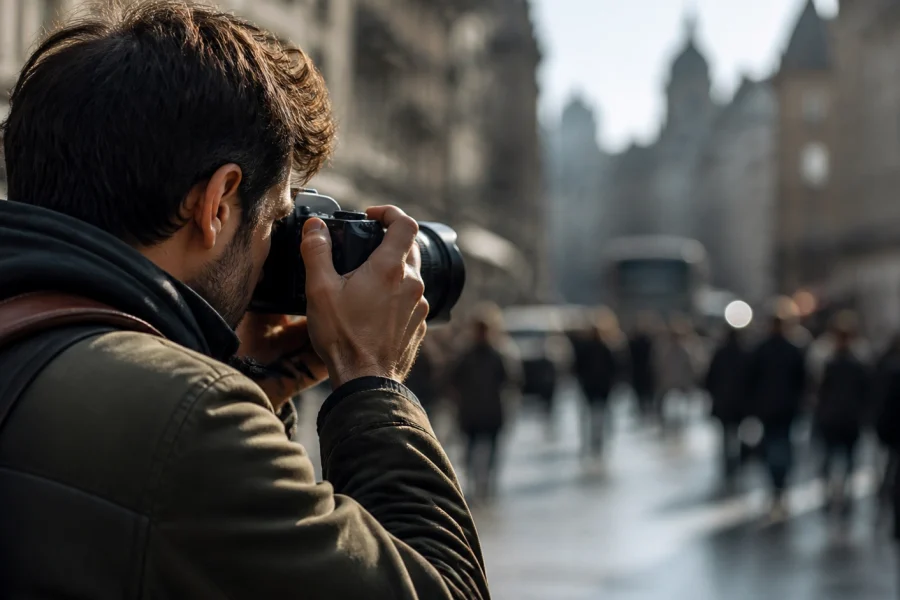
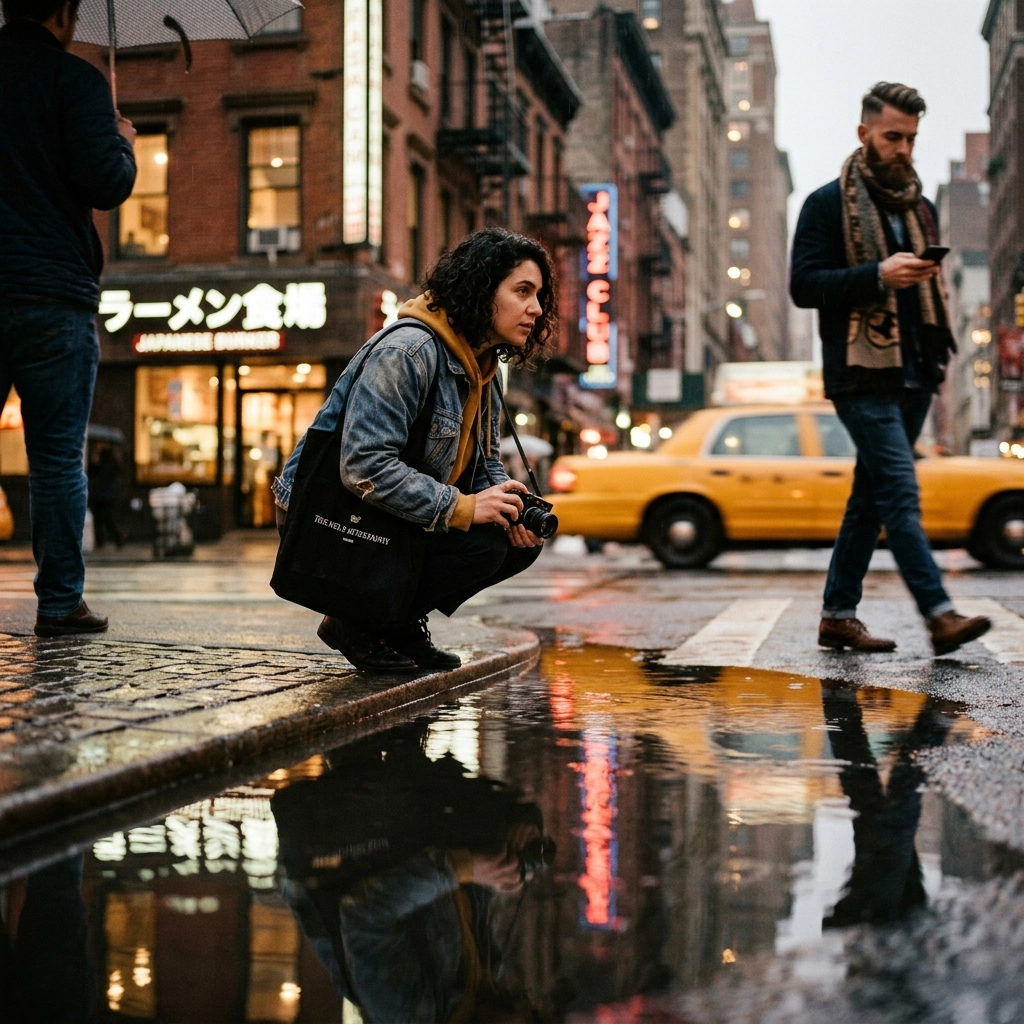
Street photography is the ultimate test for any photographer. It’s raw, it’s unpredictable, and frankly, it can be a little terrifying. Most people start by wandering around a city, snapping photos of random strangers, and wondering why their shots look like boring vacation photos.
If you’re stuck in a rut, shooting the same old street corners or "man walking past a wall" shots, it’s time to shake things up. The world in 2026 is moving faster than ever, and with the 2026 camera shift, the way we capture the urban environment is evolving.
Whether you’re just starting out and need a photography 101 guide or you’re a seasoned pro looking for a spark, these 25 ideas will force you to see the streets in a way you’ve never considered before.
1. Puddle Portals with a Twist
We’ve all seen the puddle reflection shot. It’s a classic. But to make it creative, you need to wait for an interaction. Don’t just capture the reflection of a building. Wait for a cyclist to splash through it or a child to jump over it. The distortion created by the moving water turns a standard reflection into a piece of abstract art. If you're having trouble catching the action, check out this guide on mastering manual mode to lock in that shutter speed.
2. The "Shoe-Level" Perspective
Most street photography is shot at eye level. It’s boring. Put your camera on the ground, literally. Use a tilt-screen or your camera’s remote app to compose. From this height, a simple sidewalk looks like a grand stage, and people’s feet become the main characters. It’s a great way to capture the "hustle" without showing a single face.
3. Shooting Through Plastic and Glass
Look for bus stops, cafe windows, or even construction plastic. Shooting through these elements adds a layer of texture and "filth" that makes the photo feel more organic. The condensation on a cafe window on a cold morning can turn a busy street into a dreamy, impressionistic painting.
4. The Color-Block Hunt
Pick one color: let’s say bright yellow. Spend two hours in the city and only shoot things that are yellow. You’ll start noticing details you usually ignore: a yellow fire hydrant, a yellow taxi, a person wearing a yellow hat. When you compile these shots, you create a cohesive story that feels intentional and professional.

5. Intentional Camera Movement (ICM)
Who says your shots have to be sharp? Set your shutter speed to 1/10th or 1/15th of a second. As you take the photo, pan your camera quickly or zoom in and out. This creates a sense of frantic energy that perfectly mimics the vibe of a crowded city. For more technical help with this, visit PhotoGuides.org.
6. The "Faceless" Portrait
The biggest fear in street photography is confrontation. You can avoid this while creating mystery by focusing on "faceless" portraits. Capture a person’s hands as they hold a cigarette, the back of an interesting jacket, or a shadow cast against a wall. It forces the viewer to imagine the story behind the person. This is a core concept we dive into over at Shut Your Aperture’s learning portal.
7. Motion Blur in Broad Daylight
Most people use long exposures at night. Try it during the day. Use an ND filter (or just stop your aperture way down) to get a slow shutter speed in the afternoon. Capture the crowd as a ghostly blur while the architecture remains tack-sharp. It creates a stunning contrast between the permanent city and the temporary people moving through it.
8. Looking Up at Skyscrapers
Stop looking at what's in front of you and look up. The "urban canyon" created by skyscrapers offers incredible geometric patterns. Wait for a bird or a plane to enter the frame to provide a sense of scale. If you are using modern AI-powered mirrorless tech, your autofocus should have no problem tracking a bird against the sky.
9. Night Neon and Rain
Rain is a street photographer’s best friend. When the sun goes down and the neon signs turn on, every wet surface becomes a light source. Focus on the reflections on the asphalt. The colors will pop in a way that feels cinematic, almost like a scene from Blade Runner.
10. Juxtaposition with Advertisements
Find a billboard or a street advertisement and wait for someone to walk past it who either perfectly matches the ad or hilariously contradicts it. A luxury watch ad next to a person sleeping on a bench tells a powerful story about urban inequality without saying a word.

11. Framing Through Public Transport
The windows of buses and trains are ready-made frames. Capture the bored expressions of commuters through the glass. The layers of reflections from the street combined with the people inside create a complex, multi-dimensional image.
12. Shadows as the Subject
During the "Golden Hour," shadows become long and dramatic. Instead of photographing the person, photograph their shadow stretching across the street. This works especially well in black and white, where the contrast can be pushed to the extreme in post-processing.
13. The "Waiting Game" with Architecture
Find a piece of interesting architecture or a doorway with great light. Now, stay there. Don't move. Wait for the right person to enter the frame. This is the "fishing" method of street photography. Eventually, someone with a red umbrella or a unique hat will walk through your "trap."
14. Silhouettes in Subway Stations
Subway entrances often have strong backlighting. Position yourself so the light is behind your subjects. As they walk toward you, they will be rendered as dark silhouettes against a bright background. It’s a clean, graphic style that never goes out of fashion.
15. The Mid-Day Harsh Light Challenge
Many photographers hide when the sun is directly overhead. Don’t. High-contrast, harsh light creates deep blacks and blown-out whites. It’s perfect for gritty, noir-style street photography. If the highlights get a bit too crazy, you can always use Luminar to balance the tones and bring back some detail in the shadows.

16. Pets of the Street
Street photography isn't just about humans. The dogs of New York or the cats of Istanbul are just as much a part of the city's fabric. Get down to their level and capture the world from a pet's perspective. It adds a touch of humor and warmth to your portfolio.
17. Street Performers and Their Crowds
Instead of just photographing the performer, turn your camera around. Photograph the faces of the people watching. The expressions of awe, boredom, or confusion are often far more interesting than the performance itself.
18. Urban Decay and Texture
Sometimes the best "street" photo has no people in it at all. Focus on the textures of the city: peeling paint, rusted metal, layers of old posters torn away. These details tell the history of a neighborhood. For more on this style, check out Edin Chavez’s personal blog.
19. The "Burst Mode" Candid
Sometimes the "decisive moment" happens too fast for a single click. Use your camera's high-speed burst mode when someone is moving quickly or reacting to something. You might find a micro-expression in one of the frames that you would have otherwise missed.
20. Double Exposures In-Camera
Many modern cameras allow you to overlay two images. Try taking a photo of a textured wall and then overlaying it with a busy street scene. It creates a surreal, layered look that moves away from traditional documentary photography into the realm of fine art. You can see examples of this high-end work at Edin Fine Art.

21. High-Angle "Ants"
Find a rooftop or a high bridge. Photograph the people below so they look like tiny ants navigating a concrete maze. This perspective highlights the scale of the city and the anonymity of the individual.
22. Focus on the Hands
Hands tell a lot about a person’s life. A construction worker’s weathered hands, a teenager scrolling on a phone, an elderly couple holding hands. These tight crops are intimate and powerful.
23. Using Flash in the Daylight
Don't be afraid to use a small on-camera flash during the day. It’s a technique made famous by Bruce Gilden. It creates a harsh, "paparazzi" style look that makes the subject pop off the background. It’s aggressive, but the results are incredibly striking.
24. Abstract Night Streaks
Find a busy intersection at night. Use a tripod and a long exposure to turn car lights into streaks of red and white. But here’s the twist: move the tripod during the exposure. The light trails will dance across the frame in unpredictable patterns.
25. The AI-Enhanced Street Scene
In 2026, we can’t ignore technology. Use AI tools to enhance your street shots: but do it carefully. Maybe you want to replace a distracting trash can or adjust the sky to match the mood of the scene. Just be sure to avoid these 7 common AI photo editing mistakes. AI should be a tool for your vision, not a replacement for it.

Why Street Photography Matters Now
In a world increasingly dominated by digital screens and AI-generated imagery, street photography remains one of the few ways to capture "the real." It’s a record of our time, our fashion, and our social struggles. Whether you're using a top-of-the-line mirrorless kit or an old film camera, the goal is the same: to find the extraordinary in the ordinary.
If you’re feeling overwhelmed by the technical side, don't sweat it. Everyone starts somewhere. We have a great beginner’s guide to mastering your camera that breaks down everything you need to know.
Post-Processing: The Final Step
Once you’ve captured your 25 creative shots, the work isn’t done. Post-processing is where you define your "look." Whether you prefer a gritty black-and-white aesthetic or a vibrant, colorful vibe, tools like Luminar make it easy to bring your vision to life without spending hours behind a computer.
Just remember to stay authentic. Street photography is about the truth of the moment. Don't over-edit to the point where the soul of the photo is lost. If you're looking for more tips on how to handle specific styles, like corporate work or portraits, we’ve got plenty of resources on professional corporate headshot tips and natural light techniques.
Get Out and Shoot
The best way to get better at street photography isn't by reading blogs (though we appreciate you being here). It’s by hitting the pavement. Take these 25 ideas, head into the city, and see what happens. Don't worry about making "perfect" photos. Focus on making interesting ones.
The streets are waiting. Go get 'em. For even more advanced training, don't forget to check out Shut Your Aperture's full course library.