If aperture still feels fuzzy, start with our deep-dive aperture photography guide — it covers everything from f-stop math to bokeh control.
shutyouraperture-20). Buying through these links costs you nothing extra and helps fund our free guides.
Welcome to 2026. If you’re still clutching that clunky DSLR like it’s a vintage vinyl record, I love the commitment, but we need to talk. The mirrorless revolution didn't just happen; it won. Today, mirrorless cameras are smarter, faster, and more capable than anything we imagined a decade ago.
Whether you’re just starting out or you’re a seasoned pro looking to refresh your kit, picking the right gear can feel like trying to choose a favorite child. There are too many options, and they all have "amazing" specs. But don't worry, I’ve spent enough time breaking gear and testing sensors to help you navigate this. If you're wondering why everyone is talking about mirrorless cameras in 2026, it's because the tech has finally hit a point where the camera practically does the heavy lifting for you, letting you focus on the art.
In this guide, we’re going to break down the best mirrorless cameras of the year, compare the heavy hitters, and figure out which one belongs in your camera bag.
The State of Mirrorless in 2026
Before we dive into the specific models, let's look at the landscape. In 2026, photography for beginners is more accessible than ever. AI-powered autofocus isn't just a luxury; it’s standard. Cameras can now recognize everything from a hawk’s eye to a speeding Tesla. Speaking of Teslas, remember that photo of Elon Musk’s Tesla flying through space? Well, today’s cameras could probably track that car from your backyard.
We are seeing a massive shift toward hybrid performance. It’s no longer enough for a camera to just take great stills. It has to shoot 4K (or 8K) video that looks like a Hollywood production. If you want to take better photos, the gear helps, but understanding the tech is key.
 Save
Save
1. The Best All-Rounders: Mid-Range Heroes
Most of us live in the mid-range. We want a camera that can shoot a wedding on Saturday and a mountain range on Sunday.
Canon EOS R6 Mark II
The Canon R6 II remains a powerhouse in 2026. It’s the ultimate "Goldilocks" camera: not too expensive, not too basic. With its AI-powered subject detection, it sticks to subjects like glue. It’s perfect for portrait photography techniques because it finds the eye instantly, even if the person is wearing glasses or looking away.
Sony A7 IV
The A7 IV is the workhorse of the industry. Sony’s lens ecosystem is massive, making it a favorite for those who like to experiment. If you’re looking for Sony deals, this is often where the best value lies. It’s a hybrid beast that handles 33MP stills and stunning video with ease.
Nikon Z 6III
Nikon has made huge strides with the Z 6III. It features a partially stacked sensor, which basically means it reads data faster than a teenager scrolls TikTok. This reduces "rolling shutter" (that weird wobbly effect when you pan quickly) and makes it a top choice for both sports and street photography.
2. Photography for Beginners: Getting Started Without Breaking the Bank
If you’re just starting out, don't buy a $6,000 camera. You’ll just end up confused and frustrated. Start with something that teaches you the ropes while still delivering pro-level results.
The Canon EOS R50 is currently the king of the "entry-level" hill. It’s tiny, lightweight, and the menus are designed for humans, not engineers. It’s a great tool to learn how to use manual mode camera settings.
Another solid pick is the Sony ZV-E10 Mark II. While it’s marketed at vloggers, it’s a fantastic stills camera for someone who wants a compact setup for street photography ideas.
For more tips on starting your journey, check out Shut Your Aperture for some deep dives into the basics.
3. The Professional Powerhouses: When Only the Best Will Do
When your paycheck depends on the shot, you need gear that won't fail. In 2026, the professional market is dominated by two or three titans.
Nikon Z9 and Z8
The Nikon Z9 is a beast. It’s the camera that basically killed the mechanical shutter. It shoots 20 frames per second at 45 megapixels. If you are into landscape photography tips or wildlife, this is the gold standard. It’s rugged enough to survive a polar vortex and fast enough to catch a hummingbird’s wings. The Z8 offers most of that power in a smaller, more manageable body.
Sony A1
The Sony A1 is the "do everything" camera. 50 megapixels at 30 frames per second? It’s almost unfair. It’s a favorite for high-end fashion and commercial work. If you’re looking to build a portfolio that rivals the top 5 most expensive photographs ever sold, this is the tool to get you there.
Save
4. Specialized Uses: Choosing Based on What You Shoot
Not all cameras are created equal. Depending on your niche, you might want to prioritize certain features over others.
Best for Landscapes
Landscape photographers need dynamic range and resolution. You want to capture every tiny detail in the clouds and the shadows.
- Top Pick: Sony A7R V. With 61 megapixels, you can crop in until you see the ants on the trees. Combine this with some solid landscape photography tips and you're golden.
- Why? The multi-axis tilt screen is a godsend for low-angle tripod shots.
Best for Street and Portraits
For street photography, you want to be invisible. For portraits, you want that "wow" factor.
- Top Pick: Fujifilm X-T5. It looks like a vintage film camera, which makes people less nervous when you point it at them. It’s one of my favorite tools for the art of taking the perfect candid photos.
- Portrait Tip: Focus on the eyes and use a wide aperture. If you want to see how the pros do it, look at Steve McCurry’s composition tips.
Best for Video
If you’re a filmmaker first and a photographer second, the Panasonic LUMIX S5 II is your best friend. It has internal cooling (so it won't overheat during long shoots) and incredible in-body image stabilization. You can practically walk and shoot without a gimbal.
5. Why the Lens Matters More Than the Body
I’ll let you in on a secret: a $5,000 camera with a $200 lens will take mediocre photos. A $1,000 camera with a $2,000 lens will take masterpieces.
In 2026, the lens mounts are well-established. Sony’s E-mount has the most third-party options (Sigma, Tamron), which is great for your wallet. Canon’s RF glass is arguably the best optically, but it’ll cost you.
Before you drop all your cash on a new body, save some for a "nifty fifty" (50mm f/1.8) or a high-quality 24-70mm zoom. If you’re trying to figure out how to become a freelance photographer, your lens choice will define your "look" more than your camera brand will.
Save
6. Mastering Your Workflow: From Manual Mode to Editing
Buying the camera is just step one. You also have to know how to use the damn thing. If you're still stuck on "Auto," you're missing out on 90% of your camera's potential.
Learning the Basics
Take some time to go through photography tutorials. Understanding the exposure triangle: ISO, Shutter Speed, and Aperture: is the foundation of everything. Whether you're shooting long exposure folk dance or epic night photos, manual mode is your friend.
The Power of Post-Processing
In 2026, the "out of camera" photo is just the starting point. Most pros spend as much time in front of a computer as they do behind the lens.
If you want to speed up your workflow, I highly recommend checking out Luminar. It uses AI to handle the tedious stuff: like masking sky or retouching skin: leaving you more time to be creative. For a deep dive into setting up your workspace, our photo editing tutorials 101 guide is a great place to start.
7. Camera Gear Reviews: What to Watch Out For
When you’re reading camera gear reviews this year, watch out for the "hype cycle." Every new release is labeled a "game changer." But ask yourself:
- Do I need 8K video? (Probably not, unless you have a massive hard drive and a supercomputer).
- Is the autofocus really that much better? (If you shoot landscapes, it doesn't matter).
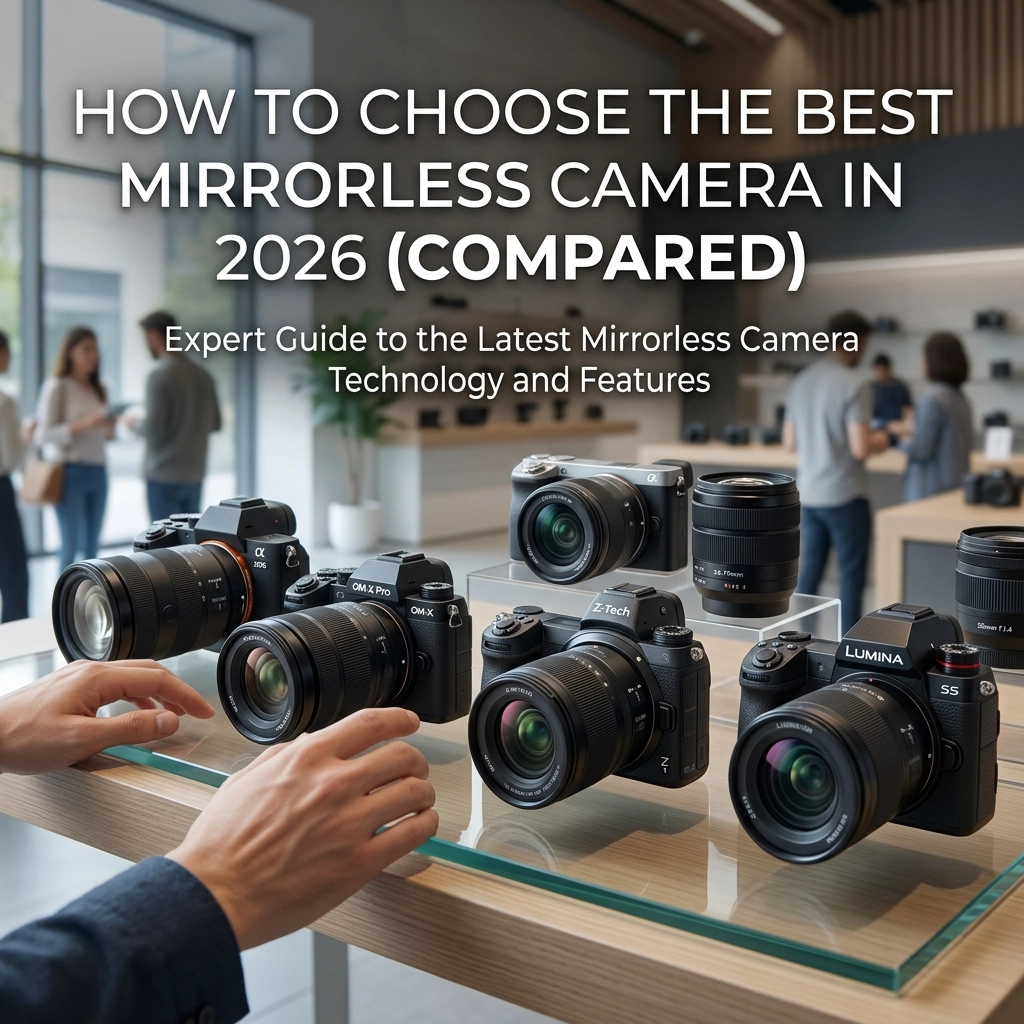
- Is it comfortable? Go to a store and hold the camera. If it doesn't feel good in your hand, you won't use it.
I’ve seen amazing work shot on "outdated" gear. Look at the nature and wildlife photography by Sarang Bhand or the photo series by Merlin Viir. It’s about the vision, not just the sensor.
8. Looking Ahead: Photography News and Trends
What's next? We are already seeing "Global Shutter" technology trickling down from high-end cinema cameras to consumer mirrorless bodies (like in the Sony A9 III). This eliminates distortion entirely.
We’re also seeing more computational photography: the stuff your iPhone does: finding its way into big cameras. Imagine a mirrorless camera that can automatically stack exposures for a perfect HDR shot without you even thinking about it. That’s where we’re headed.
For the latest updates, keep an eye on photography news sites to see what the manufacturers are cooking up next.
Save
Summary: Which One Should You Buy?
Choosing the best mirrorless camera in 2026 comes down to your "why."
- For the Hobbyist/Beginner: Go with the Canon R50. It’s easy, fun, and affordable.
- For the Professional Hybrid: The Sony A7 IV or Nikon Z 6III offer the best balance of price and performance.
- For the High-Res Junkie: The Sony A7R V is your best bet for incredible detail.
- For the Action Pro: The Nikon Z9 is the king of the mountain.
No matter what you choose, remember that the best camera is the one you actually bring with you. Don't get so caught up in the specs that you forget to go out and shoot. Whether you’re into sexy light-hearted surrealism or forbidden love stories in photo form, the gear is just a tool.
If you want to see some world-class inspiration of what's possible with modern gear, go check out EdinFineArt.com. Seeing what others are creating is often the best way to figure out what kind of gear you need to achieve your own vision.
Now, stop reading, grab your camera (whatever it is), and go make something cool. The light is burning!
Quick Amazon shortcuts for the camera categories covered in this guide. Use them if Prime shipping or your existing Amazon credit makes more sense than B&H. As an Amazon Associate ShutYourAperture earns from qualifying purchases.