Best Photography Spots in New York City: 12 Locations With GPS
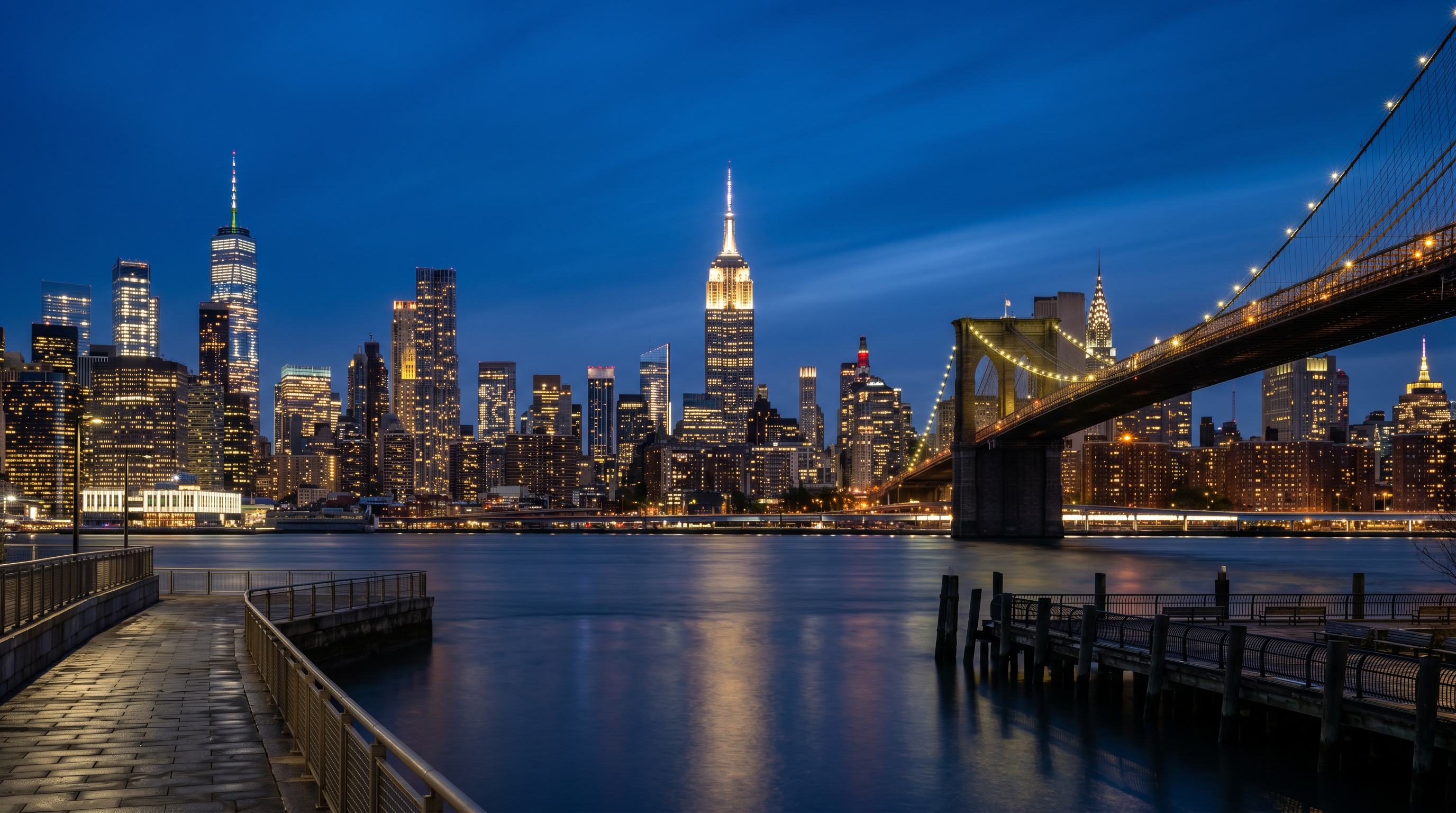
New York City, New York is one of the most photogenic cities in the United States. If you have a camera and the patience to show up before dawn, New York City will give you images that last a career — but only if you know where and when to point it.
This is the definitive field guide to the 12 best photography spots in New York City, with GPS coordinates you can drop straight into Google Maps, exact camera settings tuned to New York City’s unique light, precise timing for every location, and the access notes nobody else bothers to document. It mirrors the intel inside our New York City Ultimate Photographer’s Guide ($47 PDF) — a downloadable field guide with full-page hero images, GPS maps, seasonal tables, a city safety briefing, and a complete photographer’s packing list. Get the guide →
Planning multi-city travel? See also: U.S. cities photography hub and the National Parks Photography Guides.
12 GPS-mapped locations · Exact camera settings · Multi-season shooting calendar · Free annual updates
Download the PDF guide →
Quick jump to the 12 spots
- DUMBO – Washington Street Manhattan Bridge View
- Top of the Rock Observation Deck
- Central Park – Bow Bridge
- Times Square at Night
- Grand Central Terminal – Main Concourse
- The Vessel – Hudson Yards
- The High Line – 10th Avenue Square
- Flatiron Building – 23rd Street Corner
- Williamsburg Waterfront – Marsha P. Johnson State Park
- Coney Island – Riegelmann Boardwalk
- Washington Square Park – Arch
- The Cloisters – Fort Tryon Park
A look inside the New York City Photographer’s Guide
Here are three of the actual shots you’ll find inside the PDF — cinematic full-page references for the exact spots, lenses, and lighting conditions documented in the guide. The full guide includes 12 locations, each with a hero image, GPS map, settings table, and a five-shot list.
 Save
Save
Before you shoot New York City: the essentials
- Free public access: Most outdoor locations, parks, bridges, and street-level shots are free. Indoor/elevated paid attractions include Top of the Rock ($42–$71), The Vessel ($10–$20), and The Met Cloisters ($30 adults; pay-what-you-wish for NY State residents).
- Commercial permits: Per NYC Mayor’s Office of Media & Entertainment (MOME): no permit required for casual, personal, or media photography using a hand-held camera or tripod without exclusive use of City property. Commercial productions with equipment packages, production vehicles, or exclusive use of public space require a film permit ($500 per 14-day period). Details: nyc.gov/site/mome/permits
- Best photography seasons: Spring (Apr–May) and Fall (Sep–Nov) for foliage, comfortable temperatures, and dramatic skies; winter for crisp air and long-exposure city lights
- Blue hour notes: Blue hour in Manhattan typically runs 20–40 minutes after sunset; best captured from elevated or waterfront vantage points. Neon-lit Times Square and East River waterfront at DUMBO peak during this window. Use f/8, ISO 400–800, 2–8 sec exposures.
- Drone policy: Most major U.S. cities restrict drone flight in airspace and via local ordinances. Check FAA + city rules before launching.
- Local resource: Official visitor information
The full-resolution version of every map below — plus seasonal calendars, gear notes per location, sun-angle diagrams, and a complete photographer’s packing checklist — is inside the New York City Photographer’s Guide PDF ($47).
1. DUMBO – Washington Street Manhattan Bridge View
The cobblestone frame of Washington Street channels the Manhattan Bridge arch with the Empire State Building perfectly centered beneath it — one of the most reproduced compositions in NYC photography. The red-brick buildings and irregular cobblestones add warmth and texture that set this apart from any other city view.
- GPS: 40.7025, -73.9896
- Elevation: 20 ft
- Best time of day: Sunrise or early morning (golden hour) on weekdays to avoid crowds; the sun rises behind the Manhattan Bridge in summer months, providing dramatic backlighting
- Sun direction: Bridge faces northwest; sun rises roughly behind the bridge in late spring–summer mornings, casting warm backlight on the cobblestones. In fall/winter, morning light rakes from the southeast across the brick facades, creating long shadows along Washington Street.
- Access: Transit: F train to York St (5-min walk), A/C to High St–Brooklyn Bridge, 2/3 to Clark St. Ferry: Fulton Ferry/DUMBO terminal. Free street access at Washington St between Plymouth and Front Sts. No parking privileges; street parking extremely limited. Open 24/7.
- Difficulty: easy
- Recommended settings: Golden Hour Standard: f/8, 1/250 sec, ISO 200, 35mm · Blue Hour Long Exposure: f/11, 4 sec, ISO 400, 24mm · Overcast Street Scene: f/5.6, 1/125 sec, ISO 800, 50mm · Telephoto Compression: f/8, 1/500 sec, ISO 400, 85mm
Shots to chase:
- Classic center-frame: stand mid-street at Washington/Water, shoot north to frame the Manhattan Bridge arch with the Empire State Building beneath it
- Pre-dawn long exposure: capture light trails from the occasional car on the cobblestones with the illuminated bridge
- Rainy-night reflection: wet cobblestones mirror the bridge lights for a painterly abstract
- Human-scale silhouette: wait for a lone pedestrian to stride through the arch for scale and story
- Telephoto compression at 85–135mm from the corner of Front and Washington for a compressed, stack-effect of arch, brickwork, and skyline
Pro tip: Arrive at sunrise on a weekday in summer; the alignment of the early sun with the bridge creates natural backlighting that crowds out by 8 AM. Stand in the middle of the street (be mindful of cars) at the Washington/Water intersection and shoot from hip height to include the full cobblestone texture in the foreground.
Common mistake to avoid: Shooting from the sidewalk cuts off the cobblestone foreground and ruins the classic composition. Arriving after 9 AM in peak season means crowds and scaffolding in your frame; midday harsh light eliminates the arch’s shadow depth.
2. Top of the Rock Observation Deck
Uniquely, the Empire State Building appears in every south-facing composition — an impossibility from ESB itself. Three tiers of open-air and glass-enclosed decks at 850 ft provide frameless 360° views with Central Park to the north, the full Manhattan skyline to the south, and both rivers flanking the island.
- GPS: 40.7591, -73.9794
- Elevation: 850 ft
- Best time of day: Sunset to 40 minutes after (blue hour / dusk) for the optimal balance of ambient sky and city lights; early morning (opening, 8–9 AM) for uncrowded access and soft directional light
- Sun direction: The deck faces all 360°. The south view frames the Empire State Building with the sun setting to the southwest in summer, producing warm sidelight on the ESB facade. The north view down Central Park is best in early morning when the low eastern sun illuminates the green canopy.
- Access: 30 Rockefeller Plaza, Manhattan. Subway: B/D/F/M to 47–50 Sts–Rockefeller Ctr. Open daily 8 AM–midnight, last entry 11:10 PM. General admission: $42–$71 (adults 13+), varies by time/season; children 5 and under free. Tripods not permitted; mini-tripods/gorilla pods allowed on the concrete ledge piers on the top (70th-floor) deck. No parking on-site; midtown parking garages nearby.
- Difficulty: easy
- Recommended settings: Sunset To Blue Hour: f/8, 1/15–1/30 sec, ISO 800, 24–35mm (on concrete ledge pier) · Deep Night Sparkle: f/8, 2–4 sec, ISO 400, 35mm (gorilla pod on pier) · Daytime Wide: f/11, 1/500 sec, ISO 200, 16–24mm · Telephoto Detail: f/5.6, 1/250 sec, ISO 400, 135mm
Shots to chase:
- South-facing ESB portrait: Empire State Building centered with Midtown towers fanning out in both directions and One WTC in the background
- North view: long green corridor of Central Park stretching to the horizon framed by Manhattan’s residential towers
- Blue-hour city sparkle: window lights and street grids create a glittering quilt from the top deck after sunset
- East River at dusk: Brooklyn Bridge, Manhattan Bridge, and Williamsburg Bridge all visible simultaneously with Queens in the background
- Aerial street-grid abstract: shoot directly down from the 70th-floor fencing to capture the miniature grid of yellow cabs and ant-sized pedestrians
Pro tip: Arrive 75–90 minutes before sunset to secure a pier position on the south side of the 70th-floor deck, which has the least foreground obstruction from the 69th-floor glass panels. Use the flat concrete piers between fence sections to brace the camera; a gorilla pod wedged there functions as an effective stabilizer. Commercial photography and professional video equipment are prohibited.
Common mistake to avoid: Shooting only during sunset misses the best light — city sparkle peaks 20–40 minutes after the sun drops. Staying only on the 69th-floor deck (with glass panels) reduces sharpness and causes reflections; always go to the 70th-floor open deck.
3. Central Park – Bow Bridge
Built in 1862, Bow Bridge is Central Park’s most photographed feature — a 60-foot cast-iron span whose graceful arc frames the Lake and its perfect reflection of the UWS skyline. On a still morning it produces one of the few mirrored-city shots available entirely within a park setting.
- GPS: 40.7758, -73.9718
- Elevation: 54 ft
- Best time of day: Sunrise (golden hour) for mirror-like lake reflections and empty bridge; autumn for fiery foliage; winter for snow-frosted ironwork
- Sun direction: Bridge runs roughly east–west. Morning sun from the east illuminates the San Remo and Central Park West towers reflected in The Lake. Late-afternoon light from the west casts warm tones on the bridge ironwork and western treeline.
- Access: Central Park, Manhattan, mid-park at 74th St. Subway: B/C to 72nd St (5-min walk east into park). Free. Park open daily 6 AM–1 AM. No vehicle access near the bridge; cyclists use the park loop. No permit required for personal photography.
- Difficulty: easy
- Recommended settings: Sunrise Reflection: f/11, 1/30 sec, ISO 200, 24mm (tripod) · Autumn Foliage: f/8, 1/125 sec, ISO 400, 35mm · Overcast Moody: f/5.6, 1/60 sec, ISO 800, 50mm · Telephoto Skyline Compression: f/8, 1/500 sec, ISO 400, 135mm
Shots to chase:
- Stand on the bridge and face east toward the Bethesda Terrace for an arch-framed fountain view
- Shoot from the lake’s south shore with the bridge centered and San Remo towers visible above the tree line
- Early-morning reflection: approach from Cherry Hill dock at dawn for a still-water double-image of the bridge
- Winter ice: frozen Lake surface with snow on the ironwork railing creates an otherworldly scene
- Fall foliage canopy: stand mid-bridge and shoot toward the Ramble as the forest blazes red and orange
Pro tip: Arrive 20 minutes before sunrise for the best chance of glassy water before joggers and cyclists disturb the surface. The vantage from the Cherry Hill fountain dock (just west of the bridge) provides the best separation between the bridge arch and the background skyline. A polarizing filter reduces glare on the water and deepens the sky.
Common mistake to avoid: Shooting from the bridge itself is scenic but misses the full reflection composition; move to the lake shore. Midday sun blows out the sky and creates harsh shadows in the ironwork; golden-hour or overcast light is far superior.
4. Times Square at Night
The densest concentration of illuminated billboard surfaces in the world creates an immersive light canyon unlike any other urban photography environment. During blue hour the neon and LED facades achieve a near-daylight intensity that enables handheld shooting at low ISO while preserving a vivid azure sky overhead.
- GPS: 40.7564, -73.9865
- Elevation: 36 ft
- Best time of day: Blue hour (20–40 min after sunset) for the optimal balance of blue sky and full neon intensity; avoid fully-dark nights when the sky goes pure black
- Sun direction: Times Square runs roughly NNW–SSE along Broadway. The tight canyon shading means direct sun rarely penetrates to street level. For the best ambient-to-neon balance, shoot during the 20-minute blue-hour window when ambient sky luminance matches billboard brightness.
- Access: Junction of Broadway and 7th Ave, W 42nd–47th Sts, Manhattan. Subway: N/Q/R/W/S/1/2/3/7 to Times Sq–42nd St. Free access to all public plazas and pedestrian zones. TKTS Red Steps at 47th St provide elevated vantage. Car-free pedestrian plazas between 42nd–47th Sts. Open 24/7.
- Difficulty: easy
- Recommended settings: Blue Hour Handheld: f/5.6, 1/60 sec, ISO 800, 24mm · Long Exposure Trails: f/8, 2–4 sec, ISO 400, 35mm (tripod on plaza edge) · Deep Night Neon: f/8, 1/30 sec, ISO 1600, 24mm · Crowd Motion Blur: f/11, 1/8 sec, ISO 400, 16mm
Shots to chase:
- Southwest corner of 42nd St and 7th Ave: a clean south-facing view of the full Broadway canyon with billboards receding to the vanishing point
- TKTS Red Steps: elevated position above the pedestrian flow, shoot north toward the Coca-Cola billboard for crowd density without being engulfed
- Rain reflection: wet pavement doubles the neon signs in a shimmering abstract carpet
- Long-exposure taxi stream: 2–4 sec at f/11 captures yellow cab light trails weaving through the crossroads
- Looking up between buildings: ultra-wide 14–16mm pointed skyward shows the billboard canyon converging with a strip of blue sky
Pro tip: The southwest corner of 42nd St and 7th Ave — facing south — is the definitive composition for the full billboard canyon. Shoot during the 15-minute blue-hour window precisely; the transition from blue to black sky happens fast. A circular polarizing filter reduces glare on wet pavement and intensifies reflections after rain.
Common mistake to avoid: Coming mid-afternoon eliminates neon impact — billboards appear washed out in daylight. Shooting at ground level in the pedestrian flow produces blurry crowds and poor compositions; use the TKTS steps or cross street corners for a clear sightline. Shooting straight into fully dark conditions makes the sky dead black, losing all sky–neon depth.
Want this in your pocket on the street?
The full-resolution version of every spot above — with full-page hero photography, GPS maps with gold location pins, sun direction diagrams, multi-season tables, and a complete safety + packing checklist — is inside the New York City Ultimate Photographer’s Guide PDF ($47). Print it, save it offline, take it on the walk. Get the guide →
5. Grand Central Terminal – Main Concourse
 Save
Save
The 75,000 sq ft main concourse with its Beaux-Arts barrel vault and turquoise celestial ceiling is one of the most architecturally grand interior spaces in North America. During morning rush hours, kinetic crowds in motion blur below fixed vaulted geometry create a uniquely cinematic composition impossible to replicate in any other space.
- GPS: 40.7527, -73.9772
- Elevation: 60 ft
- Best time of day: Morning rush (7–9 AM) for iconic commuter motion blur and shaft-of-light rays through the clerestory windows; or midday in winter when low sun angles create the strongest celestial window beams
- Sun direction: The main concourse faces south; the famous diagonal clerestory windows on the south wall admit direct sunlight in the morning from October through March when the sun is low enough to clear the adjacent MetLife Building. The light-shaft effect is strongest Nov–Feb between 9–11 AM.
- Access: 89 E 42nd St at Park Ave, Manhattan. Subway: 4/5/6/7/S to Grand Central–42nd St (direct underground connection). Free entry at all times. Terminal open 5:30 AM–2 AM daily. Tripods require a free permit from the stationmaster’s office (limited to off-peak hours); handheld cameras unrestricted. Commercial shoots: $250 non-commercial / $450 commercial permit from Grand Central Madison.
- Difficulty: easy
- Recommended settings: Rush Hour Motion Blur: f/11, 1–2 sec, ISO 400, 24mm (tripod/permit required) · Handheld Ambient: f/2.8, 1/60 sec, ISO 3200, 24mm · Light Shaft Rays: f/16, 1/30 sec, ISO 400, 35mm (tripod) · Architectural Detail: f/8, 1/125 sec, ISO 800, 14mm
Shots to chase:
- Center concourse floor looking up: ultra-wide 14–16mm aimed at the vaulted ceiling to capture Cerulean zodiac mural and arched windows
- Morning rush motion blur: long exposure (1–2 sec) from the upper balcony ramp for commuters as kinetic streaks below static architecture
- Celestial window shafts: shaft of golden light piercing the main hall’s south windows in November–February mornings
- Vanderbilt Hall arches: marble-tiled room off the main concourse with symmetrical arches and warm amber lighting
- Oyster Bar ramp underpass: curved stone corridor below the concourse with hypnotic arched brick vaulting
Pro tip: The best tripod position is the upper ramp/balcony overlooking the concourse (southeast corner) — request a free stationmaster permit for off-peak use. For the iconic commuter shot without a permit, wedge your camera against a column or railing during off-peak and use ISO 1600–3200 for handheld steadiness. The celestial ceiling restoration revealed over 2,500 stars; a tilt-shift lens dramatically enhances this shot.
Common mistake to avoid: Shooting at street level in the center of the concourse produces crowd-obstructed foregrounds and poor angle on the ceiling; the upper balcony ramp provides the classic view. Flash photography ruins the ambient mood and will draw attention from security.
6. The Vessel – Hudson Yards
Thomas Heatherwick’s 154-flight latticed staircase structure is a one-of-a-kind architectural sculpture — 2,500 individual steps organized into a honeycomb of 80 landings that create infinite geometric compositions from every angle. The copper-toned Corten-inspired steel changes appearance dramatically with shifting light.
- GPS: 40.7538, -74.0022
- Elevation: 150 ft
- Best time of day: Golden hour (afternoon) for warm coppery light catching the honeycombed steel; overcast for even reflections on the bronze metalwork
- Sun direction: The Vessel faces east toward Hudson Yards plaza. Afternoon sun from the west backlights the latticed staircases, creating dramatic silhouette patterns. Morning sun from the east fills the interior with light, illuminating the staircase geometry from within.
- Access: 20 Hudson Yards (10th Ave & 33rd St), Manhattan. Subway: 7 to 34th St–Hudson Yards (direct). Tickets required: $10 (timed), $20 (flex admission); NYC residents free on Thursdays with ID. Open daily 11 AM–5 PM, reopens 7–9 PM. Last entry 8 PM. No tripods inside the structure; exterior is publicly accessible. Tickets: vesselnyc.com.
- Difficulty: easy
- Recommended settings: Golden Hour Exterior: f/8, 1/500 sec, ISO 200, 24mm · Overcast Architectural: f/11, 1/125 sec, ISO 400, 35mm · Interior Staircase Abstract: f/8, 1/60 sec, ISO 800, 14–16mm · Night Illuminated: f/5.6, 1/30 sec, ISO 1600, 24mm
Shots to chase:
- Low-angle exterior from plaza level: wide-angle looking up to frame the lattice against a blue sky with the ESB or 30 Hudson Yards tower as background
- Interior staircase geometry: shoot upward through the concentric rings of stairs for a dizzying optical illusion
- Human scale on landing: position a person on a mid-level landing with the full structure rising behind them
- Sunset silhouette: backlit lattice at golden hour creates graphic shadow-play on the plaza below
- Reflection in adjacent 30 Hudson Yards glass: the Vessel mirrored in the office tower facade across the plaza
Pro tip: For the purest architectural abstracts, visit on a slightly overcast afternoon — diffuse light eliminates harsh shadows in the lattice. From inside, shoot straight up through the central void with an ultra-wide or fisheye for a graphic infinity-spiral effect. Early morning before crowds arrive gives the cleanest plaza-level exterior shots.
Common mistake to avoid: Shooting only from ground level at a flat angle produces a crowded, repetitive lattice with no sense of scale. Shooting at midday with hard overhead sun creates blown highlights on the upper steel panels. Trying to use a tripod inside is prohibited and leads to removal.
7. The High Line – 10th Avenue Square
The 1.45-mile elevated rail-bed park converts raw industrial infrastructure — original steel I-beams and rail tracks — into a narrow green corridor that floats 30 feet above the Chelsea street grid. The 10th Avenue Square is an amphitheater cut into the park with floor-to-ceiling glass framing 10th Avenue below, offering a live street-theater composition unavailable at ground level.
- GPS: 40.748, -74.0049
- Elevation: 50 ft
- Best time of day: Sunrise (golden hour) for warm light along the rail corridor with minimal foot traffic; late spring when wildflower plantings are in full bloom
- Sun direction: The High Line runs roughly north–south. Morning sun from the east rakes across the elevated landscape, casting long shadows of rail tracks and plantings westward toward the Hudson. 10th Avenue Square faces east and captures the street grid below directly into the rising sun on clear mornings.
- Access: Access points at Gansevoort St, 14th St, 16th St, 18th St, 20th St, 23rd St, 26th St, 28th St, 30th St, and 34th St (Hudson Yards). Subway: A/C/E to 14th St or 23rd St; 7 to 34th St for north end. Free entry; open daily 7 AM–10 PM (June–Sep), 7 AM–8 PM other seasons. Tripods allowed in off-peak hours. No vehicle access.
- Difficulty: easy
- Recommended settings: Sunrise Long Corridor: f/11, 1/125 sec, ISO 200, 24mm · Spring Bloom: f/5.6, 1/500 sec, ISO 200, 50mm · 10Th Avenue Street Theater: f/8, 1/250 sec, ISO 400, 50mm · Dusk City View: f/8, 1/30 sec, ISO 1600, 24mm
Shots to chase:
- 10th Avenue Square amphitheater: position at the window glass and shoot south for a framed composition of pedestrians and cars flowing through the street below
- Linear rail corridor: shoot south along the original tracks with wildflower plantings flanking both sides converging to a vanishing point
- Zaha Hadid building (520 W 28th St): abstract wave facade rising above the park’s south edge creates striking architectural contrast
- Spring bloom close-up: macro of native grasses and wildflowers with Manhattan skyline softly blurred in background
- Night glow: High Line lamp posts and city lights create an intimate path of light at blue hour or after dark
Pro tip: The 10th Avenue Square glass window is a prime position — arrive early before tourists fill the stepped seating to get an unobstructed framed street view. Shoot with a medium telephoto (50–85mm) looking down through the glass to compress the street scene and fill the frame with activity. Early morning on weekdays, when the park is nearly empty, allows use of a tripod for long corridors shots without crowd management.
Common mistake to avoid: Starting at 14th St and walking north means arriving at the most photogenic north end (Hudson Yards and Vessel views) when already fatigued; consider starting at 34th St and walking south. Shooting in the middle of a crowded summer afternoon makes wide shots nearly impossible — the narrow park allows no room to step around foot traffic.
8. Flatiron Building – 23rd Street Corner
The 1902 Flatiron Building occupies a singular triangular lot where Broadway and Fifth Avenue intersect, creating the archetypal NYC architectural prow shot. It is one of the most recognizable silhouettes in American photography, and its narrow steel-frame construction allows it to be fully framed from across 23rd Street’s wide intersection.
- GPS: 40.7411, -73.9897
- Elevation: 60 ft
- Best time of day: Blue hour and just after sunset for the best light-trail potential and ambient sky tone; overcast days eliminate harsh shadows and reveal the limestone facade’s natural texture
- Sun direction: The building’s iconic prow points south. Morning sun from the east illuminates the Broadway (east) facade. Afternoon sun from the west lights the Fifth Avenue (west) facade. The north-facing pedestrian triangle plaza directly in front of the prow catches both facades simultaneously during overcast days. The south-facing apex is best photographed from a position 1.5–2 blocks north.
- Access: 175 Fifth Ave at the intersection of Broadway and 23rd St, Manhattan. Subway: N/R/W to 23rd St; F/M to 23rd St. Free exterior access. Flatiron Plaza and Madison Square Park are public spaces. Open 24/7 exterior. The building is a historic landmark; interior commercial tenants. No permit required for exterior personal photography.
- Difficulty: easy
- Recommended settings: Blue Hour Light Trails: f/11, 4–8 sec, ISO 200, 24mm (tripod at triangle plaza) · Overcast Facade Detail: f/8, 1/125 sec, ISO 400, 50mm · Dawn Misty Street: f/8, 1/60 sec, ISO 800, 35mm · Classic Daytime: f/11, 1/250 sec, ISO 200, 28mm
Shots to chase:
- Classic prow: stand at the triangular median at 23rd St and Fifth Ave, shoot south to capture the building’s full tapered facade at eye level
- Blue-hour light trails: 4–8 sec exposure from the north median for taxi and bus streaks converging on the Flatiron’s prow
- Madison Square Park low angle: sit in the park on the east side and shoot northwest for a tree-framed view with sky above
- Fog or misty morning: the building literally disappears and re-emerges from atmospheric haze, creating ethereal impressionist compositions
- Night reflection: after rain, the wet Broadway surface mirrors the illuminated limestone facade in watery gold
Pro tip: The triangular pedestrian island at 23rd St/Fifth Ave is the classic position for the prow shot — use a tripod for blue-hour light trails when car frequency is high enough to create unbroken streaks. A slightly wide lens (24–35mm) takes in both flanking street canyons simultaneously. For fall: shoot from Madison Square Park where yellow ginkgo trees frame the building’s southern face.
Common mistake to avoid: Shooting from directly below (too close on Fifth Ave) distorts the prow into an ugly trapezoid and loses the distinctive triangular shape. Midday sun creates harsh directional shadows that fragment the stone detailing. Standing on the west side (Broadway) misses the prow altogether — always shoot from the triangular median or the north side.
Want this in your pocket on the street?
The full-resolution version of every spot above — with full-page hero photography, GPS maps with gold location pins, sun direction diagrams, multi-season tables, and a complete safety + packing checklist — is inside the New York City Ultimate Photographer’s Guide PDF ($47). Print it, save it offline, take it on the walk. Get the guide →
9. Williamsburg Waterfront – Marsha P. Johnson State Park
 Save
Save
Marsha P. Johnson State Park stretches 11 acres along the East River in Williamsburg, offering an unobstructed western waterfront view of Midtown Manhattan’s skyline — the Chrysler Building, Empire State Building, and One WTC are all visible simultaneously from a low, level perspective that makes the skyline loom dramatically. The rocky shoreline and ferry wake create natural foreground textures.
- GPS: 40.7216, -73.9623
- Elevation: 10 ft
- Best time of day: Sunset (golden hour) for warm light on the Manhattan skyline across the East River; blue hour for the lit Midtown towers reflected in still water
- Sun direction: Park faces west-southwest across the East River toward Midtown Manhattan. Sun sets directly behind the Manhattan skyline in late October–November and early February, creating an intense backlit silhouette. Summer sunsets are northwest of the skyline but still provide warm sidelighting.
- Access: 90 Kent Ave, Brooklyn, NY 11249 (Williamsburg). Subway: L to Bedford Ave (15-min walk to waterfront), NYC Ferry to North Williamsburg stop (adjacent). Free. Open daily year-round; park hours approximately 6 AM–10 PM. Limited street parking along Kent Ave.
- Difficulty: easy
- Recommended settings: Golden Hour Skyline: f/11, 1/125 sec, ISO 200, 70mm · Blue Hour Reflection: f/8, 1–2 sec, ISO 400, 35mm (tripod) · Rocky Shore Foreground: f/11, 1/60 sec, ISO 400, 24mm · Telephoto Skyline Compression: f/8, 1/500 sec, ISO 400, 200mm
Shots to chase:
- Wide-angle river panorama: 24mm at blue hour with Manhattan skyline spanning the full width of the frame and East River foreground
- Telephoto compression: 200mm+ to stack the ESB, Chrysler, and One WTC into a flat, dense skyline
- Smorgasburg market (spring–fall, Saturdays): blend colorful food stalls and crowds with the skyline backdrop for street-market documentary
- Ferry wake reflection: time a long exposure (2–4 sec) as the NYC Ferry passes for silk-smooth water with a skyline reflection broken by wake trails
- Night sparkling skyline: Midtown towers lit post-sunset with Williamsburg Bridge lights to the north
Pro tip: The rocky beach at the park’s north end provides the best foreground texture for wide-angle compositions. Golden hour here in late October produces one of NYC’s most dramatic silhouette shots, with the setting sun dropping directly behind the skyline cluster. Combine with Domino Park to the south (0.5-mile walk) for additional sugar-factory industrial foreground elements.
Common mistake to avoid: Shooting only at the ferry terminal end misses the more open beach area with better skyline separation. Midday shooting creates a flat, washed-out skyline — this location lives and dies by the quality of evening light. A telephoto lens (70–200mm) is essential; shooting only with a wide lens fails to compress the skyline elements into a dramatic stack.
10. Coney Island – Riegelmann Boardwalk
Coney Island combines beach, amusement rides, boardwalk culture, and Atlantic Ocean horizon in a uniquely American tableau absent from any other NYC neighborhood. The 1920 Wonder Wheel, 1977 Cyclone roller coaster, and 1936 Parachute Jump are irreplaceable vintage subjects. Summer crowds provide vibrant street-photography energy while off-season visits reveal a hauntingly quiet carnival atmosphere.
- GPS: 40.5739, -73.9805
- Elevation: 5 ft
- Best time of day: Summer golden hour (evening) for backlit amusement rides and beach crowds; early morning in off-season for solitary boardwalk atmosphere and dramatic skies
- Sun direction: The boardwalk runs east–west facing south toward the Atlantic. Morning sun rises from the east along the boardwalk creating long shadows of rides and structures. Evening sun sets to the west, backlighting the Parachute Jump and Wonder Wheel from the beach.
- Access: Riegelmann Boardwalk, Coney Island, Brooklyn. Subway: D/F/N/Q to Coney Island–Stillwell Ave (0.3-mile walk to boardwalk). Free. Boardwalk open 24/7. Luna Park and Wonder Wheel have individual admission fees. Seasonal attractions open late May–Labor Day. NYC Parks jurisdiction; personal photography always free.
- Difficulty: easy
- Recommended settings: Summer Golden Hour: f/8, 1/500 sec, ISO 200, 35mm · Ride Light Trails: f/11, 8–15 sec, ISO 200, 24mm (tripod at night) · Beach Wide Scene: f/11, 1/250 sec, ISO 200, 16mm · Off Season Moody: f/8, 1/60 sec, ISO 800, 50mm
Shots to chase:
- Wonder Wheel at night: 10–15 sec long exposure from the boardwalk for a full-circle light trail with the Atlantic behind
- Parachute Jump silhouette: backlit at sunset from the beach looking west, the steel tower becomes a graphic black spire against orange sky
- Summer crowd street scene: 35mm at f/8 walking the boardwalk mid-afternoon for authentic documentary energy
- Off-season melancholy: closed rides and deserted beach in gray winter light for a nostalgic, Edward Hopper-style composition
- Beach-to-skyline: wide-angle from surf line at sunrise, shooting west along the shore to include both the boardwalk crowds and city horizon in the distance
Pro tip: For night ride-light trails, position yourself on the boardwalk south of the Wonder Wheel between 9–11 PM in summer when the rides are lit. A 10–15 sec exposure at f/16 with base ISO on a tripod captures full wheel rotations as complete light circles. Off-season mornings (October–March) offer an entirely different, quieter Coney Island with dramatic skies that compensate for reduced subject energy.
Common mistake to avoid: Shooting only from the boardwalk misses the beach-level perspective where the rides tower against the sky with Atlantic horizon behind. Arriving past 10 AM in summer means dense crowds that make composition control nearly impossible on the boardwalk itself. Forgetting that winter shooting is equally rewarding — the haunting off-season atmosphere is a distinct photographic genre.
11. Washington Square Park – Arch
Stanford White’s 1892 marble triumphal arch anchors the southern terminus of Fifth Avenue and is the symbolic heart of Greenwich Village bohemian culture. The wide plaza and central fountain create an unusually open urban composition for Manhattan, with the arch framing the Fifth Avenue corridor to the north. Year-round street performers, chess players, and NYU students provide authentic urban energy.
- GPS: 40.7308, -73.9971
- Elevation: 26 ft
- Best time of day: Golden hour at sunset when warm light illuminates the marble arch from the southwest; spring and summer when the fountain is running and surrounding trees are in full leaf
- Sun direction: The arch faces north on the southern terminus of Fifth Avenue. Morning sun from the east creates raking light on the marble bas-reliefs. Late afternoon sun from the southwest washes the south-facing arch face in warm gold — prime shooting time from inside the park looking north.
- Access: Washington Square Park, Greenwich Village, Manhattan. Subway: A/B/C/D/E/F/M to W 4th St–Washington Sq. Free. Open daily 6 AM–midnight. Police guard the arch 24/7; no access directly under the arch for unobstructed shots (security railing). Personal photography always unrestricted.
- Difficulty: easy
- Recommended settings: Golden Hour Arch: f/8, 1/250 sec, ISO 200, 35mm · Arch And Avenue Compression: f/11, 1/500 sec, ISO 400, 85mm · Night Illuminated: f/4, 1/30 sec, ISO 3200, 24mm · Spring Fountain Scene: f/8, 1/500 sec, ISO 200, 24mm
Shots to chase:
- Classic axial view: stand at the park’s central fountain and shoot north toward the arch with the Fifth Avenue corridor receding behind it
- Low-angle drama: crouch near ground level inside the main fountain plaza and shoot upward to make the arch monumental against the sky
- Night illumination: arch is lit year-round; long-exposure with light trails from passing vehicles on Washington Square North
- Arch framing trees: from inside the park looking south, frame the arch between bare winter branches or spring leaf clusters
- People-watching documentary: 50mm at f/5.6 around the central fountain captures chess players, musicians, and dog-walkers in a Greenwich Village slice-of-life series
Pro tip: The police security railing immediately under the arch prevents close-up shots directly beneath it; the optimal composition is from 50–80 feet south inside the park’s fountain plaza. A mid-length telephoto (85mm) from the south end of the park compresses the arch against the Fifth Avenue buildings for a classic postcard composition. Early morning on weekdays is the only time the park is relatively empty.
Common mistake to avoid: Attempting to shoot directly under the arch is blocked by the security fence — adjust to a distance of 50+ feet for a full frontal view. Shooting in full midday sun creates an ugly dark shadow under the arch and bleaches the white marble; golden-hour sidelight reveals the carved detail.
12. The Cloisters – Fort Tryon Park
Perched 200 feet above the Hudson on Manhattan’s northern tip, the Cloisters assembles actual stone elements from five medieval French monasteries into a single museum — a unique cultural-interior photography subject. The surrounding 67-acre Fort Tryon Park offers Hudson River panoramas, the Heather Garden (NYC’s largest public garden), and views of the George Washington Bridge and New Jersey Palisades found nowhere else in Manhattan.
- GPS: 40.8648, -73.9319
- Elevation: 200 ft
- Best time of day: Spring (April–May) for Heather Garden bloom and soft light; autumn (Oct–Nov) for Hudson River foliage; golden hour for warm Palisades silhouettes across the river
- Sun direction: The Cloisters faces west overlooking the Hudson River. Afternoon and evening light from the west illuminates the Romanesque stone facade and floods the garden terraces with warm gold. Morning sun from the east backlights the building; best for exterior architecture shots from Fort Tryon Park paths.
- Access: 99 Margaret Corbin Drive, Fort Tryon Park, New York, NY 10040 (Washington Heights, Manhattan). Subway: A to 190th St (elevator available), then M4 bus to Cloisters or 10-min walk. Free parking on Margaret Corbin Dr. Park open daily 6 AM–1 AM (free). Met Cloisters museum: Tue–Sun 10 AM–5:15 PM; closed Mondays. Admission: $30 adults (mandatory for non-NY State residents); NY State residents pay-what-you-wish ($0.01 minimum). Photography: non-flash, hand-held, personal use allowed inside; no tripods without advance approval from Communications Dept.
- Difficulty: moderate
- Recommended settings: Golden Hour Exterior: f/8, 1/250 sec, ISO 200, 35mm · Interior Garden Cloister: f/4, 1/60 sec, ISO 1600, 24mm (no flash) · Hudson River Overlook: f/11, 1/500 sec, ISO 200, 70mm · Heather Garden Bloom: f/5.6, 1/500 sec, ISO 200, 50mm
Shots to chase:
- Cloisters exterior from park path: medieval stone turrets rising above the forest canopy with Hudson River and Palisades in background
- Interior garden cloister courtyard: Romanesque arched colonnade framing a central garden — a time-travel architectural portrait unlike any other in NYC
- Linden Terrace overlook: wide Hudson panorama with George Washington Bridge and Palisades at golden hour
- Heather Garden in bloom (April–October): 500 varieties of plants create a rich botanical subject with the Manhattan skyline faintly visible to the south
- Billings Arcade stone ruins: remnant arched stonework of the former Billings Mansion provides a photogenic Gothic ruin composition
Pro tip: Arrive via the A train to 190th St and use the elevator — the park entrance at Margaret Corbin Circle places you immediately near the museum and best viewpoints without a steep climb. The Linden Terrace on the park’s western edge offers the finest Hudson River views; arrive 45 minutes before sunset for optimal Palisades lighting. Interior cloisters require non-flash: push ISO to 1600–3200 with f/2.8–4 and correct for the warm tungsten ambient in post.
Common mistake to avoid: Visiting only the museum interior and skipping Fort Tryon Park misses extraordinary outdoor compositions. Arriving on a Monday (museum closed) wastes the museum-exterior combination. Shooting handheld inside with shutter speeds below 1/60 sec at 24mm causes blur — lean against the stone columns for support or request tripod approval well in advance.
When to photograph New York City: a year-round breakdown
New York City is photogenic every month of the year — but the conditions differ radically by season. Here is what to expect:
Spring (Apr–May) and Fall (Sep–Nov) for foliage, comfortable temperatures, and dramatic skies; winter for crisp air and long-exposure city lights
Photographer safety in New York City: read this
City photography has its own risks: gear visibility, neighborhood timing, traffic, weather. Read the briefing before you go.
- Gear visibility: Use a discreet bag with no obvious camera branding. Keep a body strapped under a jacket on transit.
- Neighborhood timing: Pre-dawn and post-sunset shoots reward early scouting. Cross-reference each location with current local guidance and choose well-lit transit routes.
- Situational awareness: Headphones out. One eye in the viewfinder, one on the street.
- Traffic: Bridges, medians, and bike lanes are not setup zones. Shoot from sidewalks and pedestrian areas only.
- Weather: Summer storms move quickly; winter cold drains batteries. Layer up, keep gear dry, watch for ice on cobblestones at blue hour.
The complete safety briefing is inside the New York City Photographer’s Guide PDF.
Take this guide into the city
This post is the complete field reference. The New York City Ultimate Photographer’s Guide PDF is the field-deployable version: full-page resolution hero photography, GPS maps with gold pins for every location, multi-season shooting calendars, gear notes per location, sun-angle diagrams, the full city safety briefing, and a print-ready editorial layout in Framehaus black and gold. Save it offline. Print it. Take it on the walk.
New York City Ultimate Photographer’s Guide
Downloadable PDF · 12 GPS-mapped locations · Multi-season calendar · City safety briefing · Packing checklist
Get the New York City guide — $47
Get the New York City Guide + Preset Pack
Photograph it. Edit it. Done.
All links go to Viator (a TripAdvisor company), the world’s largest marketplace for guided experiences. Tagged as affiliate per FTC.
Take New York City home in your pocket.
Every shot location, every angle, every time of day worth shooting. Printable PDF + GPS-tagged map.
Instant download. Works on phone, tablet, and printed.
Continue reading
- U.S. Cities Photography Guides — every city, mapped
- National Parks Photography Guides
- Travel photography destinations
- Travel photography pillar
- How to shoot golden hour like a pro
- Blue hour photography settings and locations
← Back to U.S. Cities Photography Guides
Related guides nearby
Three more photography guides within striking distance — perfect for combining into one trip.
- Philadelphia 133 km away · city · USA
- Boston 301 km away · city · USA
- Washington Dc 332 km away · city · USA