The weekend is winding down, but the tech world doesn’t sleep. If you’ve been out shooting all day or just relaxing, you might have missed some of the biggest shifts in the photography and videography world. From AI models that can generate hyper-realistic textures to hardware that feels like it’s straight out of a sci-fi flick, there is a lot to catch up on.
At Shut Your Aperture, we keep our fingers on the pulse so you don’t have to. Here is the Sunday night breakdown of the 10 breaking news updates you need to know before you call it a night.
1. Microsoft Launches MAI-Image-2: The End of "Uncanny Valley"?
Microsoft just dropped its second-generation AI image model, MAI-Image-2, within Copilot and Bing Image Creator. For photographers, this is a double-edged sword. The model features massive improvements in photorealism and, more importantly, text rendering.
We’ve all seen those AI images where the "Store" sign looks like gibberish. That’s gone. This model handles complex lighting and skin textures with frightening accuracy. If you’re a commercial photographer, you might want to start thinking about how to integrate these tools into your workflow: perhaps for storyboarding or background generation: rather than fighting them. Speaking of editing, if you want to push your existing photos further with AI, checking out Luminar is still the gold standard for desktop creators.
2. Apple iPad Air with M4 Chip: The Ultimate Field Monitor?
Apple just pulled the curtain back on the new iPad Air featuring the M4 chip. Why does this matter for us? Because it’s packed with enhanced memory and better connectivity. With iPadOS 26, the integration between your camera and your tablet is becoming seamless.
Imagine using this as a high-brightness field monitor that can also run full-scale desktop editing apps without breaking a sweat. It’s thinner, faster, and the battery life is actually catching up to our long shoot days. For those of us still mastering manual mode, having a screen this powerful for instant review is a game-changer.
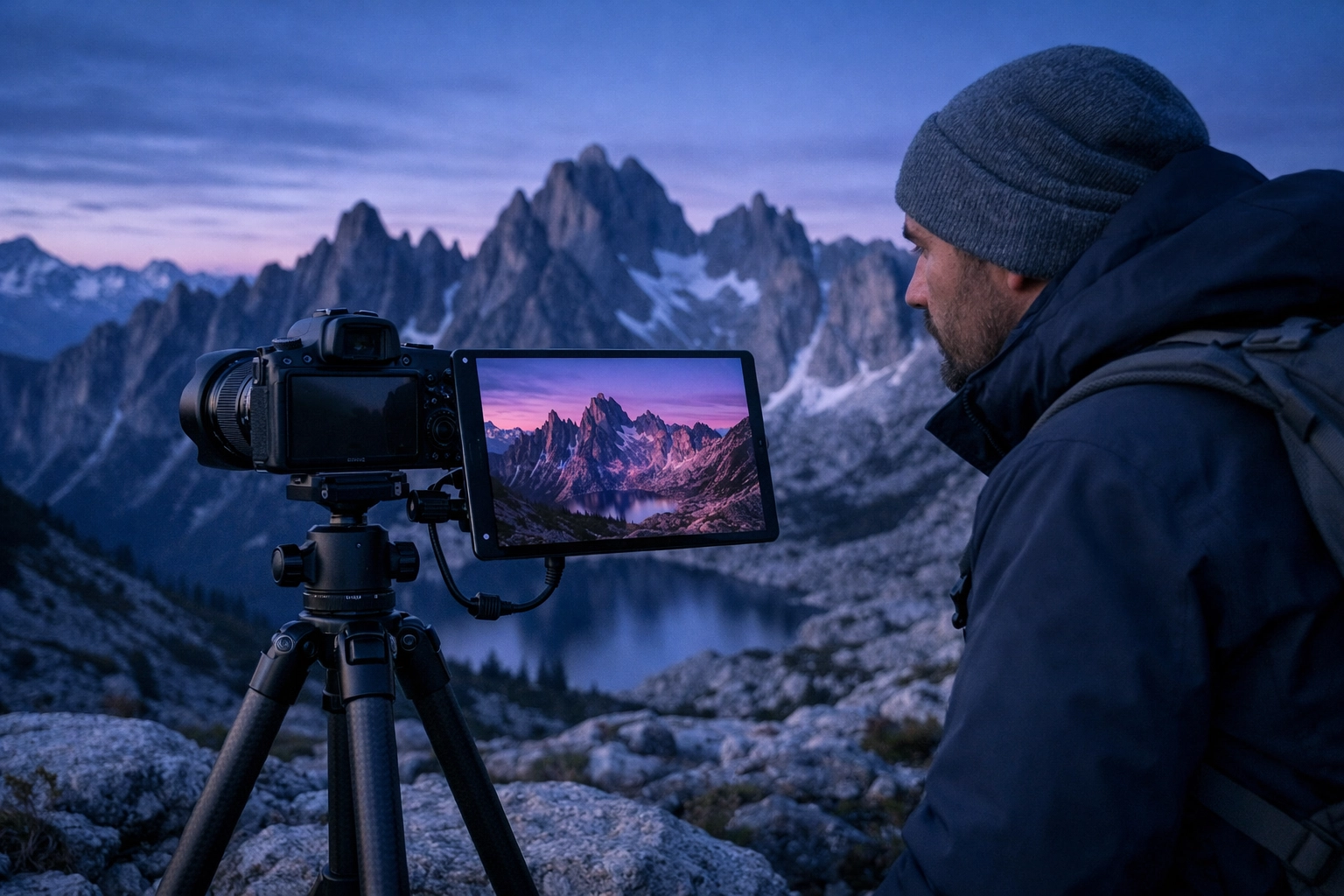
Alt Text: A photographer using a high-tech tablet as a field monitor while shooting a sunset on a tripod, ultra-realistic style.
3. Google’s "Nano Banana 2" is Faster Than Your Buffer
Google has upgraded its AI image generation model, and while the name "Nano Banana 2" sounds like a joke, the specs aren't. This model is built for speed and efficiency. It uses real-time data integration, meaning it can generate visual content based on live events.
For social media creators and news photographers, this means the ability to create supporting visuals for breaking stories in seconds. It’s all about world knowledge features. The AI now understands spatial awareness better, which helps in creating realistic perspective: a common fail point in earlier models.
4. Perplexity Computer: The AI Project Manager You Didn't Hire
Perplexity just unveiled an end-to-end AI system called "Computer." It’s not just a search engine anymore; it can research locations, design a shot list, code a gallery website, and manage your deployment.
If you’re struggling with the business side of photography: which, let’s be honest, is most of us: this could be huge. Imagine telling your computer, "Find me hidden gem locations for travel photography, check the weather for next Tuesday, and draft a permit application." That’s the level of automation we’re looking at.
5. Honor’s Robot Phone: A Humanoid Camera Assistant?
At MWC 2026, Honor showcased a concept that sounds wild: the Robot Phone. It’s a humanoid device that reimagines how AI integrates motion and spatial awareness.
Think about a phone that can physically move to track you while you’re filming a vlog, or a device that can stabilize itself by "walking" to a better vantage point. It’s still a concept, but it shows where the industry is heading: cameras aren't just boxes we hold; they are becoming autonomous observers. This aligns with many of the latest photography trends we’ve been tracking this year.
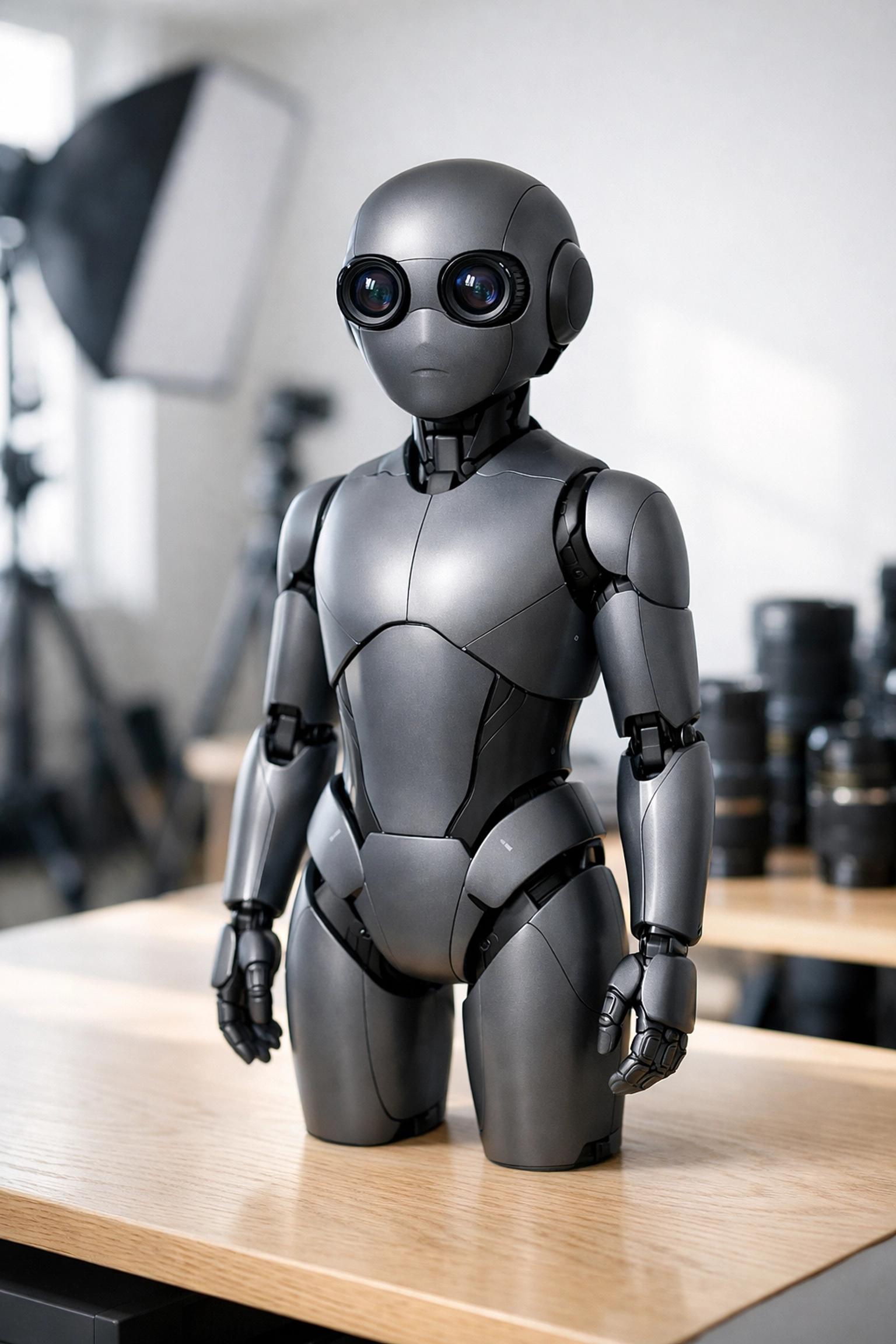
Alt Text: A futuristic humanoid smartphone standing on a table, its camera lens tracking a subject in a modern studio, hyper-realistic.
6. Google Gemini Canvas: Expanding the Creative Workflow
Google Gemini Canvas has launched within AI Search Mode. This isn't just about finding information; it’s a workspace where you can manipulate data and visuals side-by-side. For videographers, this is a dream for scriptwriting and mood-boarding.
You can pull in reference images, generate script ideas, and organize your entire pre-production in one "canvas." It’s about making the creative process less fragmented. When you aren't busy using Luminar to fix your sky replacements, you’ll probably be using Gemini Canvas to plan your next viral reel.
7. Qualcomm Snapdragon Wear Elite: Wearable Cameras 2.0
Qualcomm is moving beyond the smartwatch. Their new Snapdragon Wear Elite chip is designed for AI wearables like pins and pendants.
For POV (Point of View) photographers and documentary filmmakers, this means "always-on" cameras that are tiny, have massive battery life, and can intelligently decide when to start recording based on the action in front of them. It’s a huge shift for street photography, though it certainly raises some interesting privacy questions we'll need to tackle.
8. Huawei AgentArts: Cutting Development Time for Creators
Huawei’s new platform, AgentArts, is designed to help enterprises (and solo creators) build AI agents quickly. They claim it can cut delivery time by 60%.
Why should you care? Because "agents" are the tools that will eventually automate your post-production. Imagine an agent specifically trained on your editing style that can cull 1,000 photos down to the best 50 in minutes. If you want to stay ahead of these shifts, keeping an eye on proshoot.io for professional-grade gear and software updates is a must.
9. Alibaba Qwen 3.5: Intelligence in Your Pocket
Alibaba just launched the Qwen 3.5 Small Model Series. These range from 0.8B to 9B parameters. The "small" part is the breakthrough.
Most high-end AI requires massive cloud servers. These models are small enough to run on your camera’s internal hardware. This means faster autofocus, better on-device noise reduction, and smarter "scene recognition" without needing a Wi-Fi connection. It’s about bringing "smart" features to the middle of the desert where there’s no cell signal. This is a massive leap for anyone following the ultimate guide to photography tutorials to improve their tech game.
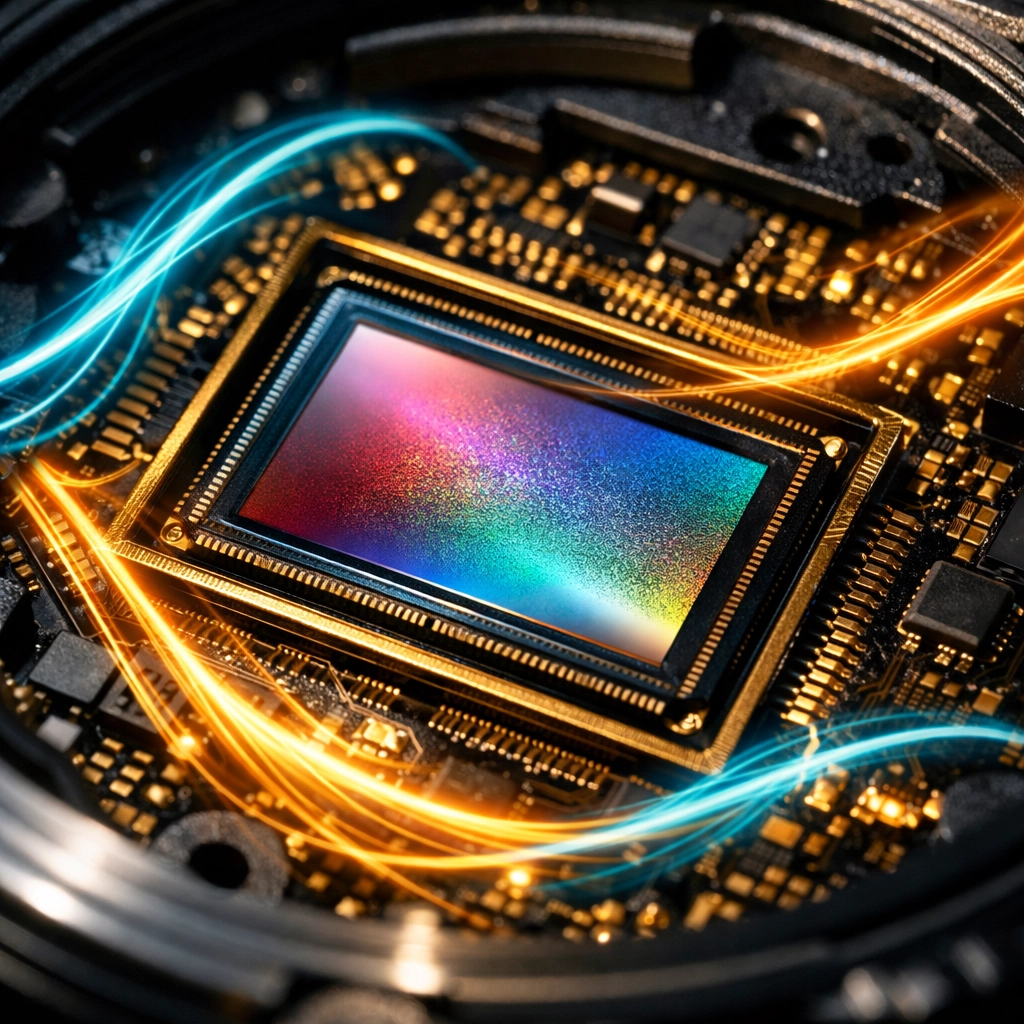
Alt Text: A close-up of a high-end mirrorless camera sensor with digital data overlays representing on-device AI processing, realistic lighting.
10. Cursor Composer 2: Build Your Own Photo Apps
AI coding startup Cursor is launching Cursor Composer 2. It’s designed to handle longer, more complex software tasks.
Even if you aren't a coder, this is relevant. It’s becoming so easy to "prompt" code that photographers are building their own custom tools. Need a specific way to rename and sort your files based on metadata that doesn’t exist in Lightroom? You can probably build that now. The barrier between "creative" and "developer" is officially gone.
Why This Matters for You
It’s easy to look at this list and feel overwhelmed. "I just want to take photos," you might think. But the reality is that the tools we use are changing faster than ever.
We’ve moved from film to digital, and now we’re moving from digital to "augmented." Whether it’s using rare textures for tangible aesthetic photography or letting an AI agent help you with your color grade in Luminar, the goal is the same: telling a better story.
The photographers who will dominate the next decade are the ones who embrace these tools instead of fearing them. You don't need to be a tech genius; you just need to be curious.
Quick Recap for the Busy Creator:
- AI is getting realer: Microsoft and Google are making AI images that look like real life.
- Hardware is getting smarter: The iPad Air M4 and Honor's Robot Phone are changing how we capture and edit.
- Workflow is getting faster: Tools like Perplexity and Huawei AgentArts are taking the "work" out of the creative process.
If you’re looking to dive deeper into how to actually use these tools, head over to PhotoGuides.org for more in-depth walkthroughs.
Tomorrow is a new day and a new chance to go out and shoot. Hopefully, these updates give you some inspiration for how you can use the latest gear to elevate your craft. Stay creative, stay curious, and most importantly, keep your aperture open (except when you're supposed to shut it).
For more industry-shifting news and professional tips, keep it locked here at Shut Your Aperture. If you’re ready to level up your professional game, check out the resources over at blog.edinchavez.com or see the latest fine art work at edinfineart.com.
Now, get some sleep. You’ve got a shoot tomorrow.