

Let’s be honest: nobody actually likes getting their headshot taken. It’s right up there with going to the dentist or explaining to your parents what a "Social Media Manager" actually does. You stand in front of a giant lens, a stranger tells you to "look natural" while pointing three blinding lights at your face, and suddenly you forget how to move your own mouth.
But here’s the reality, in 2026, your headshot is your digital handshake. Whether it’s for LinkedIn, your company’s "About Us" page, or a speaking gig, people are judging your professional competence based on a handful of pixels before they ever read your resume. If your current photo is a cropped shot of you at a wedding from three years ago, we need to talk.
Preparing for a professional session isn't just about showing up; it’s about strategy. From the way you hydrate to the color of your socks (yes, even the socks matter for your confidence), every detail contributes to the final result. If you want to see how the pros do it, check out Perfect Corporate Headshots for some top-tier inspiration.
In this guide, we’re going to break down exactly how to prepare for a headshot session so you walk away with an image that actually looks like you: just on your best day.
The Timeline: When to Start Preparing
You can’t just roll out of bed, grab a coffee, and expect to look like a Fortune 500 CEO. Success starts about a week before the shutter clicks.
7 Days Before: The Haircut Rule
One of the most common professional corporate headshot tips is to avoid getting a haircut the day before your shoot. Why? Because fresh haircuts often look "too" fresh. You want your hair to have a few days to settle into its natural shape. Aim for 3 to 7 days before your session. This gives you time to get used to the length and ensures you don't have those awkward tiny hair clippings stuck to your neck.
48 Hours Before: Hydrate Like a Pro
Water is the best beauty product on the market, and it’s free. If you start chugging water two days before your shoot, your skin will look more supple, your eyes will look brighter, and those fine lines will be less pronounced. Avoid heavy salt and alcohol during this window, as both lead to bloating and puffiness: the enemies of a sharp jawline.
The Night Before: Rest and Prep
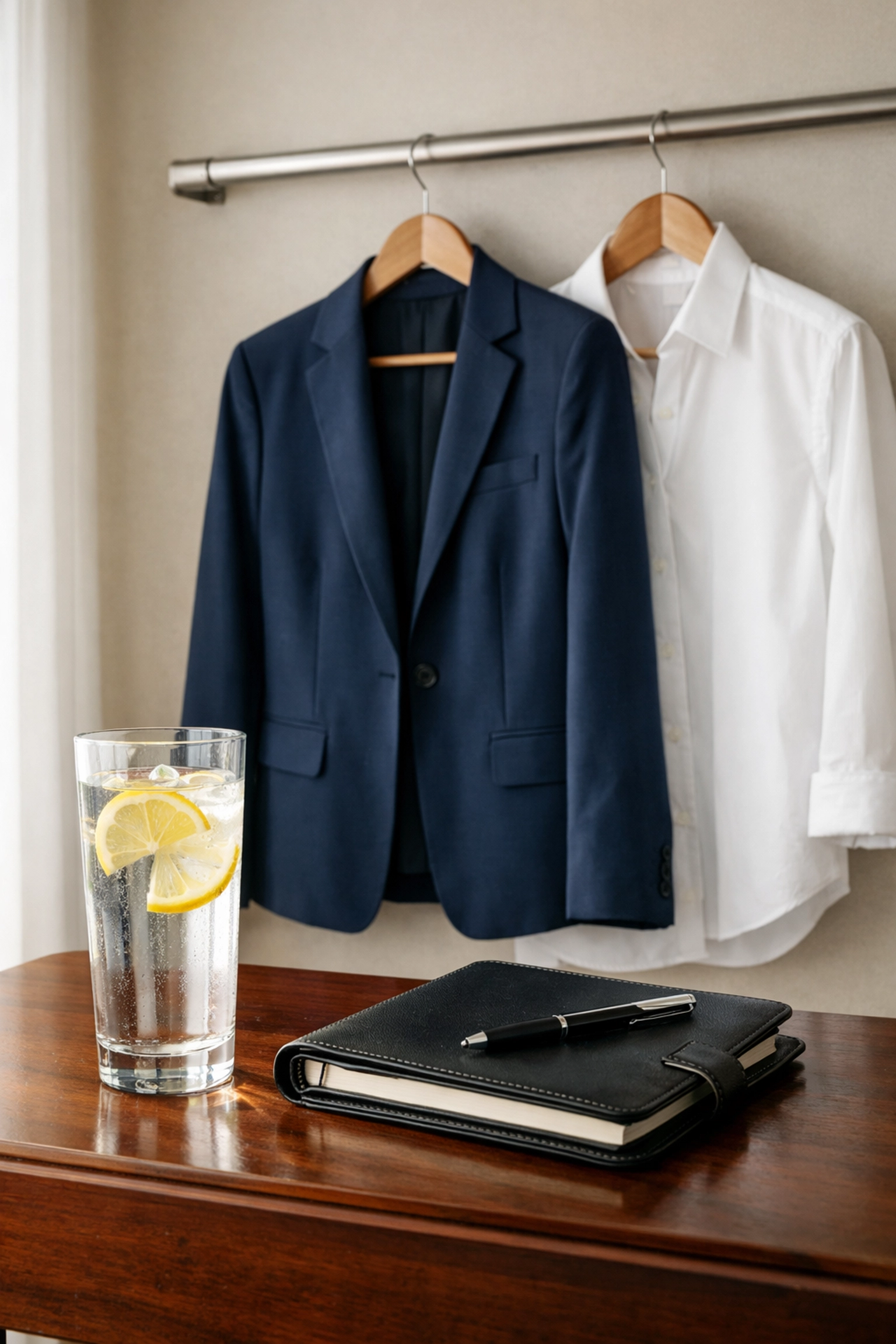
Get your 8 hours. "Camera eyes" are a real thing, and no amount of Luminar magic can perfectly replicate the sparkle of a well-rested human being. This is also when you should steam or iron your clothes. Don't wait until the morning of; you’ll be stressed, and stress shows up in your shoulders.
Wardrobe: What to Wear (and What to Burn)
Figuring out how to prepare for a headshot session usually centers on one question: "What do I wear?" The answer depends on your industry, but there are some universal truths.
Professional Corporate Headshot Tips for Clothing
- Solid Colors are King: Busy patterns like small checks or thin stripes can cause a "moire effect" on digital sensors, creating weird wavy lines in the photo. Stick to solid, mid-tone colors.
- Contrast is Your Friend: A dark navy blazer over a crisp white shirt is a classic for a reason: it creates a clean, authoritative frame for your face.
- Fit Matters More Than Brand: A $200 suit that fits perfectly will always look better on camera than a $2,000 suit that is a size too large. Cameras add perceived weight if your clothes are baggy.
- Avoid Neon: Bright oranges and "high-vis" yellows reflect color back onto your skin, making you look like you’ve got a weird jaundice situation going on.
If you’re in a creative field, you have more leeway, but the goal remains the same: the clothes should support your face, not distract from it. For more on how visual presentation impacts your brand, take a look at our thoughts on storytelling in photography.
Glasses: The Great Reflection Debate
If you wear glasses every day, you should wear them in your headshot. However, avoid transition lenses or glasses with heavy blue-light coatings. These can create purple or green reflections that are nearly impossible to edit out. If possible, bring a pair of frames without lenses to the shoot: it’s an old pro trick to avoid glare entirely.
Skincare and Grooming: The Fine Details
The camera sees everything. While we love the retouching capabilities of Luminar for fixing a stray blemish, it’s always better to give the photographer a clean canvas.
For the Gentlemen
If you’re going for the clean-shaven look, shave about 2-4 hours before the shoot. This gives any redness or "razor burn" time to dissipate but ensures you don’t have a five o'clock shadow by the time you hit the studio. If you have a beard, trim it and use a bit of beard oil for a healthy (but not greasy) shine. Don’t forget to trim your nose and ear hair: the "worm's eye view" of certain poses will highlight anything you missed.
For the Ladies
Makeup for the camera is different from makeup for a night out. Studio lights are intense and can "wash out" about 20% of your makeup.
- Matte is Mandatory: Shimmer and glitter reflect studio lights in weird ways, often looking like sweat or oily skin. Use matte foundation and a good translucent powder.
- Eyes and Lips: Focus on defining the eyes, but keep the lip color close to your natural shade or one shade darker.
- Professional Help: If your budget allows, hire a makeup artist who specifically understands "HD" or "Photography" makeup. It makes a world of difference.
Mastering the Posing: How to Not Look Like a Statue
You’ve got the outfit, the hair is perfect, and you’re standing in the studio. Now what? Posing is where most people get "the fear." Here is how to handle it like a veteran.
The Best Lighting for Executive Portraits
While your photographer handles the gear, you need to understand how to work with the light. Usually, the best lighting for executive portraits involves a large, soft light source positioned slightly above eye level. This creates a flattering shadow under the jaw, making it look sharper.
The "Turtle" Technique
To get rid of a double chin (even if you don't have one in real life, the camera finds them), try the "Turtle." Push your entire head forward toward the camera and then tilt your chin down slightly. It feels incredibly awkward: like you’re a turtle peeking out of its shell: but from the camera’s perspective, it chisels your jawline and stretches the skin on your neck.
Angle Your Body
Standing square to the camera makes you look as wide as possible. Instead, turn your shoulders about 30 degrees away from the lens while keeping your face pointed toward the photographer. This creates a more dynamic, slimming silhouette. If you're interested in how different angles affect perception, check out vistas and perspectives.
The "Squinch"
Wide-eyed "deer in headlights" is the most common headshot fail. To look confident and approachable, try "squinching": pinching your lower eyelids up just a tiny bit. It conveys a sense of focus and self-assurance.
Psychology of the Session: Confidence is Key
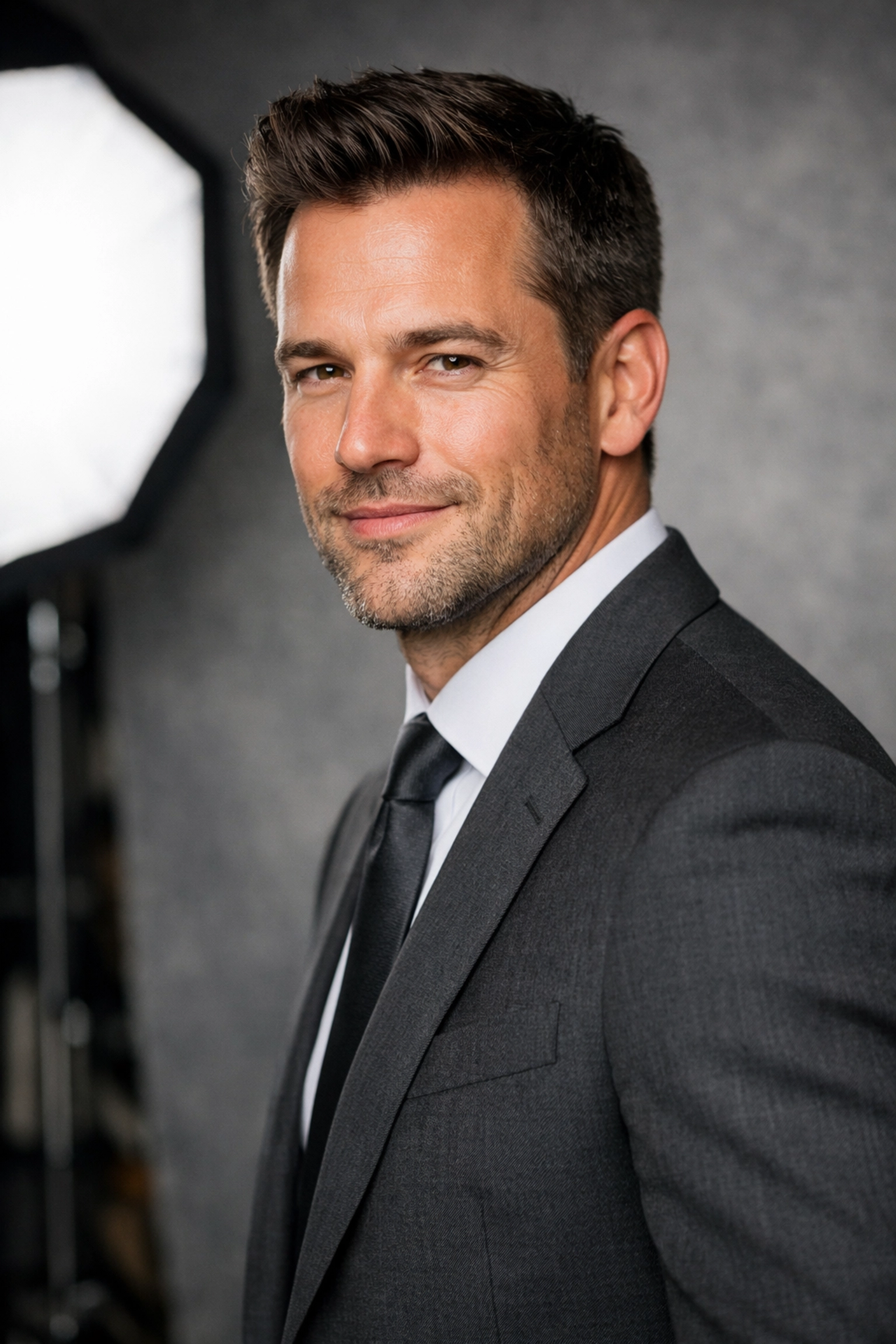
Your internal monologue shows up in your eyes. If you’re thinking, "I hate this, I look stupid," your face will reflect that tension.
Before you walk into the studio, remind yourself why you’re doing this. You are an expert in your field. You are a professional. You are providing value. If you need a confidence boost, look at the work being done at Perfect Corporate Headshots to see the level of professionalism you’re aiming for.
Communication with Your Photographer
Don’t be afraid to talk. Tell your photographer which side of your face you prefer (everyone has a "good side") or if you’re self-conscious about something specific. A good photographer is like a coach; they need your feedback to get the best performance out of you. For more tips on working with pros, see our 10 essential photography tips.
Post-Processing: The Final Polish
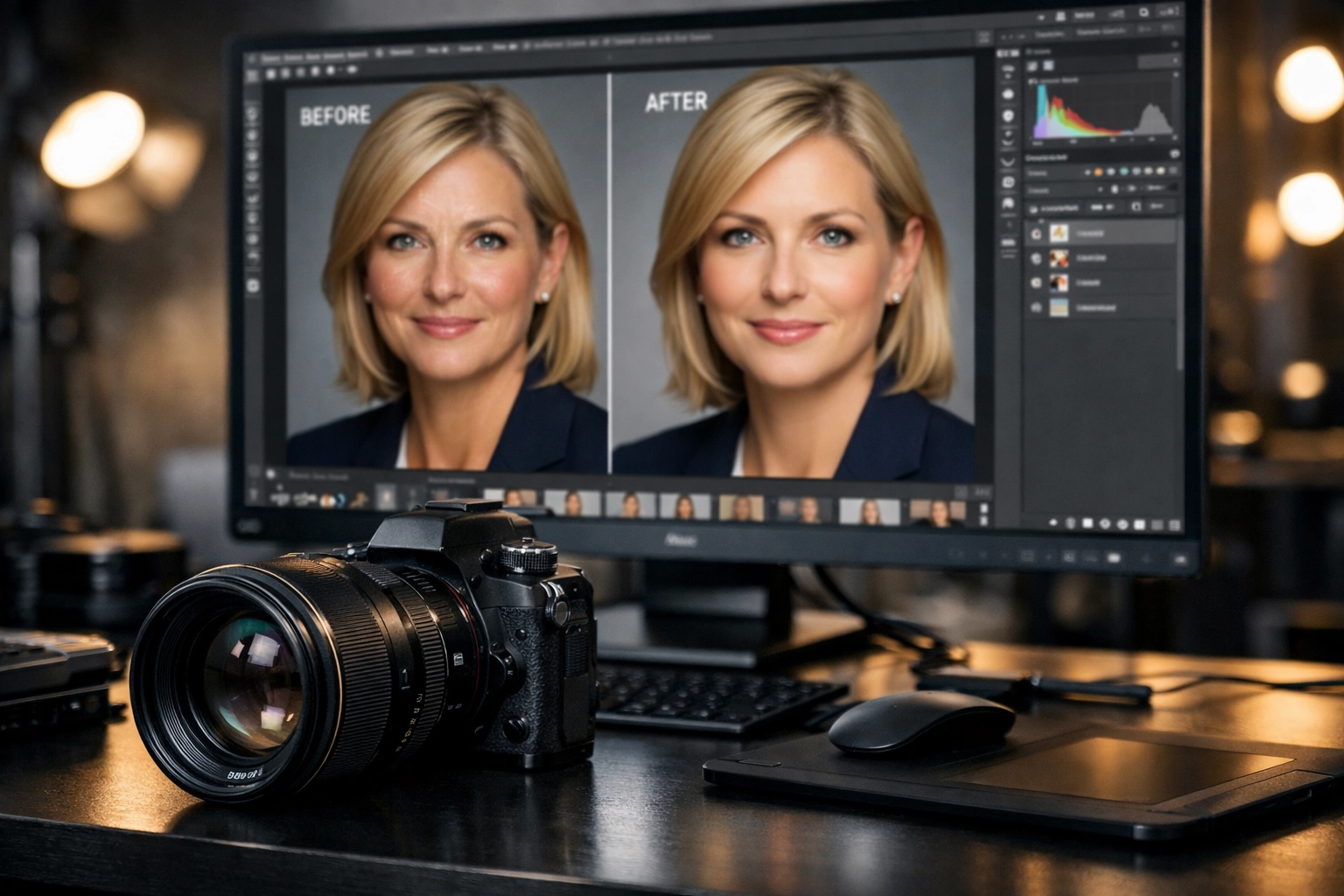
Once the shoot is over, the work isn't quite done. Your photographer will likely send you a gallery of "proofs." When selecting your final images, look for the ones where your eyes look engaged. You can fix a stray hair or a wrinkled shirt in post, but you can’t fix a dead expression.
Software like Luminar is fantastic for the final "edit." It allows for subtle skin smoothing, eye enhancement, and color correction that looks natural rather than "Photoshopped." The goal is to look like you on your best day, not like a plastic version of yourself.
A Note on Modern Gear
People often ask if the camera matters. In 2026, the tech is incredible, but the person behind it (and the person in front of it) matters more. For a deeper dive into the gear debate, read Does new camera gear really matter in 2026?.
The Ultimate Headshot Checklist
To make things easy, here is your "Cheat Sheet" for the big day:
- 7 Days Out: Get a haircut.
- 3 Days Out: Stop drinking alcohol; start drinking 2L of water daily.
- 1 Day Out: Iron/Steam outfits. Try them on one last time.
- Morning Of: Shower, shave (carefully), and moisturize.
- 1 Hour Before: Brush your teeth and check for any "lunch leftovers."
- At the Session: Relax your shoulders, remember to breathe, and try the "Turtle."
Professional headshots are an investment in your career. By taking the time to prepare correctly, you ensure that your first impression is exactly what you want it to be. You've worked hard to build your reputation: make sure your photo reflects that hard work.
Ready to take your visual branding to the next level? Whether you're a photographer or a professional looking for the best in the business, staying informed is the first step. Keep checking back here at Shut Your Aperture for the latest in photography trends and techniques. And for the gold standard in corporate imagery, don't forget to visit Perfect Corporate Headshots.




