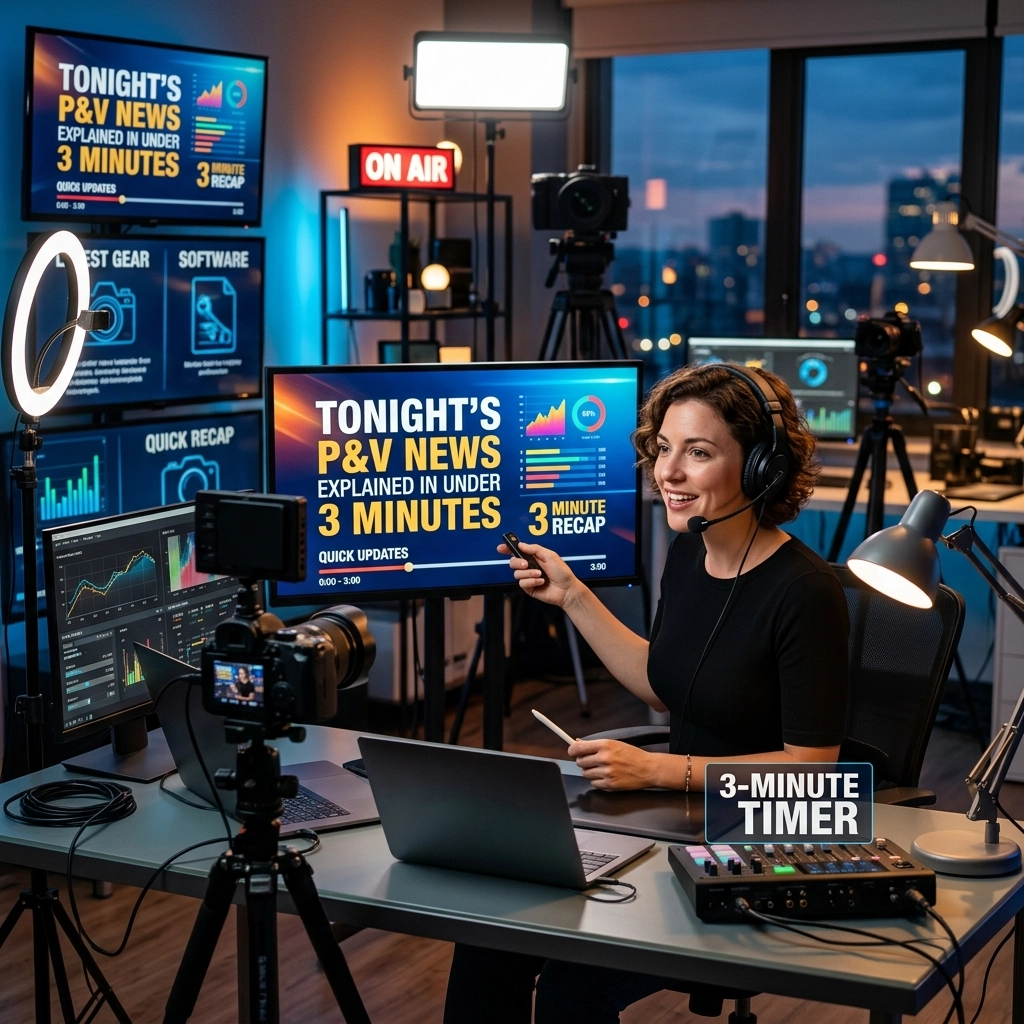
It is Saturday, May 16, 2026, and if you thought the photography industry was slowing down, you haven't been paying attention to the headlines tonight. We are seeing shifts in gear that were unthinkable just a few years ago. From Canon finally embracing the "hybrid-first" mentality with a dedicated video body to Sony smashing the barriers between resolution and speed, the landscape is shifting faster than a shutter at 1/8000th of a second.
Whether you are a seasoned pro shooting at Yosemite or a hobbyist just trying to figure out how to get the most out of your Sony Alpha a6000, tonight’s news has something for everyone. Let’s dive into the biggest stories of the evening and why they actually matter to your workflow.
Canon Goes All-In: The EOS R6 V and the Power Zoom Revolution
Canon has been doing some soul-searching lately. For years, they tried to keep their "stills" and "video" lines somewhat separate to protect their Cinema EOS range. Tonight, that wall officially came crumbling down with the announcement of the Canon EOS R6 V.
This isn't just an "update." It is a video-centric powerhouse built around a brand new 32.5MP sensor capable of 7K oversampled capture. This is specifically aimed at the mid-tier professional, the wedding shooters, the YouTubers, and the small production houses that need high-end results without the bulk of a C70.
But the camera body was only half the story. Canon also dropped the RF 20–50mm f/4 L IS USM PZ. This is Canon’s first L-series lens with a built-in power zoom. If you’ve ever tried to operate a manual zoom on a gimbal, you know it’s a recipe for a shaky mess or a broken motor. This lens changes that. It is designed to be the "native" companion for the R6 V, offering smooth, electronically controlled focal shifts that make one-person crews look like a full cinematic team.
This move is a direct response to the market's demand for high-end hybrid tools. While Canon used to be a bit stingy with their lens sales, check out this Nikon Lens Sale for comparison, they are now aggressively targeting the video market.

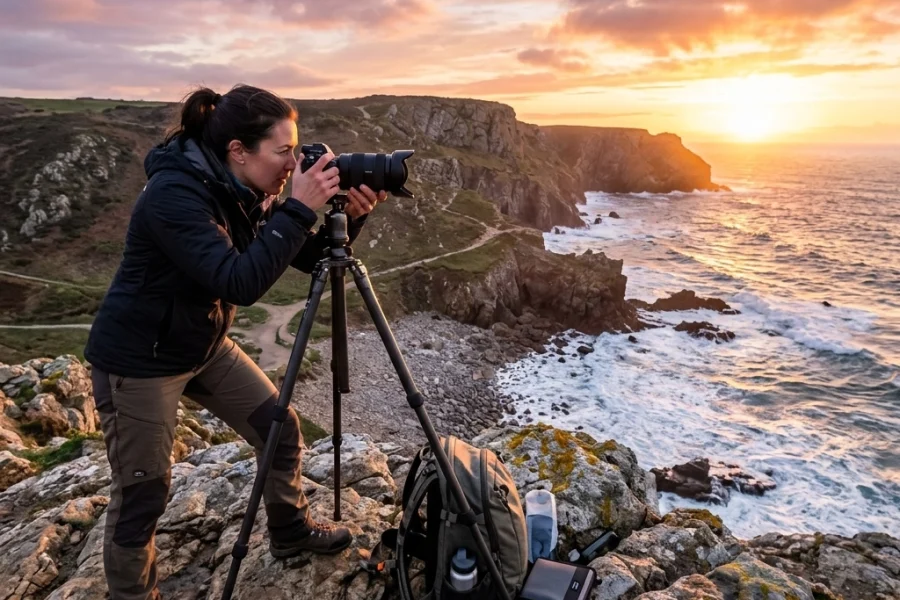
SEO Alt Text: A professional filmmaker using the Canon EOS R6 V on a gimbal with the RF 20-50mm Power Zoom lens during a sunset shoot.
Sony’s A7R VI: Erasing the Trade-off Between Pixels and Speed
For a long time, photographers had to choose: do you want a lot of megapixels, or do you want a fast camera? You couldn't really have both. If you wanted the detail of a landscape shot in Varanasi, India, you bought an "R" series. If you wanted the speed to capture wildlife in Africa, you bought an "A1" or an "A9."
Tonight, Sony basically told the industry that those days are over. The Sony A7R VI just launched, and it is a beast. We are looking at a 67MP sensor that can rip through 30 frames per second. That is a terrifying amount of data to process, but Sony’s new BIONZ processors seem to be handling it without breaking a sweat.
Accompanying this resolution monster is the Sony FE 100–400mm F4.5 GM OSS. It’s a new G Master super-telephoto that is lighter and sharper than its predecessor. For sports and aviation photographers, this is the gold standard. It allows you to crop into that 67MP file and still have enough resolution to print a billboard.
The Creator Market: Pocket-Sized Powerhouses
Not everyone wants to carry a five-pound setup. Tonight’s news also focused heavily on the "grab-and-go" creator.
Panasonic stole some of the limelight with the LUMIX L10. This is a 25th-anniversary model that feels like a love letter to street photographers. It’s a fixed-lens compact with a Four Thirds sensor and a Leica-branded zoom. They even released a Titanium Gold version which, let’s be honest, looks incredible. It’s the kind of camera you take when you want to focus on the travel photographic memory rather than the technical specs.
Meanwhile, DJI is teasing the Osmo Pocket 4P. The rumors suggest a multi-camera or multi-lens gimbal design. This would be a massive leap for cinematic vloggers. Imagine having a wide and a tight lens on a device that fits in your pocket. However, there is some regulatory noise in the US regarding DJI right now, so keep an eye on that before you pre-order.
Perhaps the most surprising move came from Insta360. They are moving toward a Micro Four Thirds (MFT) sensor camera. This isn't an action cube; it’s a small, hybrid body with an articulated screen and dual command dials. It looks like they are coming for the vloggers who find Sony’s ZV line a bit too "plastic."

SEO Alt Text: A side-by-side comparison of the Panasonic LUMIX L10 and the DJI Osmo Pocket 4P on a wooden table.
Software Wars: DaVinci Resolve 21 vs. The World
If you are a photographer, you likely live in Adobe Lightroom. You might use Luminar for those quick, AI-powered edits that save you hours of masking. But tonight, Blackmagic Design decided to set the cat among the pigeons.
DaVinci Resolve 21 was announced, and it’s not just for video anymore. They have added a full still-photo workflow. We are talking about organization, rating, and native RAW processing for Canon, Fuji, Nikon, and Sony. They’ve even added tethering support for Canon and Sony.
This is a direct shot at Adobe. For years, video editors have used Resolve because the color grading is world-class. Now, Blackmagic is telling photographers they don’t need a separate subscription for their stills. If you want to dive deeper into how this compares to traditional methods, you should check out our guide on how to learn Lightroom.
But the reality is, if you’re already using Resolve for your video work, the barrier to switching your photo workflow just disappeared. If you are looking for more tips on how to master these tools, head over to https://learn.shutyouraperture.com/ for our latest deep dives.
Hardware Support and Cinema Glass
It wasn't just cameras and software tonight. The "boring" stuff, tripods and lenses, had some major wins too.
Manfrotto announced the ONE Photo tripod. It’s part of their hybrid line, meaning you can swap heads in seconds. The center column flips horizontally, which is a godsend for anyone shooting microscopic time-lapse videos or top-down product shots. If you’ve ever struggled with a hi-end product shoot, you know that a versatile tripod is more important than a new camera body.
Nikon also gave us a teaser of their Z Cinema lens line. They are planning nine lenses in total, featuring standard cinema gearing and focus locks. This is a clear sign that Nikon is no longer content being just a "stills" company. Since the launch of the Nikon D4s, they have been slowly clawing back their reputation for professional reliability, and this cinema glass is the final piece of the puzzle.

SEO Alt Text: The new Nikon Z Cinema lenses displayed in a professional studio setting with a Nikon Z9 camera.
Why This Matters to You
You might be sitting there thinking, "This is great, Penny, but I’m not buying a $5,000 Sony today." And that’s fair. But this news matters because of the "trickle-down" effect.
When Sony pushes the limits of resolution and speed, that technology eventually finds its way into the "entry-level" cameras. When DJI innovates on gimbal tech, it forces everyone else to get better. And when software like Resolve adds photo support, it forces Adobe to innovate and maybe, just maybe, lower their prices or improve their performance.
For those of you shooting professional gigs, whether it's high-fashion or even just a wedding video, these updates change the expectations of your clients. They want that 7K clarity. They want that 30fps precision.
If you are looking to stay ahead of the curve, you need to be checking for firmware updates tonight. Canon just pushed a massive wave of updates for the R3, R5 II, and even the R100. Sony and Nikon followed suit. These updates often improve autofocus and stability for free. It’s like getting a new camera without spending a dime.
Industry Shifts and Viral Trends
Beyond the gear, there’s a cultural shift happening in photography. We are seeing a move away from the hyper-clinical, perfect look. People are craving authenticity. This is why cameras like the Panasonic L10 are gaining so much traction. People want a tool that feels like a camera, not a computer.
We’ve seen this trend before with photographers like Poliana Devane, who brings a raw, human element to her work. Even in the world of drones, the focus is shifting from "how high can it go" to "how can I use this to tell a better story?"
The viral trend of the week? It’s actually classical sculptures defying logic through creative photography and editing. It just goes to show that while the gear is cool, the vision behind the lens is what really sells the shot.

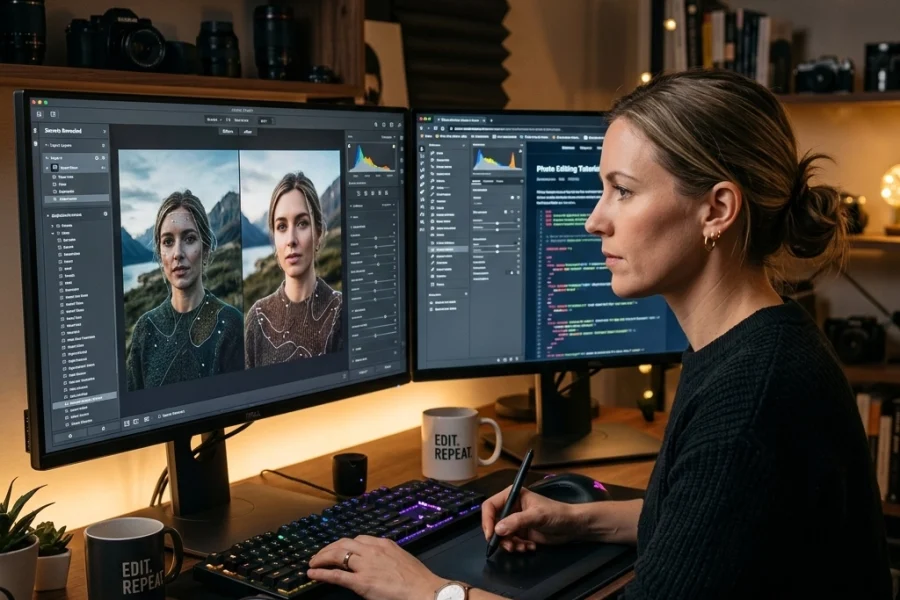
SEO Alt Text: A photographer editing a high-resolution image of a classical sculpture on a dual-monitor setup using DaVinci Resolve 21.
Final Thoughts for the Night
As we wrap up this evening update, my advice is simple: don't get distracted by the "shiny object syndrome." Yes, the Sony A7R VI is amazing. Yes, the Canon R6 V is a video beast. But if your current gear is working for you, keep shooting.
If you are looking to upgrade your skills rather than your gear, I highly recommend visiting PhotoGuides.org for some excellent technical breakdowns. For those who want to see the creative side of Edin’s work, you can always check out edinfineart.com or his personal thoughts at blog.edinchavez.com.
And if you are ready to take your business to the next level and integrate these tools into a professional workflow, check out what they are doing over at www.proshoot.io. They have some incredible resources for scaling your production.
The industry is changing, but the goal remains the same: capture the moment. Whether it’s a redwood forest or a behind-the-scenes shot, just keep clicking.
Stay creative, keep your sensor clean, and we’ll see you in the next update.

SEO Alt Text: A close-up of a camera sensor being cleaned with professional tools in a clean, brightly lit environment.