If you’ve opened Instagram, Twitter, or your favorite photography forum in the last 72 hours, you’ve probably seen it. A barrage of "before and after" sliders that look less like photo edits and more like actual magic. This week, the photography world didn't just move forward; it took a massive, AI-powered leap.
Whether you’re a purist who loves the click of a mechanical shutter or a tech-head who buys every new plugin, you can’t ignore what’s happening. Tutorials are surfacing that show how to do in thirty seconds what used to take four hours of painstaking masking in Photoshop. We’re talking about a level of precision that’s honestly a little scary.
At Shut Your Aperture, we’ve always been about the balance between the gear and the craft. But let’s be real: if a tool makes your work better and your life easier, it’s worth talking about. This week, everyone is talking about AI tutorials because the "uncanny valley" is finally closing. The results look real, they look professional, and they are changing the game for everyone from hobbyists to high-end pros.
The GPT Image 2 Explosion: Why This Week is Different
The main reason your feed is currently flooded with tutorials is the recent release and widespread access to GPT Image 2 and similar sophisticated models. For a long time, AI image generation was a "separate" thing from photography. You’d generate a weird, surreal landscape that looked cool but was clearly fake.
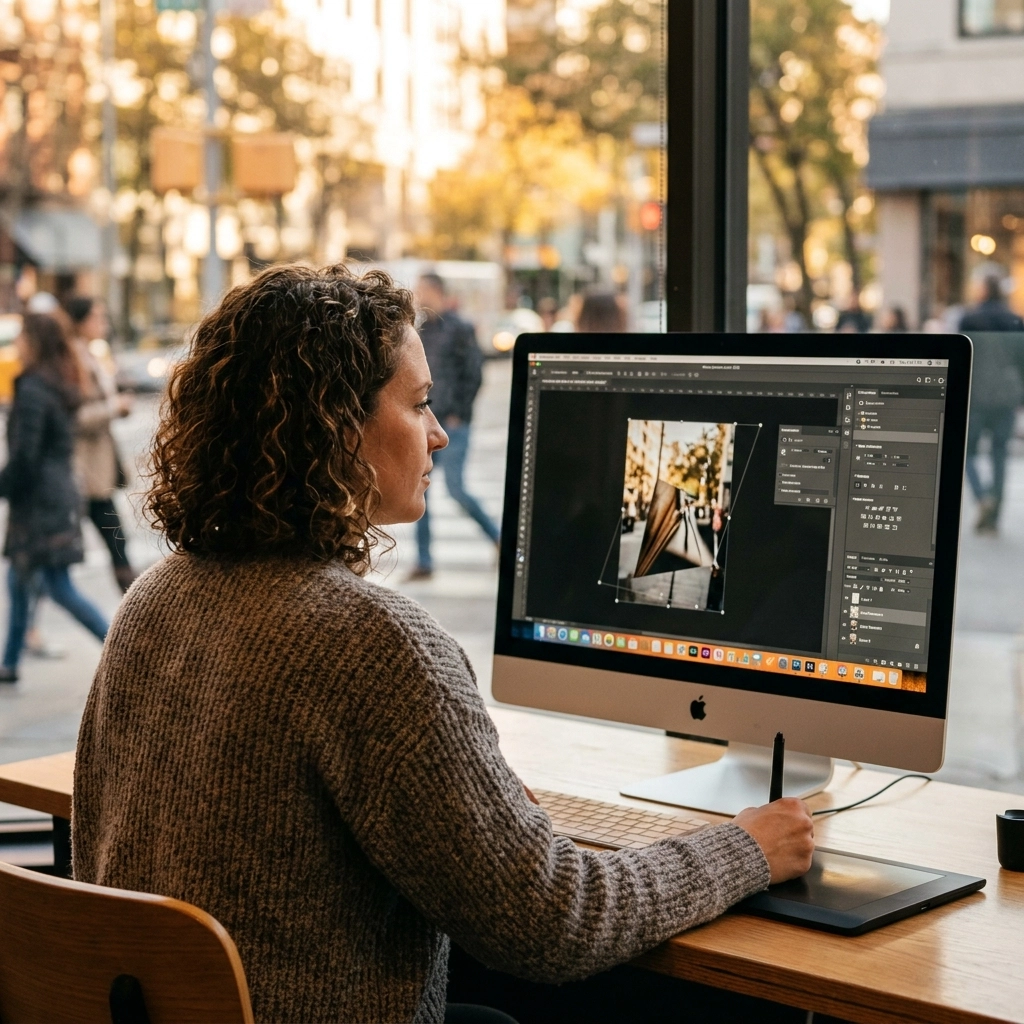
Now, that technology has been baked into editing workflows. New tutorials are showing photographers how to use natural language to fix complex lighting issues. Imagine telling your software, "Make the light hitting the subject’s face look like it’s coming from a softbox at a 45-degree angle," and having it actually happen: without destroying the skin texture.
This shift from "generative art" to "intelligent editing" is why people are losing their minds. We aren't just making pictures from scratch anymore; we’re using the world’s smartest assistants to polish our authentic shots. If you want to keep up with these shifts, staying ahead of industry news is no longer optional: it’s a survival skill.
 SaveAI photo editing tutorials software.” width=”1024″ height=”682″ loading=”lazy” />
Speed is the New Skill
For decades, the mark of a "pro" was how well they knew the Pen Tool or how many hours they spent frequency separating a portrait. While those skills still have value, the market is shifting toward speed. If a wedding photographer can use these new AI tutorials to cull and color-grade 2,000 photos in an afternoon instead of a week, they’ve just reclaimed five days of their life.
This week’s tutorials are focusing heavily on "Batch Intelligence." People are learning how to train mini-models on their own editing style. You feed the AI ten of your best-edited shots, and it learns your specific color science, your contrast preferences, and how you handle shadows.
It’s personal, it’s fast, and it’s remarkably accurate. If you’re still clicking "Auto" and hoping for the best, you’re missing out on the personalized automation that is currently taking over the industry. This is exactly the kind of deep-dive content we cover in our photography tutorials at our online school, where we bridge the gap between traditional technique and modern tech.
Luminar and the Rise of One-Click Sophistication
You can’t talk about this week’s buzz without mentioning Luminar. They’ve been at the forefront of the "AI-first" editing movement for years, but the latest tutorials coming out right now are showing off features that feel like they’re from the year 2030.
The focus right now is on "Object-Aware Relighting." Most editors just brighten or darken pixels. The new AI-driven methods understand 3D depth. If you have a portrait taken at noon, these tutorials show you how to convincingly drop the sun behind the subject, create a rim light, and adjust the shadows on the ground to match.
It’s not just about "fixing" a photo anymore; it’s about "re-directing" it. For many, Luminar has become the go-to sandbox for these experiments because it doesn't require a PhD in computer science to get a clean result.
The Hardware Connection: Does Your Camera Still Matter?
One of the big debates sparked by these tutorials is whether high-end glass and sensors still matter. If AI can fake the bokeh of a $2,000 prime lens, why bother carrying the heavy stuff?
The truth is, AI works best when it has high-quality data to start with. A "garbage in, garbage out" rule still applies. This is why we’re seeing a massive interest in how the latest mirrorless cameras interact with these tools. A clean, high-dynamic-range RAW file from a modern sensor gives the AI more "meat" to work with.
If you’re looking to upgrade your kit to make the most of these software advancements, check out The Ultimate Guide to 2026 Mirrorless Cameras. Having the right sensor: like the one in the Nikon Z8: provides the resolution needed for AI upscaling and generative fill to look seamless rather than pixelated.
Street Photography and the Ethical Line
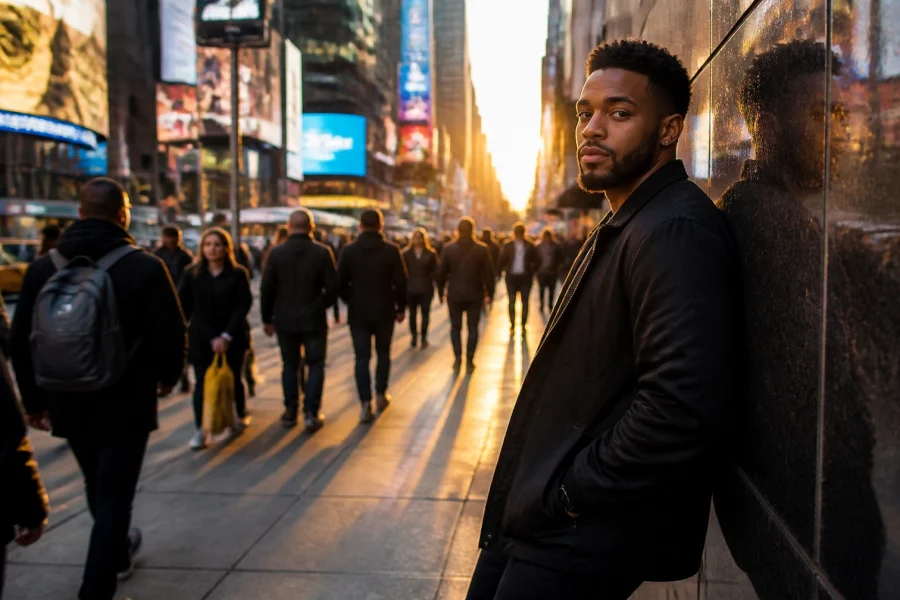
The street photography community is having a particularly heated week. Tutorials have popped up showing how to remove distracting tourists or even change the facial expressions of people in the background to better suit the "mood" of a shot.
This brings up a huge ethical question: Is it still street photography if you’ve manipulated the "truth" of the scene? Some say it’s no different than dodging and burning in a darkroom. Others say it’s digital heresy.
Regardless of where you stand, knowing how these tools work is vital. Even if you choose not to use them, you need to understand how the medium is changing. For those using the Nikon Z8 for street photography, the focus is usually on capturing that "decisive moment." AI might be able to clean up the background, but it still can't replicate the soul of a perfectly timed shot.
The same applies to the Fujifilm X100VI for landscape photography. You might use AI to enhance a sunset, but the composition and the journey to that mountain peak are yours alone.
Learning the "Prompt" Language
The most popular tutorials this week aren't about sliders; they’re about words. "Prompt Engineering" has officially entered the photographer's vocabulary.
Instead of searching for a "vintage" filter, photographers are learning to describe the specific aesthetic they want: "1970s Kodachrome, slight halation, warm highlights, crushed blacks, 35mm grain."
The tutorials are teaching us how to talk to our computers. It’s a new type of literacy. If you can describe what you want with precision, the AI can deliver it. This is a massive shift from the trial-and-error method of traditional editing. It’s more intentional. You have to know what you want before you ask for it.
For more technical breakdowns and creative inspiration, I always recommend checking out PhotoGuides.org. They stay on top of the "how" and the "why" of these emerging technologies without getting bogged down in too much jargon.
Why You Should Start Now (Even if You’re a Skeptic)
I get it. Some of this feels like it’s taking the "art" out of photography. But think back to when digital cameras first replaced film. Or when Photoshop first introduced layers. There’s always a period of resistance before a tool becomes the standard.
Here’s why you should dive into these tutorials today:
- Future-Proofing: Clients are going to start expecting these results. If a client asks you to "just remove that power line" or "change the color of the car," and you can't do it quickly, they’ll find someone who can.
- Creative Freedom: AI can handle the boring stuff: noise reduction, sensor dust, basic color correction: leaving you more time to focus on the creative vision.
- Experimental Play: You can try out styles you never would have dared before. Want to see what your architectural shots look like in a cyberpunk neon style? It takes seconds to test the idea.
If you’re feeling overwhelmed, don’t worry. You don’t have to master everything overnight. Start with the basics. Look at how AI can assist your current workflow rather than replacing it. Edin Chavez often talks about this balance on his personal blog at blog.edinchavez.com, where he discusses the intersection of art and modern living.
The Impact on Gear Buying Habits
Interestingly, this week's tutorials are actually changing the way people buy camera gear. People are realizing they don't necessarily need the $5,000 lens with the perfect "character" if they can intelligently apply that character in post-processing.
Does this mean prime lenses are dead? Not quite. But it means that the "utility" of a lens is being weighed against its "software compatibility." We’re seeing a shift toward lenses that are technically perfect and sharp, knowing that the "soul" can be added later through sophisticated AI filters. It’s a weird time to be a gearhead, but an exciting one.
How to Get Started with AI Tutorials
If you're ready to jump in, here’s a simple roadmap:
- Audit Your Workflow: Identify the task you hate the most. Is it masking? Is it retouching skin? Find a tutorial specifically for that.
- Play with Generative Fill: Open a photo that has a "near miss" composition and see if AI can help you extend the canvas or balance the frame.
- Join the Community: Head over to our online school and join the discussions. Seeing how other photographers are failing and succeeding with these tools is the fastest way to learn.
- Keep One Foot in Tradition: Don't stop taking great photos. AI is a multiplier. If your original photo is a zero, zero times anything is still zero.
Photography has always been about the marriage of technology and vision. From the first daguerreotypes to the latest AI-generated composites, the goal remains the same: to capture or create an image that makes people feel something.
The Bigger Picture: Art in the Age of Algorithms
We are currently standing at a crossroads. Some photographers will use these AI tutorials to create "fast food" content: generic, hyper-polished, and ultimately forgettable. But others will use these tools to push the boundaries of what is possible.
They’ll create dreamscapes that were previously impossible to capture. They’ll tell stories that require a level of visual fidelity we haven’t seen before. They’ll use AI to bridge the gap between what their eye saw and what the camera could actually record.
If you want to see what high-end, thoughtful photography looks like in its final form, take a look at the galleries at www.edinfineart.com. It’s a great reminder that no matter how many tutorials you watch, the final image still needs to have a point of view.
The "buzz" this week isn't just about a new set of tutorials. It’s about the realization that the barrier between our imagination and the final print is thinner than ever. That’s why everyone is talking. That’s why you should be, too.
Don't let the tech intimidate you. Grab your camera, fire up your editor, and start experimenting. The future of photography isn't something that's happening to us: it's something we're building with every prompt and every shutter click. Keep shooting, keep editing, and most importantly, keep your aperture shut until the light is just right.