Let’s be real for a second: street photography can get a little stale if you’re just walking around taking photos of people walking past beige walls. We’ve all been there. You grab your camera, head downtown, and suddenly everything feels like something you’ve seen a thousand times on Instagram.
But street photography is basically professional people-watching with a high-tech tool in your hand. It’s about finding the extraordinary in the "meh" moments of daily life. If you’re feeling stuck in a creative rut, you don’t need a new camera (though AI-integrated mirrorless cameras are pretty sweet); you just need a new way of looking at the world.
Whether you’re a total pro or just getting started with manual mode 101, these 25 ideas will push your boundaries and help you see the sidewalk in a whole new light.
1. Shoot Through the Obstacles
Usually, we want a clear view of our subject. Throw that rule out the window. Try shooting through things like metal grates, shop windows, or even the gaps in a market stall. This adds "layers" to your photo and gives the viewer a sense of being an observer, or even a bit of a voyeur. It creates depth that a flat shot just can't match.
2. Focus on the Readers
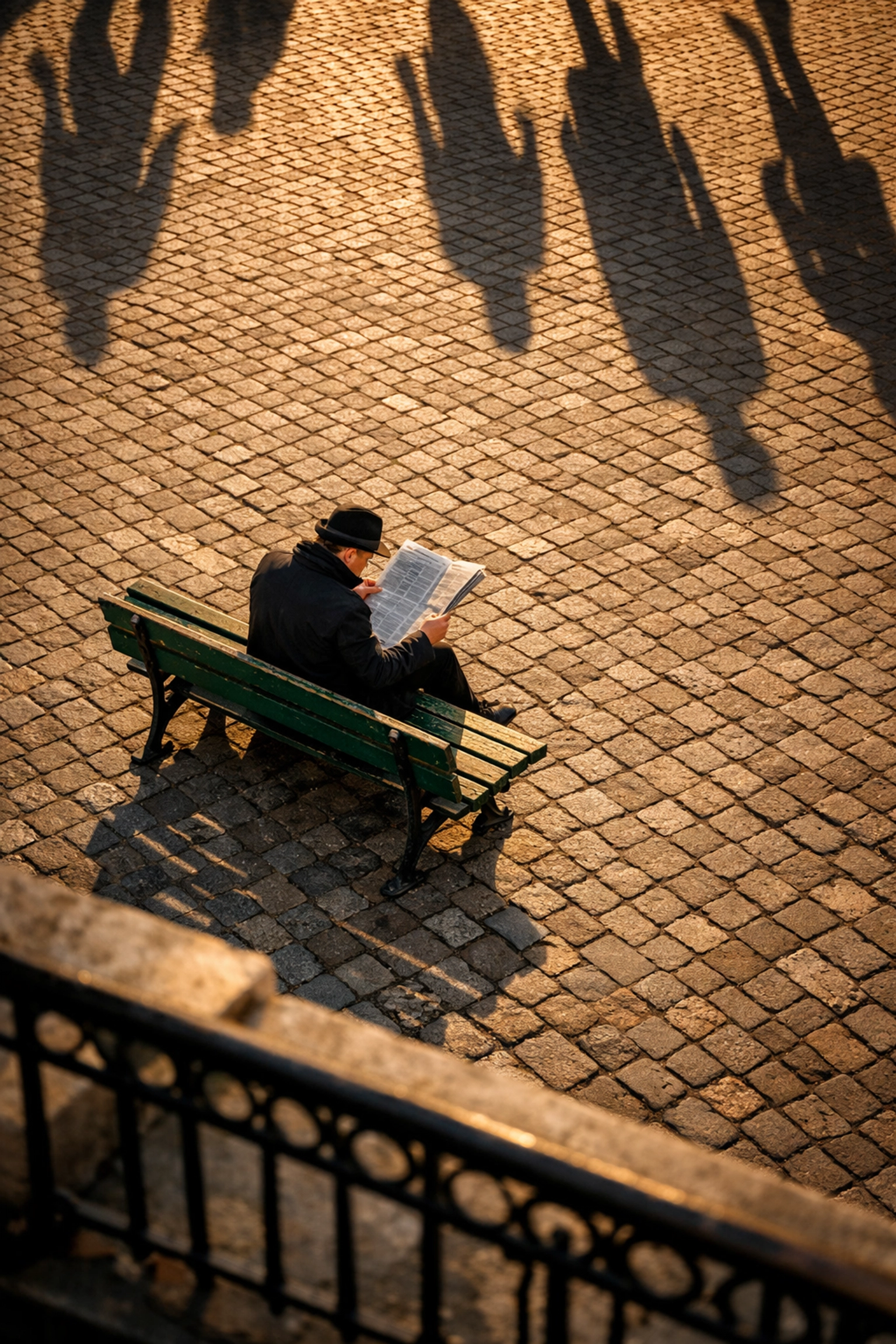
In a world glued to smartphones, seeing someone actually reading a physical book or a newspaper is a vibe. It creates a quiet, still moment in the middle of urban chaos. Look for people lost in a story at a bus stop or a park bench. It’s a classic look that never gets old.
3. Get the Bird’s Eye View
Find a bridge, a parking garage, or a balcony. Looking down on a city changes the geometry of everything. You start seeing shadows as long, dramatic shapes and people as small moving parts of a bigger machine. If you want to see how the pros handle perspective, check out some vistas and perspectives techniques often used in high-end shooting.
4. The One-Hour Anchor
This is a great discipline exercise. Pick one single street corner or one specific bench and stay there for exactly one hour. Don't move. You’ll be surprised how the light changes and how the characters "rotate" through your frame. It forces you to find the beauty in one spot rather than hunting for it across ten blocks.
5. Footwear and Fashion Details
Street photography doesn't always have to be about faces. Sometimes, a person’s shoes tell a bigger story than their expression. Spend an afternoon focusing entirely on footwear. The contrast between a pair of beat-up sneakers and expensive Italian leather shoes on the same subway platform is pure visual storytelling.
6. Construction Zone Navigation
Construction sites are messy, loud, and usually annoying to walk past. For a photographer, they’re gold mines. Watch how people interact with the fences, the scaffolding, and the detours. The bright orange of a safety vest or the geometric lines of a crane can add some serious "pop" to your urban shots.
7. Freeze the Action at Skate Parks
If you want to practice your timing, head to a skate park. Capturing someone mid-kickflip is the ultimate test of your shutter finger. Just remember: always ask for permission if you’re getting close. Most skaters are stoked to have high-quality photos of their tricks. For more tips on timing and gear, you can always dive into some photography tutorials.
8. The Art of the Diptych
Don't think of your photos as single frames. Try to capture "pairs" of images that tell a story when placed side-by-side. Maybe it’s a shot of a rainy street paired with a shot of someone’s soaked umbrella. Combining two images into a diptych in a program like Luminar can elevate a simple street snap into a piece of fine art.
9. Master Negative Space
Sometimes, what you don't show is more important than what you do. Place your subject in a tiny corner of the frame and let the rest be a massive, empty wall or a clear sky. It creates a feeling of isolation or grand scale that is incredibly powerful. This is a favorite technique of landscape legends like Peter Lik.
10. The Worm’s Eye View
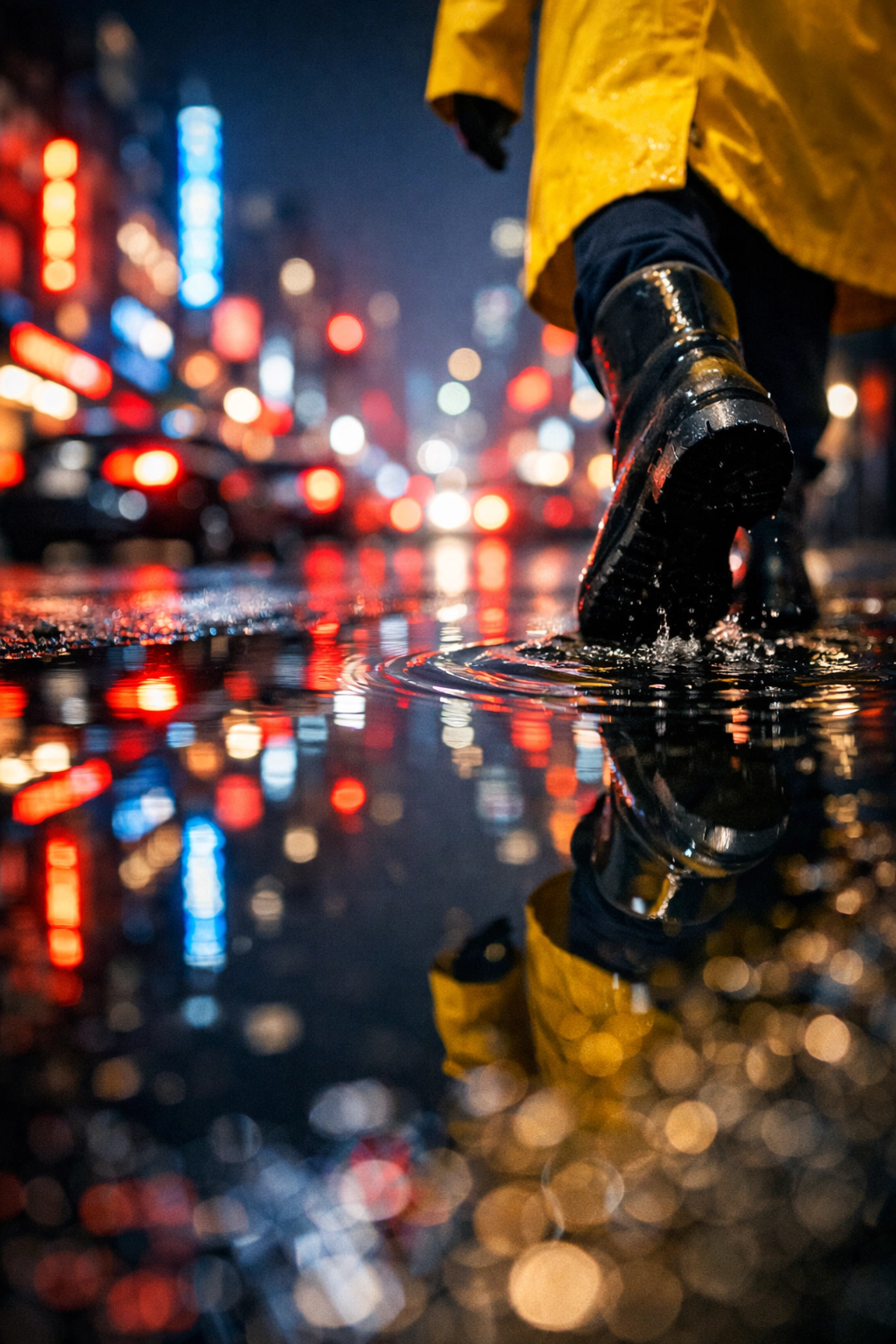
Crouch down. No, lower. Put your camera almost on the pavement. Shooting from a very low angle makes buildings look taller and people look more heroic. It also lets you catch reflections in small puddles that you’d miss if you were standing up.
11. Puddle Reflections
Rainy days are the best days for street photography. Wait for the storm to pass and look for puddles. By getting close to the water's surface, you can capture a "parallel universe" of the city. If you’re struggling to make these pop, Luminar has some great AI tools to enhance reflections and light.
12. Night-Time Motion Blur
When the sun goes down, don't put the camera away. Slow your shutter speed down and capture the "ghosts" of the city. Moving cars become streaks of light, and walking people become blurred silhouettes. It’s a great way to show the energy of a city like New York or Tokyo. For more on this, check out the latest photography trends.
13. The Speeding Cyclist
Cyclists are perfect subjects for panning. Set your shutter speed a bit slower, follow the cyclist with your camera as they ride past, and fire the shutter. If you time it right, the cyclist will be sharp while the background is a beautiful, horizontal blur. It's a classic technique you can learn more about over at PhotoGuides.org.
14. Architecture First, People Second
Instead of looking for a person and then finding a background, do it backward. Find a stunning piece of architecture or a cool doorway and wait for the right person to walk into the frame. This ensures your composition is perfect before the "action" even happens.
15. Neon Nightmares (The Good Kind)
Neon signs are a gift from the photography gods. They provide focused, colorful light sources that look incredible at night. Focus on the glow of a "Donut Shop" sign on someone's face. The high contrast between the neon and the dark street creates a cinematic look that would make any movie director jealous.
16. Street Art Interplay
Don't just take a picture of a mural, that's someone else's art. Instead, wait for someone to walk past the mural in a way that interacts with it. A person walking past a mural of a giant bird might look like they're about to be carried away. That’s where the creativity happens.
17. Extreme Textures
Sometimes the street is just about the "feel." Macro shots of rust on a dumpster, the grain of a wooden door, or the texture of a concrete wall can be fascinating. Use these as "filler" shots in a photo series to give the viewer a sense of the environment. You can see how texture plays a role in professional work at www.proshoot.io.
18. High-Noon Fill Flash
Most people hate shooting at noon because the shadows are harsh. But if you use a fill flash, you can kill those shadows and make your subject "pop" against the background. It creates a very modern, high-fashion look on a gritty street corner.
19. Water in Motion
Look for fountains, leaking hydrants, or even a kid splashing in a puddle. Using a fast shutter speed to freeze a single droplet of water in the air can turn a mundane street scene into something magical. If you're interested in how light interacts with water, check out the role of luminosity.
20. The Professionals
Street photography isn't just about pedestrians. It’s about the people who make the city run. The chef smoking a cigarette in the alley, the window washer hanging from a skyscraper, or the street sweeper at 4 AM. These "working" shots often carry a lot of emotional weight.
21. Look for the "Wait, What?" Moments
Humor is one of the hardest things to capture in photography. Look for ironies, like someone eating a giant burger in front of a gym or a dog wearing sunglasses. These "weird" moments are the ones that usually go viral and get people talking.
22. The Fishing Technique
Find a spot with great light, maybe a "God ray" coming between two buildings, and just wait. Like a fisherman, you’re waiting for the "big catch" to walk into that perfect light. This requires patience, but the results are almost always better than "run and gun" shooting.
23. Character over Beauty
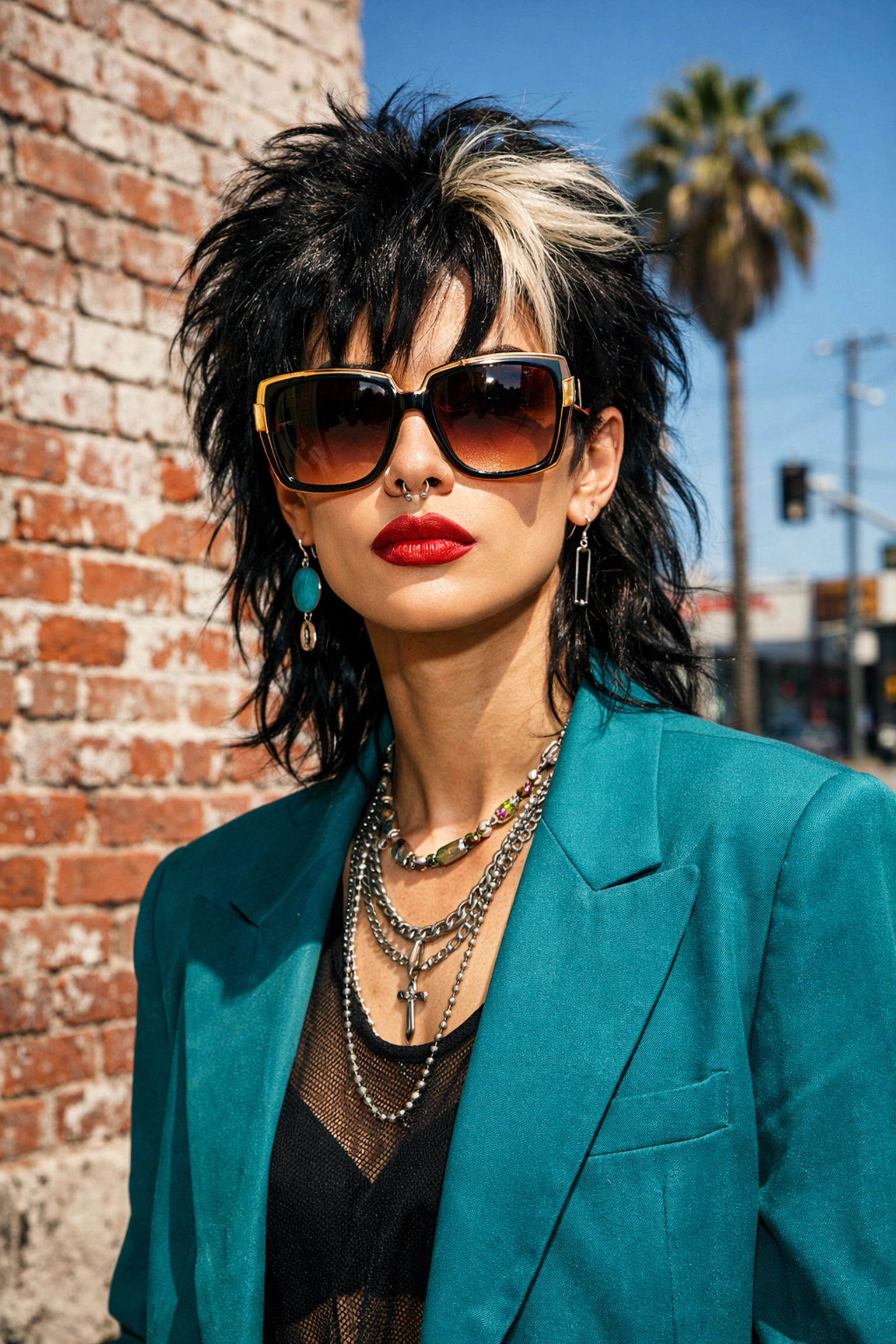
In street photography, we aren't looking for supermodels. We’re looking for characters. The guy with the wild beard, the lady with the eccentric hat, or the teenager with the bright blue hair. Look for people who stand out from the crowd. You can find more inspiration for character-driven art at blog.edinchavez.com.
24. The Edgy Flash
If you want to get really bold, try using an off-camera flash or a direct on-camera flash like Bruce Gilden. It’s invasive, and it’s definitely not for everyone, but it creates a raw, high-contrast look that screams "street." It adds a layer of drama and grit that you just can't get with natural light.
25. Double Exposures
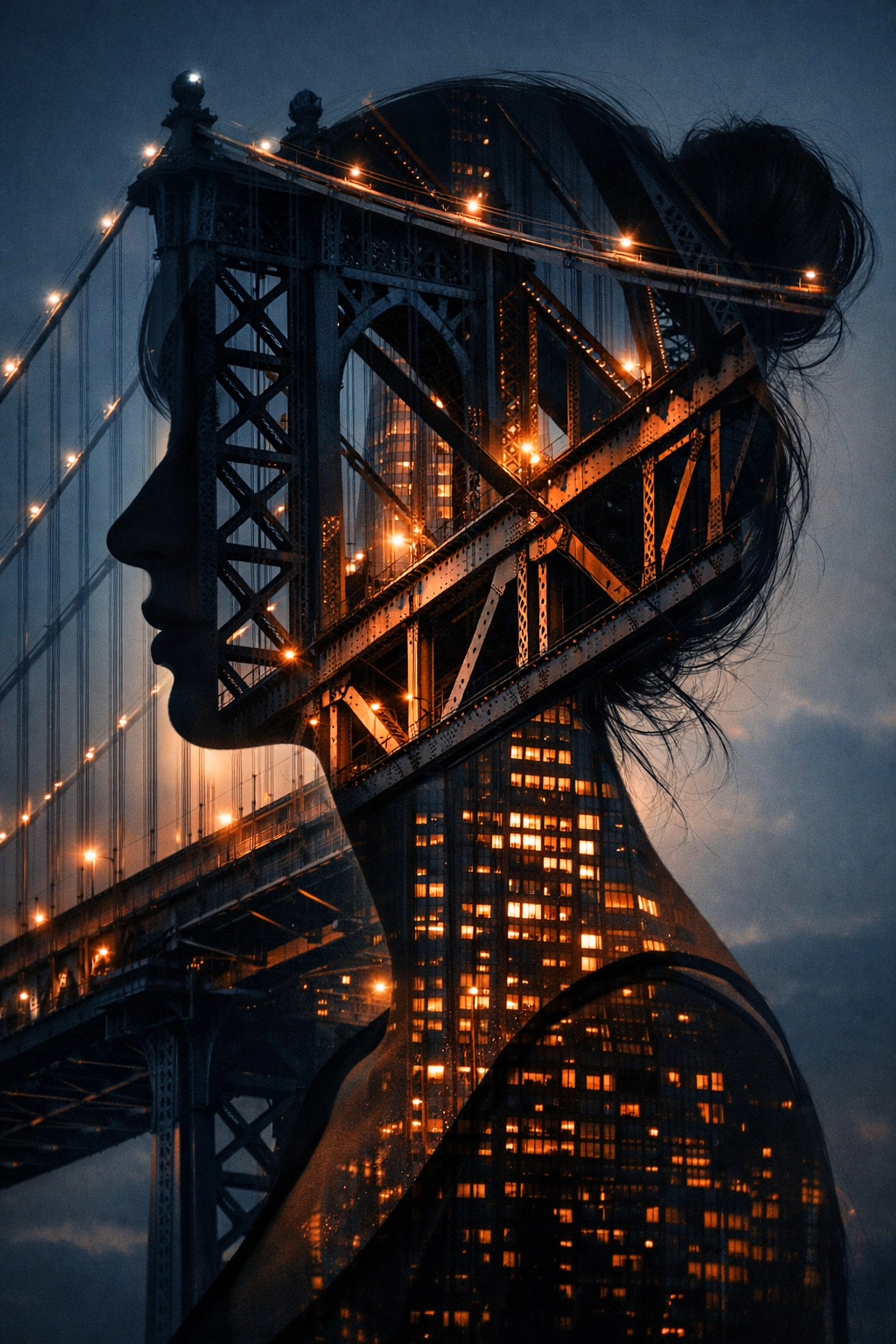
Many modern cameras allow you to do in-camera double exposures. Try layering a shot of a crowded street over a shot of a skyscraper's texture. It creates a dreamlike, abstract version of the city. If your camera doesn't do it, you can easily replicate this in Luminar by layering two images and playing with the opacity.
Elevating Your Street Game
Street photography is as much about your mindset as it is about your gear. If you’re shooting with an older camera, it might be time to see why the latest photography news matters, tech is making it easier than ever to capture sharp images in low light.
Also, don't be afraid to look at other genres for inspiration. The way a real estate photographer uses a wide-angle lens to make a room look huge can be applied to a narrow city alleyway to give it a sense of scale. Check out some distinctive elements of real estate photography and see if you can steal some of those ideas for the street.
Post-Processing: The Secret Sauce
Once you’ve got the shot, the work isn't done. Street photos often need a little "nudge" in post-production to really sing. Whether it's converting a distracting color image into a moody black and white or using AI to remove a stray piece of trash from the sidewalk, tools like Luminar are a lifesaver.
If you want to see how these techniques look when finished at a world-class level, take a peek at www.edinfineart.com or www.edinstudios.com. Seeing high-end gallery work can give you a goal to aim for with your own street snaps.
Go Out and Shoot
The best camera is the one you have with you, and the best idea is the one you actually go out and try. Don't worry about being "perfect." Street photography is inherently messy, and that’s why we love it.
Grab your bag, charge your batteries, and head out. Whether you’re hunting for neon lights or waiting for the perfect person to walk through a puddle, the city is waiting to be photographed. And hey, if you catch something truly epic, you might just find yourself trending in the daily photography news.
Now, quit reading this and go shut your aperture!