shutyouraperture-20). Buying through these links costs you nothing extra and helps fund our free guides.
It’s Monday, March 23, 2026. If you walked into a camera shop five years ago and asked for a camera that could distinguish between a seagull and a drone, the clerk might have laughed you out of the building. Today? That’s just standard firmware.
The photography world is buzzing, loudly, about AI-integrated mirrorless cameras. And no, we’re not talking about robots taking your job. We’re talking about a technological shift that is making photography more accessible, more fun, and frankly, a lot more accurate. Whether you’re a hobbyist or a seasoned pro, the AI revolution in mirrorless tech is something you can’t afford to ignore.
Let’s dive into why everyone is obsessed with this tech and how it’s changing the way we see the world through a lens.
The "Magic" of AI Autofocus
Remember the days of "focus and recompose"? You’d lock focus on your subject’s eye, hold the button halfway down, and then shift your frame. It worked, but it was slow. If your subject moved an inch, the shot was ruined.
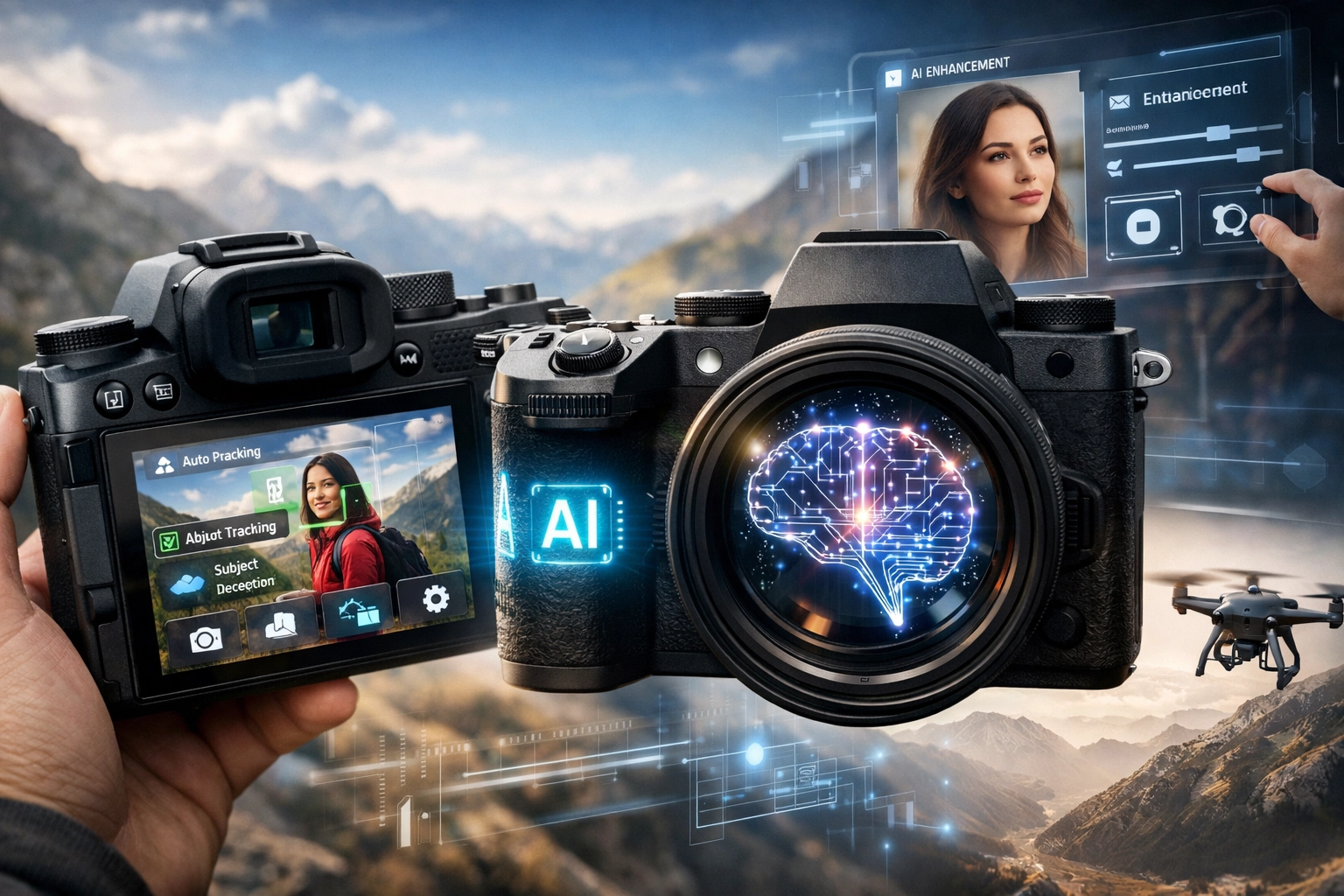
Fast forward to 2026. AI autofocus (AF) isn’t just a feature; it’s the brain of the camera. Brands like Sony, Canon, and Nikon have poured millions into deep-learning algorithms. These cameras don’t just look for contrast; they recognize shapes, patterns, and movement.
When you point a modern mirrorless camera at a person, it doesn't just see a face. It sees a human. It understands where the eye is, even if that person turns around or walks behind a tree. The moment they reappear, the AI snaps back onto the eye instantly. This level of subject tracking has completely changed the game for sports and wildlife photographers.
But it’s not just for people. AI can now recognize:
- Animals: Cats, dogs, birds, and even insects.
- Vehicles: Cars, motorcycles, trains, and airplanes.
- Specific Features: Focus on the helmet of a racing driver or the cockpit of a jet.
This reliability means you spend less time worrying about your tech and more time focusing on your composition. If you’re still struggling with the basics of how your camera works, check out our Manual Mode 101 guide to get a handle on the fundamentals before letting the AI take the wheel.

Beyond the Focus: Computational Photography
For a long time, "computational photography" was a term reserved for iPhones and Pixels. Enthusiasts with "real" cameras looked down on it. But the tables have turned. Mirrorless cameras are now using AI to perform heavy lifting that used to require hours in front of a computer.
We’re seeing in-camera noise reduction that looks incredibly clean, even at ISO 12,800. We’re seeing "Smart HDR" that balances a sunset against a dark foreground without looking like a cheap 2010 filter.
Even post-processing is getting a massive boost. Software like Luminar has pioneered AI-based editing, allowing you to swap skies or enhance skin tones with a single click. Now, mirrorless manufacturers are baking some of that logic directly into the RAW files and JPEGs.
If you want to see how these trends are shaping the industry this year, take a look at our breakdown of photography trends you should know. It’s a wild time to be a creator.
Functional AI vs. Generative AI: Know the Difference
There’s a lot of fear around AI, mostly because of "Generative AI", the stuff that creates images from thin air using text prompts. While that’s a cool (and controversial) tool for digital artists, it’s not what we’re talking about here.
The AI inside your Sony A7 V or Nikon Z8 is Functional AI. Its job is to help you capture the reality in front of you more effectively. It’s not adding a fake mountain to your landscape; it’s making sure the mountain you’re looking at is sharp and perfectly exposed.
Think of it like power steering in a car. You’re still the one driving, choosing the destination, and hitting the brakes. The AI just makes the physical act of "steering" the camera much smoother. For those who want to see how these tools are used to create world-class art, I highly recommend checking out Edin Fine Art to see the level of detail modern tech can achieve.
Why This Matters for Real Estate Photography
One area where AI-integrated cameras are making a massive splash is real estate. If you’ve ever tried to shoot a dark living room with a bright window, you know the struggle.
AI now helps with luminosity and exposure balancing in ways we couldn't imagine a few years ago. It can suggest the best angles or even help stabilize handheld shots to make them look like they were taken on a tripod.
In a competitive market, having high-quality imagery for listings is non-negotiable. AI assists in capturing the "vibe" of a home by managing tricky lighting and ensuring every corner is in focus. Whether it's aerial photography or interior shots, the AI is doing the heavy lifting of technical perfection so you can focus on the shot composition.
Learning from the Masters
Even the greats are being looked at through the lens of modern tech. Take Peter Lik, for example. His landscape work is legendary for its scale and color. While Lik built his career on traditional film and early digital mastery, the modern photographer can use AI to find those same vistas and perspectives.
Using AI to help with focus stacking or long-exposure simulation allows us to mimic the techniques behind Peter Lik’s landscape photography without needing $50,000 worth of specialized panoramic gear. If you’re a fan of his work, you might enjoy exploring his creative process revealed to see how his eye for detail aligns with the precision modern AI cameras provide.
The Hybrid Camera Standardization
In 2026, the wall between "stills photographer" and "videographer" has finally crumbled. Almost every high-end mirrorless camera is now a hybrid powerhouse.
AI is the glue that makes this possible. High-frame-rate video requires insane processing power to keep things in focus while the camera moves. AI-driven subject recognition ensures that your video stays cinematic and sharp, even if you’re shooting wide open at f/1.2.
This has huge implications for businesses. For example, in real estate, cinematic techniques can transform property showcases. A quick video walk-through that looks professional, thanks to AI stabilization and tracking, is a game-changer for marketing.
Is Photography Essential for Marketing Anymore?
With AI being able to generate images, some people ask if traditional photography is still essential. The answer is a resounding yes.
In marketing, especially for things like luxury dining or high-end property, authenticity is everything. People want to see the real thing. AI-integrated cameras allow photographers to capture that reality with more "wow" factor than ever before.
Is photography essential for real estate marketing? Absolutely. But the type of photography that wins is the one that uses modern tech to create something distinctive. You can learn more about these distinctive elements on our blog.
The Learning Curve: Don’t Get Left Behind
It’s easy to feel overwhelmed. You might think, "I just learned how to use my DSLR, and now you want me to buy a computer with a lens attached?"
The truth is, these cameras are actually easier to use once you get past the initial setup. The AI handles the tedious stuff (like hunting for focus in low light) so you can spend more time on the creative stuff (like where to stand and how to light your subject).
If you're looking to level up, we've put together the ultimate guide to photography tutorials. It covers everything from the basics to these advanced AI features. You can also find great resources over at Shut Your Aperture to help you stay ahead of the curve.
What Should You Look For?
If you’re in the market for a new camera this year, here are the AI features you should prioritize:
- Dedicated AI Processing Chip: Some cameras now have a separate chip just for AI calculations. This keeps the main processor free to handle high burst rates and video.
- Custom Subject Recognition: Look for cameras that let you tell the AI what to look for. Are you shooting a wedding? Set it to "Human Eye." Shooting a track day? Set it to "Motorsports."
- Firmware Expandability: The best part about AI is that it gets smarter over time. Choose a brand known for frequent firmware updates. Your camera could literally be "smarter" a year after you buy it.
- In-Body Image Stabilization (IBIS) Synergy: Modern AI works with the sensor’s physical movement to predict camera shake and counteract it more effectively than traditional systems.
The Human Element
At the end of the day, a camera is just a tool. Whether it’s a vintage Leica or a brand-new AI-integrated Sony, the person standing behind the viewfinder is what matters.
Edin Chavez always says that photography is about the story. AI is just a better pen to write that story with. It allows you to capture moments that were previously "un-gettable." It lets you shoot in conditions that were previously "impossible."
If you’re curious about how a professional studio integrates this tech, check out Edin Studios or see the gear in action at ProShoot.io. The goal is always the same: to create an image that makes people stop and look.
Final Thoughts
The conversation around AI in mirrorless cameras isn't going away. It’s only going to get louder as the tech gets better. By embracing these tools, you aren't cheating; you're evolving.
Think of AI as your digital assistant. It’s there to hold the light, keep the focus sharp, and make sure the exposure is spot on. Your job? To find the beauty, wait for the moment, and press the shutter.
So, should you be talking about AI-integrated mirrorless cameras? Definitely. But more importantly, you should be using them to push your creative boundaries. Whether you are inspired by Peter Lik’s favorite locations or you're just trying to get a sharp photo of your kids in the backyard, this tech is for you.
Go out there, stop worrying about your settings, and start shooting. The future of photography is here, and it’s smarter than we ever imagined. Don't forget to play around with tools like Luminar to see just how far your images can go once they leave the camera.
For more updates on the world of photography and to see what we're up to, keep an eye on blog.edinchavez.com. We’ll see you out there in the field!
Quick Amazon shortcuts for the camera categories covered in this guide. Use them if Prime shipping or your existing Amazon credit makes more sense than B&H. As an Amazon Associate ShutYourAperture earns from qualifying purchases.